
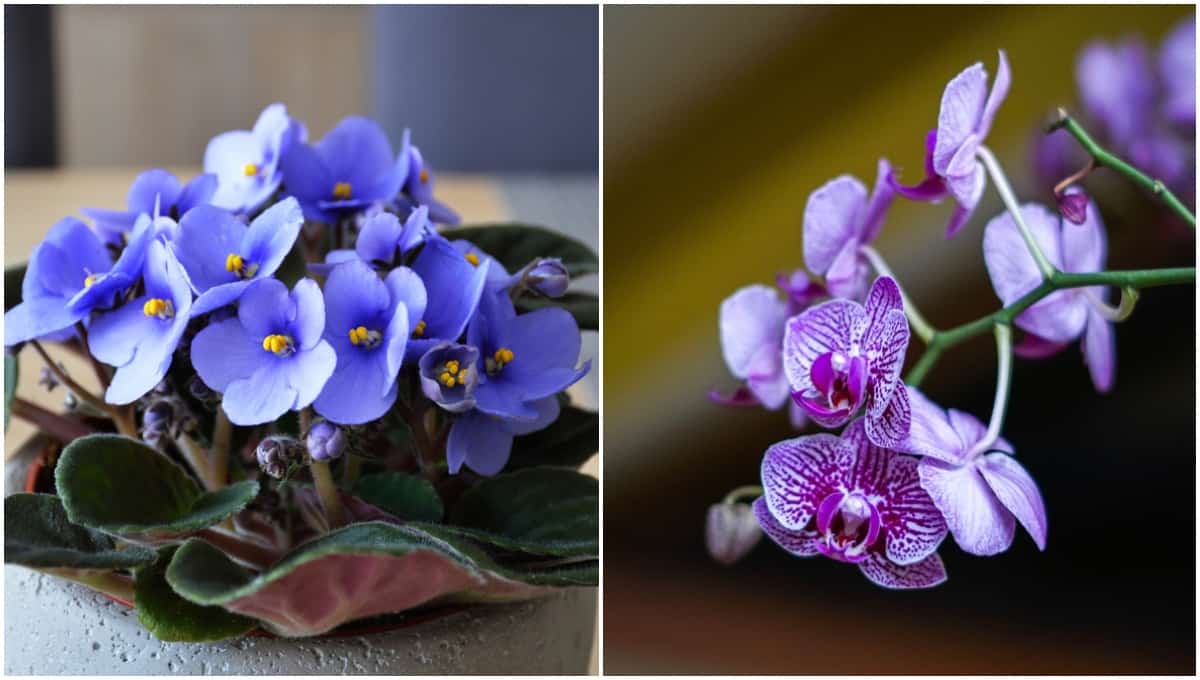
Indoor plants are often valued for their leaves. always popular delicious monstera Collectible Pepperomia varieties have social media feeds full of leaves.
But that’s not the only thing I love about houseplants, many of them flower too.
It is not easy for plants to produce flowers. Its impressive colors, shapes and textures are the result of the hard work of the plant. This hard work is only possible with energy, much of it provided by the sun. With less light indoors, it stands to reason that fewer plants will flower indoors.
However, there are many plants that produce beautiful flowers without the hours of direct sunlight that most other flowering plants require.
With a little indirect light and proper care, these plants will bloom year after year. And since they are indoors, they even flower all year round.
1. Peace lily
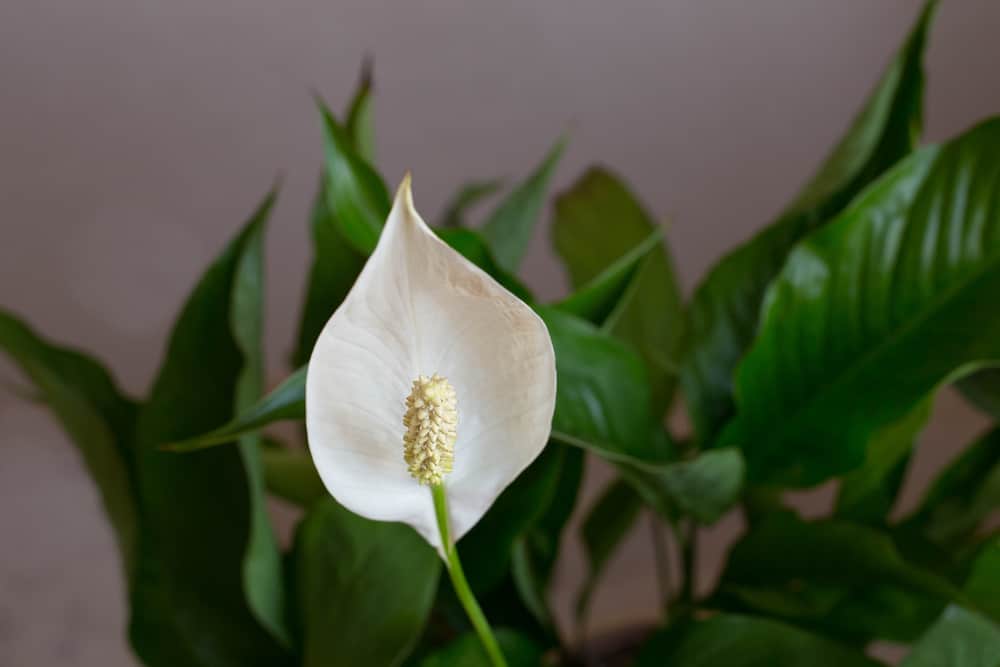
Every houseplant lover has one. Spathiphyllum in her house. If not, you must have seen this plant somewhere in your grandmother’s house.
A staple of the indoor garden, the peace lily is prized for its tolerance of low light conditions and its glossy, deep green leaves.
This plant produces elegant white flowers (technically leaves) with a tropical look that will impress. Blooms year-round, but produces the greatest number of flowers during the height of summer.
It produces more flowers in bright, indirect light, but is one of the few flowering plants that will thrive in low light conditions.
Related Reading: 7 Reasons Your Peace Lily Leaves Are Turning Yellow
2. African Violet
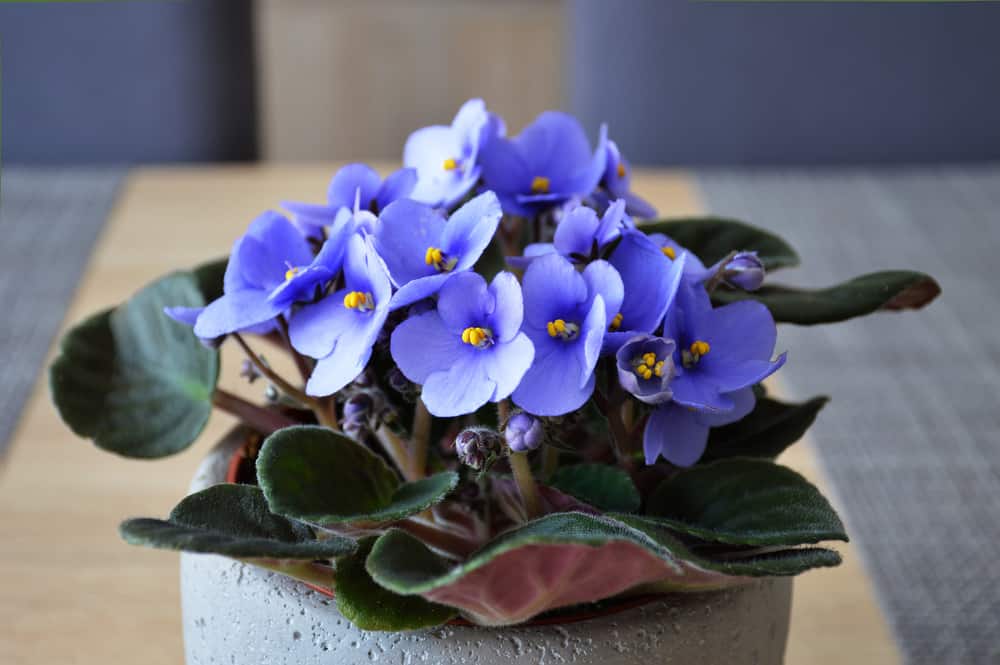
When you talk about flowering houseplants, you always think of African violets. Its typical grey-green leaves and beautiful blue-violet flowers are hard to miss. But what gardeners love most about this plant is its ability to flower reliably despite a little neglect or lack of watering here and there.
An old favorite, this compact plant is best grown in bright indirect light. But like the peace lily, it can take a little less and still bloom.
Under the right conditions, your African violet will bloom several times a year, or even stay in bloom year-round.
Always water the soil directly and never the leaves. The tiny hairs that give the plant its shaggy gray appearance easily trap water, discoloring the leaves.
3. Hooray!
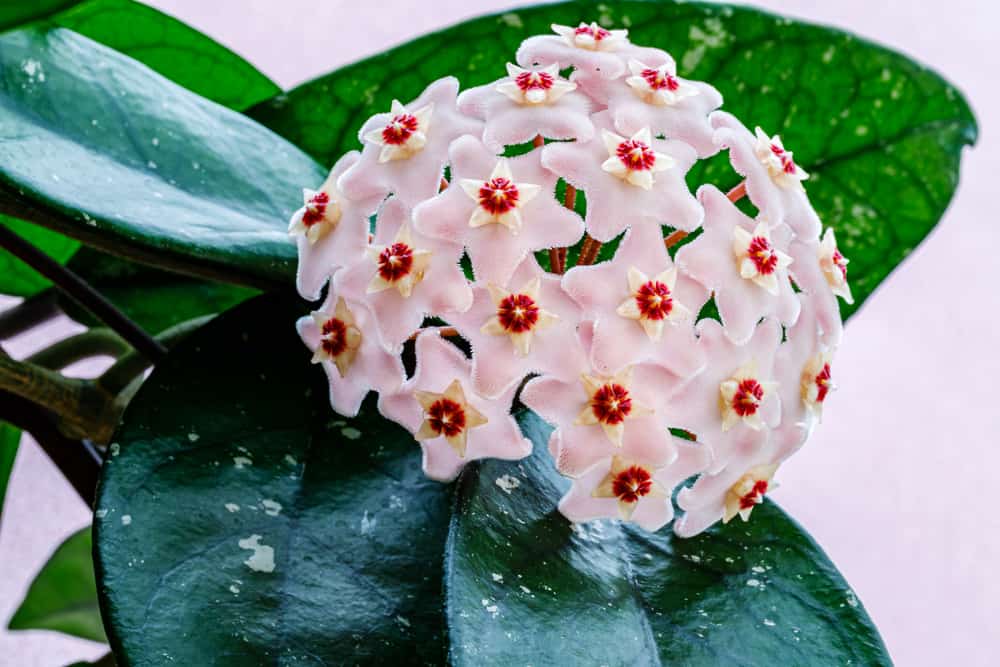
You might be surprised to see popular hoya on this list. These plants are known for their striking foliage: thick, waxy leaves in a variety of colors and shades. However, under the right conditions, these foliage plants will also bloom, displaying traces of delicate flower clusters.
Hoyas grow well in a variety of conditions. With their succulent leaves that retain a lot of water, they can also survive long periods without worry. In fact, they do better with too little water than with too much water.
But if you want your hoya to thrive, make sure it’s in a bright spot near a window and avoid overwatering.
4. anthurium

Anthurium is another houseplant that you must have found at your grandmother’s house. These traditional indoor plants are back in fashion.
Its range of colors and textures is unmatched, from deep purple to dusty pink and even a mix of pink, white and green, aptly known as watermelon anthurium.
What many people confuse with the flowers of this plant are actually modified leaves. If you look closely, you can see that these intricate leaves are more leaf-like in thickness and texture than any other flower. This modified leaf wraps around a flower spike that gives the plant its classic look.
They might not technically be flowers, but the variety of colors they come in certainly make them look like them, earning them a spot on this list.
5. Hibiscus
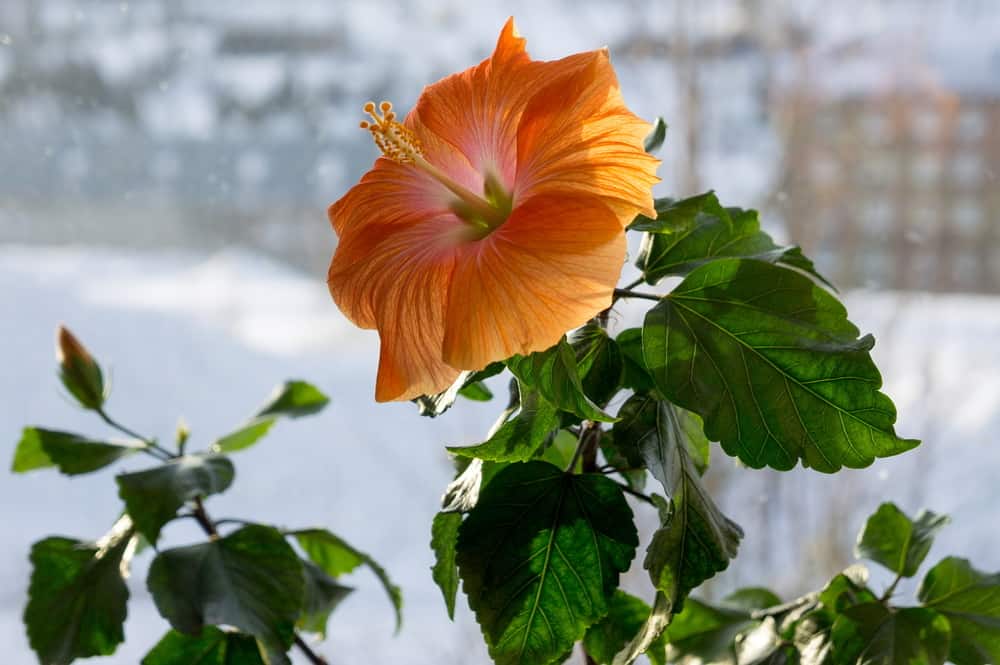
Lovers of the tropics will immediately fall in love with this plant. Hibiscus flowers are undoubtedly the star of the show here, not arguing with the foliage for attention.
Tropical flowers come in many lovely colors, ranging from bright orange to deep red, or a mix of everything in one flower. If you have no way of seeing the sunset from your window, place a hibiscus in front so it looks like you can.
If you are looking for a hibiscus to grow indoors, always choose a tropical hibiscus, also called Chinese hibiscus. These plants are accustomed to tropical conditions and do well indoors, unlike their relatives Rose of Sharon or Dinnerplate Hibiscus which do better outdoors.
These plants need some direct sunlight to flower reliably. Their height allows them to stand in front of a window for a few hours of direct light and usually bright indirect light the rest of the day. And as a bonus, the flowers are also completely edible.
6. Poinsettias
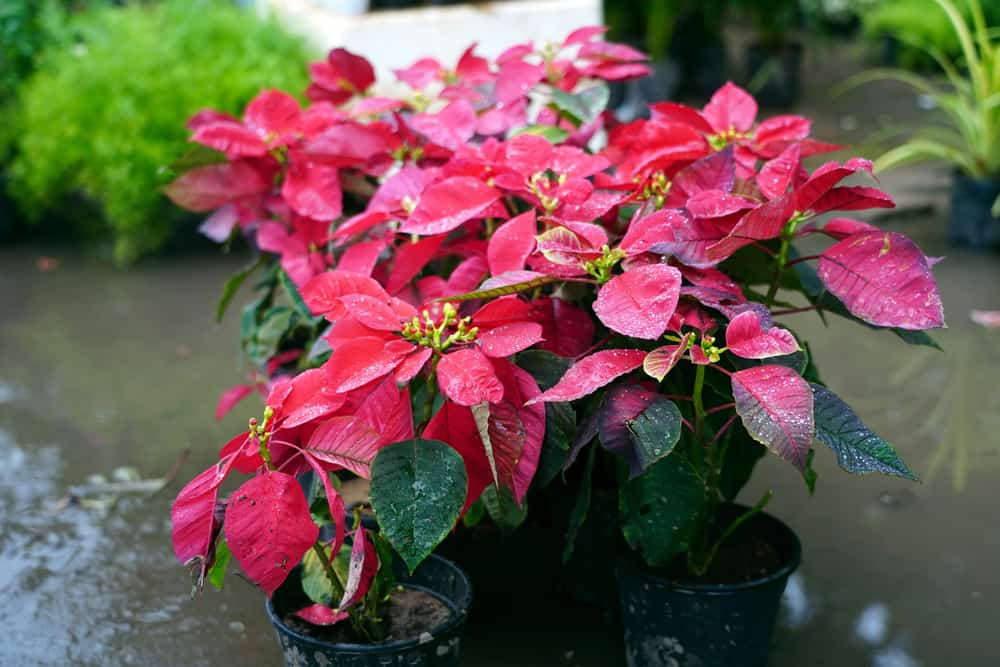
During the holiday season, you’re sure to find hundreds of poinsettias in the houseplant section of your local nursery.
While the red variety is known for its Christmas spirit, there are plenty of other poinsettia color options that will complement a home all year round. Some are even multicolored or feature beautiful patterns and textures that will brighten up any space they are placed in.
Like the peace lily, what we think of as the poinsettia flower is not a flower at all. The colored parts of the plant are called bracts and surround much smaller leaves that form in the center of the plant. But because they don’t have a flower tag and grow like a leaf, you’re guaranteed to have more color for longer, without needing a lot of light.
7. Christmas cactus
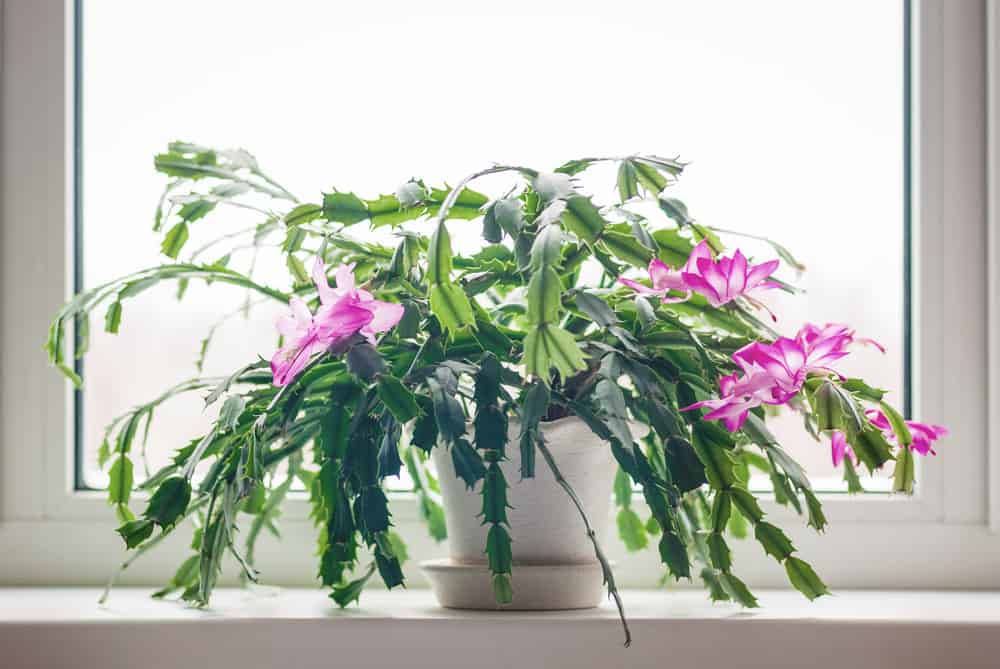
Another Christmas plant, the Christmas cactus is prized for its delicate pink flowers on long green cactus-like leaves.
Unlike most flowering plants, the Christmas cactus blooms after being triggered by cold weather, producing flowers in fall and winter. If you want to brighten up a dreary winter day, this is the way to do it.
To witness the flowering, you must place this plant in a very bright place. Despite the cactus in its name, the watering needs aren’t like a succulent, preferring a good watering with your other tropical foliage plants.
If your plant isn’t flowering or producing buds, keep it in a cool, dark place for most of the day. This mimics the flowering time of that plant, forcing it to produce flowers. Here’s a great guide to getting more blooms from your Christmas cactus.
8. Orchid
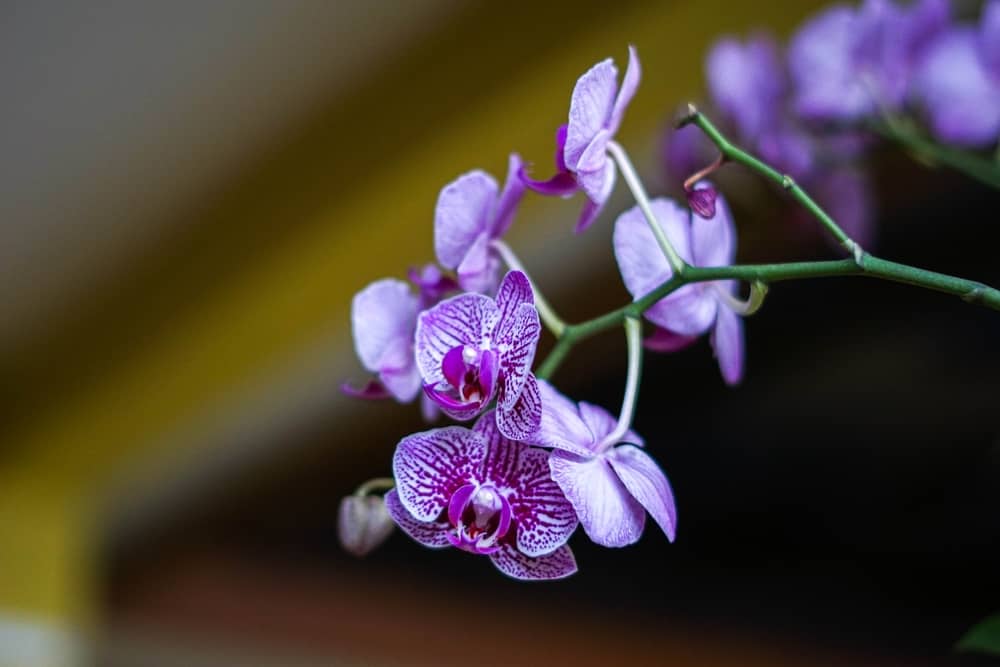
A list of flowering houseplants would not be complete without the addition of the orchid. Whether you choose one Cymbidium or the classic phalaenopsisYou will receive long stems of intricate flowers in every color you can imagine.
These tropical plants are sure to be a collector’s item and have a devoted following all over the world.
Since they are quite different from other easy-care houseplants we know of, they can be difficult to care for. In the wild, orchids usually grow on trees; they are generally considered epiphytes. This means they need incredibly well-drained “soil”, usually a mixture of bark and moss, and occasional heavy watering, allowing the plant to dry out completely in between.
How to get orchids to bloom again is the most frequently asked question when it comes to orchid care. Pruning, fertilization, and a good amount of light are essential for this plant to shoot flower stalks season after season.
9. Bromeliads
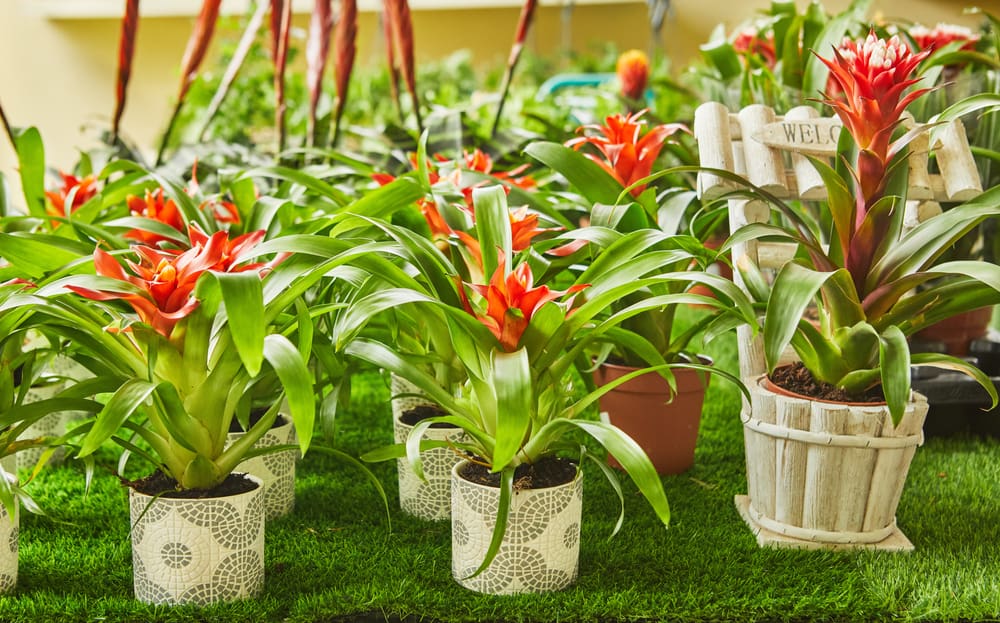
Rounding out this list, we have one last flowering plant that doesn’t technically “bloom”.
Bromeliads differ in shape and texture from most houseplants and other plants on this list. The leaves are pointed and structural and the flowers (also the bracts) are pointed. The flowers, on the central stems, present a kaleidoscope of tropical colors, mainly red, orange and yellow.
Related to the pineapple, this plant has an exotic and tropical appearance. Place it in bright light and it will glow with color for months. For more color contrast, choose a bromeliad with variegated leaves to draw attention to the foliage and flowers.
In full sun, many flowering plants will thrive indoors. However, they aren’t likely to thrive, and getting them to thrive is often a struggle.
If you want to get rid of foliage in your home, these nine plants are the way to go. They continue to flourish without direct light and add a pop of color to empty interior corners.