
When trees are planted strategically around the home, they can become living, breathing privacy screens that will quickly add beauty and lushness to the landscape.
Trees not only protect you from obnoxious bathroom neighbors and keep unsightly things out, but they also reduce noise, act as windbreaks, add value to your property, and encourage more outdoor activity. outdoors.
There are several things to consider when choosing a tree. The size and shape of the tree at maturity, how fast it grows, whether it needs pruning and tending, and the size of the planting site all determine which tree is best for your property.
Here are 10 of our top picks to get you started:
1. Green Giant Tree of Life (Thuya standishii X fold)
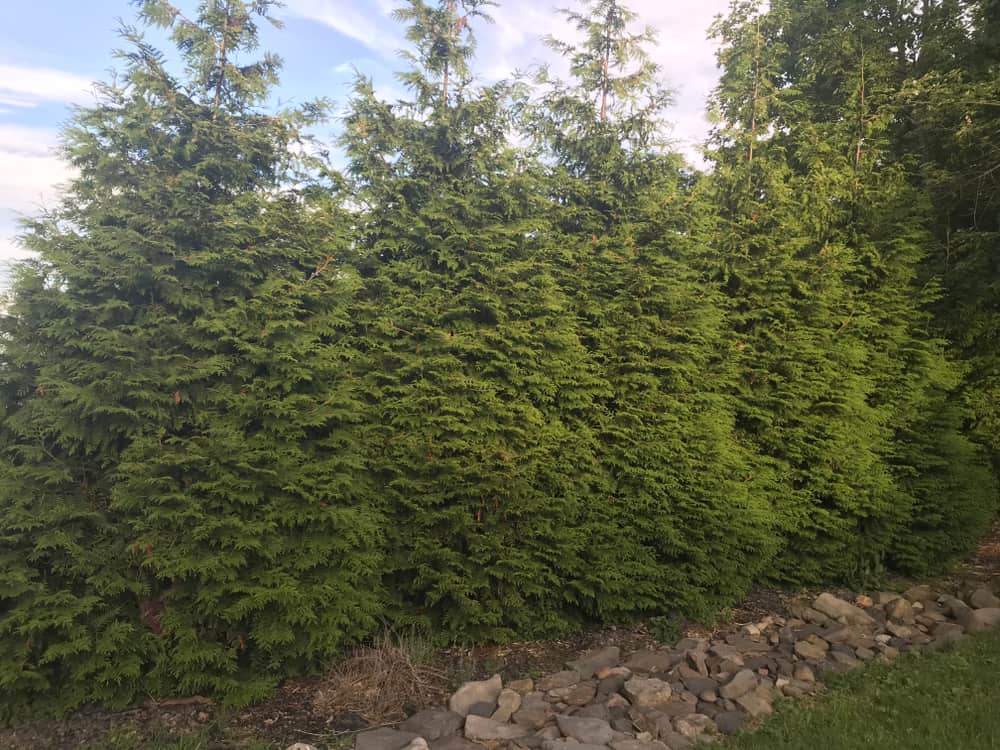
Green giants are a popular choice for privacy trees and it’s easy to see why.
A low-maintenance, drought-tolerant, and disease-resistant conifer, Green Giant Arborvitae are hardy evergreens that grow very quickly to maturity.
With a natural pyramid shape that requires no pruning, plant those six feet apart and they’ll fill in in no time.
hardiness zone: 5 to 8
Sun exposure : Full sun and partial shade
Height: 40 to 60 feet
Dispersion: 12 to 18 feet
Rate of growth: Fast – 3 to 5 feet per year
2. American holly (opaque ilex)
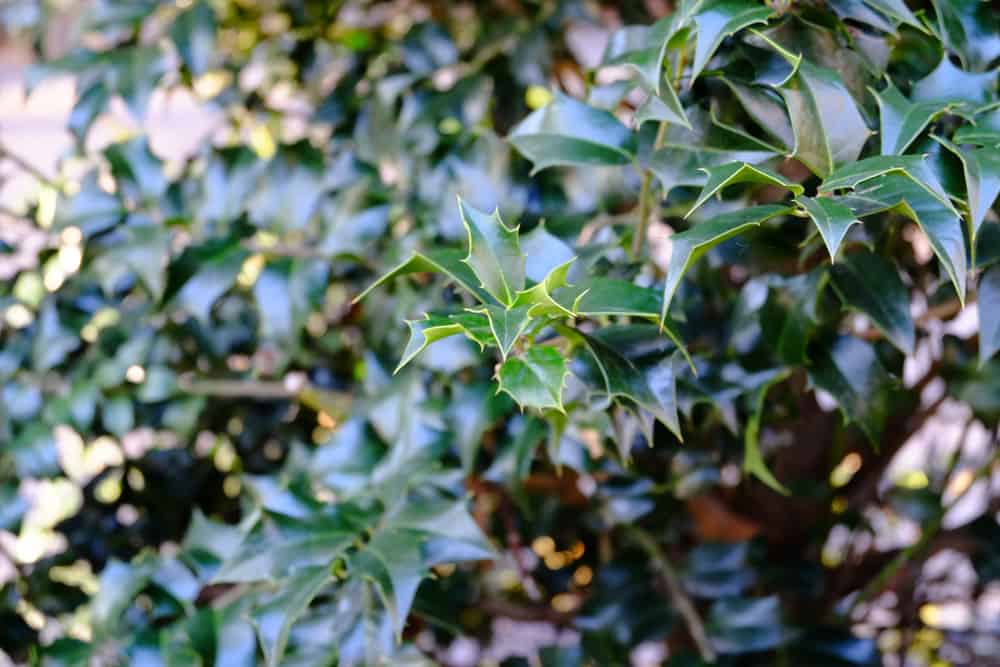
American holly is a beautiful evergreen with thick, glossy, dark green leaves edged with a prickly edging.
In summer it blooms profusely with small white flowers that turn into bright red berries in autumn. The fruits, appreciated by birds, remain on the tree all winter.
American holly is naturally straight and tapering in shape, but can be cut into a neat, tidy hedge.
hardiness zone: 5 to 9
Sun exposure : Full sun and partial shade
Height: 15 to 30 feet
Dispersion: 10 to 20 feet
Rate of growth: Slowly – 6 inches per year
3. if (yew spp.)
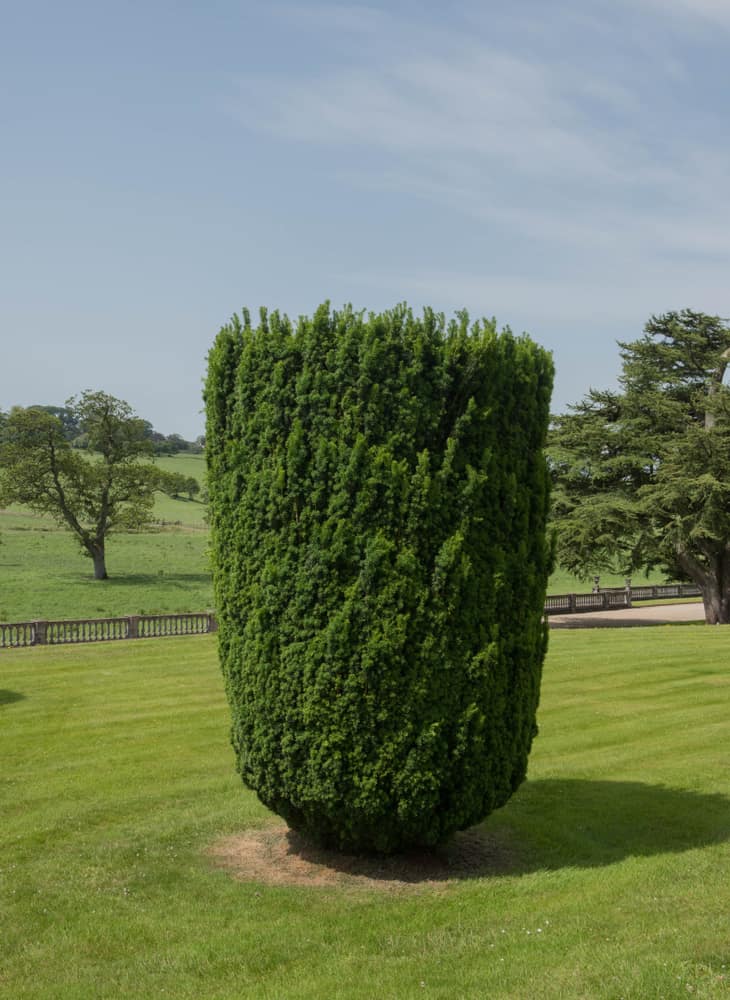
With over 400 cultivars to choose from, the most commonly seen yew in the home garden is the English yew (T.bacata)Japanese yew (T. cuspidata)and hardy Canada yew (canadensis).
In general, yews are very long-lived and have reddish bark covered with dark green flat needles.
Depending on the cultivar, yews can be tall and thin, short and stocky, and there are many variations between the two. There are a variety of yews for every garden, big or small.
hardiness zone: 3 to 8
Sun exposure : Full sun and partial shade
Height: Varies from 3 feet to 30 feet, depending on cultivar
Dispersion: From 1 foot to 15 feet
Rate of growth: Average – 1 foot per year
4. Leyland cypress (Cupressocyparis leylandii)
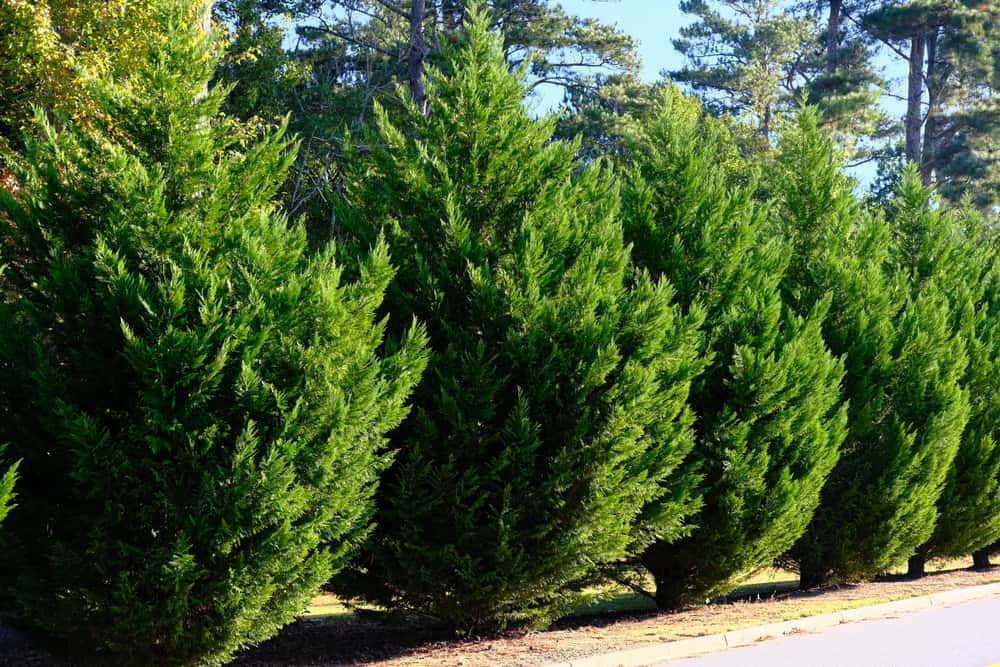
A conifer suitable for warm climates, the Leyland cypress is an excellent privacy tree thanks to its dense branches and rapid growth.
The Leyland cypress is also a sight to behold, with an upright pyramidal habit and feathery grey-green foliage. It is available in many cultivars with shades of yellow, bright green, blue-green, and variegated.
hardiness zone: 6 to 10
Sun exposure : full sun
Height: 60 to 70 feet
Dispersion: 10 to 15 feet
Rate of growth: Fast – 3 to 5 feet per year
5. mottled willow (integrated salix ‘hakuro nishiki’)
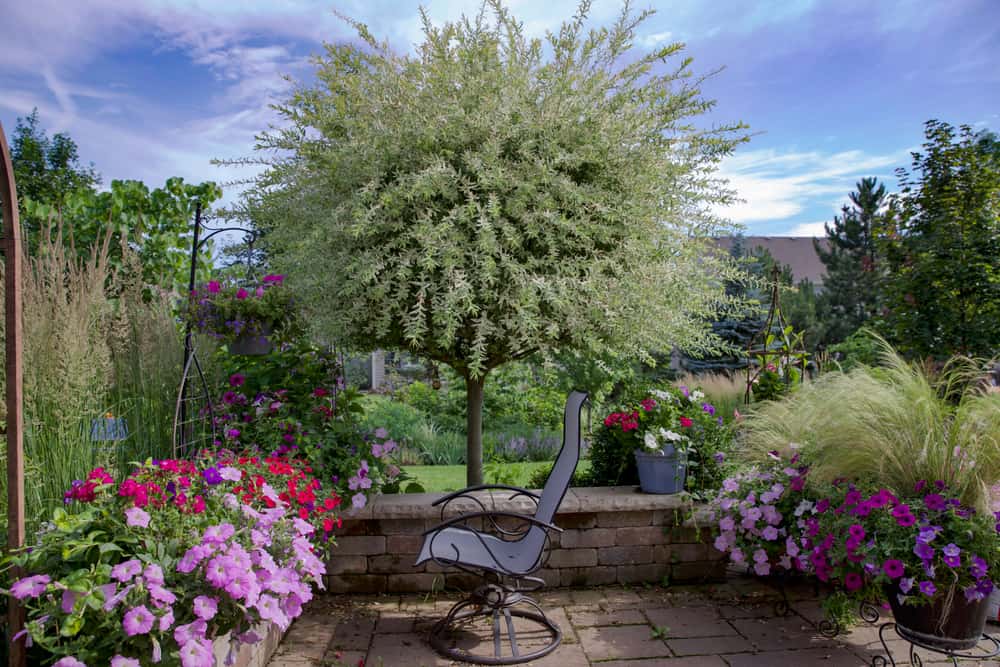
The speckled willow is a small deciduous tree, beautiful throughout the seasons.
It is a fast-growing, compact plant with small yellow catkins in spring and light green leaves in summer. In the fall, the color of the leaves turns yellow and falls at the end of the season. In winter, bare branches take on a bright red hue.
hardiness zone: 5 to 7
Sun exposure : Full sun and partial shade
Height: 6 to 10 feet
Dispersion: 5 to 7 feet
Rate of growth: Fast – 4 feet per year
6. cherry laurel (prunus caroliniana)
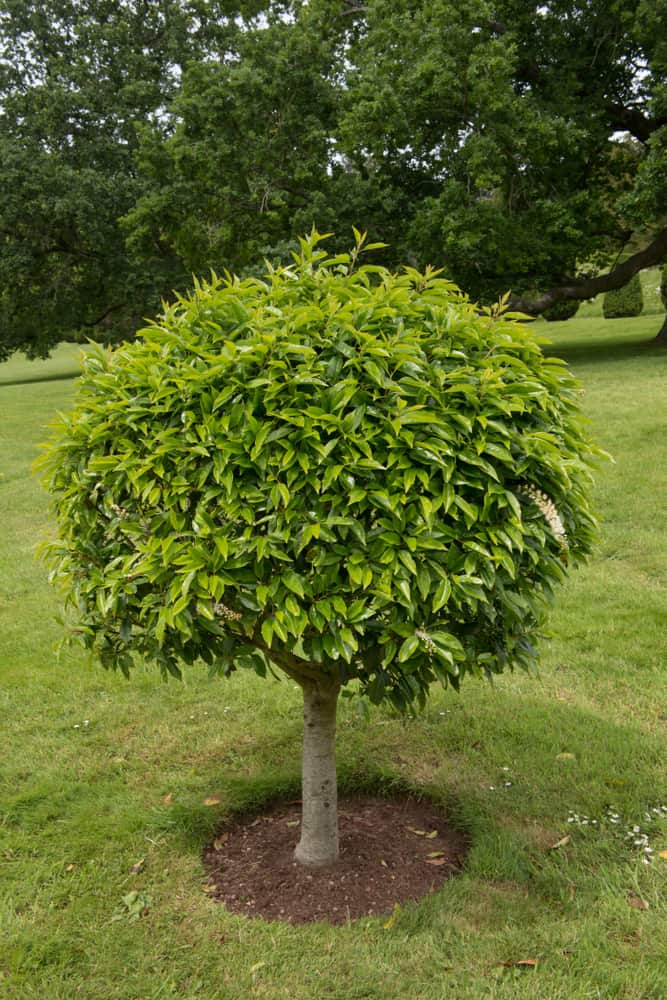
Native to the southeastern United States, cherry laurel is an evergreen tree with glossy, elongated, dark green leaves with a pointed tip, each 2 to 4 inches long.
Cherry laurel naturally has a dense pyramidal habit, but can be trimmed into a hedge or bush for more privacy.
Blooms in early spring with white clusters that fill the air with the scent of maraschino cherries.
hardiness zone: 7 to 10
Sun exposure : Full sun and partial shade
Height: 15 to 20 feet
Dispersion: 10 to 15 feet
Rate of growth: Fast – 1 to 3 feet per year
7. boxwood (Buxus sempervirens)
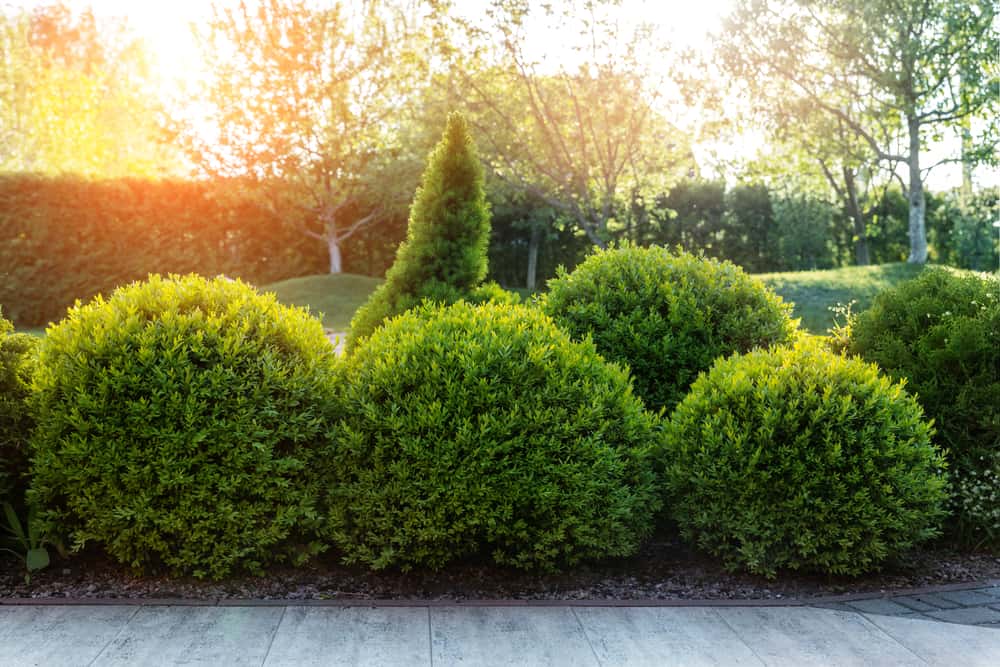
Boxwood can grow slowly, but it’s worth the wait.
Hardy, unassuming and low-maintenance, boxwood is a broad-leaved evergreen with small, elliptical, leathery leaves that are dark green above and greenish-yellow below.
Although boxwood is generally considered a compact hedge plant, it can even reach a height of 15 feet if left unpruned.
Try one of the variegated cultivars for a splash of color.
hardiness zone: 5 to 8
Sun exposure : Full sun and partial shade
Height: 5 to 15 feet
Dispersion: 5 to 15 feet
Rate of growth: Slow – 7 inches per year
8. eastern red cedar (Virginia juniper)
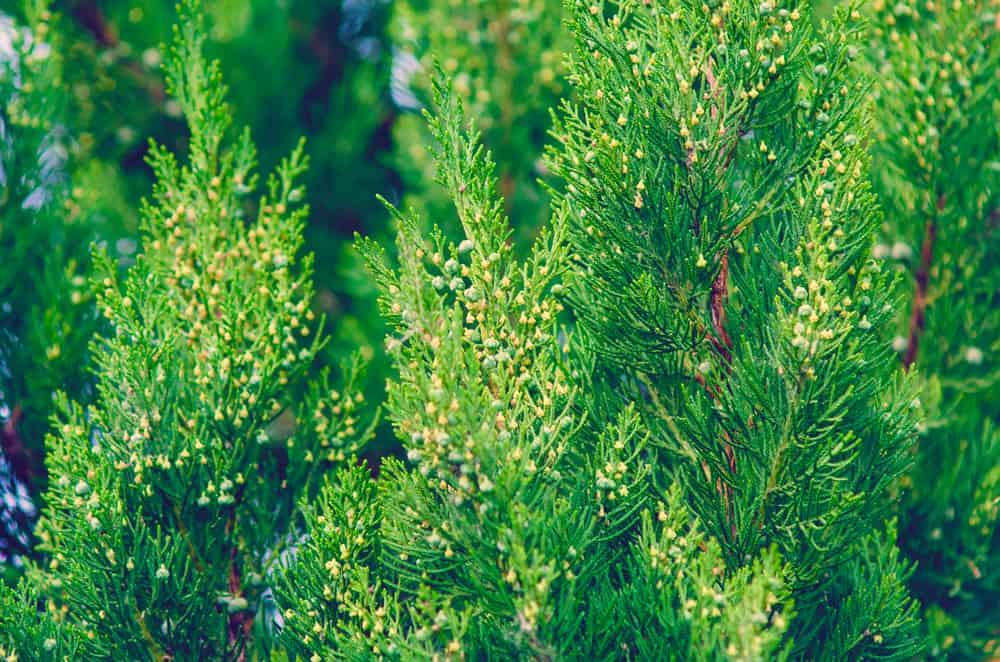
The eastern red cedar is a hardy specimen, capable of thriving in harsh conditions.
It is one of the first trees to grow on vacant land, also known as a pioneer species.
A densely branching needle-like conifer with a columnar profile, it is a good choice when a large impenetrable screen or windbreak is needed.
hardiness zone: 2 to 9
Sun exposure : full sun
Height: 30 to 65 feet
Dispersion: 8 to 25 feet
Rate of growth: Medium – 1 to 2 feet per year
9. Cassis (serviceberry arborea)
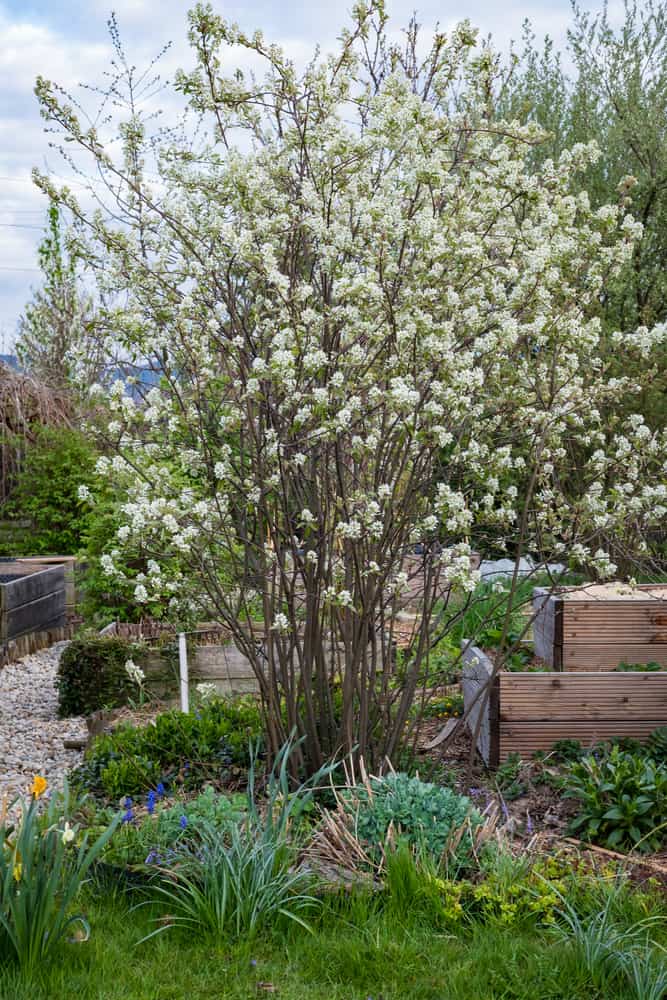
Saskatoon is a small tree or large shrub of the rose family.
Blooming with masses of clusters of white flowers in early spring, the gooseberry sprout produces sweet, edible fruits in June that would go by the name Dr. Peppery Flavors. In the summer the leaves are green, but in the fall they turn into a vibrant pastiche of red, orange and yellow.
Depending on how you prune it, the gooseberry can look like a single-trunked tree with a distinct stem, or a multi-trunked tree with many branches sticking out of the trunk near the soil line. Leave the suckers intact to give it a bushy habit.
hardiness zone: 4 to 9
Sun exposure : Full sun and partial shade
Height: 15 to 25 feet
Dispersion: 15 to 25 feet
Rate of growth: Medium – 1 to 2 feet per year
ten Pink Bay Rhododendron (maximum of rhododendrons)
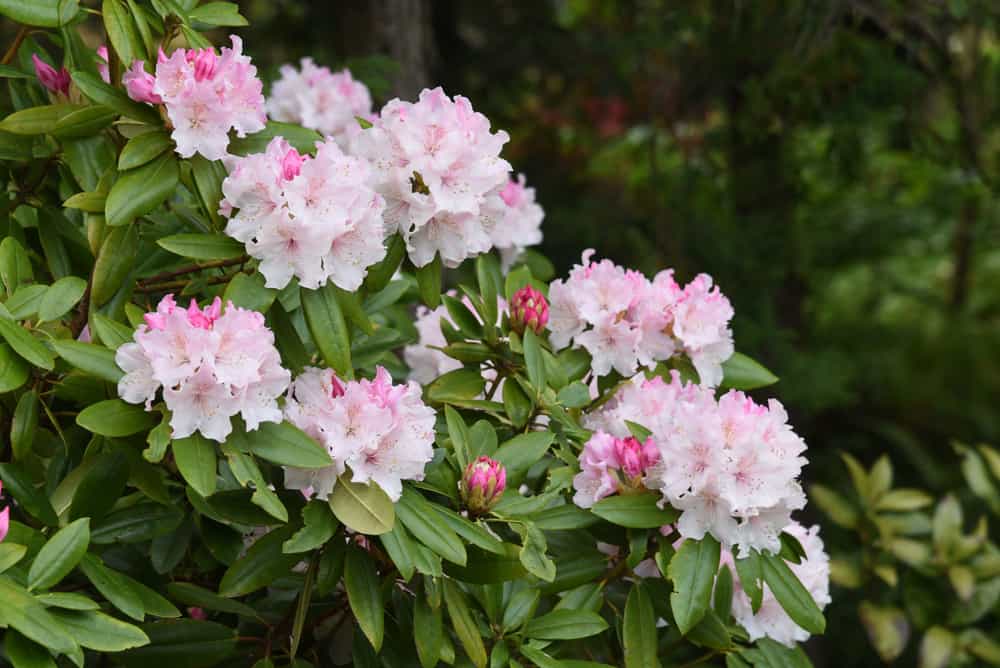
Rosebay rhododendron is a large, evergreen shrub that blooms late in the season with dense clusters of pink to white flowers, each bloom measuring 2 inches across.
Attractive even when not in bloom, Rosebay rhododendron has an upright, multi-stemmed habit that can form dense thickets in the home landscape. It has huge dark green, strap-like leaves that can grow up to 20cm long.
Because the Rosebay rhododendron needs very little direct sunlight, it makes a fantastic choice for privacy in a more shady setting. Although it grows faster and produces more flowers each season if planted in a partially shaded location.
hardiness zone: 3 to 7
Sun exposure : partial shade to full shade
Height: 5 to 15 feet
Dispersion: 5 to 12 feet
Rate of growth: Slow – 6 to 8 inches per year