
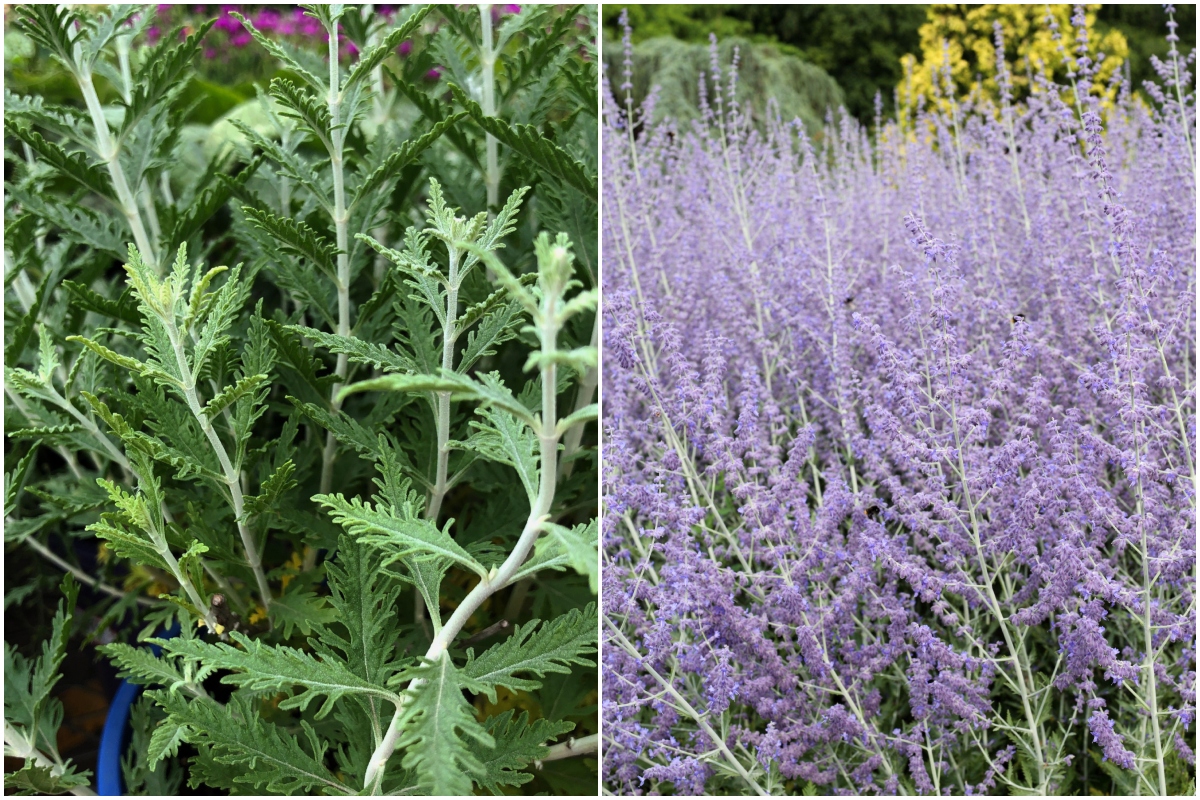
I like tall, showy plants. A quick look at my portfolio of articles on this website will show that when I write an article on a single plant, it usually revolves around the plants that take center stage.
Enchanting hydrangeas, romantic roses, cotton candy peonies. But I want to switch things up a bit and talk about an underrated accent plant for a change: Russian way.
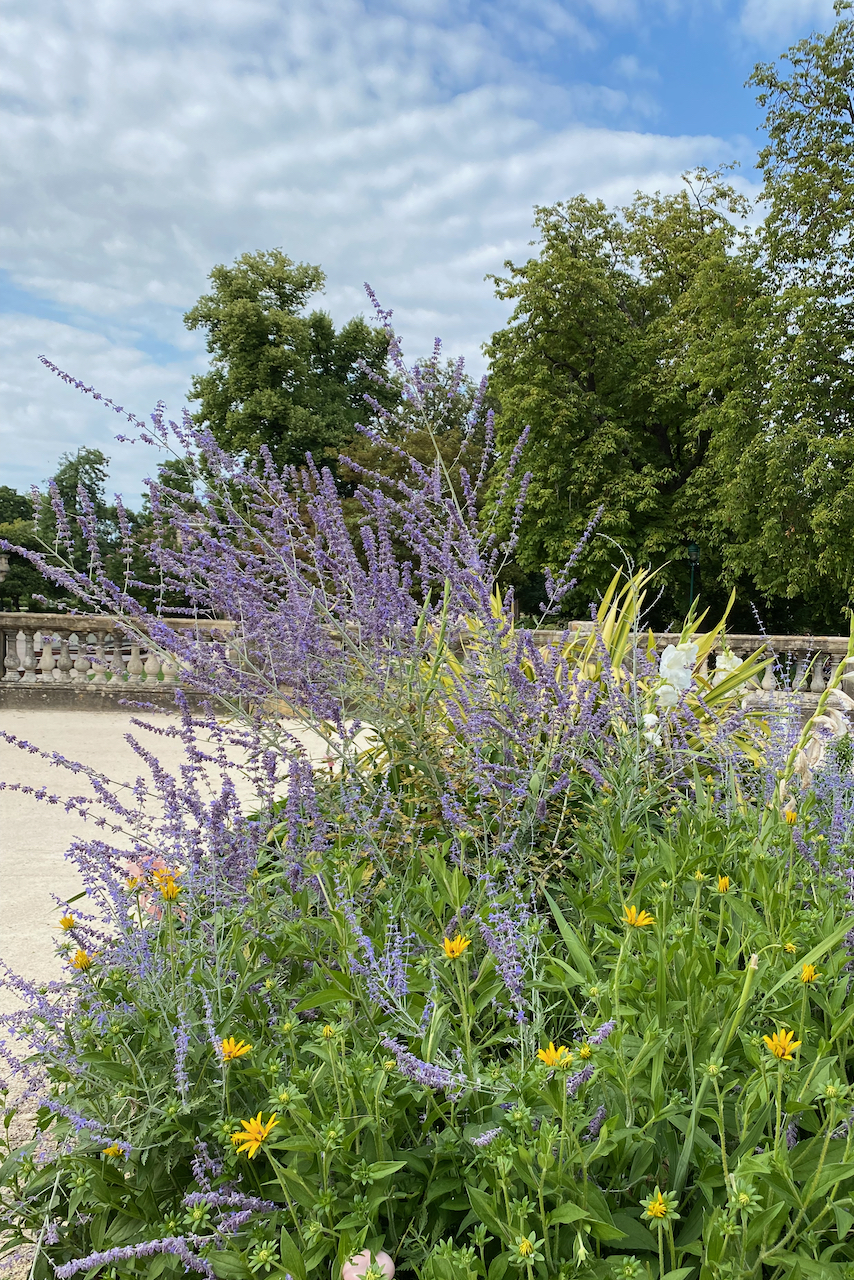 Russian wise man decorating flower bed in city park.
I bet you’ve probably come across this perennial in gardens or flower arrangements without realizing it. Unless you really know what it looks like, you could easily mistake it for sage or lavender. The beauty of Russian sage is that it enhances and complements all other perennials it is associated with, without ever being overwhelming.
These are the most important things you should know about planting and growing Russian sage.
1. The Russian sage is not a true sage.
russian way (Perovskia atriplicifolia, more recently known as sage yangii) not really wisecommon sage). I wanted to make this important distinction up front because Russian sage leaves are generally inedible, although they do smell very fragrant.
 Although the flowers and foliage look similar, Russian sage is not a true sage.
Coincidentally, he’s not from Russia either. This hardy perennial is native to central and southern Asia, but a Russian botanist named it after a Russian state official. So let’s agree that calling it perovskia clears up some of that confusion.
2. You can buy Russian sage bare root or as a starter plant.
I am proud to say that I have successfully started using royal sage from seed. But I wouldn’t try to do it the Russian way. Indeed, according to this article, you may have to wait up to four months (months!) for germination. horticultural guide from the University of Wisconsin at Madison.
When I decided to put perovskia plants in my garden, my search for larger, more mature plants yielded quite expensive results. That is, when I got results. Because apparently even the big garden center near me (which is part of a chain) doesn’t have Russian sage in stock. So I decided to order two small starter plants online.
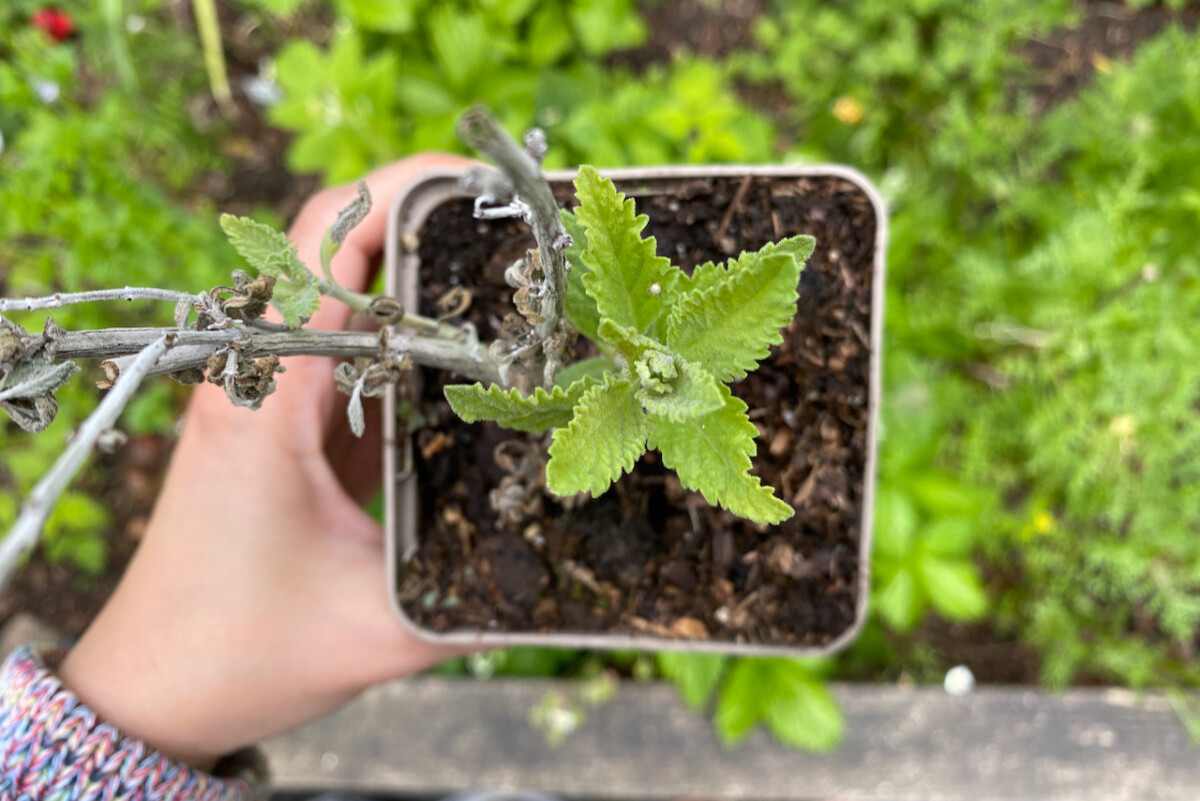 One of my starter Russian sage plants looked a bit sad. But he recovered a week after I transplanted him.
 I think part of the problem with finding him is the fact that he was trying to get something in the spring. If I had been patient enough to wait for fall planting, I could have purchased and planted perovskia as a bare root plant.
I wrote an entire article about the benefits of planting bare root starters. In short, in addition to being plant-friendly, it is also an ecological and affordable option. Planting this way gives the plants plenty of time to establish roots before they start producing new growth in the spring.
3. Russian sage is suitable for a wide variety of garden conditions.
Now we come to the good part and all the benefits of planting Russian sage in your garden. The middle name for this perennial might as well be “tolerant,” since it’s both drought-tolerant and bug-tolerant. But there is a trick to remember. His tolerance will only show if you give him the attention he needs to adapt.
This long bloomer will look great from July to October if you plant it in full sun. Even before it begins to flower, the silver-green pattern of the foliage adds plenty of interest to any garden. And I mean any garden, because Russian sage is suitable for gardens in USDA Zones 3 through 9.
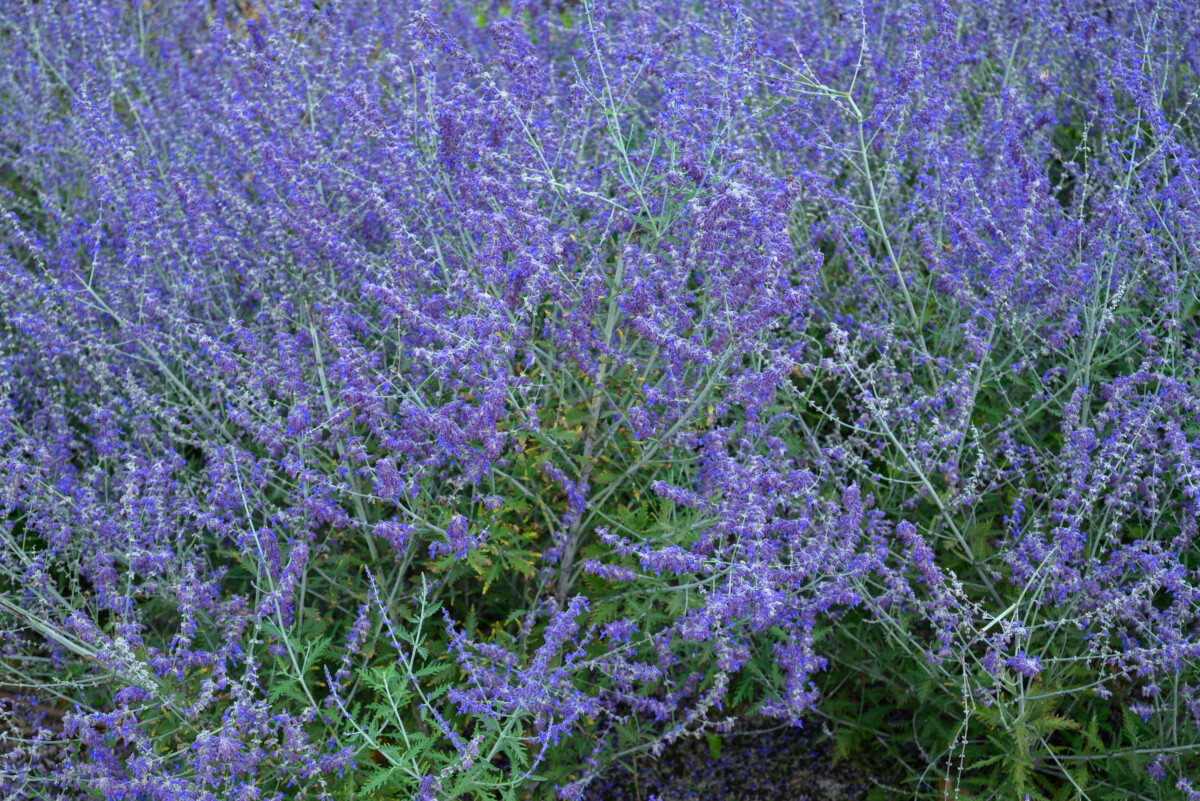 To bloom fully, Russian sage needs full sun.
Russian sage prefers a well-drained spot in your garden and doesn’t like soggy feet. If you are planting a starter plant, like me, it is very important to water it regularly until it becomes established. You’ll first devote your energy to growing your deeply nutritious taproot, so don’t be disappointed if it takes you a few months to feel comfortable in your garden. Once that’s done, you’re in for a real treat.
Perovskia can withstand alkaline conditions, saline soils and drought, making it suitable for a wide range of garden microclimates, from coastal to desert.
4. Russian sage belongs to pollinating gardens.
Think about that long bloom. Yes, they are a treat for bees, butterflies and hummingbirds. The individual flowers on each flower stalk are quite small, but it is their large mass and strong fragrance that primarily attract insects.
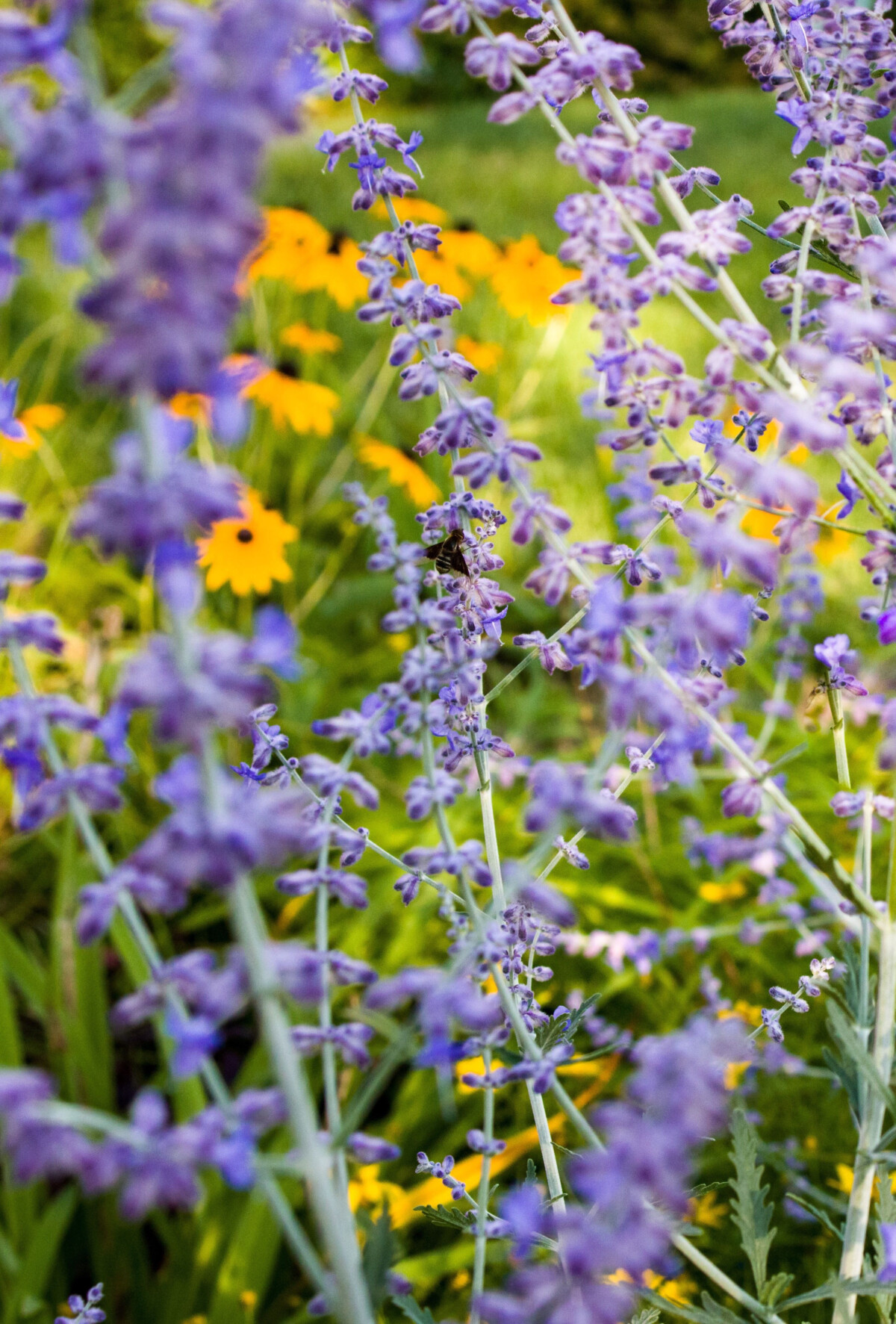 Pollinators love perovskia.
5. Russian sage is resistant to beasts.
Since we’re talking about attracting wildlife, here’s the good news. Russian sage is not a favorite of deer, squirrels, rabbits or other hungry creatures. The strong smell and taste of perovskia foliage means it won’t be very bothersome to critters in the neighborhood.
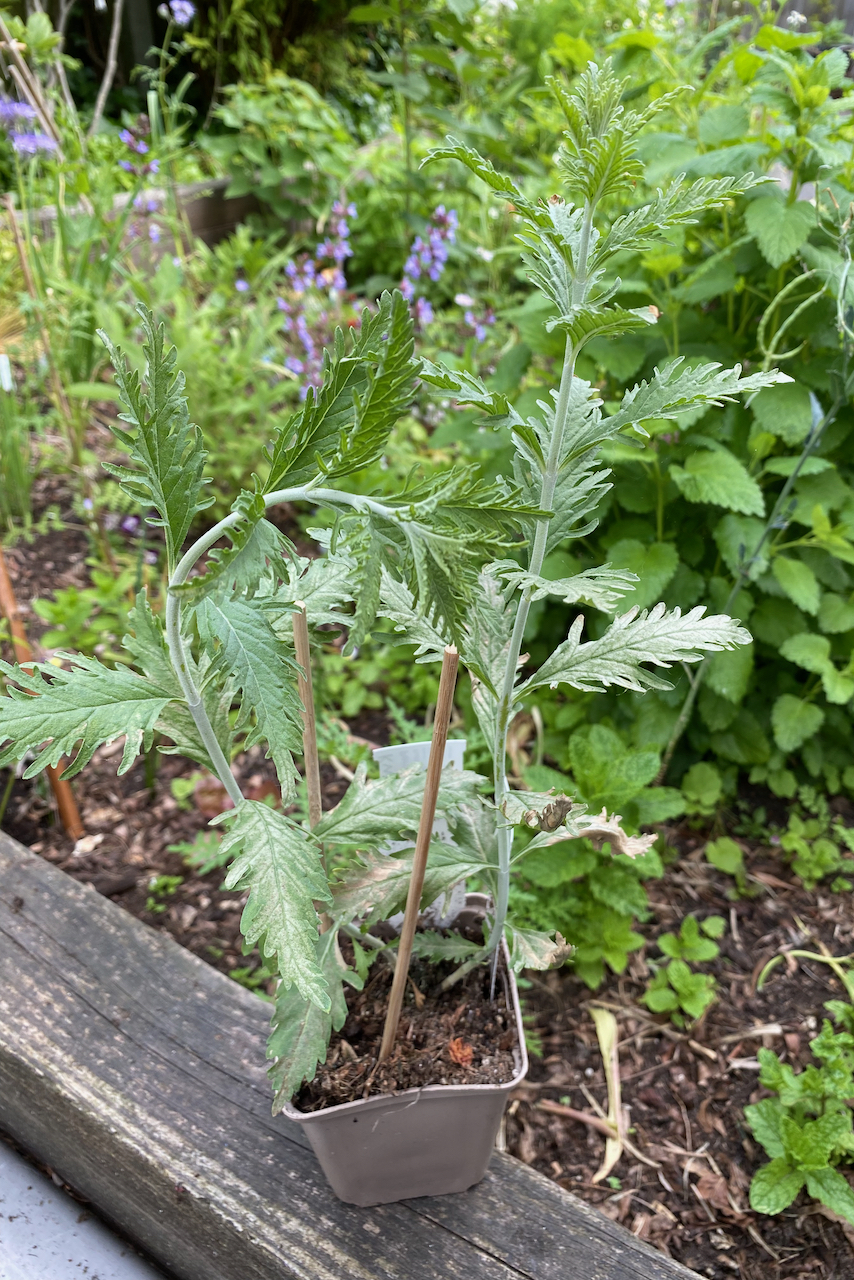 Plant Russian sage next to vulnerable plants that critters like to nibble on.
If you plant it en masse, you can even use it to keep unwanted snacks away from your tastier plants.
6. You can propagate Russian sage from softwood cuttings.
I’ve already mentioned that starting perovskia from seed can be an exercise in patience and frustration. Also, because of its woody, lavender-like stems, Russian sage is not a good candidate for root division.
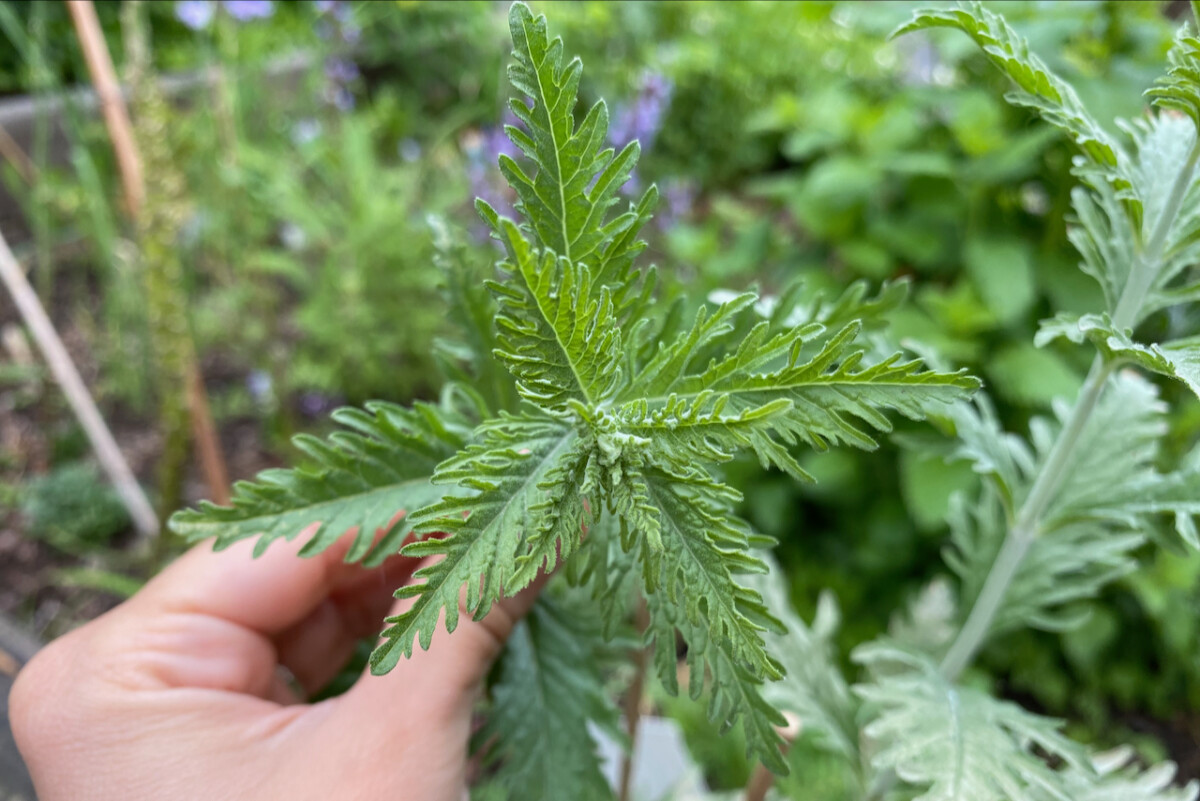 You can take softwood cuttings from non-flowering stems in late spring and early summer.
But you don’t have to buy it over and over again either. Once you’ve grown Russian sage in your garden, you can propagate it by taking softwood cuttings in late spring and early summer.
I’ve written a simple guide on how to take softwood cuttings, including all the aftercare you need to do to root them successfully.
7. Russian sage is perfect for living and cutting arrangements.
An accent plant is one that brings out the best in all of its neighbors. A bit like Mr. Rogers of plants, if you will. This is the Russian way for you. You can plant it at the back of the border to act as a canvas for any perennials you are “painting” with. If you choose smaller varieties (more on that later), you can use it for the border or as a filler between taller plants.
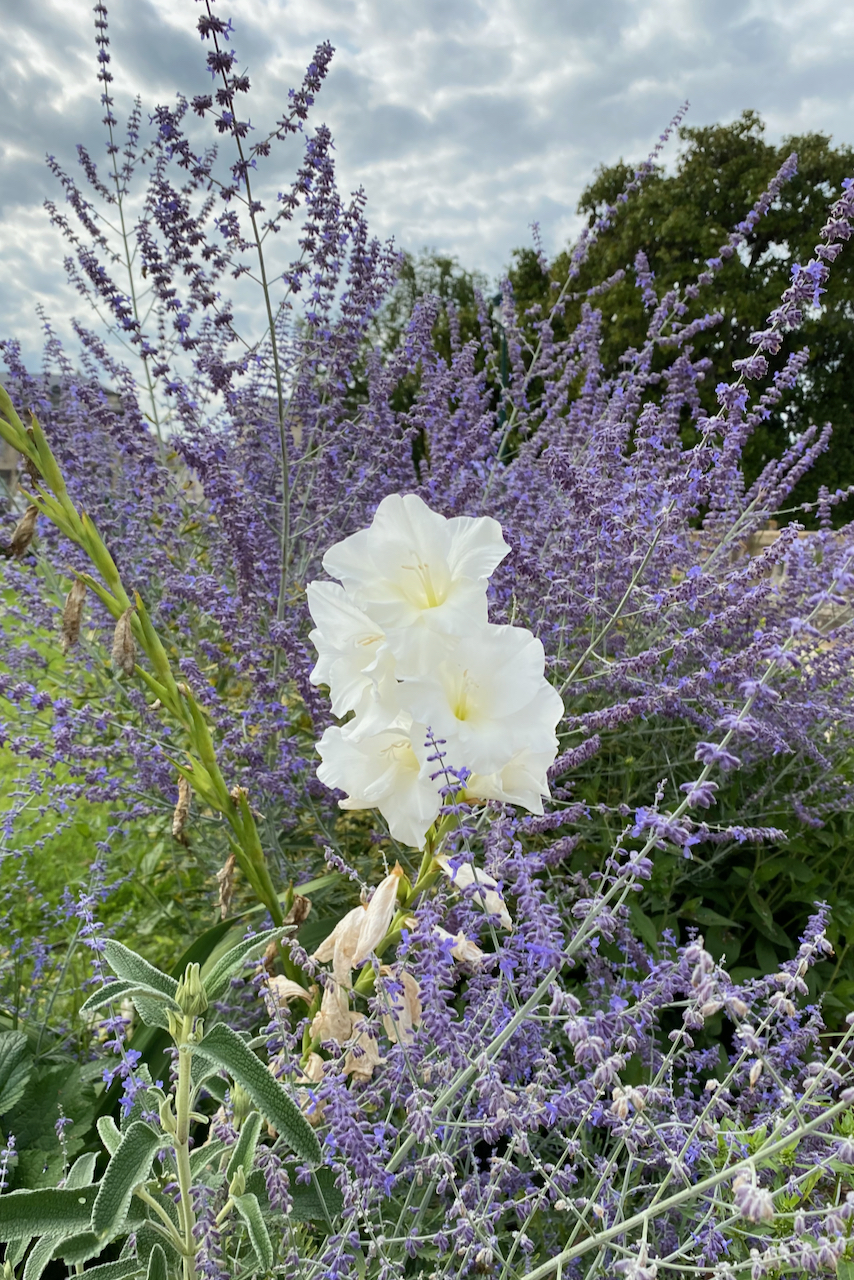 Perovskia does well at the back of the border, alongside other tall plants like gladioli and verbena bonariensis.
You can also plant perovskia on plant islands, for example, to visually break up a large lawn.
Due to its muted shades of blue, Russian sage contrasts well with brighter colored plants like black-eyed Susan, coneflower or roses. It can also cohabit with large gladioli and Japanese anemones at the bottom of the border.
Perovskia will have the same full effect in bouquets and table settings. It is a long lasting cut flower, but once it is past its peak you can turn it into a beautiful dried flower.
8. You don’t need to fertilize with Russian sage.
As further proof of how low-maintenance this perennial is, here’s some more good news. Russian sage does not need fertilizer. In fact, over-fertilizing can damage the root system just as much as over-watering.
But a layer of fresh compost each spring will help keep the plant healthy for years to come. Like a layer of mulch in the fall.
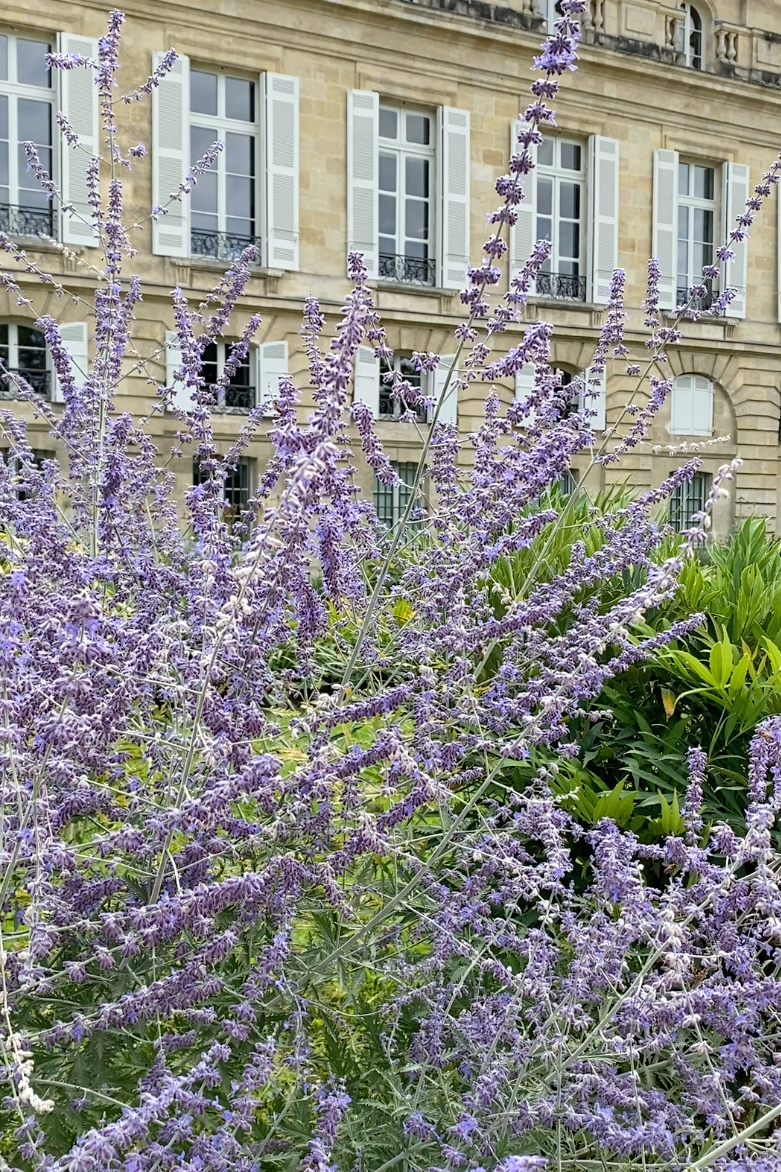 If your perovskia isn’t flowering, adding fertilizer isn’t the answer. You should move the plant to more sun.
If you are growing smaller cultivars of Russian sage in containers, it is best to change your potting soil every year. If this is too much trouble for you, removing the top layer of soil and adding fresh compost may be enough to keep the perovskia blooming profusely.
And speaking of flowering, if your Russian sage doesn’t seem very inclined to reach its full flowering potential, fertilizer isn’t the answer. Chances are this perennial is not getting enough sun. Wait until late fall, then transplant your Russian sage to a sunnier location. You can do this up to a month before the first frost of the season. Whatever you do, avoid transplanting your perovskia in the height of summer.
9. Russian sage is one of those perennials that is pruned only in the spring.
Russian sage is a deciduous perennial plant. This means that it loses most of its silvery-green foliage when temperatures drop in the fall. But the silver stems and graceful seed heads retain their appeal. This makes it the perfect perennial to decorate your winter garden. Leaving the stems dry in place also has the added benefit of acting as insulation and mulch for the crown of the plant.
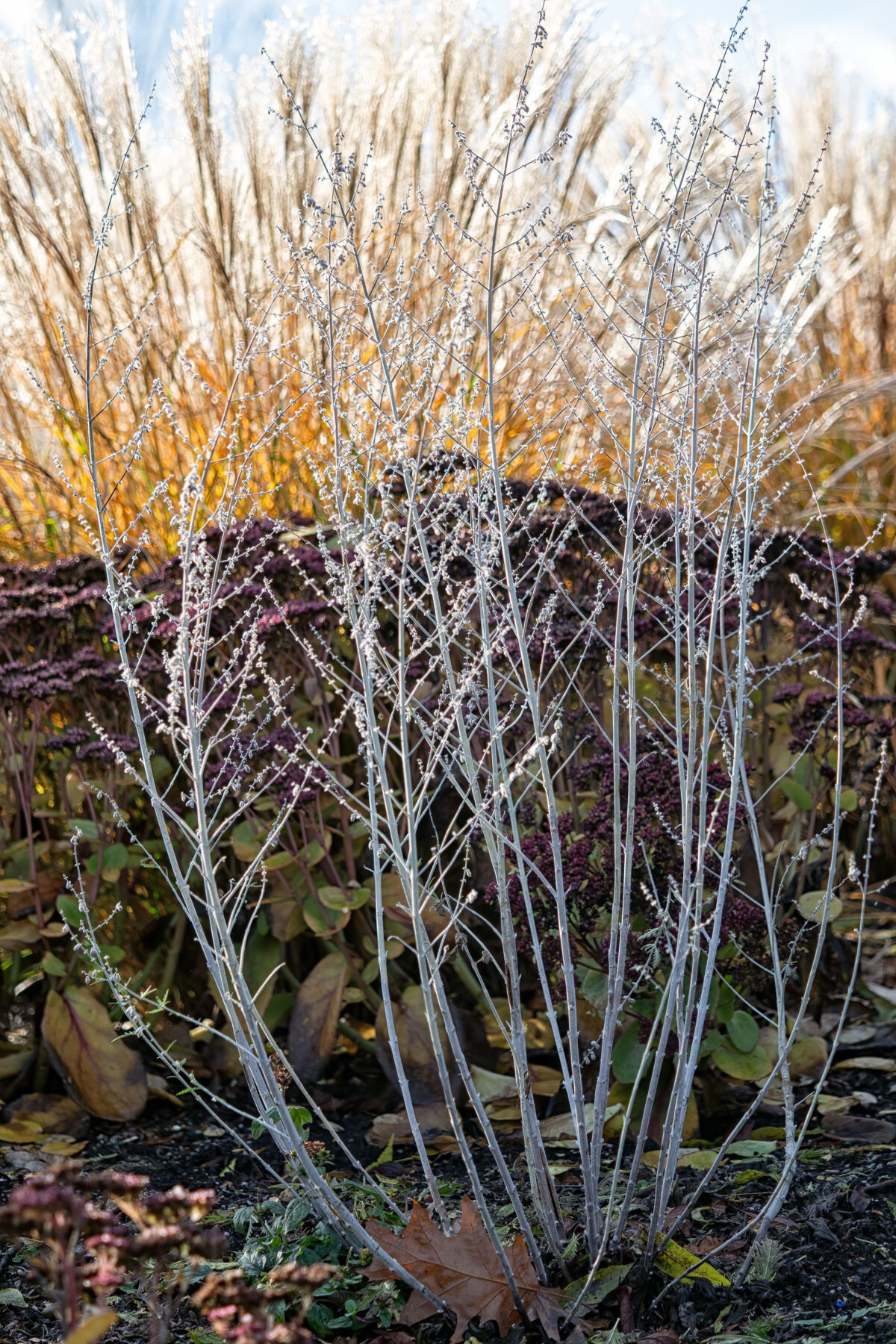 Russian sage retains its silvery tones in the winter garden.
Once spring arrives, it’s time to make room for new growth. This is when you prune the dry material down to about four inches from the ground. The more you prune it, the more abundantly it will bloom. But if you see new shoots sprouting, protect them by cutting off the dead material just above them.
10. There is a Russian sage cultivar for every type of garden.
Unlike other colorful perennials, perovskia cultivars only come in shades of blue or lavender. But there are several types to choose from. And if you’re not a big fan of tall plants, you can be sure there are smaller Russian sage cultivars.
 Perovskia ‘Blue Spire’ serves as a backdrop to a sea of Black-eyed Susans
‘the blue striker’ is a popular award-winning variety (Royal Horticultural Society Award of Garden Merit) reaching 1.5 meters in full sun.
‘little forward’ this is the much shorter version, measuring just 60cm long.
‘Cowboy and lace’ reaches a height of 32 in (81 cm) with a more compact appearance due to the spacing of the flowers.
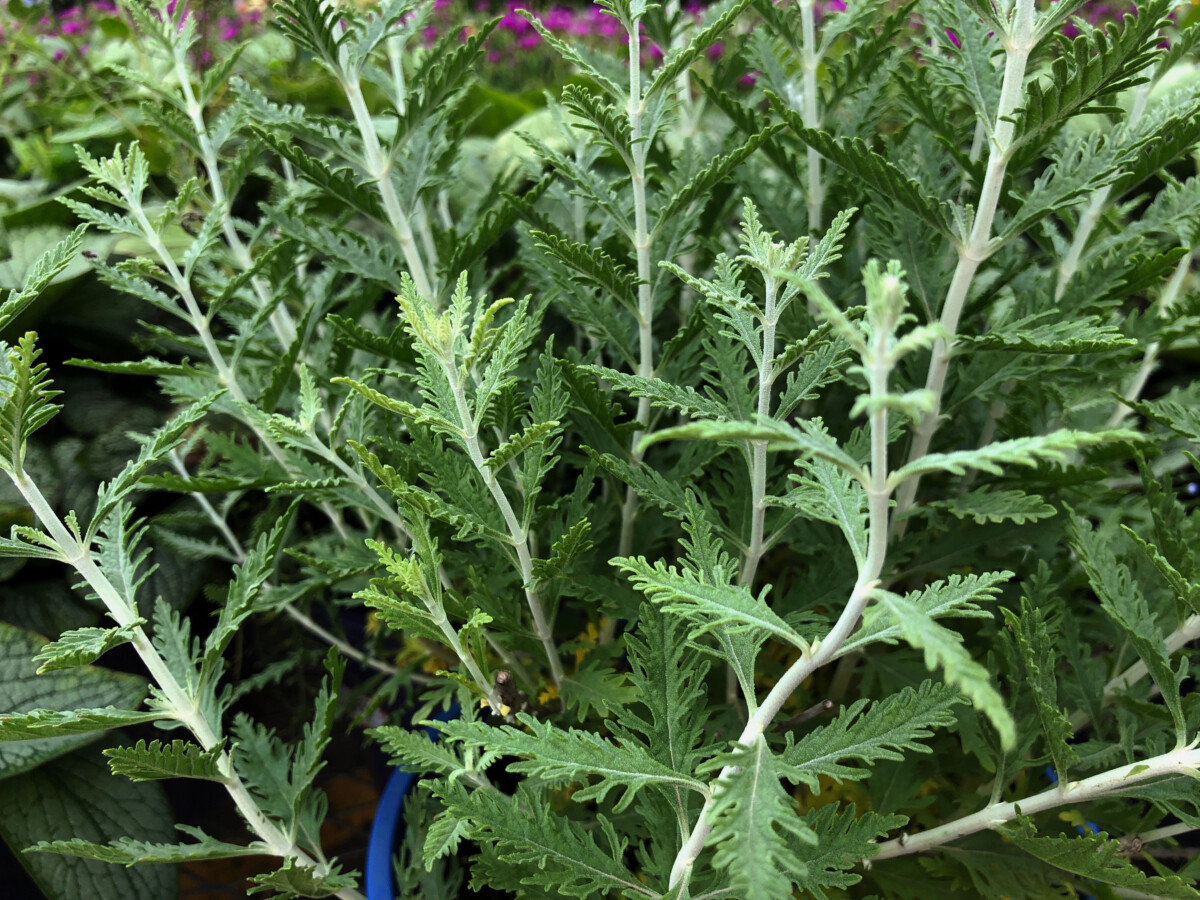 Some compact Russian sage cultivars are suitable for containers.
‘Peek-a-Blue’ It is an exceptionally long flowering plant with a compact habit. It can grow to around 23-29 inches (60-75 cm)
‘blue steel’ It has light blue flowers and a hazy, romantic look.
“Rocket Man” It is a medium-sized Russian sage cultivar with strong, upright stems and purple flowers.
‘blue set’ it is a new cultivar that stays smaller (about 24 inches tall) and blooms earlier than typical Russian sage. Its woody stems will keep it from bursting, making it suitable for pots.
Now that you know all about Russian sage and how easy it is to grow, how would you incorporate it into your garden?