
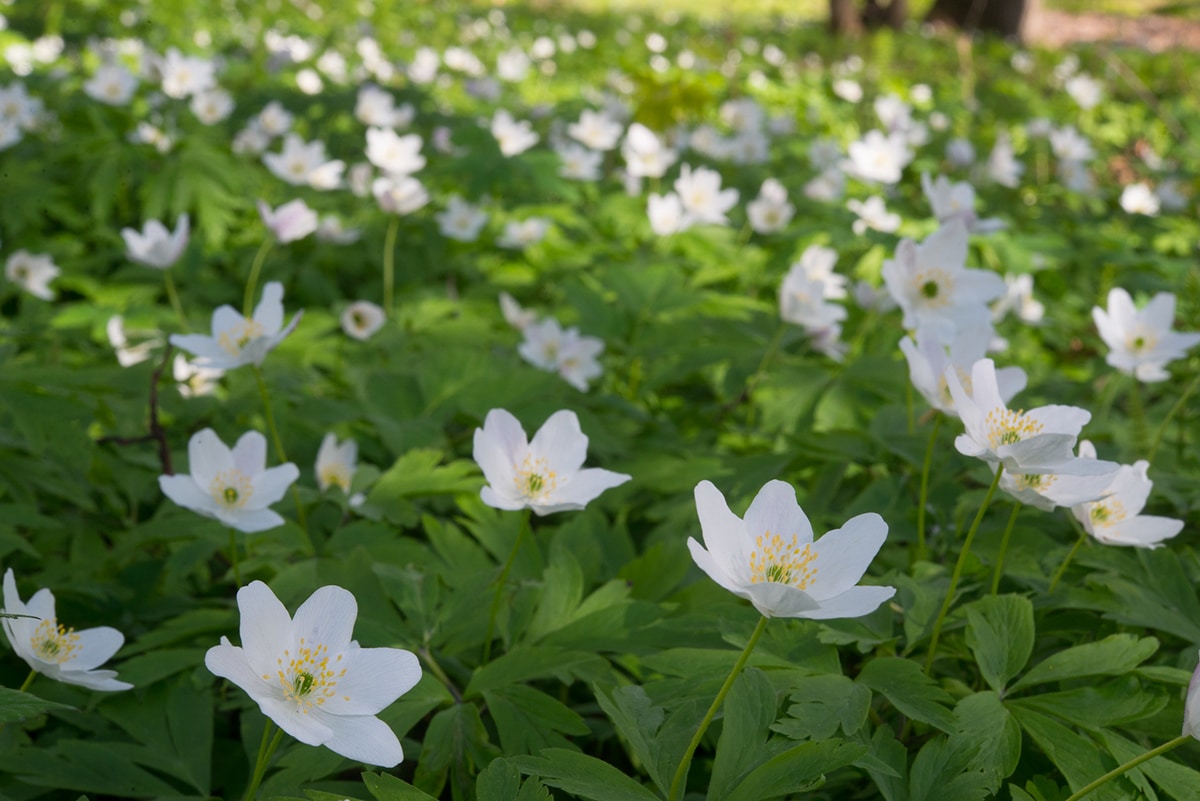
If you are one of those people who like to walk in the woods, you have surely seen on one occasion beautiful white flowers growing on the ground between the trees. It is usually quite showy as there are not many flowering vegetables growing in such low light shaded by stately trees and shrubs. It is the herb called anemone nemorosawhich covers the undergrowth with a beautiful flowery green. It is very beautiful, but also very toxic, so its sale to the public is strictly prohibited.
Does this vegetable catch your eye? In that case, I recommend that you keep reading. In this post, we will talk about the anemone nemorosa. we will explain what exactly is this plant, how is it, what are its properties and more interesting curiosities. I hope this information is of interest to you!
What is the anemone nemorosa?
There anemone nemorosaalso known as nemorosa anemoidswood anemone, wood anemone, meadow anemone, wind flower, England button, fox scent, nemorosa and white buttercup, is a perennial herb belonging to the genus anemonewhich in turn is part of the family ranunculaceae. Normally it blooms in early spring and can be found in the undergrowth, i.e. on the ground in wooded areas. It was described by Swedish naturalist Carlos Linneo (Carl Von Linné), who included this vegetable in his book “Plantarum species», published in the year 1753.
As we have already seen, this pretty flower has many names, but its scientific name comes from Greek. The term “anemosmeans “wind” and “anemonecould be translated as “easily moved by the winds”. According to an ancient legend, the flowers of this plant open only when the wind blows. Moreover, the Greeks associated these plants with the winds, which in turn announced the beginning of spring. The name of the species, “nemorosa“, has its origin in Latin and translates as “of the forests”, due to its natural habitat. Everything seems to indicate that this flower was grown as an ornamental plant in Roman gardens. However, in some European countries, farmers regard the forest anemone as a bad omen. In China, it is also called the flower of death.
Description of the wood anemone
We already know a little more about anemone nemorosabut what does it look like? Let’s see: It is a herbaceous plant that is usually between five and fifteen centimeters high. During the time when the plant does not develop its aerial habit, it spreads its roots like underground rhizomes. These grow very quickly, so it is a fast growing vegetable if conditions are right. Therefore, we can see that this plant covers a large part of the forest floor.
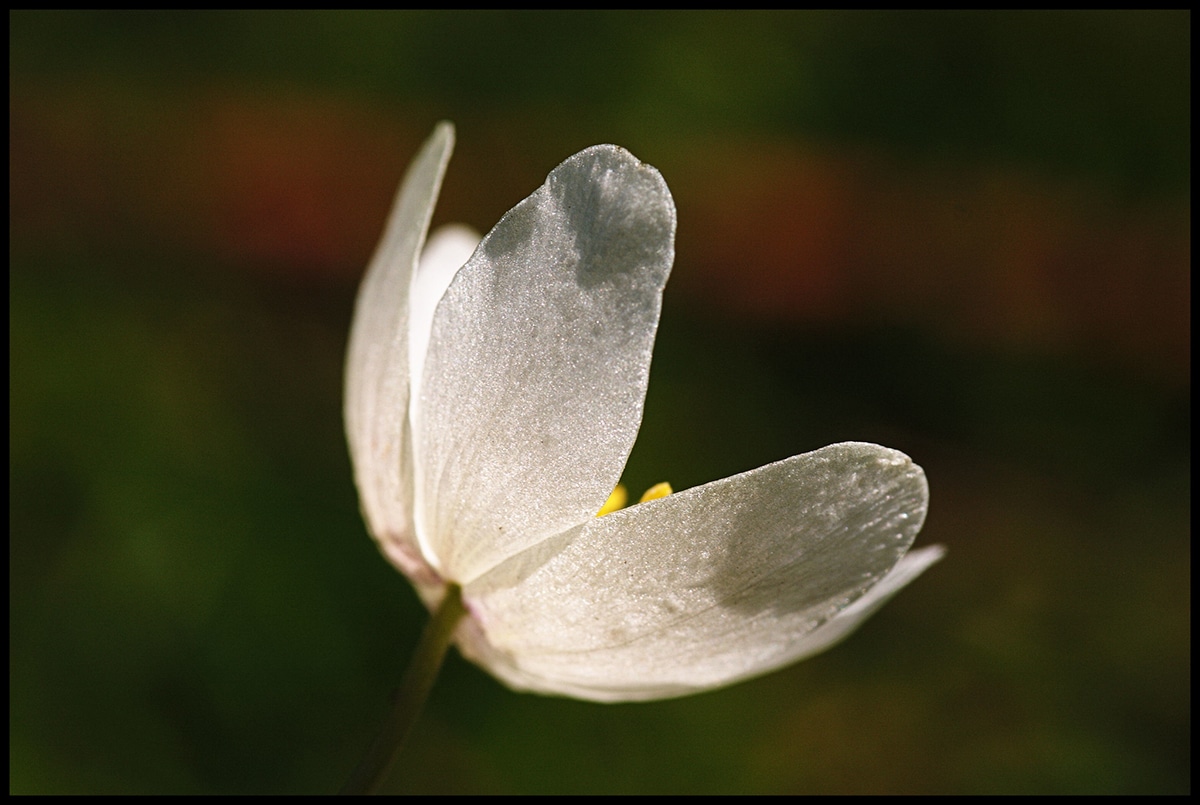
As for the flowers of this plant, they usually have a diameter of about two centimeters. They have about five to seven segment-like petals or tepals. In nature, These flowers are usually white. but on some occasions they can also be blue, pink or lilac. Also, they usually have a darker tone on the underside. It should be noted that they have practically no scents and nectar, since they do not depend on insects for reproduction.
Properties and curiosities ofanemone nemorosa

Now that we know more about the anemone nemorosaLet’s see what its properties are. Despite being poisonous, it is used to make medicines and cosmetics. It is normally used as an antibacterial, rubefacient, antitussive and vesicant. Topically, it is used to treat rheumatic diseases, that is, those related to the musculoskeletal system (ligaments, tendons, bones, muscles and joints). Since it is a poisonous plant for humans, it is always used outdoors. Like other anemones, the forest anemone has active ingredients called anemonin and protoanemonin, which is the poisonous component of this plant. With 200 grams of these active ingredients, an animal weighing around ten kilos could be killed.
The fresh grass of anemone nemorosa Like the essential oil made from them, they have a high percentage of protoanemonin lactone, which we have already discussed above, which is very toxic. If consumed orally, it can cause convulsions and even death. If applied externally, it can lead to gangrene, skin irritation and inflammation. It is possible to dry the protoanemone to transform it into isoanemonic acid and anemonine, which are less toxic substances.
Given this information, it is not surprising that the public sale of wood anemone is prohibited, or at least restricted depending on the region. Given its high toxicity, the public sale of the same plant or its preparations is not allowed. The use is limited only to the preparation of certain medicines, official preparations, master formulas and certain homeopathic strains, as long as their use is subject to medical supervision and prescription.
In the world of cosmetics this plant is used make a vinegar prepared with leaves, similar to mustard. In this way, it performs the function of rubefacient, that is, it causes redness and irritation of the skin, reaching the point of relieving the pain of certain musculoskeletal conditions.
As a curious fact about the forest anemone, it should be noted that It is the emblematic flower of the Gothenburg Botanical Garden, which is in Sweden. There we can find quite extensive meadows of this vegetable in the wooded areas of the park. Definitely worth visiting this place if we are traveling in the area.
Like many other plants and even animals, the anemone nemorosa This shows us that beauty, on certain occasions, can also be dangerous, even if we do not expect it. What do you think of this herbaceous plant? You can leave us your opinion in the comments.