
Some of the links in the post are affiliate links and I receive a commission for purchases made through some of the links in the post.
If you have ever been to South Africa, and the Transvaal in particular you saw gerberas.
They are grown for their bright and colorful daisies and you can find them in a variety of sizes and colors.
Gerberas are available in a variety of colors, salmon, pink, yellow, white, scarlet, dark red and orange, and can measure up to 5 inches in diameter.
You can grow gerberas yourself from seeds, seedlings, or by dividing clumps.
Of course, growing from seed is by far the cheapest way, you can even find them in packets at most garden centers.
If you choose to grow gerberas by the seed method, be sure to use them as soon as you open the package or they will go dormant and not germinate.
The easiest way to propagate gerberas is to buy seedlings or order a piece of plant from a friend’s garden.
This way you will know which type you are getting. You can lift and divide them in the spring and try to bury them immediately.
Sometimes it can feel like the heads and flowers are too heavy and the daisies seem to be wilting, but with regular maintenance you can keep your gerbera daisy from wilting and standing upright.
Here are a few things about gerberas you might not know
- They have a long vase life, longer than many other heart flowers.
- The largest can reach up to 7 inches wide.
- Hybrid varieties are cloned by tissue culture to produce long-lasting flowers that are less sensitive to light and therefore remain open in the dark, unlike most other daisies which close at dusk.
So why is your Gerbera Daisy wilting?
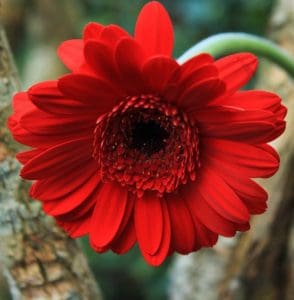 One of the first things to think about when you see your gerbera dying is diet and nutritional stress.
For gerberas kept indoors, it is best to place them in a sunnier location, or at least near a sunny window.
It can also improve irrigation conditions. Too much and too little water will cause the gerbera to topple over.
Gerberas don’t do well when they have to compete for nutrients, and when they have to fight for food, they tend to swoop.
If your gerberas are too close to other plants, you should consider moving them further away.
You may also be interested in: Which Flowers Bloom Only Once a Year and Once Every 100 Years
How do you keep your Gerbera Daisy from wilting?
If your gerbera is potted, consider watering around the roots first. Gerberas don’t like wet roots, they don’t like water in the root ball.
Potted gerberas prefer bottom feeding rather than pouring water over the crown.
Gerberas also prefer morning sun and will wilt in heat above 70 degrees F. If temperatures exceed 70 degrees F, they tend to wilt.
Humidity
Check daily to see if your gerbera is damp. Although they don’t like the root ball wet, they do need watering, so be sure to feed them when the soil feels dry.
If you water regularly, your gerbera will wilt less.
Pay
A good quality universal fertilizer is suitable for your daisy and you should feed it regularly. Gerberas in pots require more nutrition than those in the ground.
Cut off those withered heads
Removing the drooping heads will allow more energy to go to the remaining flowers and light them up.
Cut faded flowers and leaves down to the base of the stem with a clean set of hand pruners.
chop wood
A layer of organic matter 2 inches above the soil around the gerbera will help keep the soil moist and prevent wilting.
Mulch also prevents weeds around plants and improves soil quality for gerberas.
You can cover your plant with grass clippings, bark, wood chips, and any organic matter.
replant
If your gerbera is wilting from overwatering and its roots are rotting, you may be able to save it by repotting it.
Look at the roots and remove any rotten areas. Transplant the plant and water sparingly. You may be lucky enough to save the plant this way.
For cut plants
- Your garden center can sell you packets of cut flower food that will prevent your gerbera from wilting.
- Mix flower food with 1 liter of warm (not hot) water.
- Using sterile scissors, cut the bottom of the stem at a 45 degree angle and place it in the water of the vase.
- There should only be about an inch of water in the vase so that the ends of the stems are submerged.
- Place the vase in a cool room with temperatures between 32 and 35 degrees F overnight.
- Move to the desired location the next day.
Why do gerbera daisy leaves turn brown?
Although it doesn’t seem to hurt the plant at all, it does look neglected and not as pretty as it looks.
The most common reason gerbera leaves appear to turn brown is because water has covered them when watering the plant.
Gerberas don’t like their leaves getting wet, so it’s best to water them from below to avoid splashing the leaves.
Another reason for brown leaves is if you overwater your plant. This is often the cause of mildew and brown spots on the leaves.
When we think of the origin of gerberas, we see that they come from the Transvaal in South Africa.
The climate is mild to moderate (I knew that when I went to school there. I’ve only seen snow once in my 17 years of living there!)
Gerberas can be finicky about the amount of water they get and don’t like being sprayed by the garden hose while you water the rest of the garden.
It is better to leave these plants until the soil is slightly dry before watering, rather than keeping the soil moist, which prevents oxygen from reaching the roots.
If you like this article, check out our article on crafting Marigolds attract bees, wasps, butterflies and snails.
How do you keep your gerbera leaves from turning brown?
 It is important that you do not water often and deeply. My mom always suggested watering until the leaves start to wilt, then soaking them deeply.
If you keep your gerberas in pots, it is important that the pots have good drainage, so that the roots do not get wet. This causes root rot and can lead to the death of the plant.
Brown leaves, caused by fungi, should be removed and destroyed as soon as possible.
If you want the plant to grow at its best, you should fertilize it monthly during the growing season. Immediately remove dead and discolored flowers.
In spring and summer, the growing season for gerberas, you need to feed them regularly to keep them looking spectacular.
Pinch out old leaves to make room for new growth.
Also remove any leaves that have fallen off on their own. If you leave them near the plant, there is always a risk that it will go mouldy.
So the points to remember are:
- Do not wet the leaves when watering
- Avoid the sprinkler system that works for the rest of the garden.
- Simply water the base of your gerbera
- Let the soil be nearly dry before watering again.
- Use pots with good drainage.
- Feed regularly during the growing season.
- Immediately discard old and dead leaves.
The best place to plant gerberas?
These plants like to soak up the morning sun and then bask in the afternoon shade.
Be sure to space them out a bit on the ground so air can circulate around them.
Colder climates aren’t what they enjoy, so be prepared to bring them indoors for the winter.
Your gerbera will survive on a sunny windowsill in the house.
Why do you curl gerbera daisy leaves?
The most likely reason for gerbera leaf curl is insect damage. It can also be caused by overuse of herbicides and disease.
Aphids are the pests that thrive on gerberas and these tiny mites suck the juice from the young leaves. Other common pests of gerberas are thrips and whiteflies.
One disease they are prone to is powdery mildew. It starts out as white spots that quickly spread until the entire leaf is covered and it begins to turn gray.
The celery will curl up and eventually wilt and die.
How to prevent gerbera leaves from curling?
Pests can cause eaves to bend. Aphids give your gerbera a yellow and generally diseased appearance, so check for these pests if you notice leaf curling.
To treat your gerbera against pests, you can use a solution of water and insecticidal soap. You can also buy horticultural oil at garden centers.
Powdery mildew causes the leaves of your plant to curl. This is due to long periods of high humidity combined with cloudy skies and moderate temperatures.
Depending on the region where you live, these conditions can occur at the beginning of winter, when the days are still beautiful.
If your potted daisy develops powdery mildew, it’s best to check where it is placed, as conditions may not be ideal.
Also, if you have placed a selection of gerberas close together and one is developing curled leaves, you need to move them away from the others.
Powdery mildew pathogens can spread to others and affect everyone.
Leaves whose curls need to be removed immediately can simply be pinched.
It is not a good idea to wipe the leaves with damp rags as this will remove the tiny hairs on the surface of the leaves and your plant will die.
Final thoughts: how do you keep a gerbera from withering?
These amazing plants are easy to grow and can be planted in pots or directly in the ground, making them extremely versatile and also attractive to use as cut flowers.
With a little maintenance, you can easily keep your gerbera from wilting and have a colorful display for most of the year.
Before you go, here are some more related articles that I encourage you to read below to solve more of your gardening problems:
Is ground coffee good for fig trees?
How and when to prune the Cinquefoil?
5 great plant associations with your Agapanthus