Some of the links in the post are affiliate links and I receive a commission for purchases made through some of the links in the post.
Let’s solve your problems with anthurium leaves, but first let’s learn more about this beautiful flower.
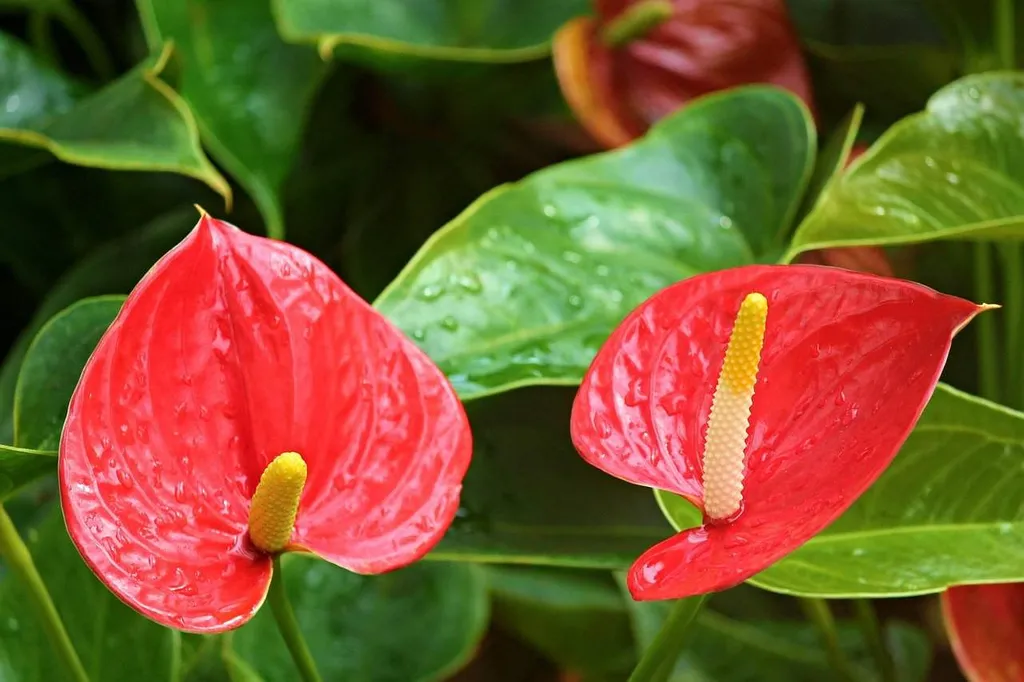
The Anthurium plant (Anthurium andreanum) is commonly known as the flamingo flower due to its bright pink flowers. It is a popular choice in many homes.
The plant is also valued for its unique and beautiful foliage. The heart-shaped leaves with a pattern of fine veins at the top make this plant a feast for the eyes.
They are native to the rainforests of South America and prefer a tropical climate for optimal growth.
It is also one of the easiest plants to care for. But not knowing simple techniques can dramatically affect the health of your plant.
It is better to know what mistakes you can avoid in order to avoid damage to your beloved Anthurium.
This article contains all the essential guidelines for fixing any Anthurium leaf problem.
Why do Anthurium leaves curl up or look limp?
Anthurium leaves are absolutely gorgeous. But when the leaves appear drooping and curling, all the charm and grace of the plant is lost.
Anthurium curling leaves can have several causes. The main problem that causes this dark spectacle is the following:
1) underwater
Leaves usually curl because of this simple mistake. Solving this problem is not at all a challenge.
You just need to set a good watering schedule so that the plant does not dry out frequently.
The solution
Regular and timely watering can prevent future damage. Watering the plant after a week or 10 days is more than enough.
2) Pest control
The most common insects that tend to damage anthurium are nematodes, scale insects and mites.
These insects suck the sap from the system and cause a lot of damage to the health of the plant.
This damage is almost equivalent to insufficient watering of the plant. This causes heavy leaf drop and leaf curl.
The solution
The solution to these anthurium foliage pest infestation problems is to use biological control agents to get rid of these insects.
The introduction of predatory insects as a biological control can also remedy this problem if necessary.
3) Low humidity
Anthurium plants are native to tropical rainforests and thrive in moist conditions. They need around 50-60% humidity to grow well.
When the air becomes dry or less humid, the leaves begin to curl and darken at the edges.
The solution
To solve this problem, simply place a pebble tray filled with water under the pot. Installing a plant humidifier can also be a good option.
To help with humidity, we have an article on: What is the ideal humidity for an anthurium.
How do you prevent your anthurium leaves from turning yellow?
Yellowing leaves are the most common problem that novice gardeners face when caring for their anthurium.
The problems are not that complicated and can be easily solved if the proper precautions are taken for your anthurium leaf. The most common causes of yellowing Anthurium leaves are:
1) Overfertilization
 Indoor plants don’t need as much fertilizer to grow. Likewise, anthurium plants need very little to grow healthily.
If too much fertilizer is used, the nutrients can choke the plant and damage the leaves.
The roots are clogged with an excess of macronutrients and the plant cannot have a balanced diet.
The solution
If you accidentally over-fertilized your Anthurium, you should immediately stop feeding it and dilute the soil with water.
Keep watering the plant regularly and the excess minerals will soon be washed away.
2) Bad sunshine
Anthuriums normally grow as epiphytes in their natural habitat. They generally prefer direct sunlight and do not tolerate full exposure.
Excessive direct light causes the leaves to dry out quickly and turn yellow. However, the same problem can occur if they receive low light.
The solution
In winter, it is advisable to place them near the windows so that enough light reaches them.
In summer, they can be placed in any room with sufficient sunlight. Just make sure the rays don’t hit the leaves directly.
3) excess water
Overwatering is the most common mistake made by novice hobbyists.
When yellowing begins to appear, novice gardeners begin to overwater due to over-maintenance of the plant.
This makes matters worse and eventually leads to rotting of the roots of the plant.
The solution
This is easily remedied by providing a good watering schedule. Try not to overwater while keeping the soil moist.
Finding a balance is difficult at first, but over time you will definitely master it.
4) Chlorosis
Chlorosis is caused by the unavailability of nutrients such as iron and magnesium to the plant.
Iron is an essential component in the production of chlorophyll. Without it, the leaves cannot produce this pigment and turn yellow.
The solution
To treat this problem, iron chelates and iron supplements should be given. The yellowing disappears with this treatment.
5) Fungal attacks
Fungal attacks such as Fusarium wilt can also cause the leaves to turn yellow or brown. The most common reason for the development of fungal diseases is excess water.
The roots can also become involved and become too fragile to support the plant.
The solution
The solution to the problem is to remove the infected leaves with sterilized scissors.
Roots should also be cut to remove roots which can lead to further spread of disease.
Moving the plant to a new pot with new potting soil will allow it to recover from this damage.
6) Aging
It can be completely normal for plant leaves to turn yellow when they get too old.
Yellow leaves are usually present near the bottom of the plant for this reason. Older leaves eventually die off to allow new leaves to bloom.
The solution
You can speed up this process by removing those unsightly leaves with sterilized scissors. This will allow the plant to push more resources towards healthy growth.
If you like this article, check out our article on Why does your anthurium have holes in its leaves?
How are there brown spots on your anthurium?
 Brown spots can sometimes appear on your anthurium plant. The most common cause of this problem is a bacterial infection.
This disease is called leaf blight or leaf spot. There are visible brown spots on the surface of the leaves, and the edges are also yellowish.
Once this bacterial growth begins, it can spread systemically and cause damage to the entire plant.
Beautiful flamingo flowers also succumb to disease and lose their color.
Therapy
The most common factor causing leaf scorch is the wetness of the plant’s leaves. It is better to water only the soil, and not to bathe the leaves.
Keeping the leaves dry is a priority when dealing with this problem.
Infected leaves should be picked by hand to prevent the spread of the bacteria.
We have an article about it. Why is your Anthurium bud turning brown?
Why do Anthurium leaves split?
Leaf splitting is a common reaction of plants when there is not enough moisture for them.
These cracks do not heal and all you can do is cut them. Overwatering plants does not replace the need for moisture in the air.
The solution
As mentioned above, Anthurium plants survive in moist environments. You can use a humidity sensor to measure the current level around the affected plant.
You can then place it where the humidity is optimal for the plant. Alternatively, humidifiers and humidifiers can also be used.
Why does your anthurium have holes in the leaves?
anthurium sheets can have holes for various reasons. The most common are:
1) Mechanical damage
If the plant is treated roughly, it is guaranteed to tear, tear and puncture the leaves.
If the location of the plant is such that it is often disturbed by people, unnecessary force and trauma can cause significant damage to its appearance.
The new blade in particular is quite susceptible to mechanical damage.
To avoid this, place your pot where it is out of the way of humans and animals.
Also, using a heavy pot can prevent the plant from falling over if it sprouts accidentally.
2) insect damage
Insects like scale insects and aphids can be quite troublesome when it comes to this problem. They gnaw the leaves and suck the juices from the tissues.
They tend to attack young leaves because they penetrate easily.
When these leaves grow, the small defects left by the insects then become apparent. The damage is already done and becomes visible after a while.
Resource
It is best to stay away from chemical pesticides as this minor problem can be easily solved with home remedies.
To get rid of these pesky critters, you can spray the plant with diluted soap/detergent.
You can also add other organic materials, such as neem oil or garlic blend, to make the spray more potent. A weekly spray can fix this problem so it never happens again.
Final Thoughts: How Do You Fix Anthurium Leaf Problems?
 Flamingo flowers are a popular choice as a houseplant. Due to its beautiful foliage and colorful flowers, novice gardeners will definitely choose one for their home.
They are quite easy to maintain and do not require as much effort as other plants such as ferns.
A little planning can solve most anthurium leaf problems that can arise when caring for this beautiful plant.
Other than that, knowing all these basic things about the plant will ensure that you don’t run into any problems.
Before you go, here are some more related articles that I encourage you to read below to solve more of your gardening problems:
Anthurium versus Philodendron
What to do with amaryllis bulbs after they bloom?
Anthurium light requirements
About the Author:
Saad Anzar
Saad is an avid gardener and a great lover of plants, animals, photography and people. Currently, his focus is on indoor plant photography and captioning beautiful landscapes. Write and rewrite feature articles on nature and science.