The ground must have all the necessary nutrients for the growth of plants, and a structure that keeps them firm and upright. The structure of ground must ensure enough air and water for roots of the plant, but to have to avoid excess of water through a good pipeline system.
What is a subsoiler mole? The subsoilers which are used to promote soil drainage are called “plows Moleand have straight temples and a shell or ball-shaped element behind the boot.
What does the subsoiler plow do? Main function • Soil cracking breaking up the compacted layers without inverting the profile. They must work at least 10 cm below the layer to be broken. The soil is broken in a V from the bottom of the furrow to the surface.
When to use a subsoiler? The plough subsoiler I also know uses in the construction of drainage tunnels in clay soils with problems of water accumulation in the soil profile. To do this, a mole-like ball attached by a chain is installed on the back of the shoe to achieve the effect of forming drainage tunnels.
What are the types of plows?
The plow It is a widely used agricultural tool in various soil conditions.
- The plow it is probably the oldest tool or tool used in agriculture, also providing a long useful life for the farmer. …
- three differ types: mouldboard, disc and rotary.
What are the disadvantages of the plow?
These are the main plow disadvantages:
- Damage to the existing microflora in the soil is caused. …
- Creation of the plowing crust. …
- Increased number of tillage steps. …
- Greater energy and economic consumption.
How should soils be for good agriculture? – Related issues
What are the parts of a subsoiler?
subsoiler
- subsoiler. …
- Hooking system. …
- Wheel. …
- Chassis or sash. …
- arms or legs…
- Scissors or bars.
How big is a subsoiler?
Their working widths vary from 120cm to 320cm and can be adjusted to get the right working width for your tractor and working area. The working depth of subsoilers It can be 70cm to 85cm.
What is the Subsolar Earth?
Remove the Usually I below the topsoil, or plow deep enough without turning the soil.
What is basement work?
The works of plowing The most common primaries in many parts of Mexico are subsoil and fallow. Subsoiling is the operation that consists of breaking up the soil without turning it over or changing its position up to 80 cm deep. it’s done with a plow basement or subsoil plough.
How is subsoiling done?

The basement or scarified This technique consists of passing a machine over the ground subsoiler 5-point scarifier; work at a depth of 35-40 cm, in addition to covering a width of 1.5-2.0 meters (working width of the equipment).
How much HP per Paratil Spike?
Answering and interpreting that you will be working at a depth of 30cm, the width between the tines would be 45cm, that means about 1.5 times the distance between the tines. And to work at this depth you need 20-25 hp per tooth…if they are at least the commonly sold ones.
What is Ragging?

shred: Since its function is to loosen and level the soil, it should be applied in a direction at 45 degrees to the line of tillage; This prevents the wheels of the tractor from falling simultaneously into the furrows being traveled, which causes sudden movements that affect the comfort of the operator and…
What type of plow is best?
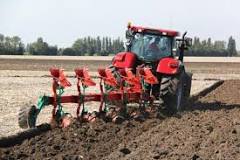
The plow The disc type is also useful for tillage, but unlike the mouldboard, the disc type is better in hard and rocky soils or soils with large remains of roots, because it works according to its weight.
How long does it take to plow one hectare?
working speed I know is between 4 and 9 km/h, with which the pictured plow can plow about one hectare per hour. The force required depends on soil texture, soil moisture, working depth and speed.
How long does it take a tractor to plow one hectare?
Barely a quarter of an hour was enough for the tractor complete the work of hectare (more precisely 14 minutes) thanks to an average working speed of 9.3 km/h.
What are the results of good tillage?

Improved aeration and oxygenation Even though we have already mentioned it in other articles, turning the soil increases the number of macropores in the soil. These are responsible for storing gases, (What oxygen), which the roots of the plants need so that the problems do not appear.
What are the consequences of tilling the soil?
“The plow increases erosion, mineralization and CO2 emissions into the atmosphere,” he explained, and defended a radical change in farming methods, as is already done in the United States.
How does plowing affect the soil?
The tillage of Usually I with traditional tools (plow disc or moldboard), is an agricultural practice that research shows as a possible cause of erosion, compaction, moisture loss and increased production costs when used excessively.
What are the types of subsoilers?
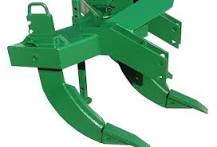
We can divide them into two groups:
- Powered. Alternative arm moved by a system of shafts and gate driven by an oscillatory movement caused by connecting rods.
- Not powered. By rubber blocks, fixed with a tree-shaped bolt.
What features should I consider when selecting a subsoiler?
When buying a subsoiler must be take into account the complexity and power required for finish the job. In the same way there is to assess the ground where it will be used. Knowing this, if you are interested in knowing the price subsoilersget in touch with us and we will help you choose the most suitable one.
What is zero tillage?
It is understood by zero tillage, the planting that is done directly on the ground, without the need to remove it or eliminate the thatch that covers it. The important thing is to remove the weeds. Weed removal can be done before planting or after crop emergence.
What is fallow in agriculture?
This concept assumes rest between sowing and cultivation, an agricultural process to allow the qualities of the soil not to wear out. The rest periods are usually every two or three years, in this way the soil recovers its nutrients and in the next planting it will bear the best fruits.
What is vertical tillage?
The vertical plowing it is a system of guiding principles that maximizes yield by increasing water infiltration, root development and nutrient uptake.
What is the basement and what is it used for?
The work clandestinely It consists of breaking up the earth, crumbling it more or less, to the depths of– down of currents, so of increase air and root infiltration and penetration.
What are the types of tillage?
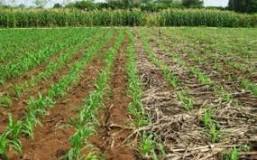
Types of tillage
- Plowing traditional or conventional; operation with cutting of the first 15 and inversion of the Usually I.
- Plowing minimal or eco-friendly; less investment, erosion is avoided, being carried out before planting and with less passage of machinery.
What is the Subsolar in agriculture?

Remove the soil below the topsoil or till deep enough without turning the soil. It consists: With a bulldozer or with a tractor (with a lot of power) three rejones are passed (a part of the tractor) What They cut the plot back and forth.
What is Paratile?
Vertical tillage equipment for loosening deep layers.
What is the agricultural subsoil?
The basement This is the operation that consists of breaking up the soil without turning it over or changing its position up to 80 cm deep. This is done with the basement plow or subsoiler plow. Apply fertilizers, insecticides, etc.
What is a furrower?
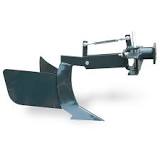
The furrower It is the specific tool for creating furrows in previously worked land, as well as for creating small irrigation canals, small drainage ditches and for supporting row crops.