
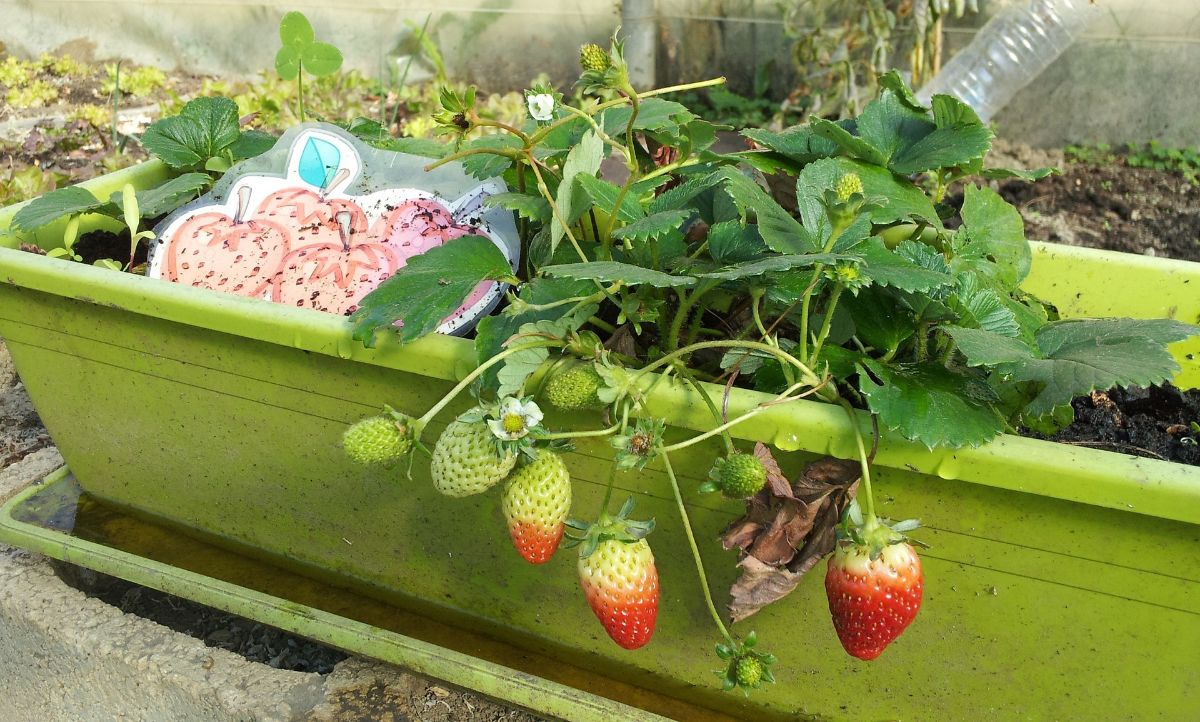
The schools have been running for almost a month now. Children already have to get up early to go to school and learn new skills there. One of them is the animation of the school garden, which more and more schools are beginning to make children aware of the environment and plants.
But, Do you know the activities carried out in a school garden? We researched this and that’s what they normally do.
collect seeds
One of the first activities in the school garden is to collect seeds. It’s not really an action that takes place in the garden (unless there are plants in it and seeds can be obtained but that’s usually very rare).
In reality, what is done is to plan what is going to be planted in order to acquire the seeds.
Now another of the related activities can be that of recover the seeds which, in the previous lesson, were harvested. And it is that it can be an opportunity to teach children how seeds are preserved and stored to be planted at that time.
As for the seeds, those which are of rapid or intermediate growth, in order to the children see progress in the school garden and are happy to know that, thanks to their care, the plants are doing well. In addition, they are chosen to be resistant, and even tolerate a little drought (for the weekend).
Sowing seeds
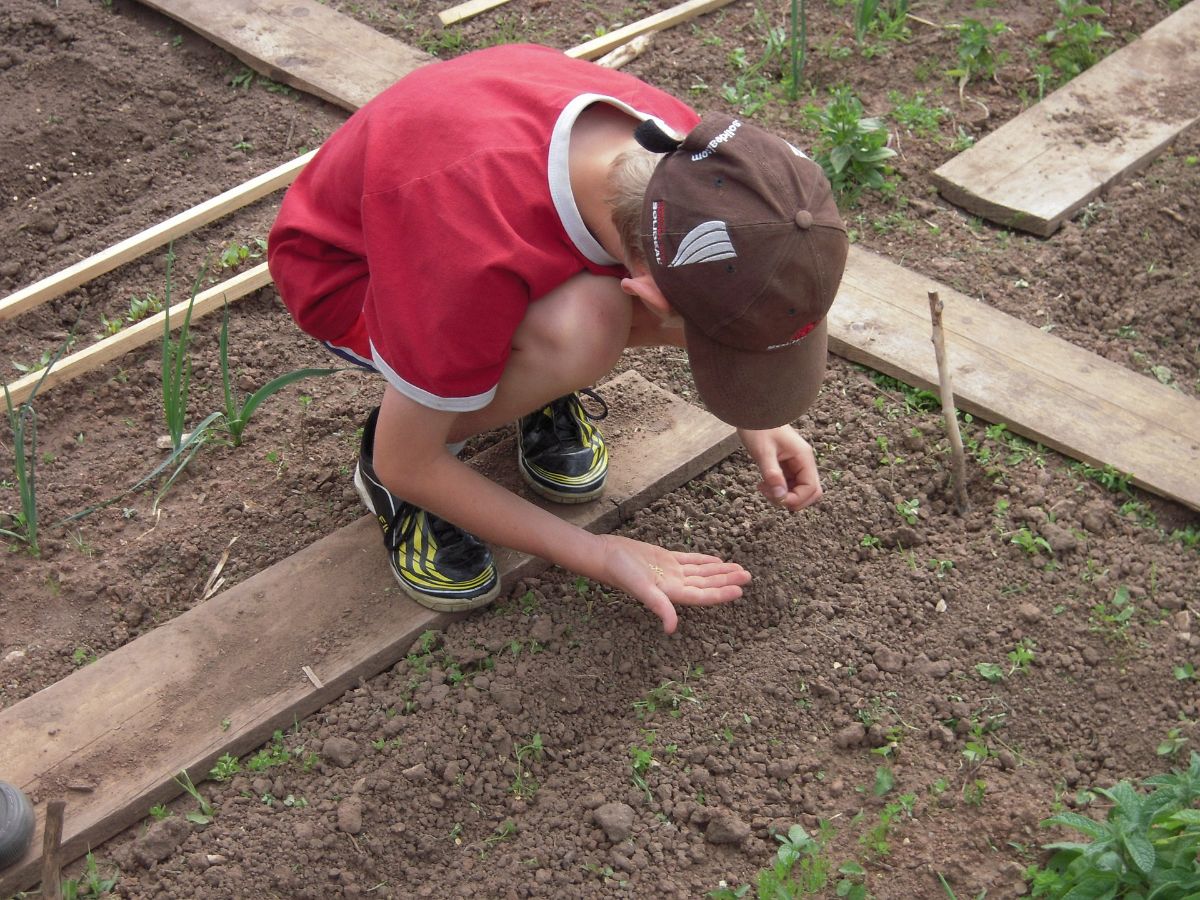
This is perhaps one of the school garden activities that children love the most, especially if they can see the day-to-day development. For this reason, many teachers instead of planting in the garden, they allow them to do it first in transparent jars in order to see how the roots unfold, how the stem grows and the leaves come out, etc.
In addition, it allows later to perform the graft function, who teaches them how delicate they must be with plants.
It is even possible to do both, i.e. plant seeds in jars and also seeds in part of the garden, so they can see how it would go both ways.
water the seeds
Once sown, these seeds must be cared for, otherwise the plant will die. For it, guardians usually give them a course to learn about the plants they have planted and thus know what care they need (in terms of light, irrigation, etc.).
Among the maintenance tasks, the best known will be irrigation. And in this, teachers can teach them different ways of watering plants, either with self-irrigation or by doing it manually themselves, so that they take responsibility for it.
Being a task they may have to do almost every day, it helps create working groups to take care of the garden on a daily basisthus promoting group work.
weeding
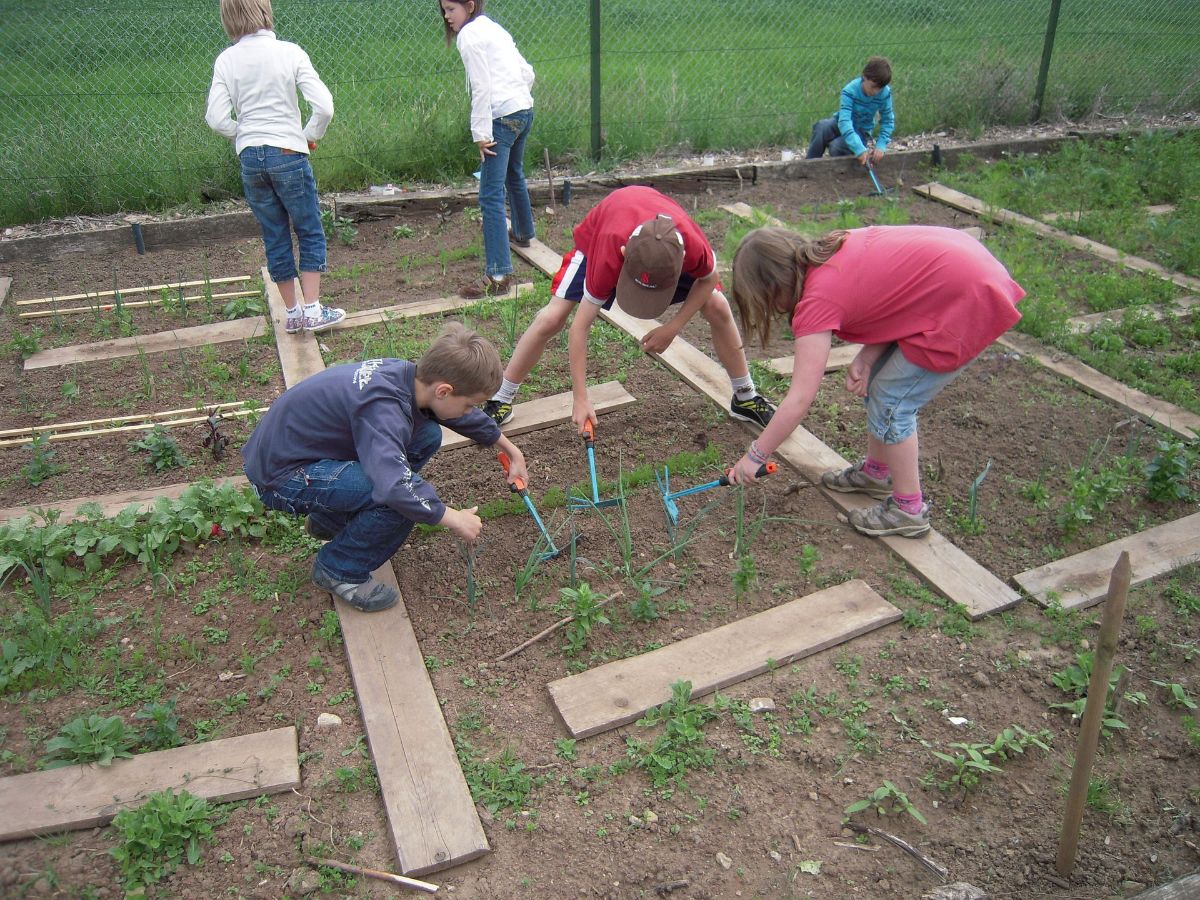
And speaking of this group work, another of the activities to be carried out is that of clean the area of weeds. This can be done in conjunction with irrigation, so the group, when going to the water, should also be aware that they may have to pull weeds that prevent the plant from growing healthily (or with Energy).
Depending on the size of the orchard, You may only need your hands or you may need to use tools to remove these weeds.
Compost
This is not done in all schools, but in those that are, it is a very fun activity for children. Firstly because they are going to do this “energy boost” for the plant, but also because it helps them to discover new smells, to do something with their hands to improve the state of their plants (because yes, they can consider them as their own and that gives them more responsibility).
The fact of making an organic fertilizer allows them to discover different ways to “reuse” certain everyday elements and how it all comes together. Also, since it’s not something they’ll use at first, but will surely do in the spring, they’ll see how everything changes over time until they get the result (so, the patience is encouraged).
A scarecrow
This might be one of the most fun school garden activities you’ll ever have, but it also has an educational component.
On the one hand, they will have fun because they will be able to create a doll that prevents birds from approaching their plants or crops, to be able to enjoy after the fruit of their work. On the other hand, when creating this character, children tend to be creative and like to do something like this because for them it’s like a game.
To harvest
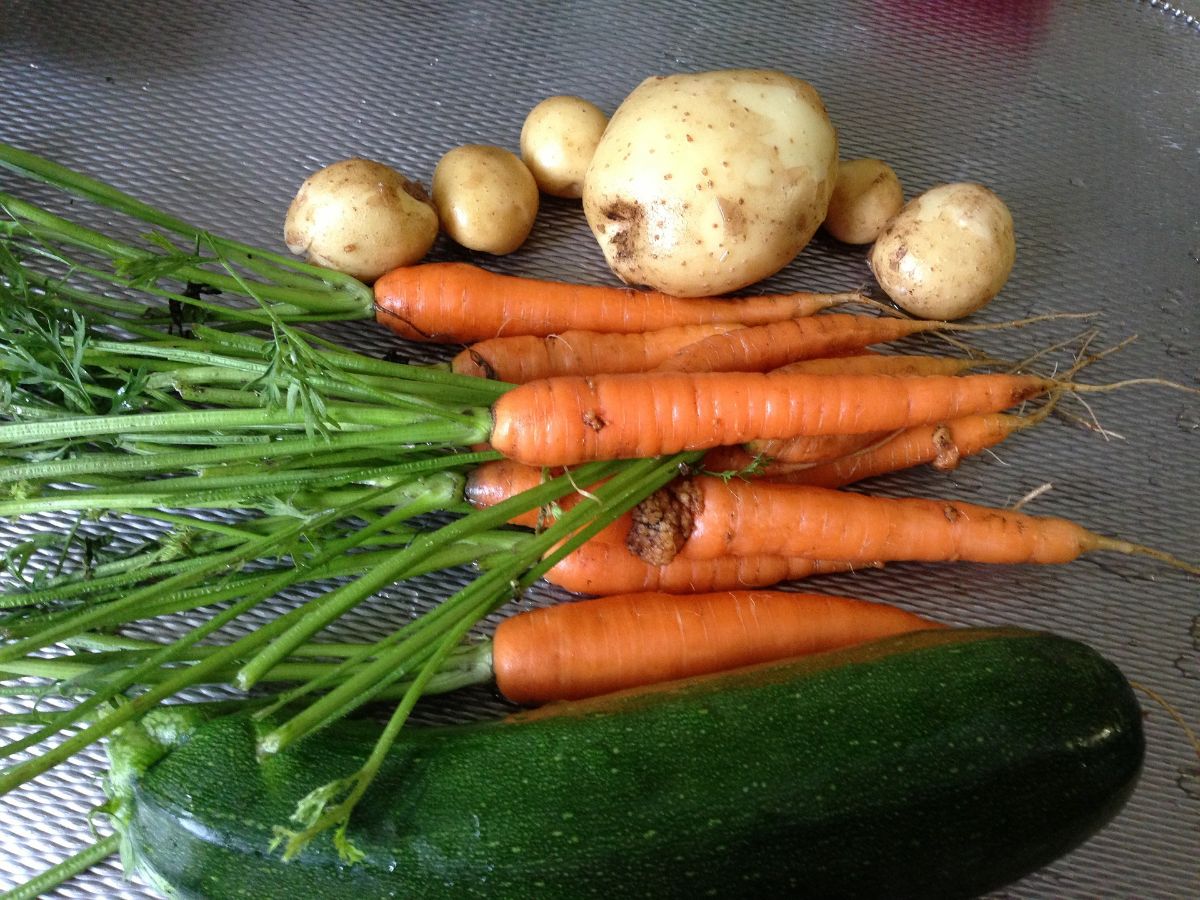
If what has been sown are fruits, it is possible that at the end of the lesson the fruits of the plants can be harvested, with which the children can see how the activities of the school garden have given results. The good thing would be to distribute all these fruits with the class who collaborated in the garden so that they could eat them and enjoy them (if they are not allergic, of course).
Another option in the collection is remove the seeds from these plantswhich will become the seeds that will be planted the following school year so that you don’t have to spend money buying new ones or asking parents for seeds (although it can also help them get involved in the garden).
Besides all the tasks you have in a school garden, there are many more that can be attached this. Some of them can be:
- Garden insect identification workshops: snails, centipedes, ants, earthworms, earwigs…
- Identification of plants.
- Search for leaves or plants. In the sense of using magnifying glasses to take a closer look at the plants and identify the different parts or see what the leaves look like.
- Work related to the plants planted (for example, to know what the care is or how they evolve).
In each school, different school gardening activities are carried out, all that we have said (and others that may arise) is not always realized, so if they have a garden it is safer that they try to teach children different values through care Plant. Does your children’s school have a school garden? What activities do they carry out?