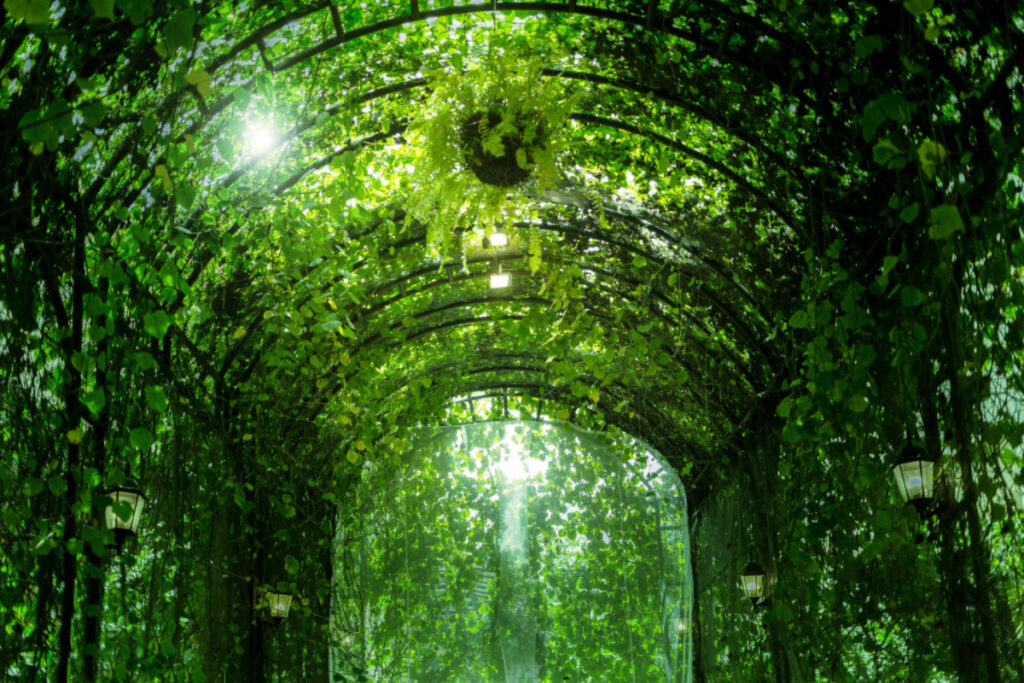
Create extravagant shaded areas with vines and flowering vines.
It’s the season to rest in the shade! Extend your relief by growing shade-loving vines and flowering vines.

sky shadows
The breeze through the leaves, the scent of flowers, the clink of ice in the glass, pure paradise.
Use vertical-inspired, shade-loving vines to define outdoor spaces. Here are more great ways to create an outdoor living room.
For people who live in hot, dry climates, creating shady areas in the garden is a well-rewarded endeavor. These areas are perfect for planting flowering vines and vines that thrive in shade.
Some vines and flowering vines are fast-growing plants that do double duty by providing even more shade!

Grapes and shade-loving vines are perfect for the north or east sides of buildings, especially in hot areas.
Like most plants, the abundant blooms and fall color are often enhanced in sunny locations. The plants on this list are potentially darker than their sunny counterparts, but they shine brighter than most in the shade.
vigorous vines
Vines and vines, like trumpet, tend to like moist soil. In lush climates or perfect conditions, some vines can become too aggressive.
Although we love the vigorous nature of the vines, be sure to choose non-invasive vines in your area.
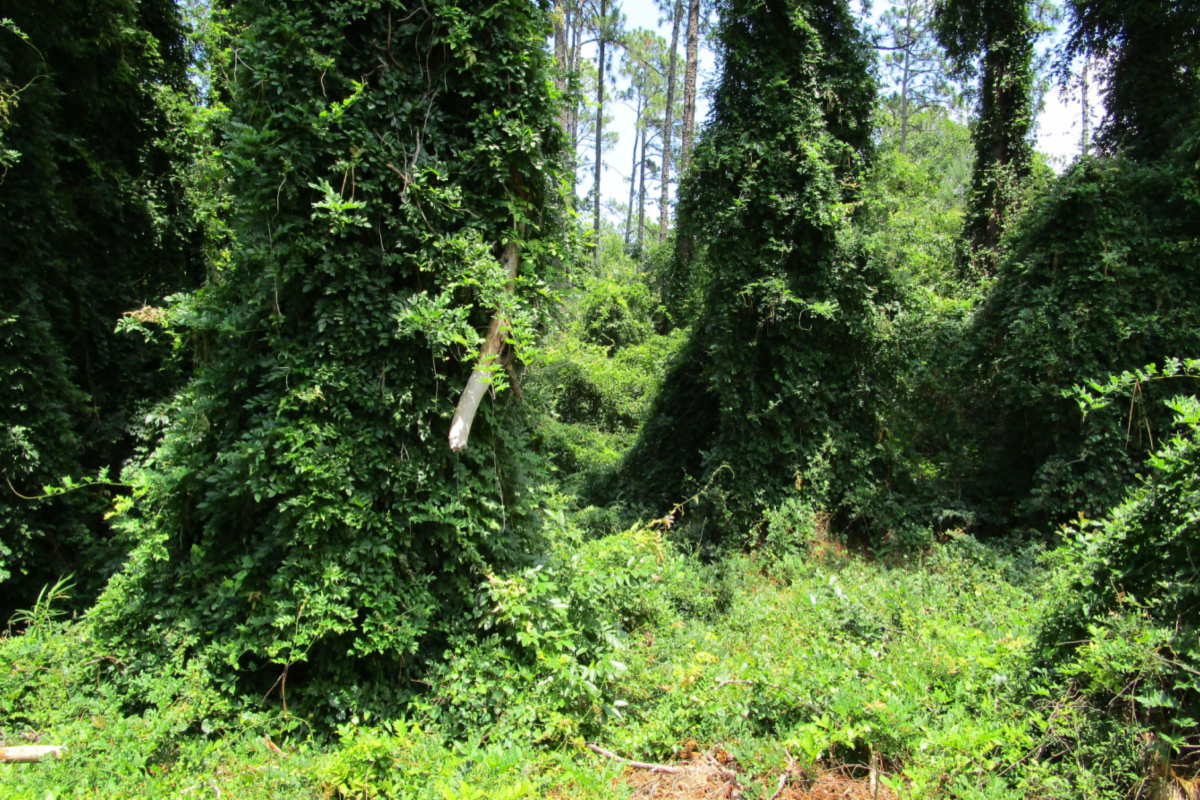
Do you like the look of structures covered in green? Vines like Boston ivy and Virginia creeper can create a long-lasting “living lining” that can actually make your home more efficient.

However, some vigorous vines like English ivy can damage wooden and even brick structures. Keep in mind to plant these vines away from foundations and structures. It may be best to avoid them or choose less aggressive alternatives.
Vigorous growth accumulates in heavy climbers! Provide substantial support for best results.
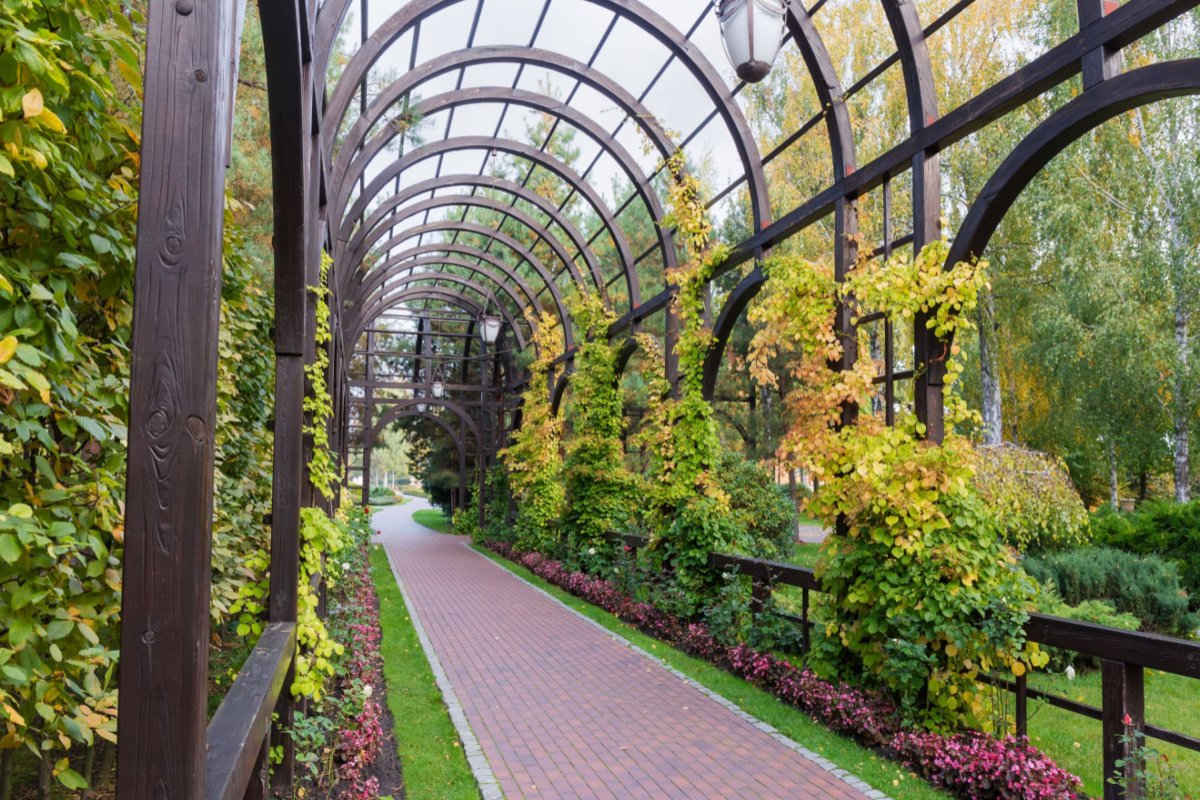
Well-managed vines and vines
Even in shade, there are plenty of flowering vine options, such as the shade-loving varieties of clematis, which are known for their well-bred qualities.
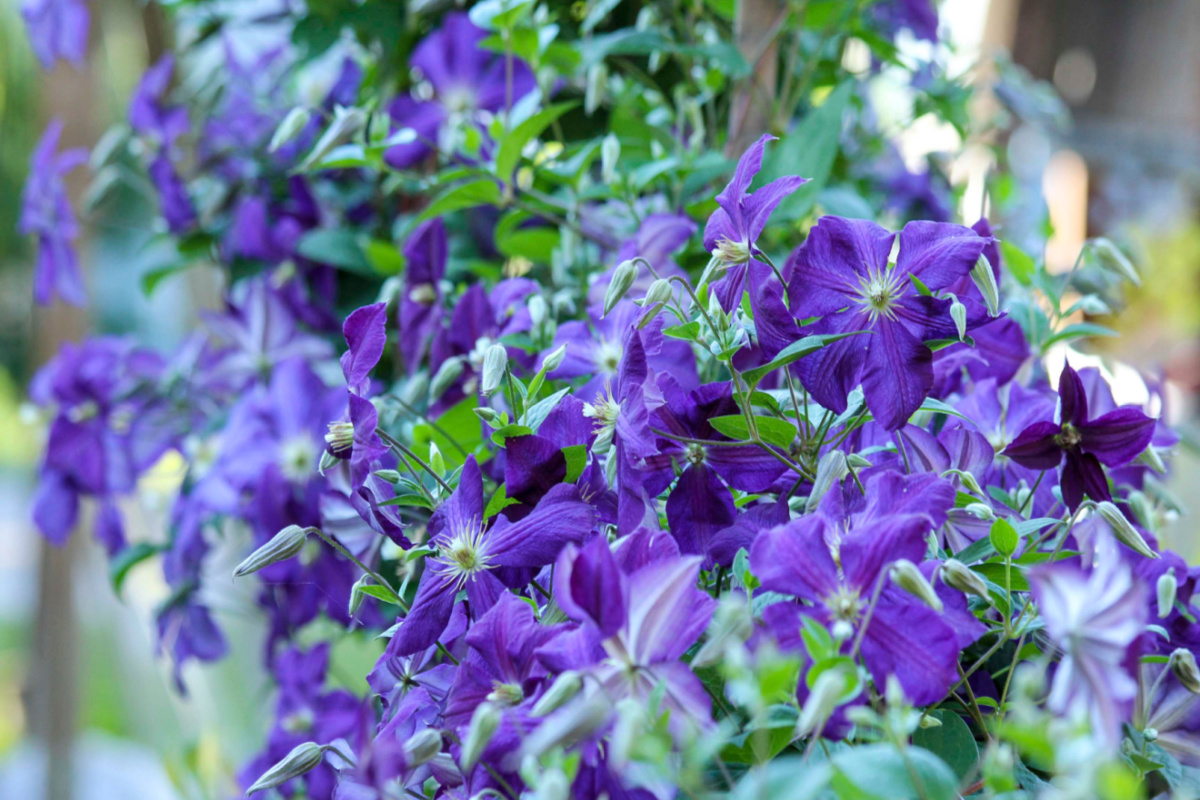
Vines and vines may require training and attachment to structures. They can be twining vines that wind around supports, or they can have aerial roots that wind around and through structures.

Sometimes the native species of your favorite vine is more polished. This is the case of honeysuckle and wisteria.

Although Chinese wisteria thrives in shade, its invasiveness and risk to native species prevents it from being included on this list. American wisteria, although less invasive, thrives in full sun and needs sun to set its drooping flowers.
Native vines, flowering vines, and a wide variety of climbing plants attract pollinators to the blooming yard.
12 Flowering Climbing Plants and Vines That Thrive in Shady Spots
1. honeysuckle (Lonicera sp.)
The best honeysuckle to grow in the shade is Lonicera periclymenum. Of European origin, notable cultivars are L. ‘Graham Thomas’ and L. ‘Serotina’.
 Lonicera periclymenum
An alternative native to western North America is L. ciliosia, which blooms in orange trumpets in the spring.
 Lonicera ciliosia
A red-flowered honeysuckle native to eastern North America is L. sempervirens, or scarlet honeysuckle.
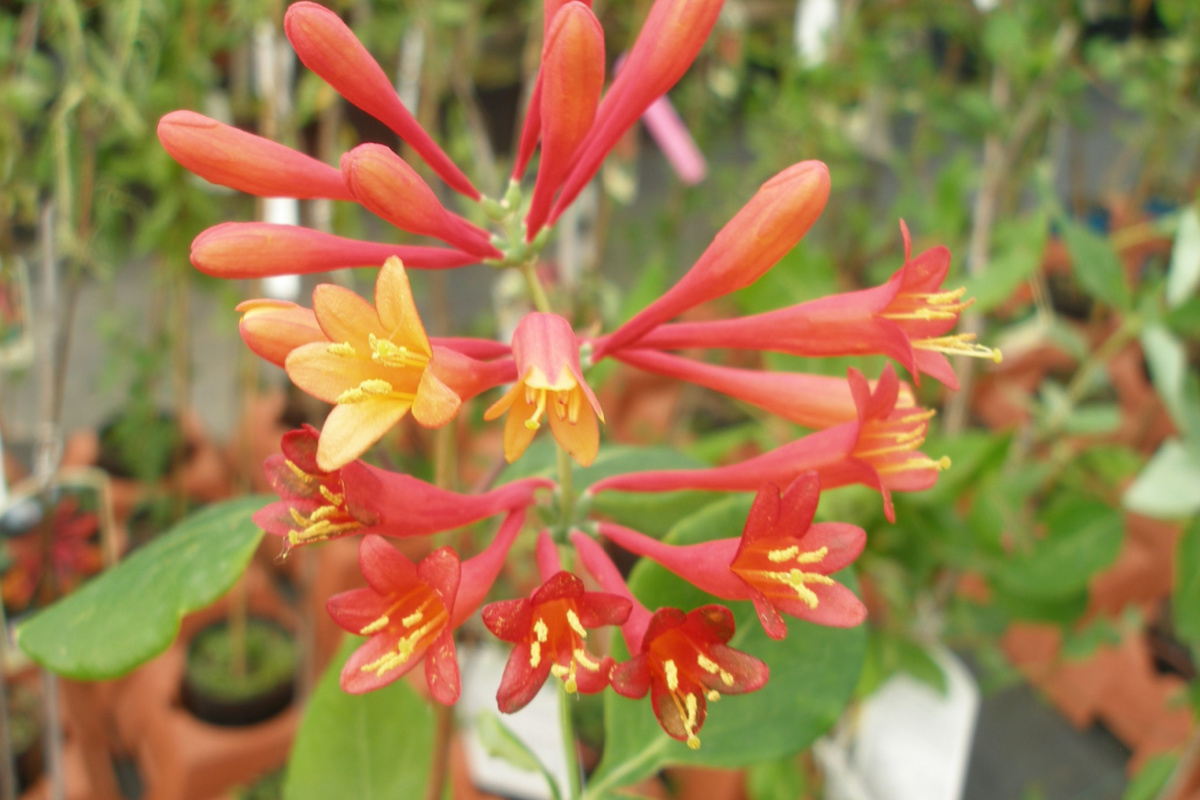 Lonicera sempervirens
Another recognizable white-flowered honeysuckle is the invasive Japanese honeysuckle, L. ‘Japonica’, which is edible and medicinal, but not highly recommended due to its aggressiveness.
Honeysuckle likes cool, moist soil and grows up to 20 feet in zones 4 to 8-10, depending on the variety.
Honeysuckles are magnets for wildlife, attracting many hummingbirds, as well as warblers and thrushes.
2. Climbing hydrangea (Abnormal Hydrangea ssp.)

The climbing hydrangea blooms profusely as an heirloom. The Lacecap hydrangea blooms in vintage white in spring and summer.
The massive 40-60 foot plants take a few years to get started, but once established they create a respected relic of art in your landscape.
Provide proper soil amendments for this long-lived vine for deep, moist, rich, well-drained growing conditions and strong supports.
Plant climbing hydrangeas in zones 4 through 8 in a sheltered north or east location with plenty of shade.
To get the most flowers from your hydrangea, check out 10 secrets to getting more flowers from your hydrangeas.
3. Boston Ivy (Parthenocissus tricuspidata)

Gliding over fantastic foliage, Boston Ivy gently clings to structures that form majestic waves of greenery.
The inconspicuous flowers in the spring turn into bird-eating berries in the fall.
When mature, Boston ivy grows 30 to 50 feet tall in zones 4 to 8, creating the feeling of a well-deserved establishment.
Boston Ivy thrives in shade with cultivars in a variety of leaf colors. Fall color will be deepest on branches reaching sunny spots.
4. Virginia creeper (Parthenocissus quinquefolia)

A five-leaf version of Boston Ivy, Virginia creeper is one of my favorites, remembered for sneaking all over my grandmother’s house.
Like Boston ivy, Virginia creeper sheds its leaves in winter and displays its intricate branching arteries throughout its host structure.
The brightest fall color remains on leaves that reach the sun, but the lush, layered growth is spectacular in shady areas.
Hardy in zones 3 to 10, Virginia creeper tolerates training, pruning, and most soil types, reaching 30 to 50 feet at maturity.
5. Clematis (Clematis sp.)
Sweet Autumn Clematis, C. ‘terniflora’, native to Japan, has creamy white flowers from summer through fall and blooms even in shade.
 Sweet Autumn Clematis C. ‘terniflora’
A variety of clematis known for its shade habit is the ‘Nelly Moser’ clematis whose vibrant flowers wilt in the sun.
 Clematis ‘Nelly Moser’
For a spectacular, fairy-wood feel, North American native C. ‘occidentalis’ blooms enchanting, pendulous four-petalled flowers on delicate tree-climbing vines.
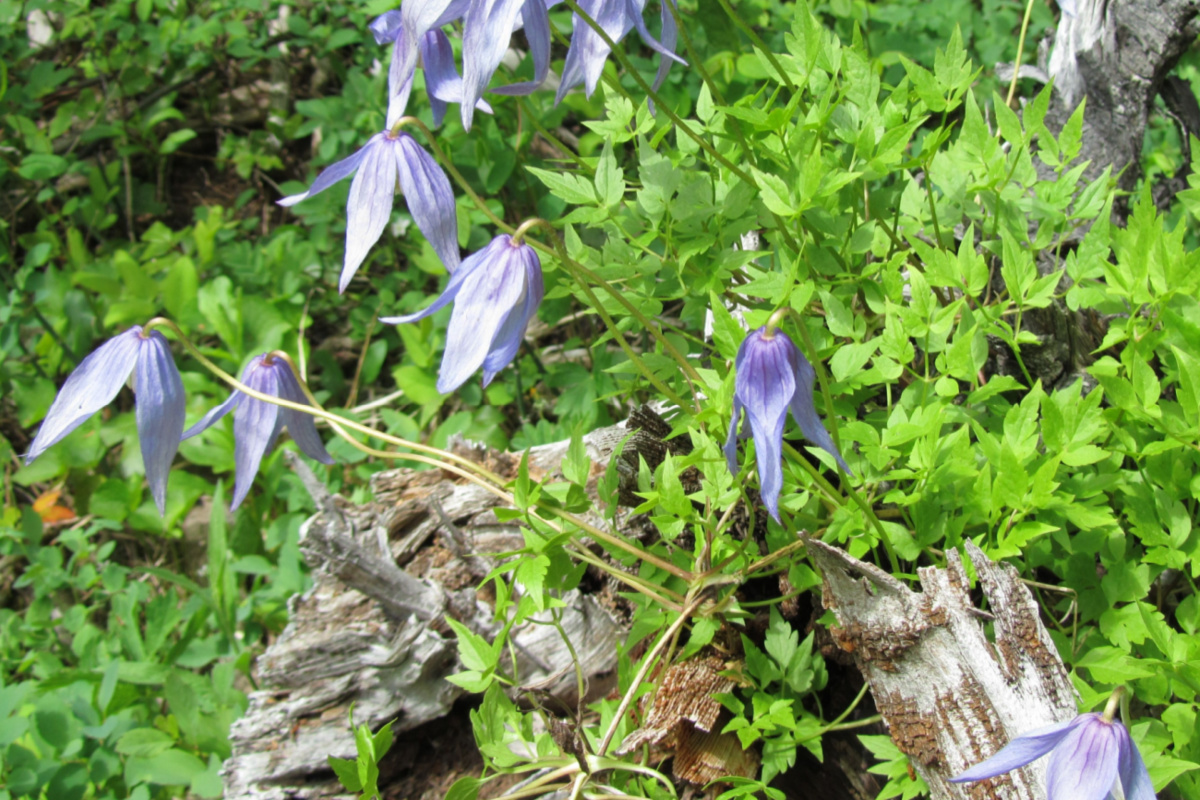 ‘Western’ Clematis
Varying by variety, clematis grows 4 to 30 feet tall in zones 4 to 9 with showy leathery blooms in a variety of shades of white, red, and purple.
6. Trumpet Vine (campsis radicans)
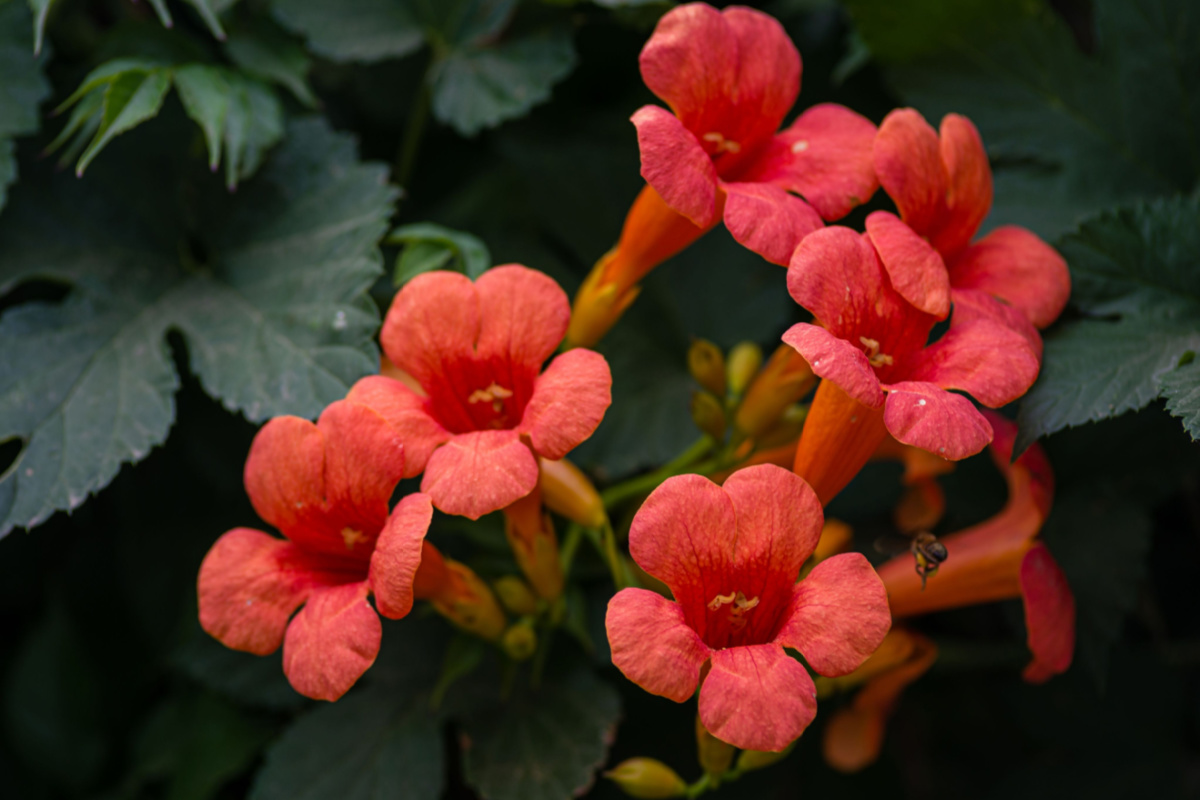
A bit of a mystery, Trumpet Vine is a plant native to the southeastern United States that is popular with pollinators and hummingbirds.
Outside its range, however, it can escape cultivation and outcompete less aggressive plants.
Trumpet vine not only thrives in shade, but it is also a plant that tolerates wet soil.
Blooming orange, red or yellow in summer, Trumpet Vine grows 25 to 40 feet tall in hardiness zones 4 to 9.
7. American Peanut (American celery)
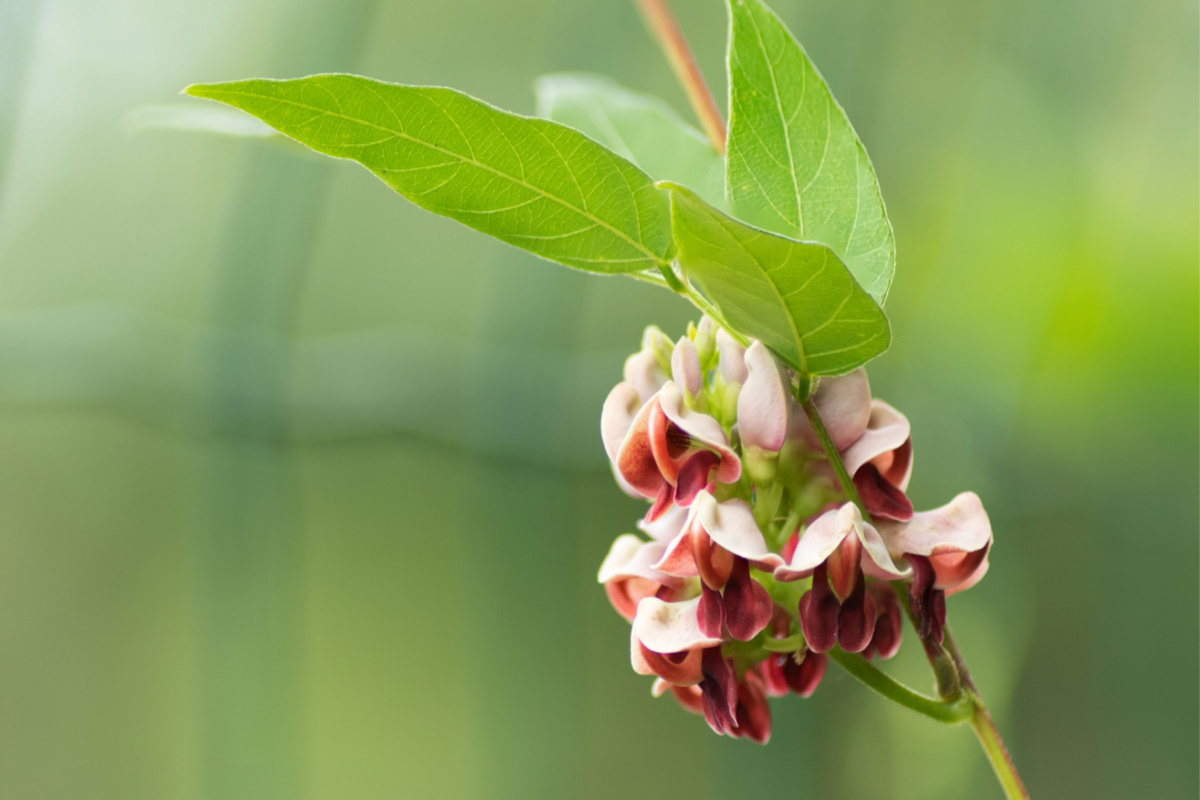
The American groundnut is a unique and interesting native plant that produces edible beans and large edible tubers.
This vine is 20 feet long and has pink, purple or rust pea-like flowers that form large clusters in summer.
The preferred growing conditions for this perennial vine are shade or partial sun, found in forests from southern Canada to Florida in zones 4 through 9.
8. Hops (Humulus hops)

Hops are normally recommended for the sun. The sun helps the plant to produce the fragrant hop fruits.
If you don’t feel like harvesting fragrant hops, this plant grows beautifully in the shade.
The foliage smells great and the plants accumulate plenty of shade-soaked gold to the chartreuse leaves.
A herbaceous perennial, hops can have a manicured or wild appearance. They reach 20 feet tall in zones 4 to 8.
9. Wild Potato Vine (Journaled Morning Glory)
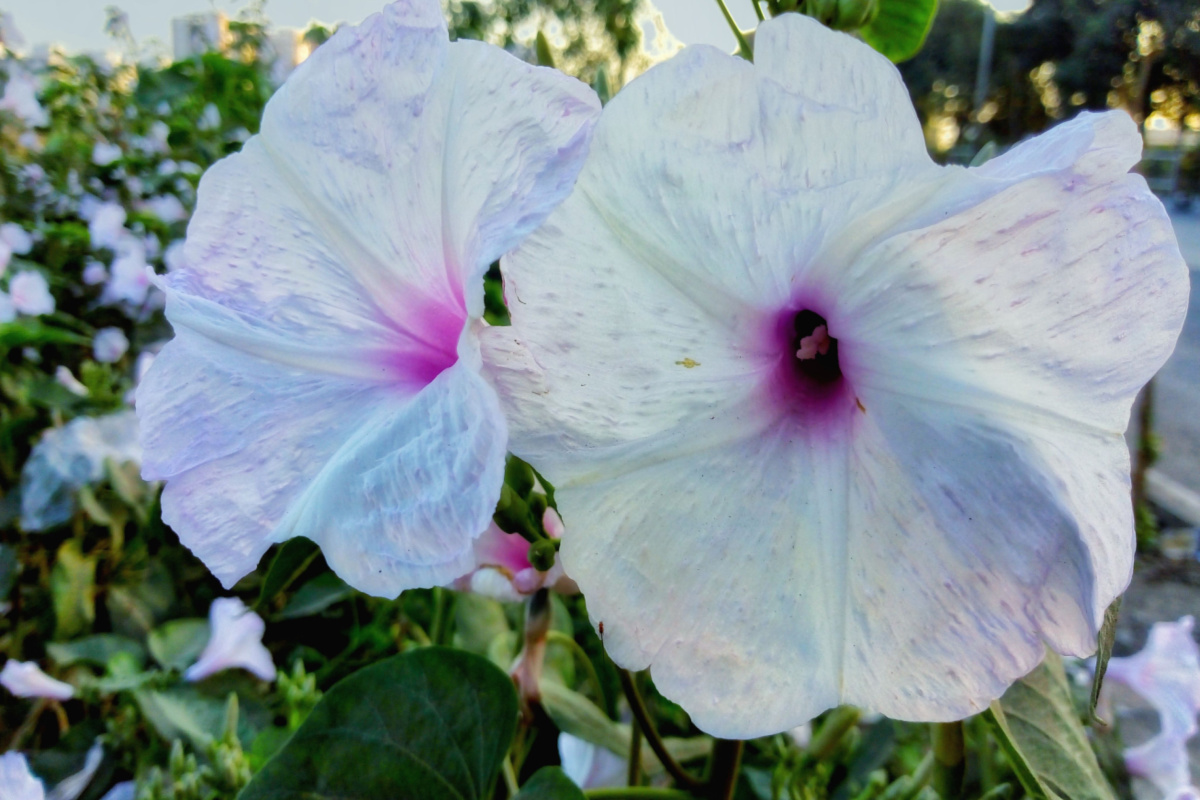
Vigorous enough to grow as an annual, this perennial vine loves shade and is hardy in zones 6 to 8.
At maturity, Wild Potato Vine reaches a height of 15 to 30 feet and is native to the United States.
Adored by hummingbirds, the showy hibiscus flowers are white with burgundy centers that arrive from spring through fall.
10. sweet peas (Lathyrus sp.)
This annual vine can quickly envelop a space in wonderful fragrance and beautiful color.
The delicate vines clamber up supports with curly tendrils and reach plant heights of 6 to 10 feet.
Obsession-worthy Lathyrus odoratus are the aromatic varieties with a wonderful variety of species, colors and cultivars.
Blooming from summer through fall, sweet peas bloom in lavender, white, pink, red, and blue.
11. Chocolate Vine (Akebia quinata)

An interesting shade-loving vine, native to Asia and parts of North America, with glossy deep green leaves.
Chocolate Vine has a light chocolate scent that makes you pick up your favorite chocolate ice cream when hanging out in the shade.
Vigorous vines that reach 20 to 40 feet in length in zones 5 to 9, chocolate vines are thirsty plants that can be aggressive or invasive in the perfect conditions.
The purple-brown flowers bloom in the spring and turn into edible fruits in pods in the fall.
12. Star Jasmine (Trachelospermum jasminoides)
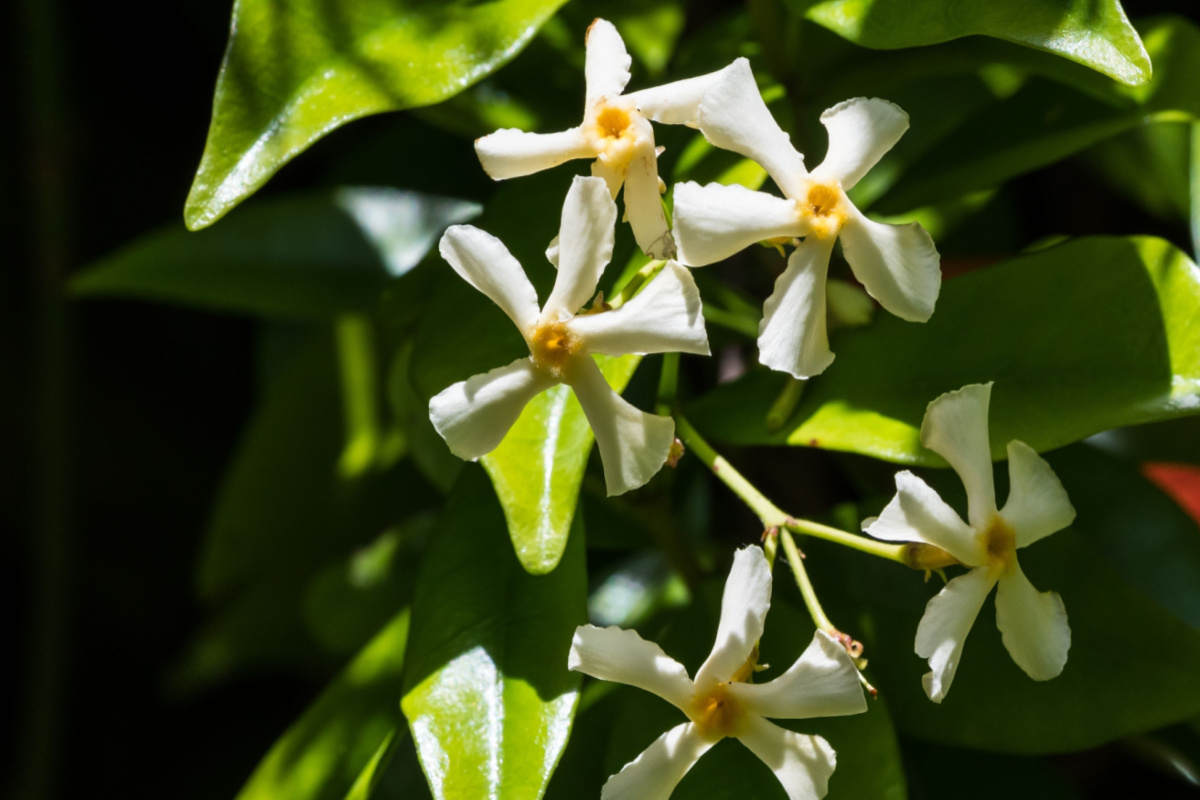
I get a little jealous when I talk about the fragrant vines that grow in zones 8-10.
Star Jasmine is not a real Jasmine (Jasmine sp.), though it is fragrant and shade-loving.
Star Jasmine is a powerfully fragrant vine that thrives in the southern United States.
The flowers appear from spring to early summer, are white, star-shaped, unfold their fragrance and attract bees.
Star jasmine vines like to grow upwards. They make a solid ground cover if there are no vertical supports.
Star Jasmine vines grow 6 feet tall and wide.