The leaves of your Elephant Ear plants can curl for a variety of reasons. To bring it back to life, you must first identify the problems and then take appropriate action. This article will help you identify and resolve these issues.
Elephant ear leaves curl due to excess water, leading to root rot, dehydration, low humidity, heat stress and pest attacks. To solve this problem, water elephant ear when the topsoil seems dry, protect your plant from the cold, and replant if there are signs of root rot.
Read on to find out how to make your plant thrive. It’s time to stop stressing and start planning!
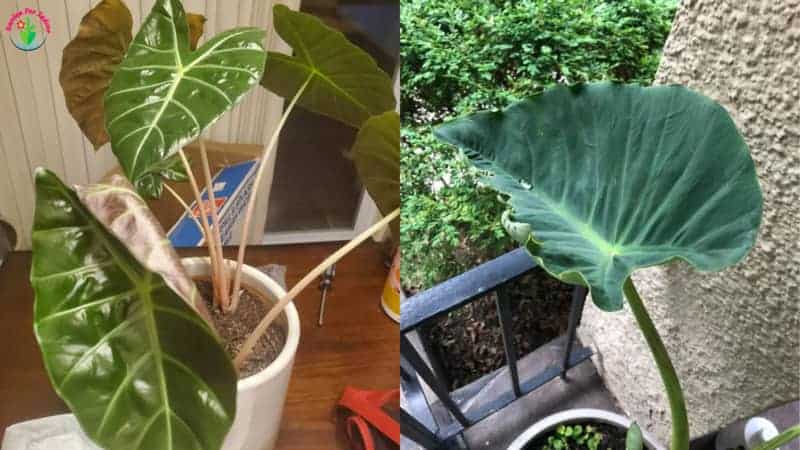 Elephant Ear Leaf Loop
Causes of Rolled Up Elephant Ear Leaves
When plants are sick, they communicate through the only language they know: their appearance.
Leaves, stems and petioles become discolored, rough in texture, curled or dry. The Elephant Ear plant is no different.
underwater dehydration
If you flood your elephant ear plant, the massive leaves will try to store the existing water in them.
This causes the leaves to curl, yellow or wilt. If you continue to neglect it, it will dry out.
The solution
Elephant ear plants drink a lot of water. Make sure the soil is moist. Establish a watering schedule where you receive at least 2 to 3 inches of water each week.
Water once a week. Don’t miss a single cycle. Water daily in summer.
Be careful not to water it too much so that it does not accumulate in the soil and has difficulty draining.
Root rot due to excess water
Just like not watering enough, wet soil is unhealthy. The leaves of your elephant ear may begin to swell or curl to indicate excess water.
If the drainage is not adequate, the excess water will soak the roots. This type of condition favors root rot pathogens. The base looks collapsed, the leaves will curl and sag.
The solution
Although the Elephant Ear plant loves water, there is a water threshold that depends on the size and age of the plant.
Make sure the soil is completely dry before watering and water in the morning.
Water quality
Water quality plays an important role in how your plant looks and feels. Tap water contains salt, chlorine and fluoride.
Elephant ear does not tolerate hard water. Over time, the leaves will show their discomfort by curling up or developing brown spots.
The solution
You can use rainwater after saving it or use bottled water. If these options are not available, you can store your tap water overnight in an open container.
These chemicals in the water dissipate, allowing your plants to thrive easily.
Light, temperature and humidity
Excessive sun exposure
Elephant ears thrive in the sun. But too much sun is harmful because it makes the plant hyperactive.
When the light intensity is too high. For example, when the sun shines directly on the plant for a long time, the the leaves turn brown at the edges and loop.
They also become crispy and brittle. This is similar to burning paper under excessive heat.
The solution
Place the plant in a location with indirect sunlight. Move the plant around the house year-round as the temperature changes and the sun changes, keep the soil moist, and mist the plant regularly during the hot months.
thermal stress
Since elephant ear plants do well in tropical climates, they should be grown in warm temperatures between 65 and 75 degrees Fahrenheit (18 and 24 degrees Celsius).
High, freezing or freezing temperatures and cold drafts impact the plant, causing cell desiccation and membrane damage. This causes them to drag on stress.
The solution
Water it abundantly during the summers. Winter sun is nice, but it’s better to place the plant indoors in a warm, bright spot than outdoors.
Elephant ear plants are sensitive to temperature drops. It is best to dig up the tubers and place them in a paper bag in a warm, dry place until spring, when you can transplant them. (Source: Purdue University)
Low humidity issues
The elephant ear plant grows gloriously when the humidity is at least above 60%.
If you live in a place where temperatures drop below 30°F (-1°C), is generally dry and experiences harsh winters, the moisture content of the air is extremely low.
Low humidity causes elephant ear leaves to lose more moisture and curl accordingly.
The solution
To combat dry air during the cold months, you can use a humidifier to create a tropical environment for your plant. Don’t be afraid to try. I also use one in the winter.
Watering the plant will help increase humidity.
The other trick is to place a tray of pebbles with water so that the water evaporates and the humidity in the room increases.
You can also enjoy: Brown spots on Alocasia leaves (causes and how to treat them)
Fertilizers, herbicides and pests
fertilizers
Give elephant ear plants enough fertilizer to compensate for their size, as they feed heavily.
However, feeding the wrong fertilizer, overfeeding, spraying the leaves with fertilizer, and fertilizing when the plant is dormant will cause the leaves to curl or develop brown spots.
Ironically, this makes it susceptible to disease and invites pests. In the worst case, it can even kill the plant.
The solution
Use the right amount of fertilizer. You can use a 20-20-20 slow-release fertilizer, which is an equal percentage of nitrogen, phosphorus, and potassium, along with other nutrients for your elephant ear plant.
Dissolve it in a liter of water, mix well and feed the plant once a month.
If you have overfed the plant, cut off the curled leaves and wait for them to regrow and regenerate.
In winter, the plant is dormant and fertilization is not recommended.
herbicide units
When you treat an invasive plant with herbicides, the strong vapors from the sprays inadvertently travel and reach your plant, damaging the bulbs and burning them.
This results in crooked or crooked stems, stunted growth, or cupped leaves as the plant uses all of its energy reserves to fight off these harsh chemicals in its system.
The solution
By the time you know the herbicide is the culprit of curled leaves, you should cut off the affected leaves so they don’t seep deep and spread to the roots.
If you suspect it has moved into the tubers, the only way to dig it up is to inspect it.
If there is any damage, discard that part of the plant immediately. It’s the only way to save him. Don’t worry, your elephant ear plants are growing fast.
pest attacks
Pests are the biggest threat to elephant ear plants. Cotton aphids devour the plant with a deadly vengeance that drains all the minerals and nutrients from the plant.
They are usually located on the underside of the leaves. This causes the leaves to curl, distort and interfere with the plant’s ability to photosynthesize normally.
The solution
A quick way to get rid of them is to use a water gun or a garden hose and blow water to kill the aphids.
You can also mix neem oil or alcohol in water, take a cotton swab and apply it to the infected areas.
growing pains
Lack of space for roots.
Elephant ear plants are gigantic! They grow fast and big, especially when climatic conditions, soil, irrigation systems and moisture requirements are well combined.
As your plant grows and matures, the root systems will need more space. If you can’t handle it, the leaves shrink to survive.
The solution
If you see roots growing, choose a plastic pot with plenty of drainage holes, make sure it’s taller than the plant’s current size (but not too tall that the soil will take longer to dry out) ) leave room for the roots to grow grow as it pleases, and eventually transplant.
Another benefit of planting your elephant ear in a pot is that you can bring it indoors during colder months.
Curled leaves after transplanting
Despite its hardy and beautiful appearance, the elephant ear plant is quite vulnerable to stress factors.
After transplanting, you may notice the leaves curling. Don’t panic.
The plant is initially startled by the sudden movement and needs time to acclimate to its new home. Be patient. In a few hours it will light up.
The solution
Before transplanting the plant, make sure that it is in the growth phase and not in the dormant phase. For this reason, it is recommended to transplant in summer or spring.
If you followed this rule and the plant still does not light up, you need to inspect the root systems.
How to Prevent Elephant Ear Leaves from Curling
- Make sure your plant is not flooded
- Do not overwater as this can cause root rot.
- Make sure the quality of water you use helps the plant grow.
- Place your plant where it can get enough light, but not so much sun that it burns the leaves.
- Elephant ear plants do not adapt well to cold seasons. Protect them by bringing them indoors for the winter.
- If there is less humidity in the air, spray in summer and place a container of water near the plant in winter.
- Use the right amount of fertilizer; feed them during their growth phase
- Trim leaves that may have been accidentally sprayed with herbicides
- Monitor your plants closely and eliminate pests before they spread to other plants or become a threat
- Make sure your plant has enough room to breathe and grow. Repot them accordingly.
- Understand that your plant may experience displacement shock.
conclusion
Elephant ear plants are extremely sensitive to their environment. There are water problems; lighting problems, weather changes and humidity; fertilizers and herbicides that wreak havoc, and finally opportunities for growth.
Now you know what to do if you see your elephant ear leaves curling up. The most important thing is to stay calm.