
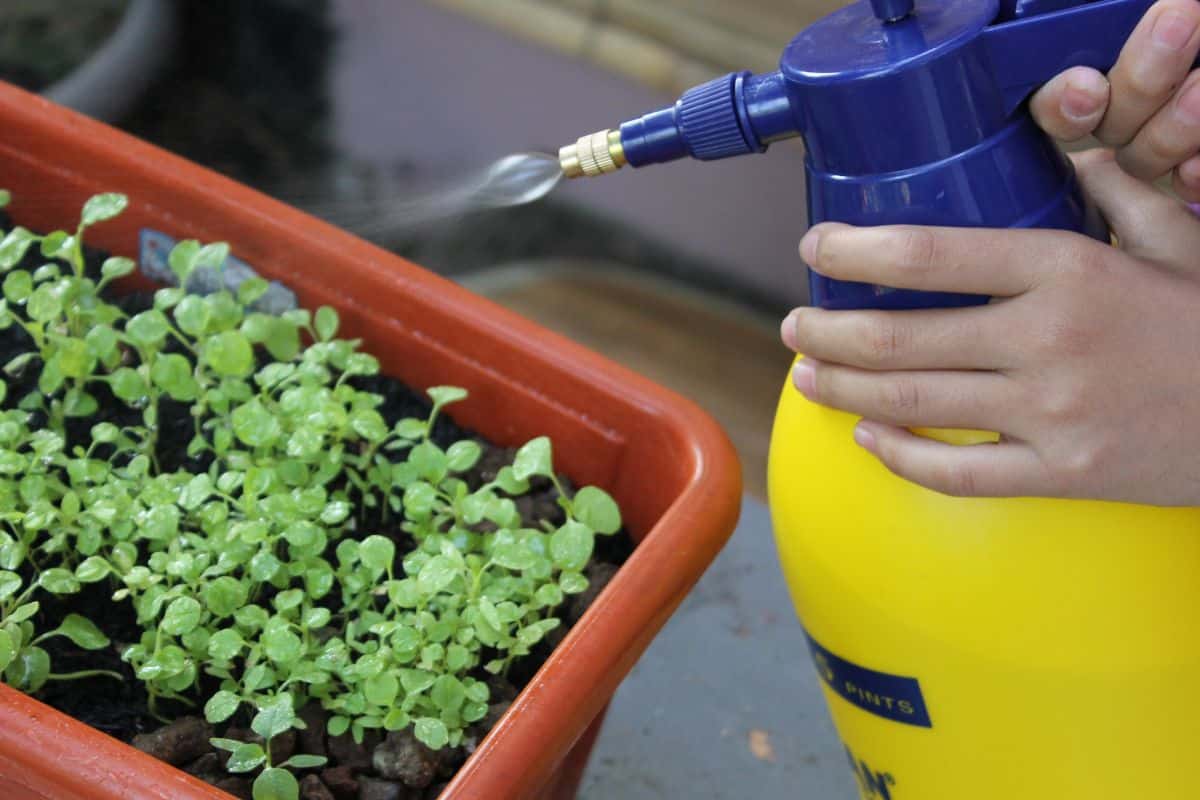
When you water your plants, you may wonder if you are using the right amount of water. That of the faucet (or pipe) may not be since, as you know, it contains chlorine. But how do you remove chlorine from irrigation water?
If you want your plants to do well, it’s best to give them the best water possible. But sometimes that means spending money you don’t have. Therefore, there are a few tricks to ensure that irrigation water does not contain chlorine. And here we are going to explain some options for that.
Why is it necessary to remove chlorine from irrigation water for plants
As you know, the water we drink contains chlorine. In fact, the vast majority of drinking water contains it because it is the “ingredient” that is used to kill pathogens and also ensures the water is safe to drink.
But in the case of plants, it is very harmful to them. and it’s because that chlorine eventually kills fungi and bacteria in the plant, as well as make a disinfection. You may think that’s fine, but the truth is, it’s not. And that’s what it disinfects (i.e. eliminating fungus and bacteria), what it does is take away those who are beneficial to himsuch that it affects plant health.
At first it just seeps through the earth, but later it leaves attacks the roots and causes drying out of these causing the plant to eventually die.
For this reason it is said that the plants should not be watered with tap water, because although it may seem that nothing is happening, in the long run, this may be the cause of your plant’s death.
Of course, keep in mind that in addition to chlorine, limescale can also be a serious problem for plants and that you must control this aspect so that the water you give your plants is as healthy as possible ( you will notice it, especially in the growth and flowering of the plant).
Consequences of watering without chlorine removal

Let’s stay on topic. As you know, we have already told you why it is not good to water with chlorinated water. But in case it’s not clear to you, we’ve compiled some consequences of watering without chlorine removal. And from now on, we tell you, you won’t want this to happen to your plants again.
Because, when you water with untreated water for plants, you can suffer from:
- Irritation of the root system of plants: Chlorine can irritate the root system of plants and cause them to dry out. In other words, it will lose roots, and it will take much longer for new ones to grow, so when you want to find out, it will be more affected by its health and will not grow as much as you. might think or want. Including the leaves, which will get smaller and smaller.
- Plant disinfection: This is something we have already talked about, but we will clarify it for you. This is because chlorine acts on plants by disinfecting them, that is to say, it kills bacteria and fungi. So far so good, but it also loads the beneficials, which will make the plant unable to absorb nutrients and resist disease.
- Loss of flowering and growth: When plants do not receive enough nutrients and the environment is disinfected with chlorine, flowering and growth stop. Or directly not.
To avoid all these problems, you must keep in mind that it is better to eliminate chlorine from the water of the plants. And how to ? Don’t worry, we explain it to you below.
How to remove chlorine from irrigation water for plants
Now yes, we are going to tell you the different ways to remove chlorine from irrigation water for plants. There are several, so we will try to give you different solutions to water your plants enough without costing you a lot, especially if you have a lot of them.
Leave the water again
It is one of the most used methods, so that Chlorine naturally evaporates from water. Keep in mind that lime will also do this, although in this case it will remain at the bottom of the container, it will not leave, that is why when using it, we recommend that you do not move the water too much or use it completely (the base is better not to throw on the plants).
For this, it is necessary to leave an open bottle, or a container, for 1-2 days so that the chlorine is completely gone.
Activated carbon filter
If you have aquariums, you surely know what we are talking about. It is special filters that help remove chlorine from the water and make it suitable for fish, but also for plants (hence it is said that aquarium water can be used on plants).
You would only have to put it in the water you are going to use, wait a bit and you can use it and give more quality to the water.
Chemical products
On the market, you can find chemicals capable of removing chlorine, as well as other elements, from the water you want to use for irrigation. They aren’t cheap, but sometimes when you have a lot of plants it can be the best way to go faster.
These you can find them in garden stores or online in some web pages.
air purification stations
Finally, we have air-purifying plants. Some are the Boston fern or dracaena, which can remove chlorine from air and water. Now to use them correctly it would be necessary to fill the bottle with water and put it next to these plants so that in 1-2 days they have eliminated the chlorine and you can use the bottle for whatever purpose you want, that is watering.
As you can see there are many ways to remove irrigation water from plant water, do you know of any other effective ones? Tell us about it.