
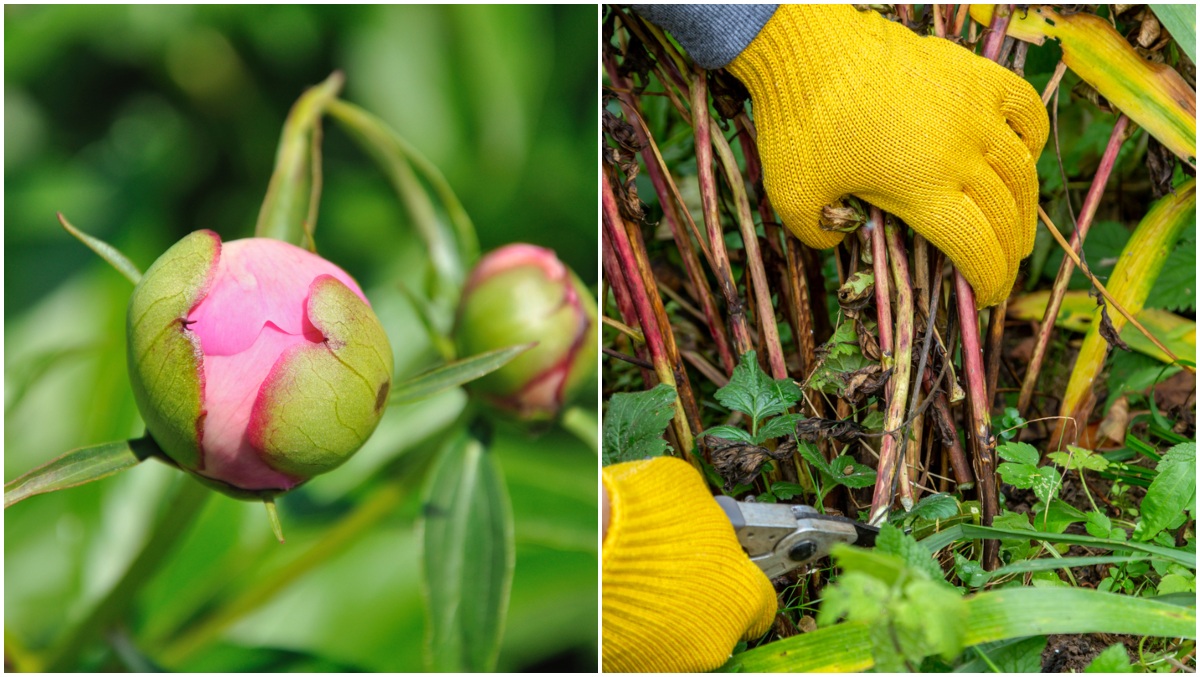
When I posted this article about fertilizing peonies, I already knew I was going to write about some of the reasons why some peonies don’t bloom. But my decision was confirmed shortly after I shared the link to my post on social media.
Not one, not two, but three of my Facebook friends have complained about having (or having had) non-flowering peonies. Or if the plant gave buds, the peony buds would not open.
And what’s most interesting (at least to me as a plant writer) is that each case looks a little different: someone just planted the peonies, while someone another assumed that the bush had been in the new garden for a while. . at least a decade. One friend of mine is obsessed with reading all the gardening tips he can find, while another has more. laissez-faire approach the flowers in your garden.
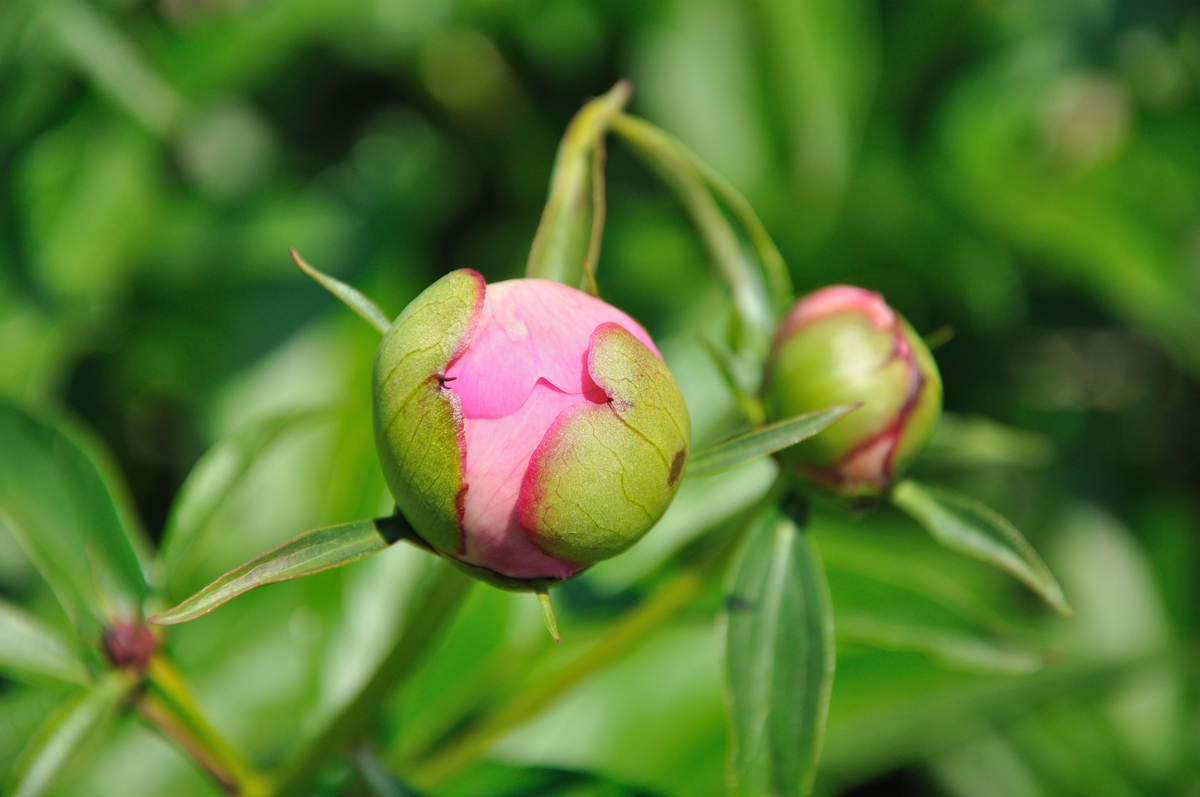 Peony buds ready to open.
So I decided to dig deeper and explain the main reasons why your peonies aren’t blooming and what you can do to fix the problem:
1. Your peonies should not be blooming at this time.
Are you sure what kind of peonies you have? I don’t mean to sound condescending, so I apologize if my question was like that. But with hundreds of peonies available on the market, make sure you know which type you have before you worry about a lack of flowers.
Some peonies bloom in late spring, while others bloom in mid-summer. Depending on the climate you are growing in, this can sometimes translate to a flowering time difference of up to two months.
So before you reach for that bottle of fertilizer, make sure you have the right time.
You can extend your peony’s flowering seasons by alternating cultivars with different flowering times. Always check the grower’s label for this information before buying a new plant.
Here are some suggestions to help you get started:
Peonies blooming in mid spring.:
“Chocolate Soldier”
‘Athena’
‘first explorer’
Peonies that bloom in late spring:
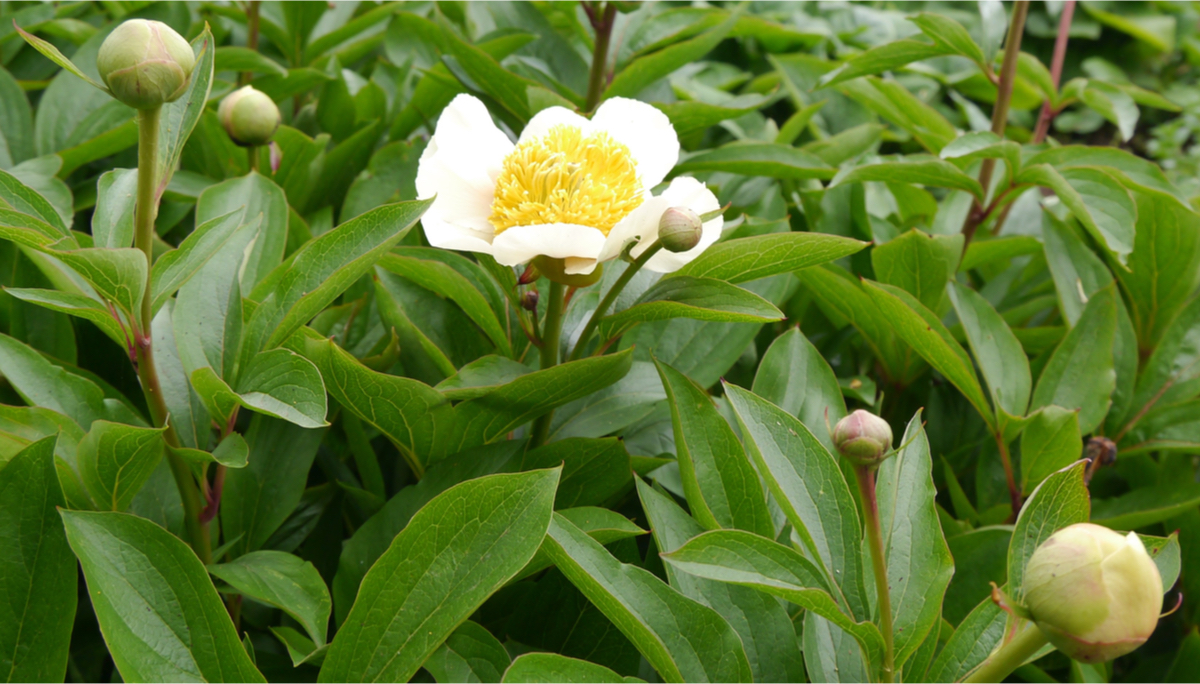 ‘Claire de Lune’ peonies bloom early.
Moonlight
“Court Jester”
‘rimpo’
‘Coral Sunset’
Peonies that bloom in early summer
“Chief Shawnee”
Supreme Felix
‘Duchess of Kent’
“Mother’s Choice”
‘Cora Luisa’
 ‘Sarah Bernhardt’ peonies bloom in early to mid-summer.
Peonies that bloom in midsummer.
Sarah Bernhardt
‘Sir. GF Hemerik’
“Come From Beauty”
‘Noon’
2. Your peonies are too young to bloom.
Speaking of planting new peonies, keep in mind that it takes about three years for a small plant to become established enough to show abundant bloom.
If you have just planted your peony, give it time to get used to its new location. The plant’s first job is to divert most of its energy to root formation, leaving very little energy for flowering.
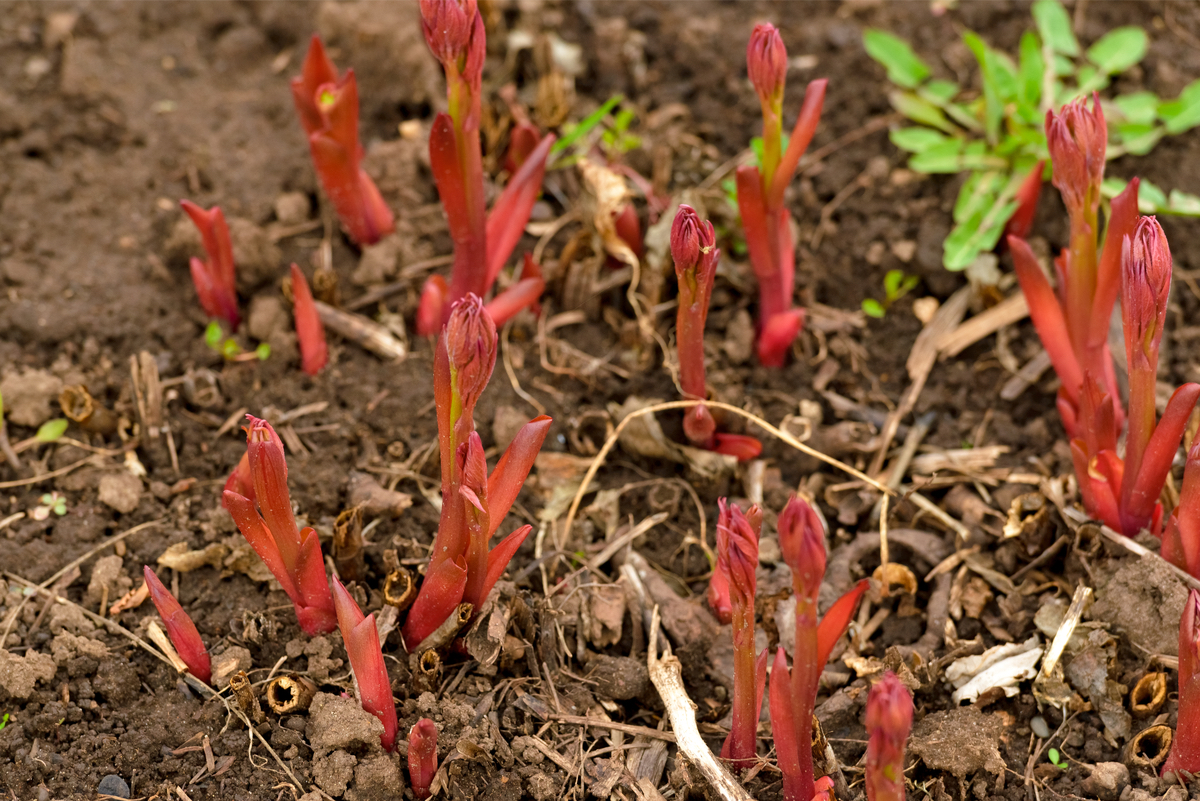
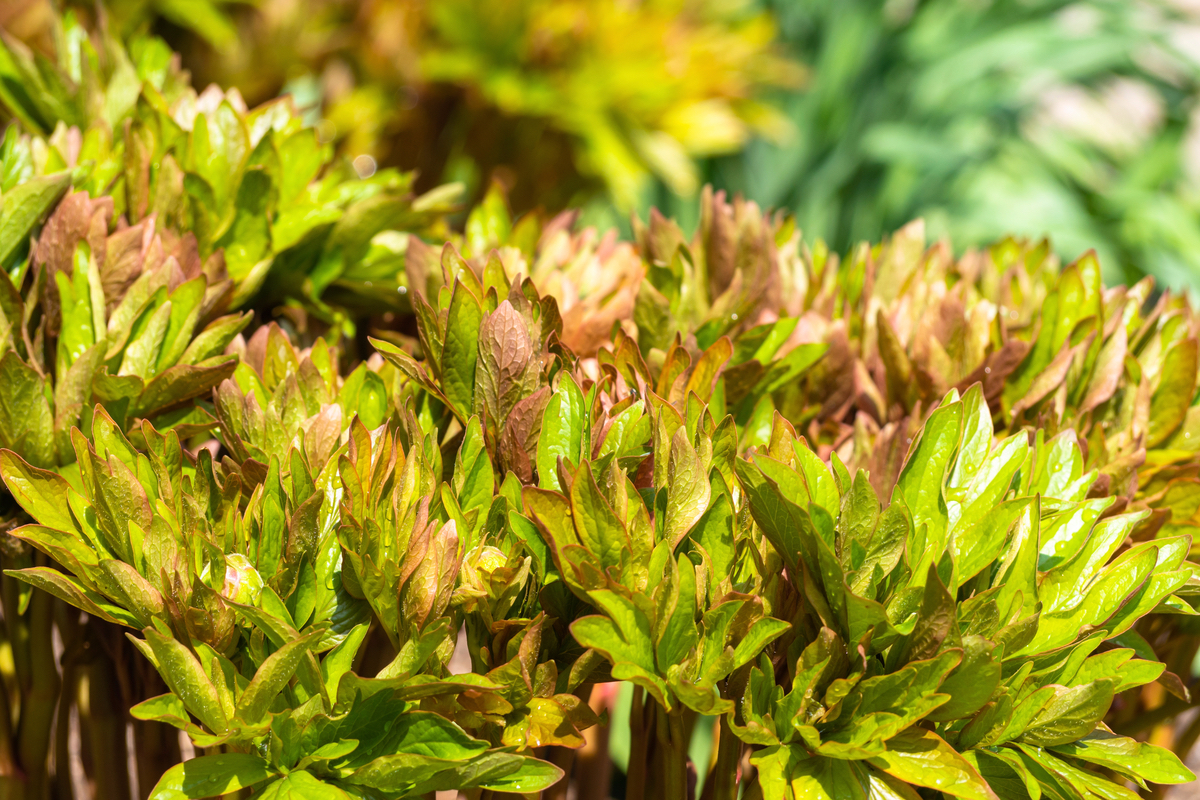 Young peony shoots in early spring
Also, try to resist the temptation to harvest flowers for flower arrangements during the plant’s first years of growth.
And if you have successfully grown your peonies from seed, congratulations! Second, you should know that it takes much longer (about four to five years) for plants to grow from seed to maturity and flowering.
3. You have just divided and transplanted your peonies.
To avoid disappointment, treat newly transplanted peonies as if they were young plants, because they are essentially that. Even if you’ve split and removed them from an older, more established bush, you shouldn’t expect the new transplant to do as well as the old growth. At least not at first.
 Peonies take a while to recover after division.
 This is especially true for peonies that were divided in late summer: they won’t bloom well the following spring because you stopped their buds in the fall. Unfortunately, this is the best time to divide peonies, but be prepared for slower growth for at least one season.
4. Your peonies are planted too deep.
Whether you’re planting a new peony you just bought or a root sprig you picked yourself, make sure you don’t plant it too deep. The “eyes” (the little buds) of the peony tubers should be just an inch or two below the soil surface.
 The “eyes” of the peony tuber should not be planted too deeply.
If you plant your peonies too deeply, you may end up with beautiful foliage, but very few flowers. If that happens, consider it a lesson learned and be patient until next season. The plant will be placed in a better position before the next growing season arrives and will get beautiful flowers.
While we’re talking about planting depth, be sure to consider the layer of mulch you’ll add on top (to maintain moisture, keep weeds out, and of course, even out soil temperatures). Plant or transplant with that extra height in mind.
5. Your peonies need more sun.
One of the most common misconceptions in gardening (and one that I often catch myself believing, though I should know better) is that “tolerant = thrive”.
Let me explain. In the case of peonies, just because they can tolerate shade doesn’t mean they’ll thrive in shade.
Your peonies will thrive in full sun and will need about six hours of direct sunlight to store enough energy for beautiful blooms. Yes, they tolerate light shade and may even produce buds, but flowering will be sporadic.
These young peonies need more sun.This is an important factor that sometimes changes without our realizing it. For example, when you first planted your garden a few years ago, you made sure to plant your peony in full sun. But in the meantime, your garden’s shadow map may have changed. Maybe you have some structures installed (like a gazebo or pergola) or maybe some trees and shrubs in your garden (or your neighbour’s) provide more shade than when you chose a spot for your peonies.
What you can do in this case is dig up the peonies in the fall and transplant them to a new, sunny area.
6. You used too much fertilizer on your peonies.
Overfertilization is, in my view, a case of good intentions coupled with poor execution. Although sometimes it’s also about following the instructions on the composter (which often overestimates the amount of compost you need).
First, keep in mind the key to fertilizing any flowering plant: low nitrogen. Nitrogen, one of the main components of fertilizers, promotes leaf growth. But the more energy the plant puts into lush foliage, the less it has to spend on flowers. (Yes, even if you fed it.) So maybe you have a big green bush with just a few blooming flowers.
 These peonies have many leaves, but few flowers.
The solution, especially if you tend to over-fertilize, is to add compost to the soil around the peonies and work the compost into the soil (being careful not to disturb the root structure).
You can also add a balanced fertilizer (10-10-10) or a low-nitrogen fertilizer (5-10-10) in early spring, before new growth appears.
Check out this article for a complete guide to fertilizing peonies.
7. You pruned your peonies too aggressively or too soon.
Peonies use their foliage to nourish the roots through photosynthesis. So even when the flowers are gone, the plant is still working hard so that next year’s flowers begin to form below the soil’s surface. If you interrupt this cycle by pruning the foliage too soon, before it has had a chance to nurture new growth, you may have to pay for your impatience the next growing season.
 Trimming peonies too early can hinder next year’s flowering.
Do not remove the sheet prematurely. It is only after the first frost, when the leaves are brown, that it should be pruned to the ground.
And if you’re growing tree peonies, never prune them. Unlike their herbaceous cousins, tree peonies are shrubs and won’t regrow if you cut them to the ground.
8. Your peonies take frost damage.
This is often the case when buds appear but never reach full bloom (a phenomenon known as “bud burst”). In my opinion, this is even more infuriating than having no buds, as it creates a sense of anticipation that doesn’t materialize.
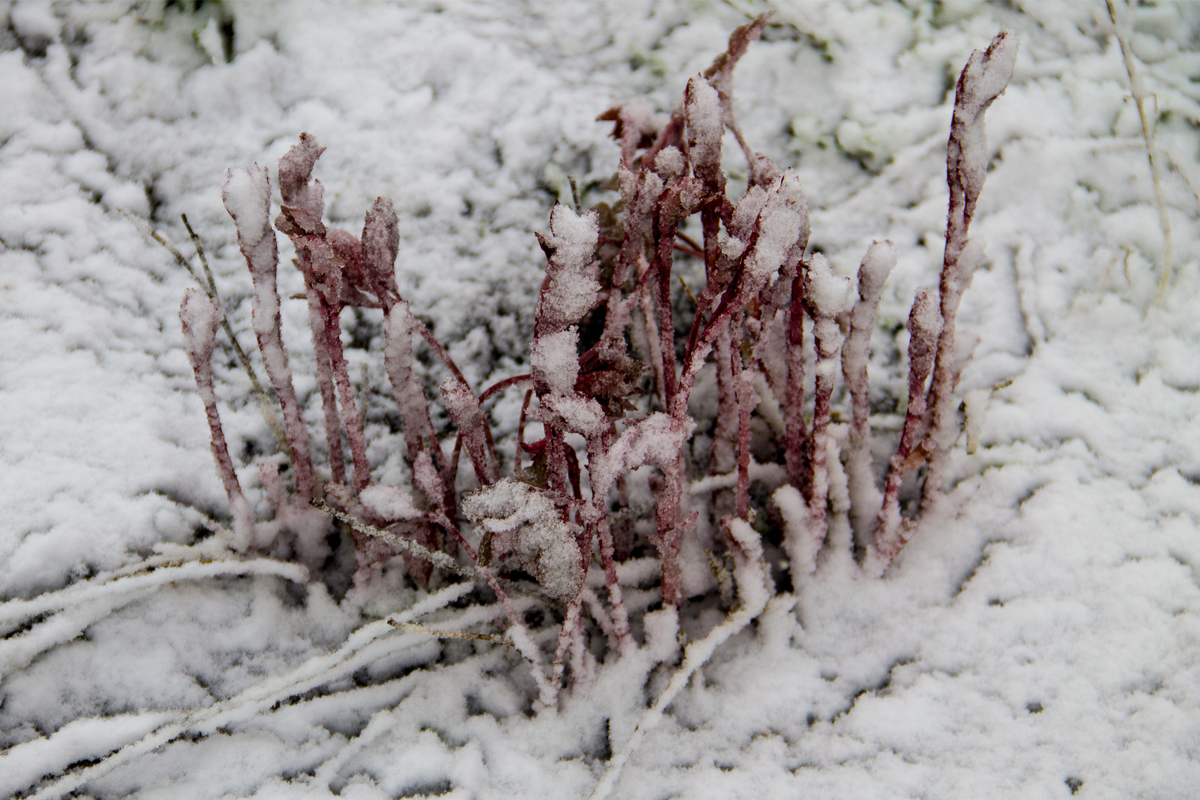
Unfortunately, this is happening more and more often due to the unusually warm periods in early spring. The plants are tricked into thinking it’s time to bloom, then a hard frost hits in late April or May that kills the peony flowers.
You can try isolating the plant with an antifreeze cloth or improvise a mini-tunnel. But if the temperature drops well below zero for more than a day, there’s not much you can do about it.
9. Fungal diseases affect your peonies.
Again, this is another scenario where your peony will bud but never bloom.
One of the most common fungi that affects flower buds, especially in cool, humid conditions, is Botrytis blight, also known as gray mold. See dark spots on stem and leaves; often the peony will look wilted and the bud will simply turn brown and wilt.

Let’s just say Botrytis blight isn’t a pretty sight. You can try to combat it with an antifungal spray specially developed for Botrytis. Unfortunately, fire blight spreads very quickly, making it difficult to detect in the early stages.
The best solution is to empty the site for the following year. Remove and destroy diseased leaves or shoots as soon as you notice them. Improve air circulation and try to keep the foliage dry when watering the peony. Avoid using spray hoses or submerging the plant in water.
10. Your peonies may not be complete with surrounding plants.
Peonies are not necessarily territorial plants and do not spread aggressively. But they should always have their own space, especially if they are at risk of being overrun by bushes or trees.
Peony roots, as sturdy as they are, cannot compete with a tree’s root systems, which can result in dry conditions and heavily compacted soil. This can often result in poor flowering or no flowering at all.

I hope this explanation of why your peonies aren’t blooming was helpful. I know it may seem overwhelming, especially to new gardeners, but if you work to remove the causes methodically and with a lot of patience, you will be rewarded with a flurry of blooms next growing season.