
If you purchase an item through links on this page, we may earn a commission. Our editorial content is not influenced by commissions. Read full disclosure.
You’ll often find them in Mexican and Central/South American cuisine, where they’re made into salsa verde and added to soups, stews, and various garnishes.
Have you had any problems growing tomatillos? Or are you planning to grow them this year and want to familiarize yourself with potential problems in advance? Either way, we’re about to dive into the 14 most common problems you might encounter and how to fix them.
What are tomatillos?
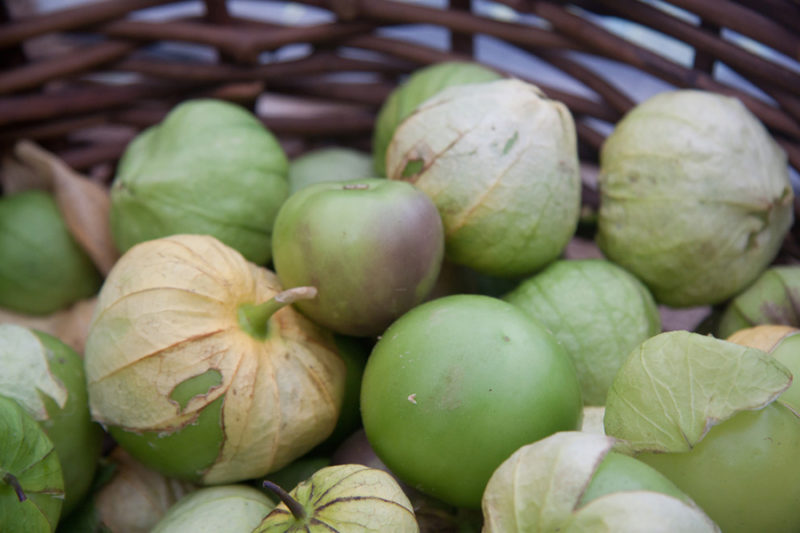
These gloriously delicious fruits are part of the nightshade family. They are close cousins of tomatoes and ground cherries (Physalis spp.) and come in shades of green, yellow, orange, and even purple.
Like ground cherries, they have paper wrappers that must be removed before cooking. You can eat them raw, although they are more acidic and astringent than tomatoes. The best way to enjoy them is to cook them to bring out their sweetness and complement their flavors with your favorite spices.
If you love growing tomatoes and peppers, then you’ll have fun growing these beauties too!
Potential Problems Growing Tomatillos
Tomatillos are slightly more difficult to grow than tomatoes and peppers. Let’s take a look at some of the most common issues you may encounter when growing them.
1. Lack of fruiting

A friend tried to grow tomatillos and was devastated to only have husks with no fruit inside. It turned out that she had only grown one plant, assuming it would grow the same way a tomato would.
Incorrect! Tomatillos are not self-fertile and need at least a few other plants nearby to ensure cross-pollination. Aim for at least three or four different plants within a ten foot radius. That said, you’ll probably love these fruits so much that it’s best to plant a dozen instead. More the merrier, the merrier!
2. Black rotten stockings
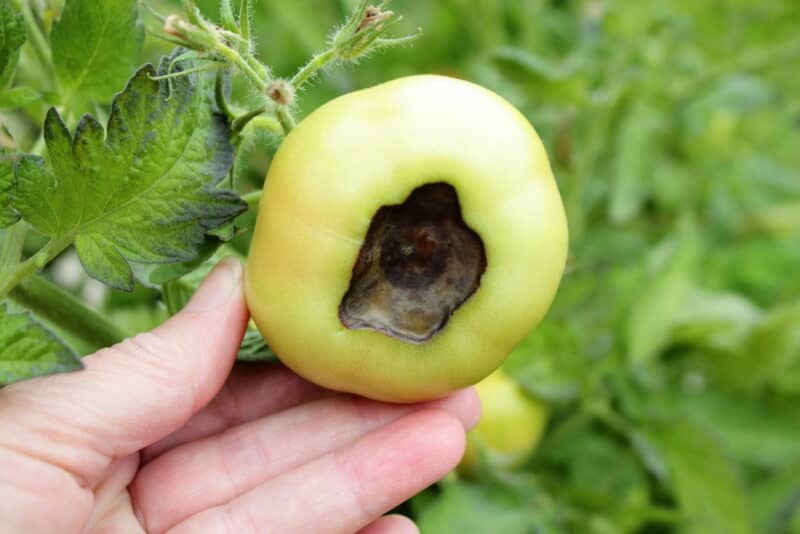
Blossom end rot is one of the most common problems you will encounter when growing tomatillos, and it affects many other fruit bearing plants as well. Basically, when the flower falls from the bottom of the fruit, it leaves a wound that quickly becomes infected and rots. The fruit thus becomes inedible and not viable for seed storage.
Blossom end rot occurs when the plant receives an insufficient supply of calcium during its flowering phase. We have a guide that can walk you through preventing and fixing this common problem.
3. Yellowed leaves
There are two main causes of yellowing leaves: nitrogen deficiency and overwatering. Overwatering can cause nitrogen deficiency by leaching vitamins and minerals from the surrounding soil.
Poke a finger into the ground to the second knuckle. If it comes out covered in wet mud, you are watering too often. Allow the soil to dry out a bit between waterings. It should look like a well wrung out sponge.
On the other hand, if the soil feels good when it comes to moisture, add some nitrogen-rich fertilizer to the soil. You can do this with compost tea or a commercial fertilizer with a higher N ratio.
Or, use a little balanced fertilizer and add blood meal.
4. General failure to thrive
Tomatillos need rich, well-drained, acidic to neutral soil and full sun. If they don’t get all of these factors, they will likely fall and die. If you find that your tomatillos aren’t growing well, check the soil.
If it contains too much clay or is too alkaline, you will need to modify it before replanting. Or create a raised bed for your plants instead. Sometimes, if you have poor soil, raised beds are your best option.
5. Fusarium wilt

Does your seedling fall and die when it’s only an inch or two tall? Check their roots. If they’re thin or brown, and too spindly and spindly to support the plant, you’re probably dealing with Fusarium wilt, also known as “damping off disease.”
This is caused by a fungal pathogen called Fusarium oxysporium sp. lycopersici , which grows in cool, moist soil. This causes the root tissues to disintegrate so they cannot suck moisture or nutrients into the plant, so they die before they have a chance to live.
Sometimes there is nothing you can do to save your plants. But there are things you can do to prevent fusarium in the first place. Visit our guide to learn more.
6. Early burn
If your tomatillos are affected by Alternaria solani mushrooms, then their leaves will be covered with tiny yellow spots. These spread and turn brown, causing the leaves to wilt and die.
If you see this happening on just a few leaves, pinch them off immediately and burn them. Otherwise, you will have to uproot and burn the whole plant.
Although tomatillos don’t respond well to most fungicides, you can prevent early blight by not watering from above. Instead, water your plants at ground level.
Also, water in the morning so that any excess moisture can evaporate during the day. This will help prevent fungal spores from growing and spreading.
7. Physalis Mosaic Virus
This is similar to cucurbit mosaic virus, except that it is prevalent on tomatillos and ground cherries rather than cukes, zukes and pumpkins.
The leaves will develop a mottled, mosaic-like pattern (hence the name), usually in yellow or yellow-white on green. This can spread to fruits if they have already developed as well.
There is no treatment for mosaic virus, so your only option is to pull out and burn affected plants. You won’t be able to grow fruit plants in this area for several years, so leave this area fallow while you turn over and treat the soil. To avoid mosaic virus, practice regular crop rotation and avoid pests like thrips, which spread the virus.
8. Septoria leaf spot

If you get regular periods of humid, hot, cloudy weather, keep your eyes peeled for rusty brown spots on your tomatillo leaves. Septoria lycopersici is a fungal pathogen that wreaks absolute havoc on plants and can appear at any time.
Since it grows on the surface of the soil, it first appears on the lower leaves of plants. A good way to avoid this is to keep the soil free of debris and not to overwater your plants.
Once it appears, you can treat it with a fungicide like copper or a product that contains Bacillus subtilis, like Cease, which is available on Amazon. If the plants are too far apart, pull them up and burn them.
9. Anthracnose
Sounds like a good name for a movie villain, doesn’t it? Anthracnose is another fungal infection, only this one causes fuzzy black spots to appear on the fruits of your tomatillos.
There is no cure, so you will need to burn any affected plants. Never throw them in the compost, as the infection will spread and go airborne as it matures. Avoid this fungal problem by never watering your plants from above. Always water at ground level.
10. Slugs and snails

These gooey sneaks come out at night and nibble on some of our tastiest favorite plants. You’ll know you’re dealing with these guys if there are glistening, glistening streaks of mud left on the leaves, surrounded by big chunks. Copper strips can keep them from climbing on your plants, and you can also set beer traps nearby.
Alternatively, go out early in the morning or late at night with a flashlight and pick them up by hand. Then drown them in water or feed them to your chickens, ducks or guinea fowl.
11. Worms and caterpillars
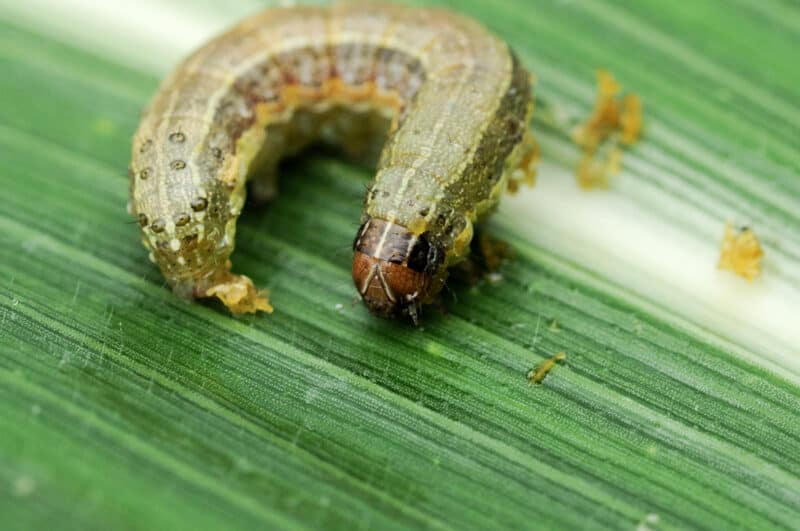
Armyworms, tomato cutworms (Helicoverpa zea), sphinx (Manduca quinquemaculata) and tent caterpillars (Malacosoma spp.) are among the most common caterpillars that can defoliate your plants and destroy any developing fruit.
Your best bet to avoid them is to cover your plants with floating covers. Alternatively, you can wrap their stems in tape-covered cardboard. Crawling insects will be trapped on it, so they cannot climb up to feast on the leaves and fruit.
12. Sapsucking Pests
Pests such as whiteflies, aphids and thrips can wreak havoc on your tomatillos. Not only can they stunt growth and kill leaves, they spread disease. To combat them, spray neem oil on your plants and sprinkle diatomaceous earth around them.
If your aphid problems are particularly severe, consider introducing ladybugs, lacewings, or tiny pirate bugs. Another option is to cover your plants with thin blankets.
13. Potato beetles
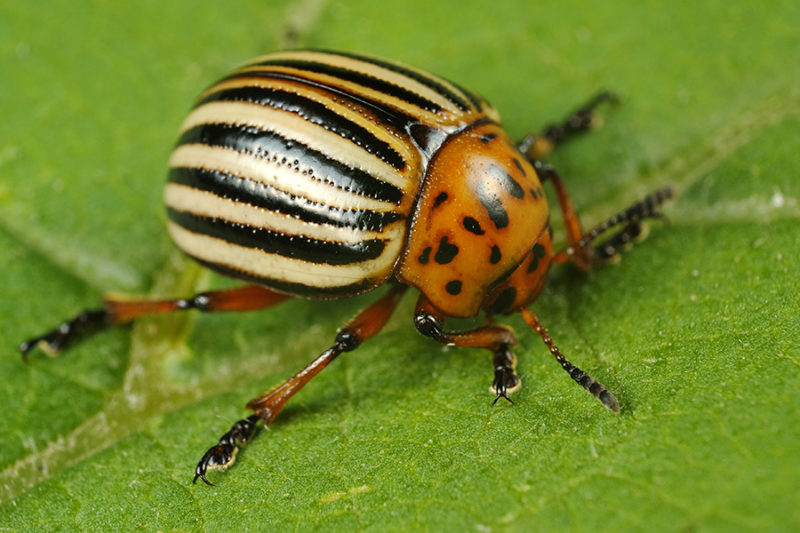
These little striped jerks like to attack all nightshade plants. Although they are commonly found on potatoes, they also like tomatoes, tomatillos and eggplants.
You can repel these types with neem, but you can also handpick them and destroy their egg clusters, which are usually found under the leaves. Visit our guide for more tips.
14. Root-knot nematodes
These tiny little worms use the roots of tomatoes and tomatillos as nurseries for their babies. They lay their eggs inside the roots, causing the rest of the plant to turn yellow, wither and die.
Although you can’t control them once they attack your plants, you can work on controlling them in the future. Dig up and destroy affected plants, then dig up and solarize the soil to a depth of two feet.
This involves digging up the ground and spreading it over tarps so the hot summer sun can bake it through. This will kill the nematodes as well as their eggs.
Once you’ve done that, mix it well with aged compost and diatomaceous earth, and replace it. Next, avoid growing fruit-bearing plants in that bed for at least two years: stick to greens and herbs instead.
Additional tips
Many of the above diseases can be avoided if you buy disease resistant plants. These were bred from parents who survived the disease and thrived, so they are better suited to repel these pathogens.
As mentioned, practice regular crop rotation and always water your plants at root level. Also, check them daily for any signs of infection. If you can snuff out a fungal infestation or problem before it spreads, you won’t lose your entire crop.
Finally, remember never to bury or compost affected plants: burn them instead to kill the diseases that affect them.
Was this article helpful?
Yes No ×
We appreciate your helpful feedback!
Your response will be used to improve our content. The more feedback you give us, the better our pages will be.
Facebook pinterest