
Have you ever walked in a sticky, twisting mass of fury on the outside? Or were you mobbed by so many writhing beasts that you ran away screaming? Then you’ve probably come across tent caterpillars before. Read on to find out how to handle them if and when they arise.
What are tent caterpillars?
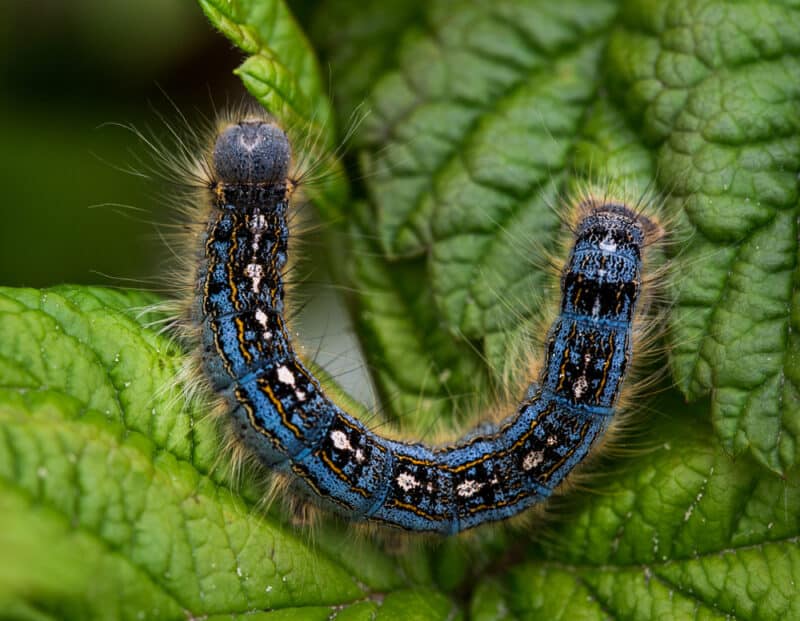
Meet some members of the Malacosome butterfly genus. These butterflies have soft, fuzzy bodies in various pale, pastel or neutral hues. They help pollinate a wide variety of plants and are a food source for many birds and small animals, but their offspring are a real horror sight.
These larvae are small, social, fuzzy wigglers that make large, silky nests in the branches of deciduous trees (those that lose their leaves each year) throughout North America, most of Europe, and some parts of Asia.
While many prefer forest locations, you’ll also find them scrubbing trees in cities and suburbs. If you look in tree branches during the summer, you might wish you hadn’t: many of them will be writhing with masses of these caterpillars, which often fall on unsuspecting passers-by.
Tent caterpillars are known as “defoliators” because they devour the leaves of the trees in which they decide to nest. Once they are done, these trees will be as bare as they are in winter.
As you can imagine, this can be devastating to people growing fruit and nut species. If there are no leaves or flower buds on the trees, there will be no food to harvest.
If you are growing fruit trees and really want to have a successful harvest, you will need to learn some management methods.
3 ways to fight tent caterpillars
There are different approaches you can take to get rid of tent caterpillars, depending on what time in their life cycle you are facing.
1. Eliminate egg clusters
These butterflies lay their eggs on trees during the summer months. Eastern species tend to lay them in June or July, while western species aim for August or September.
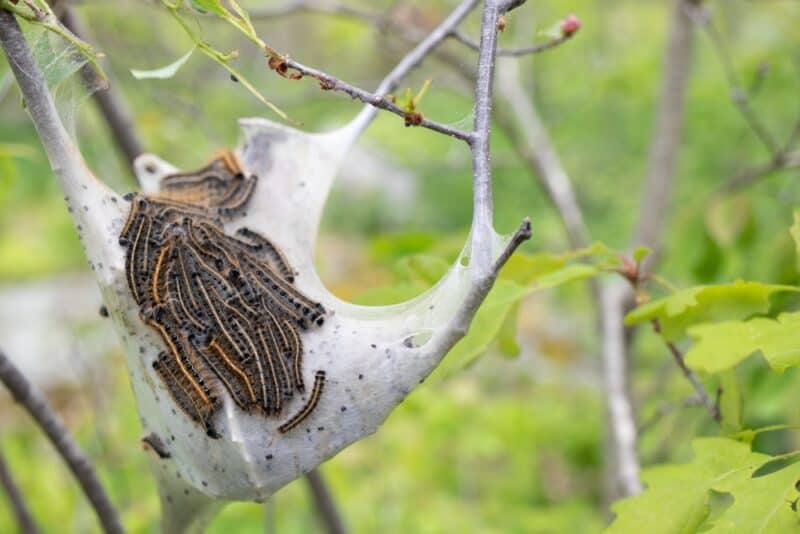
These clutches of eggs look like lumpy balls of old polystyrene. They can be tan or cream in color, but most of them are brown. These stick to trees during the winter and burst into masses of twisting larvae the following spring.
If you find these claws, you can remove them by gently scraping them off the branch or trunk with a scraper or the back of a knife. Avoid stripping the bark while doing so: we are trying to prevent these trees from being damaged, not causing damage in the process.
Once you’ve removed the clutch, you can either seal it in a plastic zip-top bag and throw it away, or throw it in a bucket or jar of vinegar. This will dissolve the eggs and end the life cycle.
Alternatively, if you don’t want to scrape off the bunches or if they’re too difficult to remove, you can smother them instead. Take a brush, mineral oil or petroleum jelly and coat the bunches. This will stifle the clutch internally preventing air from entering or exiting.
2. Shoot down the nests
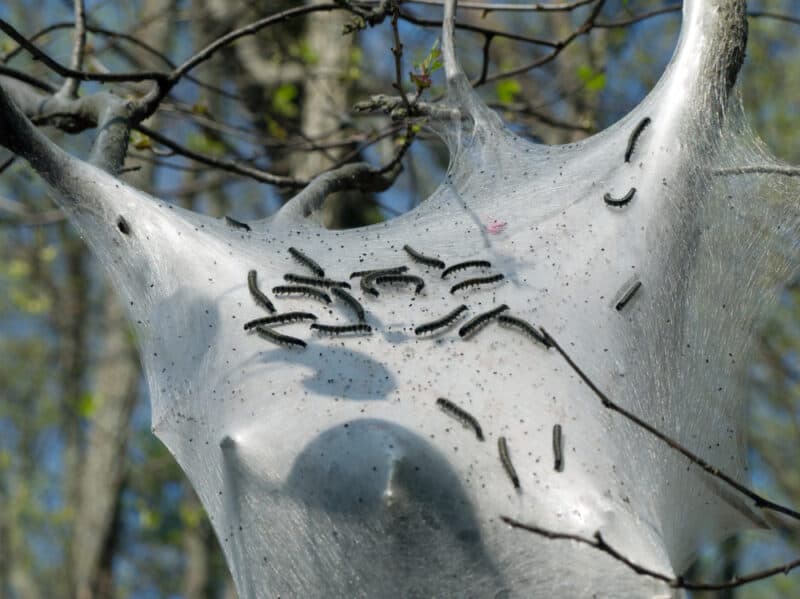
This is one of the most effective methods of dealing with tent caterpillars, but it’s not for the faint-hearted. You will be get caterpillars on you during this process so if you are gross be sure to wear protective gear.
The easiest way to knock down tent caterpillar nests is to treat them like cotton candy. Seriously. Take a large stick, preferably with a forked end. Then use it to reach the silken nest and start spinning.
You’ll grab the fibers from the nest on the branch, and as you twist, it will create a fluffy cone. It’ll look more like a horrifying version of cotton candy on a stick by the time you’re done.
Once you are done spinning, you have two options:
- Drop the branch on the ground somewhere to let the larvae crawl
- Drown everything in a large bucket or tub of warm or soapy water, or 50/50 water and vinegar
If you drop the branch on the ground (preferably away from your trees), the larvae will likely be gobbled up by birds, rodents, and various amphibians or reptiles faster than you can blink.
Many species consider these squirmers tasty, and once they’ve emerged from their protective silken nest, they’re a crawling buffet of delights that will be devoured in no time.
By contrast, drowning them in a vinegar solution effectively kills them, but this will render them inedible to local wildlife. If you prefer the latter option but still want to feed the local creatures, use hot water to drown them. Then pour out the water and let nature take its course.
Don’t try to burn the nests! It’s a great way to burn down your whole neighborhood. If these caterpillars scare you, just imagine a flaming ball falling on your floor and igniting a huge fire. Nightmare material!
3. Use a selective biological insecticide
It is generally best to avoid chemical warfare unless there is no other choice, as widespread damage from insecticides wreaks havoc on entire ecosystems. Aim for the least destructive option possible if you have no choice but to go that route.
For example, Bacillus thuringiensis is a gram-positive bacterium that specifically kills butterfly and moth larvae. It is sprayed on the foliage and any larvae that consume it will die within five days.
Just note that this insecticide is not species specific. As a result, it can affect beneficial species that are found in the area.
For example, if the foliar spray you use to control tent caterpillars on your apple trees spreads onto nearby native milkweed plants, you could kill dozens of endangered monarch butterflies. [1] who use these plants as their main source of food.
What’s more, new research shows that this bacteria can also be deadly to some species of bumblebees. [2]
Nothing exists in a vacuum and every choice we make has repercussions. If you can avoid taking this route, please try to do so.
Tolerance
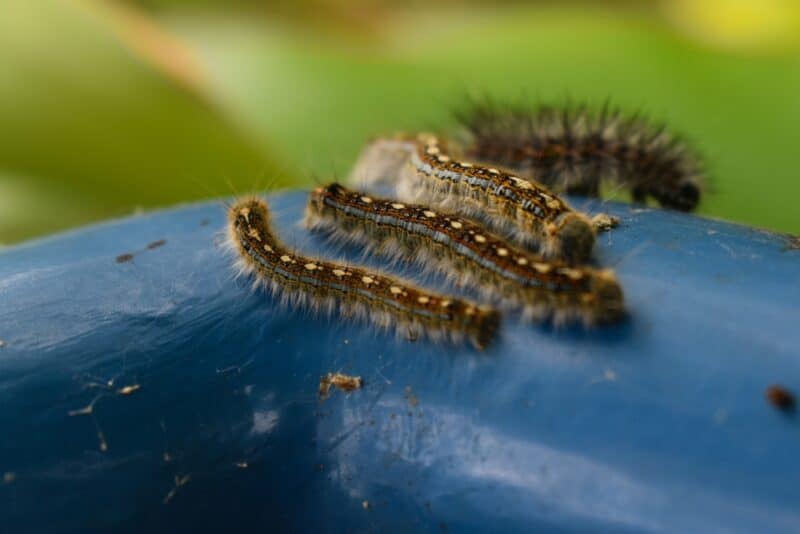
As mentioned earlier, tent caterpillars rarely cause lasting damage to the species they inhabit.
If they hit the same trees a few years in a row, it might make them more vulnerable to predation or disease, but other than that, they’re only a temporary nuisance. If your trees are at risk, try to eliminate broods before they can hatch, because an ounce of prevention is better than a cure.
Most of the time, populations tend to rise and fall. One year you will have a huge infestation, and the next year hardly any.
Many experts suggest that you use a technique known as tolerance. In other words, just ignore them. Your tree may not be at its best this year, but it will recover the next and you can put all this ordeal behind you.
If you continually see large infestations year after year and your tree suffers, go ahead and use the methods listed above. Next, work to improve your garden environment. Beneficial predatory insects will keep caterpillars under control in a healthy garden.
The references:
- Hellmich RL, Siegfried BD, Sears MK, Stanley-Horn DE, Daniels MJ, Mattila HR, Spencer T, Bidne KG, Lewis LC. Sensitivity of monarch larvae to purified Bacillus thuringiensis proteins and pollen. Proc Natl Acad Sci US A. 2001 Oct 9;98(21):11925-30. doi: 10.1073/pnas.211297698. Published online September 14, 2001. PMID: 11559841; PMCID: PMC59744.
- Mommaerts V, Jans K, Smagghe G. Impact of Bacillus thuringiensis strains on survival, reproduction, and foraging behavior in bumblebees (Bombus terrestris). Pest Management Sci. 2010 May;66(5):520-5. doi:10.1002/ps.1902. PMID: 20024947.
Was this article helpful?
Yes No ×
We appreciate your helpful feedback!
Your response will be used to improve our content. The more feedback you give us, the better our pages will be.
Facebook pinterest