
With hundreds of planting options, thousands of containers to choose from, and endless possible combinations, container gardens are a designer’s dream.
They are ideal for beginners who don’t have much gardening or outdoor experience, and for experts who want to experiment and explore their creativity in the garden.
The design of a container garden is a matter of style and personal preference. Some like their garden tidy, others like it wild. Maybe you prefer foliage, while your neighbor prefers flowers. That’s part of the excitement of the design.
That said, there are some general design principles that can improve the look of your containers and your garden in general.
These aren’t “rules” (don’t let me suppress your inner creative genius), but they are tips or tricks that can take a container garden from simple to brilliant.
1. Consider the size
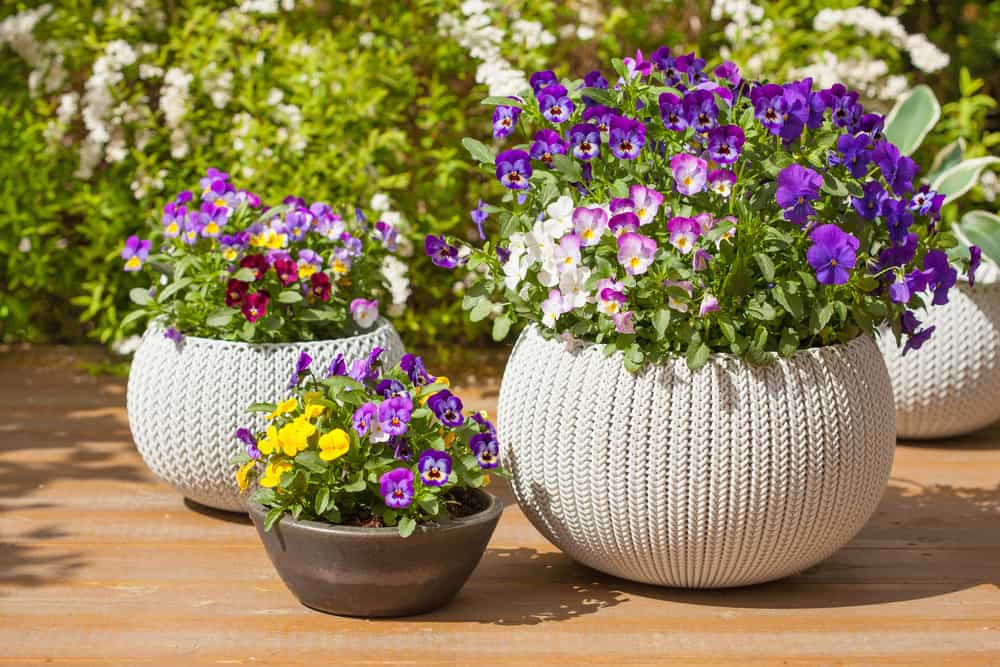
When it comes to container gardening, size definitely matters. This applies to the pots you choose, what you put in them, and how you arrange them in your vegetable patch.
When choosing a pot, plant care should be your first priority. Your container should be large enough for the plant to grow, but not so large that the plant is lost. Container depth can also affect root growth. You don’t want to completely fill a pot only to find plants sprout in a month. You won’t like it, and neither will the plants.
But care isn’t the only consideration when choosing the size of your containers. It also affects the design.
Small plants look even smaller in a pot that is too big. Likewise, small pots look even smaller in a large vegetable garden. Balance the pruning so your plants look healthy and lush, not limp and shriveled.
It is also possible to go too large. You don’t want your pot to be too heavy or spill over the sides. Keep the plant size around twice the height and width of the pot at most.
Finally, consider the dimensions of your individual pots relative to each other in your container garden. A complete garden with equally sized pots is likely to make a splash no matter what plants you choose. Vary the size of your pots and the height of the plants in them to draw attention to the different levels of the garden.
2. Play with color
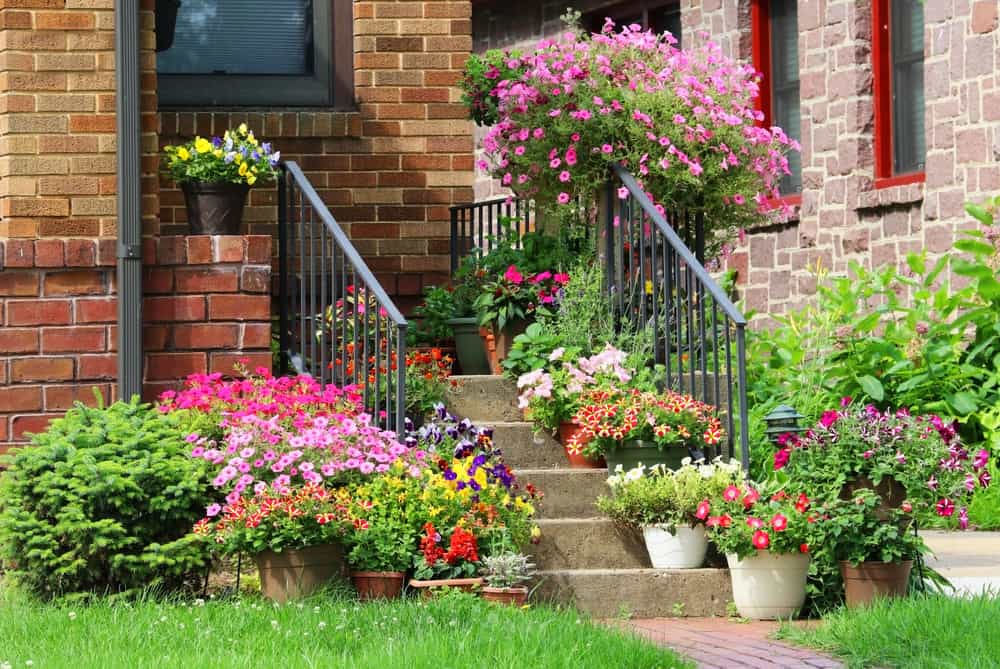
Experimenting with color is one of the strengths of container gardening. If you prefer consistent and harmonious color combinations, choose one or two colors to use throughout your garden.
The monochrome look doesn’t have to be boring either, far from it. Choose flowers of the same color but in different shades to add variety without straying too far from your color scheme. When it comes to container garden design and design in general, you rarely go wrong if you keep it simple.
At the other end of the color spectrum, gardeners who prefer bold, bright colors have the option to go wild.
Walk through your local nursery and you’ll find flowers in every shade imaginable, sometimes two or three shades on the same plant. Use this strain to your advantage. Combine contrasting colors of light and dark in the same pot, or look for two-tone blooms with dramatic contrast built in.
The color wheel is also an invaluable tool for garden design. Place flowers in complementary colors (those that face each other on the color wheel, such as orange and blue) next to each other to intensify and illuminate both.
The focus is often on the flowers, but don’t forget the foliage either. Your containers should always look good, even when the plants aren’t blooming. There are hundreds of plants with colorful foliage that are perfect for pots. Use them to ensure your pots stand out at all times, not just for one season.
3. Don’t ignore texture
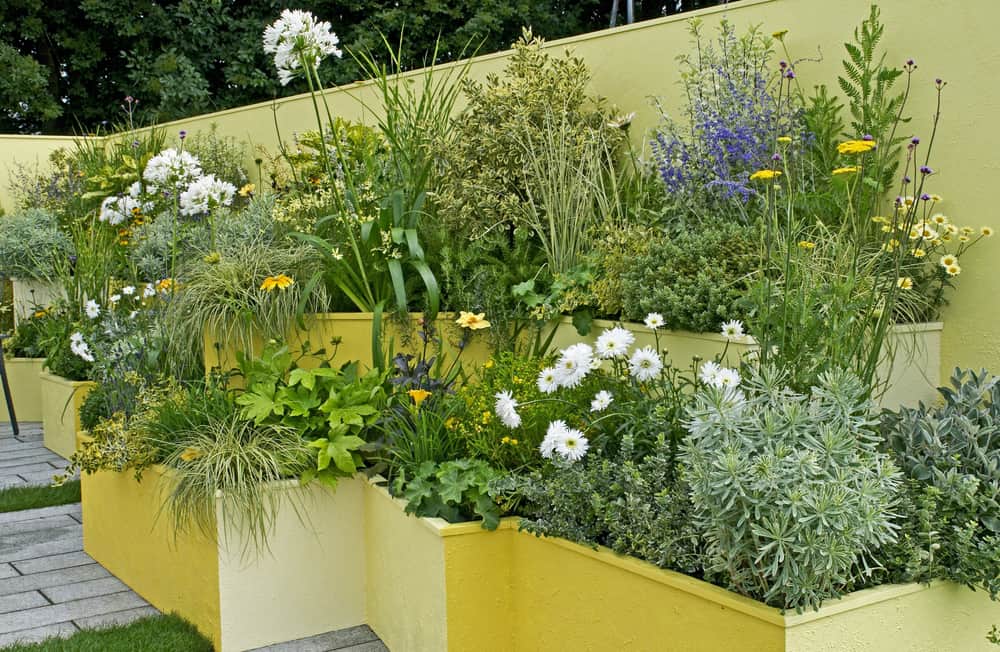
Color is often the first consideration when designing a container garden, but texture and structure can be just as impactful when used correctly.
Thin, delicate leaves can intensify bold, towering blooms. Wispy grasses can soften structural plants. The goal is balance: the plants you choose should complement each other, not compete for attention.
Fortunately, there is no shortage of fun and complementary textures. Hard, shiny plants are very different from soft, hairy leaves and flowers (like the popular sea lavender). But somehow they work together.
Thorny weeds or thistle-like plants can reduce the fuzzy texture for a softer garden. Make sure the plants you pot together and any plants in your container garden have a wide variety of textures and structures.
4. Thriller, Filler, Spiller and the Rule of Threes
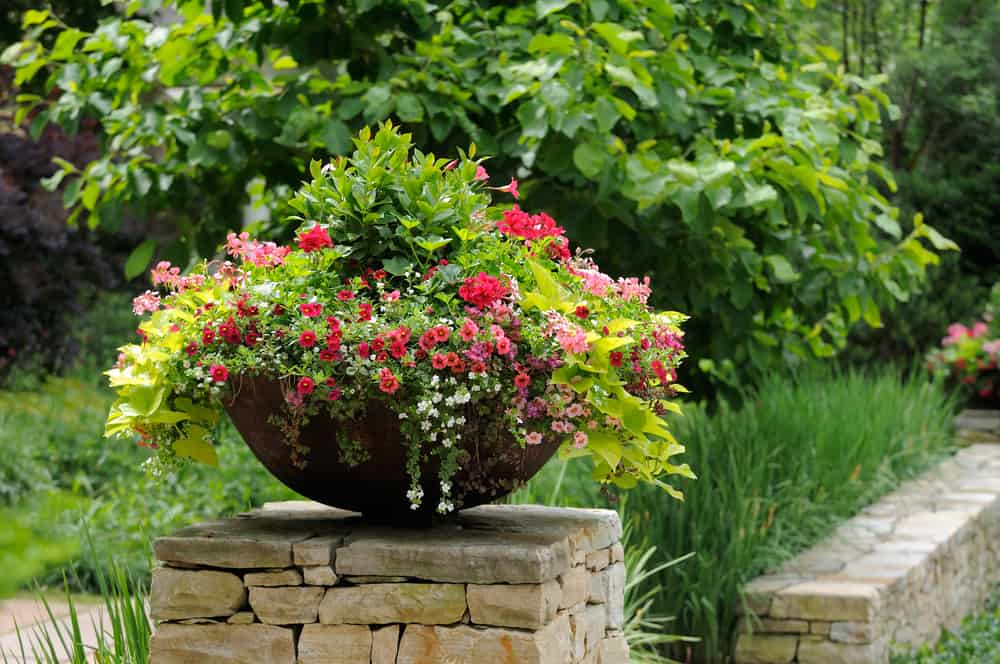
Before you start planting, think about the layout of your pots and the garden as a whole. A small plant in the middle of a container surrounded by tall plants is completely lost and (at least by design) might as well not be there.
Place the tallest plant in the center or “behind” if the pot is in a corner. This is the main focus – the star of the show. Surround the central plant with smaller companion plants called fillers. “Fill” may not be a very dignified term, but it serves an important purpose: to highlight the downstairs and add another level of interest.
The edges of a pot are ideal for hanging plants, as if they are sticking out of the pot. And they’re also a good cover for unsightly stains on bins. It boils down to three basic principles: thriller, filler and overflow.
When arranging your pots, apply the “rule of threes” by grouping pots of different heights in thirds. Add one or two tall plants to each group to keep the garden from appearing one-dimensional.
Combine plants of different types (flowers and leaves, or shrubs and succulents) in groups of three to add variety. Container gardens are the only place where you can place two plants with very different needs next to each other (albeit in separate pots) – take advantage of this.
5. Consider your surroundings
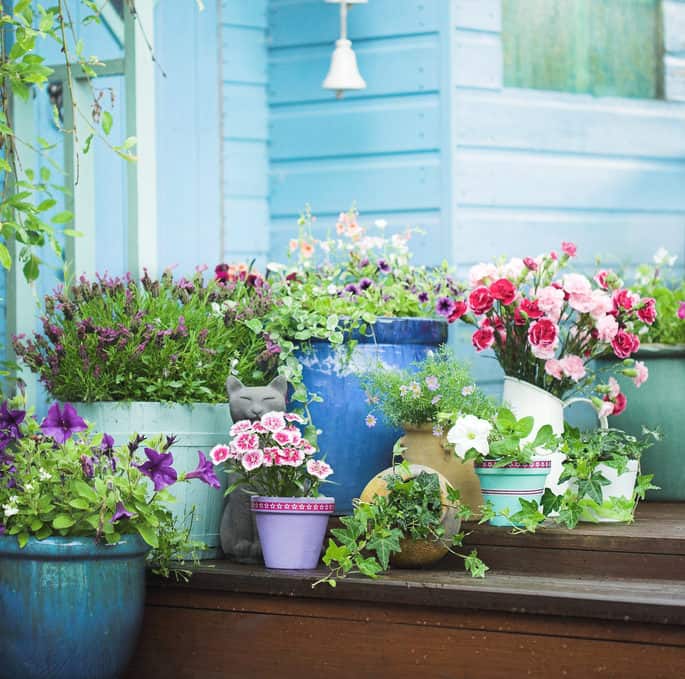
Whether your vegetable garden consists of two or twenty pots, it should always be in harmony with the wider environment. It could be the rest of your garden or the furniture on your balcony, but the same principle applies.
The potted vegetable garden must blend into its surroundings. Larger pots can be placed anywhere in a garden and stand alone, but smaller containers should be placed higher up or used alongside other pots to avoid getting lost in the landscape. You can perfectly balance color, texture, structure and movement in a pot, only to find that its beauty is diminished in comparison to surrounding plants.
But that’s the advantage of container gardening: your pots can be easily moved around until you find the perfect spot.
Designing a container garden is all about experimentation. Try these tips for yourself and see what works best for you.
Get out of your comfort zone and choose a design that is unfamiliar to you; you might surprise yourself. And at the end of the day, if you’re not satisfied, you can always change your mind and repot, an ideal gardening practice for the undecided.