
Are you planning to try blacksmithing? If so, you are going to have so much fun! This age-old craft has had a remarkable resurgence in recent years and is an excellent farm skill to possess.
Depending on your interests, you can train everything from household utensils to horseshoes, nails and more!
Let’s look at the basic blacksmithing tools of the trade you’ll need to get started.
For nearly ten thousand years, man has been transforming various metals into practical and decorative objects.
As you can imagine, blacksmithing tools have varied greatly over the centuries. That said, there are a few essentials that people of all cultures and times have used for their metalworking needs.
1. A blacksmith’s forge
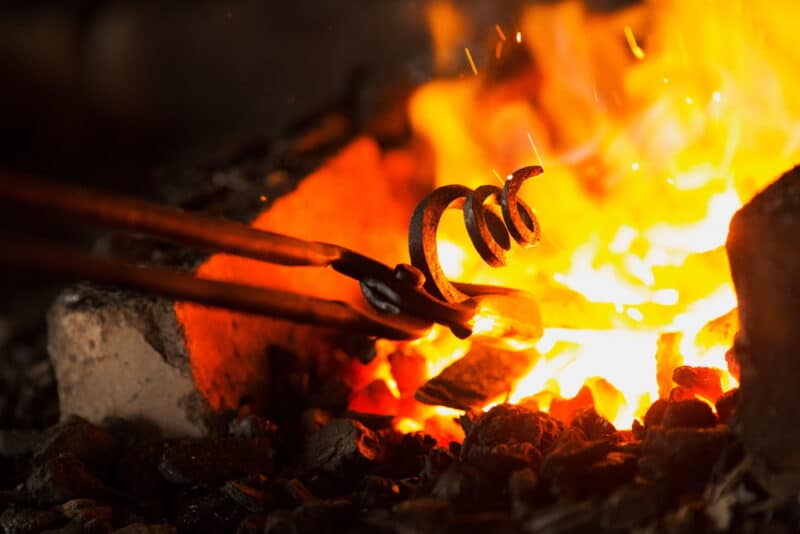
When considering your forging tools, blacksmithing is most crucial. Without a heat source, you will not be able to heat your metals to work and shape them.
When setting up your forge, you can be as high-tech or low-tech as you want. If you have a lot of money to play with, you can invest in a propane forge from a licensed manufacturer. Alternatively, you can also DIY a forge out of basic materials.
For example, you can create a forge out of a steel drum filled with rocks and sand. Some people create forges with firebricks covered in sand and charcoal. As long as you have a fuel source (such as propane or charcoal) and a way to maintain heat (such as a fan, bellows, or even a hair dryer), you’re good to go!
The most economical firebricks you can find are those that go in cob pizza ovens or pottery kilns.
2. A hammer
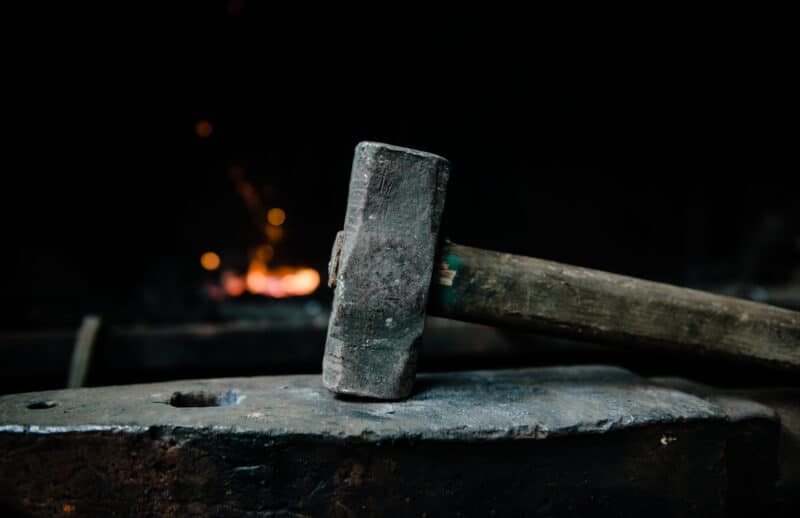
After the forge, your hammer is the forging tool you rely on most for your forging efforts. You need a tool to shape this metal, right?
There are a number of different hammers, but a cross or straight claw hammer is the most common option. You can find these online, but most hardware stores should also have at least a few in stock.
If you plan to do a lot of blacksmithing, find a hammer that works for you, then get two. This way you will have a backup when the first one starts to wear out. Plus, you won’t be disappointed if the manufacturer stops making that particular style.
3. An Anvil

Now that you have a hammer, you need a surface to hit this iron on until it takes the shape you want. Anvils are ideal because they can take heavy blows without collapsing.
That said, any solid iron surface will do if you’re not prepared to spend a lot of money on your blacksmithing tools in the beginning.
Travelers used railroad ties to fashion objects because they were made of solid iron. They would set up a forge next to a railroad and hammer. You should be able to find old anvils for sale on Kijiji, social media marketplaces, or even antique shops. They usually cost around a dollar per pound. Likewise, you can also find old railroad ties for pennies.
Ultimately, you need a flat, hard surface that can withstand being crushed by metal many thousands of times.
4. Forging pliers

Think of claws as extensions of your arms used to place objects in the forge to be heated or to hold them in position while you work on them. They add a bit of extra distance between you and the red-hot or white-hot metal you’re hitting, while preventing said metal from skidding while you’re working.
There are a dozen different types of pliers, so you’ll need to figure out which type or types you’ll be using the most. For example, some are better for holding flat metal bars to be shaped into racks or iron bars. Alternatively, some are better suited for holding rods or square bars for bed frames, fences, etc.
Decide what you will do the most, then choose the pliers best suited to making those items.
5. Soak bucket
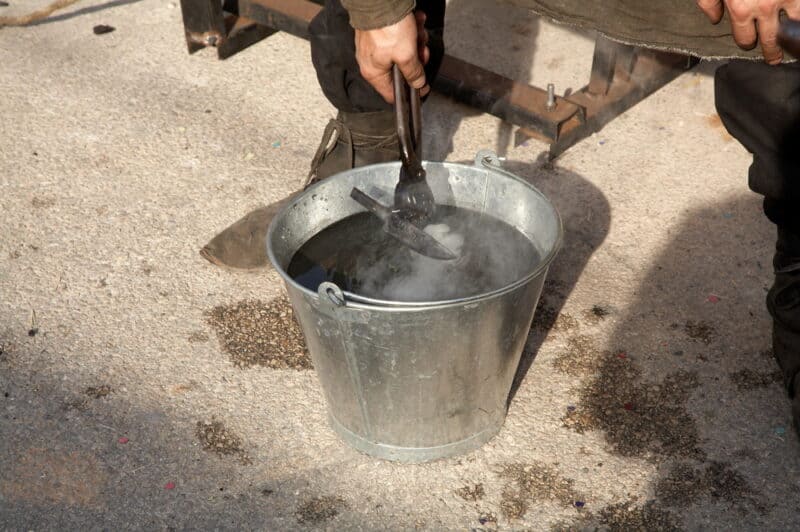
Have you ever seen a movie in which a blacksmith pushes a red-hot piece of metal into a bucket of water? Said bucket is known as a “dipping bucket”. It is used to quickly lower the temperature of hot metal to adjust its atomic structure.
You can dip the metal in water, oil, or various other types of liquid, depending on the effect you’re looking for. For example, some quenching materials will strengthen and harden the metal quenched into them. Remember that metals are crystals and will move into different alignments depending on factors such as heat and resonance.
6. Safety equipment

Have you ever been burned by the ashes of a bonfire or even a cigarette? Then you know how much it hurts to have one of those on your skin.
The types of safety equipment to use while blacksmithing will of course depend on your personal preference. Ultimately, you’ll want to make sure your eyes are protected, so you don’t get any flaming bits of metal in them. Also, wearing thick clothes while you work will prevent your skin from getting scorched.
Some of the safety equipment you may want to invest in may include:
- Safety glasses or a full face mask
- Hearing protection: The ringing of hammered iron over and over can cause hearing damage, so consider sound-absorbing earplugs or earmuffs.
- A blacksmith’s apron
- A respirator: you don’t need it if you have an open-air forge, but if you work indoors, it’s essential
- work boots
- Leather work gloves
- Thick cotton clothes
- Fire extinguisher: A random spark can fly out and ignite nearby objects, so keep a fire extinguisher handy
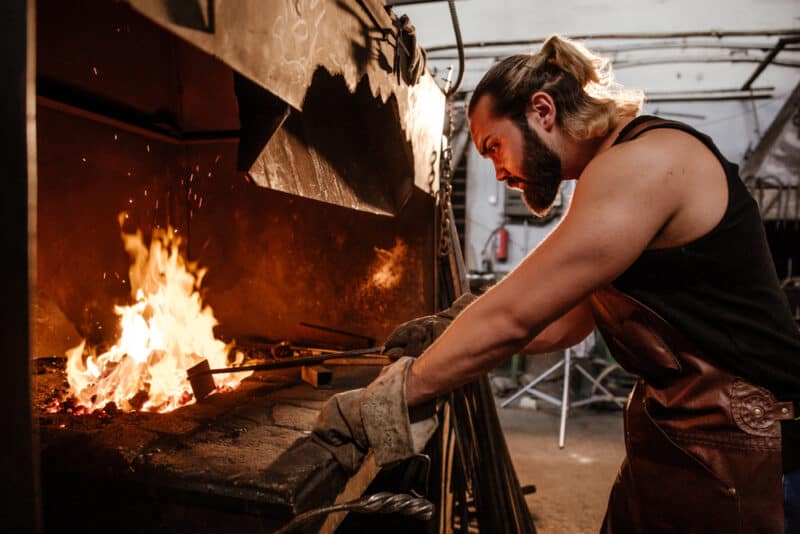
If you take up blacksmithing, after finding the right blacksmithing tools, you’ll either become your neighbors’ best friend or the bane of their existence. This is because the hammering of metal makes a plot noise.
This won’t be a problem if you live in a rural environment, but if you’re semi-rural those who live nearby might be very unhappy.
You might want to build a blacksmith shop with sound insulation in a case like this. It can be as simple as a garage lined with egg cartons or an outhouse you’ve fitted with thick sound deadening mats on the walls.
In folklore, a blacksmith’s anvil ring was said to be powerful enough to drive away evil spirits and malevolent fairies. That’s one of the reasons the fae are said to hate iron so much! This is something to keep in mind in case one of your neighbors freaks out about your new hobby.
The good news is that blacksmiths have always been known to have magical powers, as they work successfully with the elements of fire and metal. If your efforts as a blacksmith prove successful, you might end up making more friends (and customers) than you ever imagined.
Good luck!
Was this article helpful?
Yes No ×
We appreciate your helpful feedback!
Your response will be used to improve our content. The more feedback you give us, the better our pages will be.
Facebook pinterest