
The succulent plants of the genus Agave They are an excellent alternative to growing in pots or directly in the garden, especially in warm climate zones. Attenuated Agave is one of most popular varieties and its culture is relatively simple. These plants grow best in a well-drained substrate, as well as in general requires a lot of direct lightalthough they can also tolerate some shade.
Like many other succulents and cacti, their enemy is over-watering, so by controlling the irrigation well, it is possible to obtain the maximum level of this plant in terms of color, vivacity and vigor. At the time, we discussed the main characteristics of the Agave plant, from which Tequila is extracted in Mexico (tequilana agave). In this article, we give you a summary of the main needs of Attenuated Agave or, as it is commonly called, the attenuated agave.
Characteristics of Attenuated Agave
Attenuated Agave is a large-leaved succulent commonly known as agave shade. This plant is native to the deserts of northern mexico and the southern United States. Agave attenuata has a short stem, pointed, spiny leaves. It reaches a height of between 50 and 75 cm, with white flowers in clusters that open in spring.
taxonomy
| Order | asparagus |
| Family | Asparagaceae |
| Genre | Agave |
| Species | Attenuated Agave |
Common names: attenuated agave, dragon or swan’s neck agave, maguey, lion’s tail agave.
Other types of Agave we talked about in Agromática:

maintenance guide on Attenuated Agave
1. Climatology
Lives well in arid and semi-arid areas.
Temperature: cold-sensitive plant that does not tolerate frost, although it tolerates a few hours with temperatures below 0 ºC. The optimum is between 23-28 ºC
Humidity: it is adapted to conditions of low environmental humidity, although this is not an important requirement, since many agave specimens are grown in coastal gardens and grow spectacularly.
Flash: the more, the less. They can grow in semi-shaded areas or, even better, in direct sun. Only in summer we will be able to notice how it loses its intense green color due to insolation, so if it is grown in a pot it is best to place it in an environment with plenty of light, but without direct exposure to the sun.
2. Watering
Most succulents are adapted to very dry environments with low rainfall. Its fleshy leaves accumulate moisture to cover the needs of the plant for months.
In the case of Attenuated Agave, their needs are even more austere. It is usually watered 1 time per week in summer and every 15 days in autumn and winter. But, as a main measure for avoid any kind of rotis to have good drainage, a fact that we will achieve by choosing the type of substrate that we will tell you about below.
In summary:
Watering in spring and summer: 1 watering every 15-20 days, depending on the temperature.
Watering in autumn and winter: 1 watering every 7 days, depending on temperature and sun exposure.
The irrigation dose is usually the one that allows drainage of about 10% of the water, carrying salts that can be harmful to the plant. Regarding the volume, we are talking about 1/8 or 1/10 of the volume of the pot.
3. Substrate or soil type
Succulents grown in pots require as their main requirement a type of substrate that helps eliminate excess water Very easily.
For this reason, only universal substrates are usually not used, but are mixed with components such as sand, gravel, perlite or coconut fiber. All provide good oxygenation of the environment and drain excess water.
Nail homemade potting soil for you Attenuated Agave can be the following:
- 50% Universal Substrate
- 30% coconut fiber or perlite
- 20% river sand
In specialized stores you can also find slightly more complex preparationswhere they include fertilizers such as magnesium (succulents and cacti are quite demanding on this macronutrient) and components such as volcanic clay or crushed pine bark.
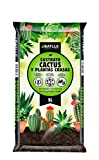
Cactus substrate 5l.
- good solid report
- high doses of magnesium
- Avoid root rot
- Made in Spain
4. Use of fertilizers
As we commented that our substrate will contain a significant part of inert components that provide practically no nutrients, it is necessary to feed the plant with the additional supply of fertilizers.
This contribution can be made using solid fertilizers in the form of granules or liquid fertilizers. For those who seek comfort, solid fertilizers are more comfortable, since they are brought in early spring once a month, slowly releasing with moisture from irrigation.
If you want to be more specific with the nutrition of your Attenuated Agave, you can use liquid fertilizers. You will find a large number of them, an NPK (nitrogen, phosphorus, potassium) ratio of 2-1-2.5 being preferable, with a preference for potassium. Never Forget Magnesium and micronutrients, important for this type of crop.
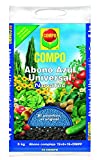
COMPO Novatec Universal Fertilizer Blue, 5 kg
- NPK complex fertilizer (Mg+S) 12 + 8 + 16 (+3+25) with magnesium and sulfur + microelements + nitrification inhibitor, Ideal for all types of ornamental plants, shrubs, green plants, roses, citrus fruits, etc.
- The professional technology with the nitrification inhibitor (DMPP) ensuring the stability of nitrogen in the soil, guarantees the maximum utilization of nutrients in the plants and more abundant flowering. Up to 8 weeks subscription available
- Improved formula, with less phosphorus. Eco-friendly
- COMPO quality: raw materials selected according to the original COMPO recipe, Strict quality controls by independent laboratories and institutes, The best conditions for healthy plant growth
- Contents: 1 x COMPO Novatec universal blue fertilizer, 5 kg
This granular fertilizer has a composition of NPK (Mg-S) 12-8-16(3-25), so it has an ideal ratio for a plant like Attenuated Agave. It is applied in low doses, approximately 10-20 grams per plant (pot) and 100-150 grams per plant if grown outdoors, reapplying monthly in spring and summer.
 Photography: Jeremy from Sydney, Australia – Succulents
5. Pests and diseases
Although the agave is a resistant plant, certain insects have a weakness for the sap and the high concentration of juice that its leaves contain.
harmful
Agave weevil (Scyphophorus acupunctatus): the adult weevil attacks many species of agave, with larger species being more likely to be attacked, such as american agave. The adult female enters the base of the plant to lay her eggs. Infested plants quickly collapse and die. Grub larvae (worms) grow on the dying plant and infect other nearby hosts.
cactus beetle (Moneilema gigas): although this beetle is more typical of cacti, as Echinocactus grusonii (mother-in-law’s seat cactus), could also affect succulents. Plant damage is the result of feeding on the edges of prickly pear pads or the terminal buds of other cacti.
Woodlouse (Dactylopius cockle): It is one of the most common pests on cacti and succulents, creating a blanket of white milkweed and gradually weakening the plant, which loses its original color and vigor.
Cooked (Coccid spp): another type of lentil-shaped mealybugs that can cover the entire plant, form pustules and weaken the plant over time.
When it comes to controlling these pests, weevils, beetles and weevils, you will need insecticides such as pyrethrins. Instead, against scale insects, you can use homemade solutions such as vinegar (2 ml/L of water), dish soap (2 ml/L), potassium soap (5 ml/L) or hydrogen peroxide (2 ml/L), spraying on the pest then, using a cloth soaked in alcohol, remove any remains that may remain on the leaves.
Diseases
The main growing problems Attenuated Agave they are related to fungus and excess moisture (in the substrate or in the environment).
The main fungi that affect this plant and other relatives are:
- Anthracnose (Colletotrichum): this can be a problem on agaves in wet or occasional conditions when grown in shade and irrigated high up or droplets remain on the leaves. Infections cause lesions on leaves and/or crowns. When the fungus is active, it produces a mass of red to orange spores in lesions.
- Pythium: disease associated with wet and cool weather, allowing water to accumulate on the leaves and on the surrounding root zone.
- Root diseases: caused by agents such as Erwinia That is Fusarium.
- bacterial necrosis: caused by one or more groups of bacteria in conditions of high atmospheric humidity (>80%).
If you need more information on Agave diseases, the University of Arizona has excellent references.
6. Prune or transplant
It is seldom pruned except to remove the lower leaves which have a brown or dry appearancecan remove them by cutting them with a sharp knife.
As for the transplant, if we talk about pot culture, it is recommended when there is no more than a finger of separation between the base of the plant and the container. The realization of this operation is simple (it can be done throughout the year):
- Take the plant out of the pot, very carefully and without breaking any roots
- Remove the substrate stuck to the roots with a rake, knife or any other object, so that they remain as clean as possible
- In a larger pot, fill 20-30% with fresh soil (choose an old or commercial mix).
- Place the attenuated agave in the center and cover the rest of the space with the substrate until you fill in the entire base of the plant.
- Press a little with your fingers and perform a first watering with the dose recommended above.
7. Multiplication
The best propagation method of Attenuated Agave it is per division. This is usually done during the growth period (spring and summer) or taking advantage of the transplant. For the graft to be done successfully, the children or small regrowth must have formed roots.