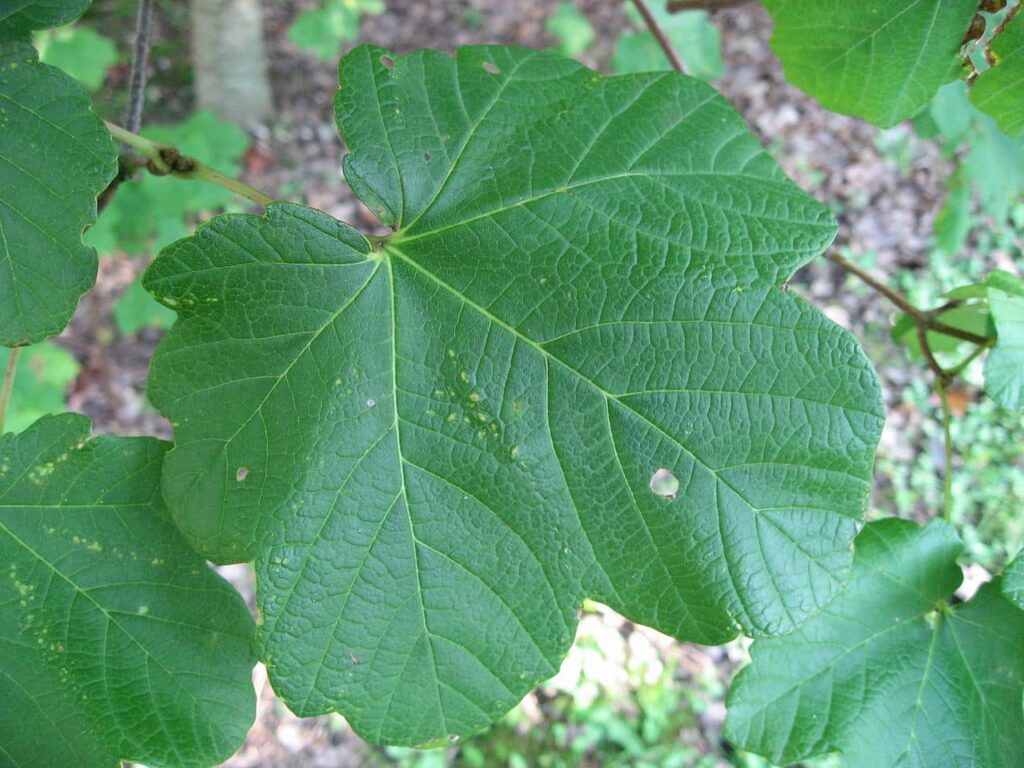

Image – Wikimedia/Line1
Although at first it’s hard to believe, there are trees that don’t need the sun to be healthy. These are the ones that, generally, in their natural habitat are found in the shade of others that grow much larger; or those that adapt without problem to direct exposure to the king sun as well as to shade.
Of course, it’s important to state that they don’t need to directly feel the sun’s rays, but that doesn’t mean they can be in areas of complete darkness. So if there is only shade in your garden, don’t worry: These are the trees we recommend you plant.
tree privet (Ligustrum lucidum)
Privet is a deciduous tree species native to China and Japan. It reaches an approximate height of 15 meters and also produces very showy and aromatic white flowers in spring. It must also be said that it grows at a rapid pace, and that it supports both hot and cold (moderate).
It is widely planted in gardens of all kinds – even small ones – and can even be seen on the sidewalks of towns and cities.
tree of love (Cercis siliquastrum)

Image – Wikimedia/Zeynel Cebeci
The tree of love is a beautiful deciduous tree native to Eurasia that reaches an approximate height of 8 meters, although it can reach 12m. It is an interesting plant for several reasons: it flowers before the arrival of spring, it has very pretty pink flowers, it grows in alkaline soil and, last but not least, it resists temperatures between 35°C and -18°C maximum.
It should also be added that it grows well in shade or partial shade, and can even flower without difficulty. We therefore recommend it without hesitation.
Tree of Jupiter (Lagerstroemia indica)

Image – Wikimedia/captain-tucker
The Jupiter tree is a deciduous plant native to East Asia that reaches a height of about 8 meters. It develops a compact and rounded cup, and about 3-4 meters in diameter. It is a species that produces very beautiful flowers in spring, which can be white, pink or red depending on the variety.
It can be planted in the shade of other larger plants, whether palms or other trees, as it is a tree that does not need sun. But yes, you should know that it supports up to -5ºC.
Maple (Acer)
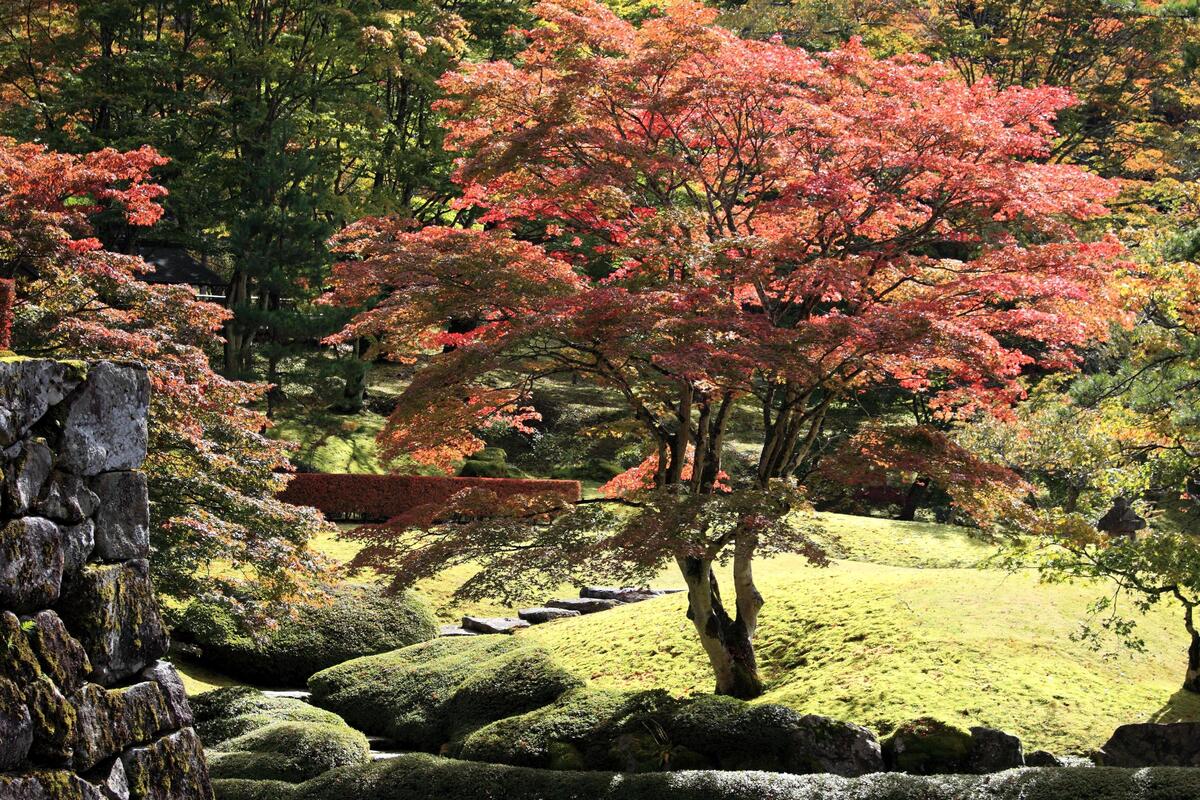
any type of maple can be in shade or partial shade. In fact, in climates like the Mediterranean, due to the high temperatures that exist during the summer, they must be protected from the sun precisely to prevent them from burning.
The vast majority are deciduous, except for the very few Acer sempervirens (it’s rare because very hard to find) that is either persistent or semi-persistent.
Of all that have been described, some of the most beautiful are:
- Japanese maple (Acer palmatum): it is so popular that in addition to the subspecies, botanists have produced many cultivars, such as the “Little Princess” which does not exceed one meter in height, or the “Orange Dream” whose leaves turn to the orange in autumn. See file.
- red maple (Acer red): this maple is one of the few to resist heat well; not in vain, he is originally from Mexico. Now, don’t let the name fool you: the leaves are green for much of the year; it is only in autumn that they turn red. See file.
- Acer opalus subsp. garnet: this subspecies of Acer opalus It deserves to be on this list for being the only native maple of the Balearic archipelago, which is found in the Mediterranean region, east of the Iberian Peninsula. Unlike most species, it grows in alkaline soil and can easily withstand the region’s summers (with temperatures between 20 and 35 ºC). See file.
In addition, all of them are resistant to moderate frosts.
Beech (Fagus)
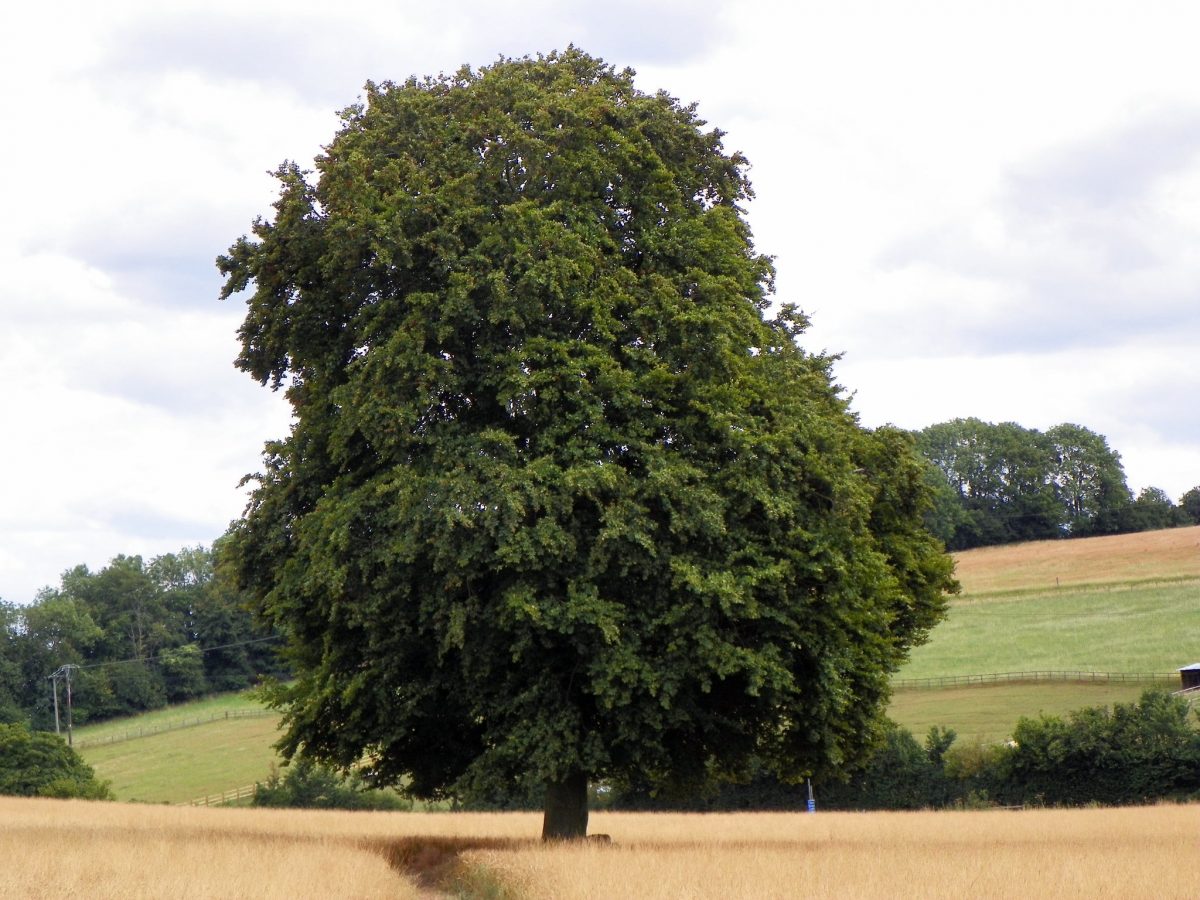
Image – Flickr/Peter O’Connor aka anemoneprojectors
beech It is a deciduous plant that reaches 20 or 30 meters in height.. There are different species, although the best known in Spain is undoubtedly the Fagus sylvatica, which is found in the north of the Iberian Peninsula, where it forms forests called beech groves. It grows quite slowly, but it is a plant of great ornamental value even in its youth. In addition, in autumn it turns from green to yellow.
Due to its size, there will most likely come a time when it will be exposed to the sun as it ages. but even if it wasn’t like that, nothing would happen as it grows well in the shade. Also, be aware that it resists frost well down to -18ºC.
Magnolia (Magnolia sp.)

Image – Wikimedia/Bruce Marlin
The magnolia or magnolia is the name given to a series of trees or shrubs originating mainly from Asia, although they are also found in America. They are characterized by large flowers, light colors (white and pink) and a very pleasant aroma.. Although they take their time to grow, because they start producing them very early, they are plants that are widely kept in pots, as well as in the garden when the soil is acidic.
And no, They also don’t need to be in full sun.. In addition, the same thing happens with maple trees: especially when it is very hot, it is strongly recommended to put them in the shade so that the leaves remain healthy. But otherwise, they tolerate moderate frosts well.
Oak (Quercus robur)

Image – Flickr/Peter O’Connor aka anemoneprojectors
Oak is a deciduous tree native to temperate regions of the northern hemisphere, including Spain. It is a slow growing plant that reaches 40 meters in height., and which develops a thick trunk. The leaves are simple and green, except in autumn when they turn yellow before falling.
It likes direct sun very much, but It can adapt to life in shade or partial shade.; that is, it doesn’t have to be in a sunny spot to be perfect. Also, be aware that it is frost resistant down to -18ºC.
What do you think of these trees that don’t need the sun?