
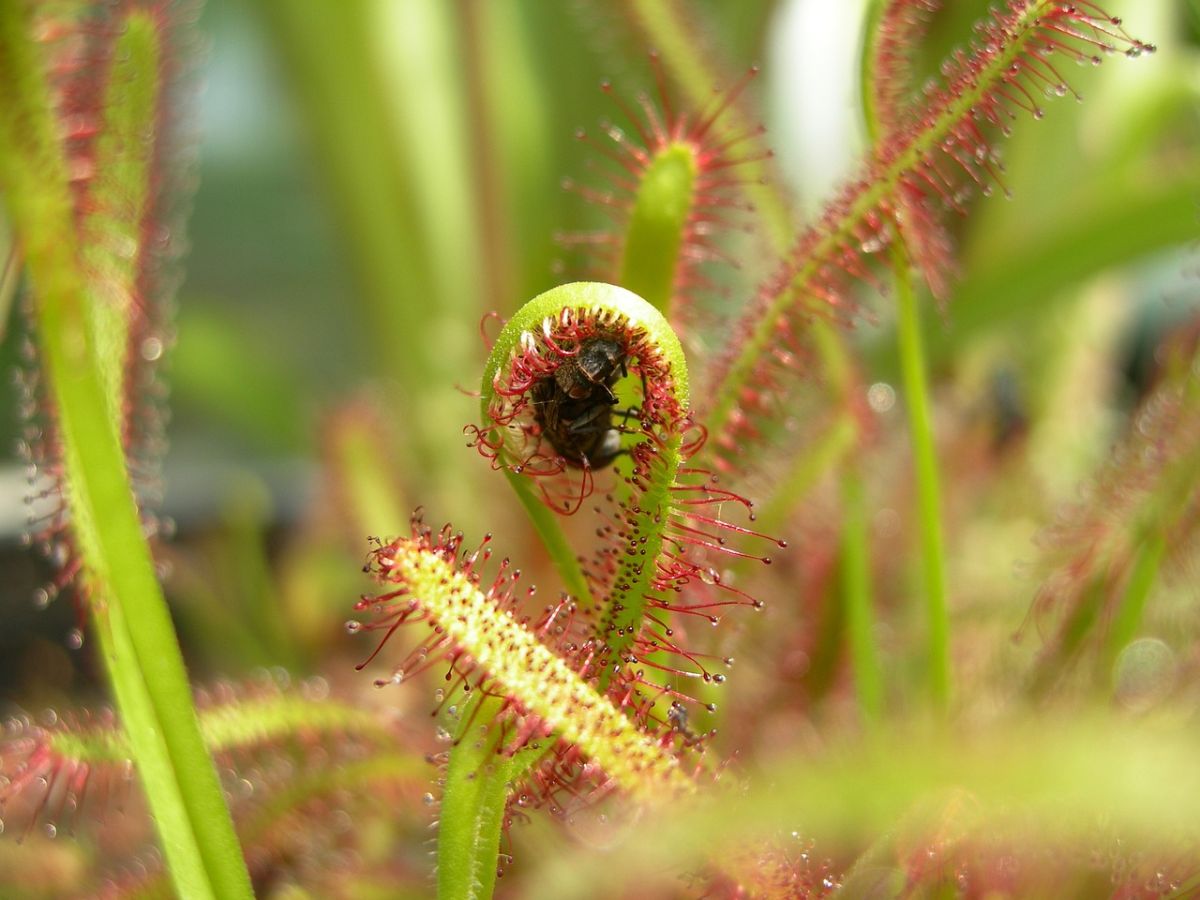
Carnivorous plants are among the most attractive to children. And they are a good way to empower them to take care of a living being. But which carnivorous plants for children are the best?
If right now you are thinking of giving your son or daughter more responsibility with a plant that interests them, why not help us choose carnivorous plants for them? Take a look at some we recommend.
venus flytrap
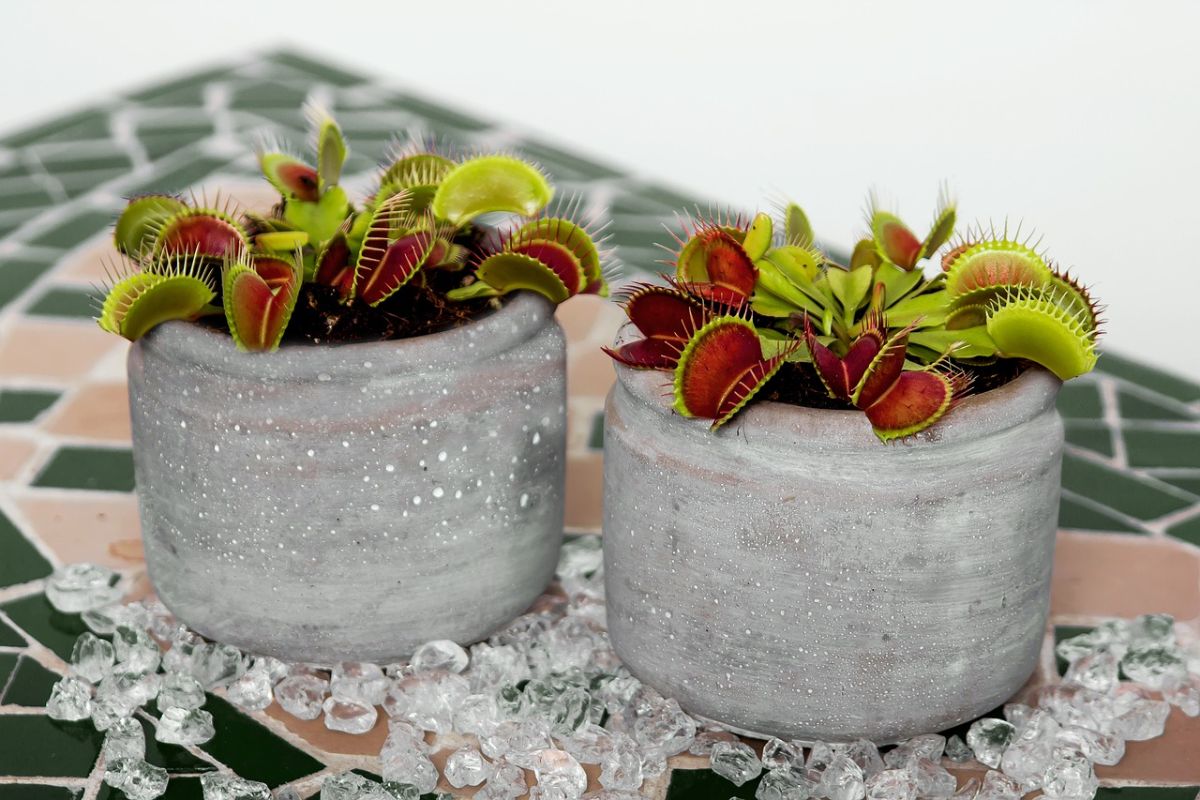
The Venus flytrap is one of the best known and easiest to find carnivorous plants. In fact, it is a plant that you can get at many online stores, nurseries, florists, and even some supermarkets.
Its scientific name is Dionaea muscipula and it is characterized by a kind of “mouth” in which, when something falls into it, it closes, preventing it from coming out.
As for the care that must be given to it, it is to have a lot of sun, sometimes even direct, and a more or less high humidity.
In winter, the plant hibernates, so it is enough to make sure that the temperature is between 2 and 10 degrees. In summer it will be very active and it may ask you to water it daily (this will depend on the heat and humidity of the region.
As for his “food”, you will have to give him two small insects per month. When you put it in his mouth it will close and for 1-2 weeks it will stay closed while he digests it. Of course, we don’t recommend that children close their mouths every three times as this weakens them to the point of death.
sundew
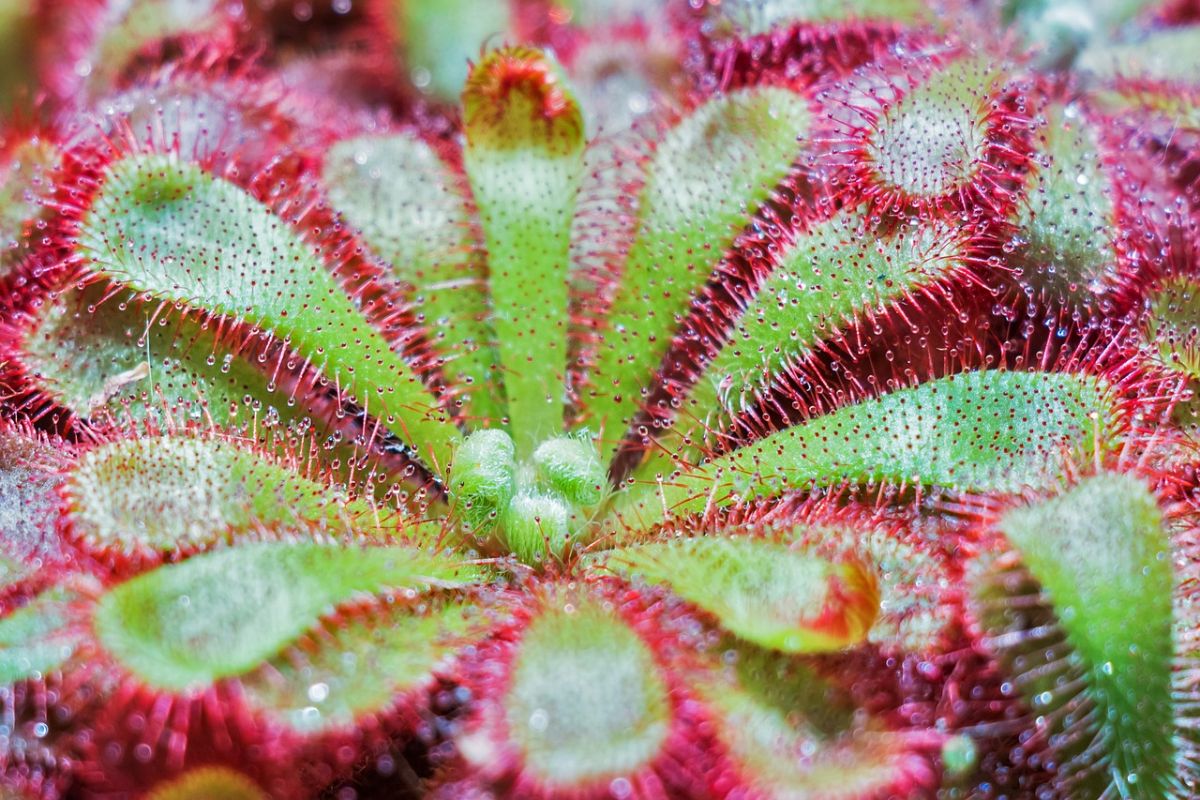
Better known by Drop of Dew, and it is that it is not for less. It is a plant that visually is very attractive because it has small red hairs and, at the ends, a kind of drop of water, as if it were dew. Nothing could be further from the truth. These droplets are a glue, which the plant uses to trap insects that get confused thinking it’s water, come down to drink and stick to it.
In this case, a fairly high humidity is necessary to keep it in good condition. In addition, you must put it in partial shade (the direct sun will burn it). Irrigation, as long as you keep it moist, there will be no problem.
As we have already told you, this plant also hibernates in winter. As for the summer, it will hold up well up to 30°C, even more so if it has been with your climate for a while.
pitcher plant

Among the carnivorous plants for children, the Sarracenia is another, striking especially with the red tones of the plant.
This plant has a temperate and cold climate, which can be much easier to adapt and maintain than others that are tropical (especially in the face of humidity). With this in mind, keep in mind that it will need at least 6 hours of sun a day, full sun if it’s winter, partial shade if it’s summer.
Like the others, it hibernates in winter, worrying only about the right temperature.
Visually, the Sarracenia is a plant that has a tube with a lid. If it is open, it means it is waiting for an insect to enter, at which point it will close the lid to trap it. Even if you don’t get too excited, because it’s one of the worst carnivorous plants (insects almost always escape).
pinguicula
This carnivorous plant is rosette-shaped. They usually don’t grow very tall in terms of height. But it’s growing a bit.
Now the plant grows in partial or full shade. It can adapt to the sun, but it is not recommended, especially since the leaves burn very easily.
It is also not recommended if you are going to have it in a place where there are intense frosts (unless you put it inside the house).
When it comes to watering, it’s important to water to keep the soil moist, but it should dry out a bit before watering again.
darlingtonia californica
This strange name is actually for the carnivorous cobra lily plant, which actually looks like a cobra snake.
To feed, what it does is attract insects to its leaves, which are modified with a special nectar whose opening is downwards. So when the insects come in they are confused thinking they are running away from the plant when in reality what they are doing is burrowing into it.
How to take care of carnivorous plants
If you leave your son or daughter in the care of a carnivorous plant, you must first explain to them how they should care for it, otherwise they won’t know if they are doing it correctly.
In this sense, what you have to teach him is the following:
- Find the best location: Most carnivorous plants for kids will need light, more or less, and even a few hours of direct sunlight. This implies that they must leave them at their window or on the balcony they have, in a place where they have light.
- Pure water: and by pure we mean water that does not contain lime, chlorine, etc. They should always have a tray with 1-2 cm of water for the soil to keep it moist. If you see that there is too much water, you can always place pebbles and put them on it.
- Carnivorous plants hibernate. Not all of them, but many of them. In winter, they slow down or even stop altogether. At this time, it is best to take them to a cold place so that they pass this season as naturally as possible.
- Food. If there is no food for them in the house or where you have carnivorous plants, you may need to bring them something to eat every month. Mostly small insects. If you have it outside the house (in the window, the balcony…) it is normal for it to attract insects itself.
Do not be afraid that in winter they will completely lose their leaves, if you continue to take care of them, they should come out in the spring. Only the Drosera capensis (which we told you about), would not need these cold months, it can be perfect all year round.
Can you think of more carnivorous plants for children and easy to maintain? Don’t forget that they can also be used for beginners.