Fatsia japonica reaches an average height of 1.5 meters and spreads about 1.2 meters. As I write this, I feel the need to add another of these beauties to my space.
You may be reading this and wondering how much space I have in my house. The truth is that it’s not a lot. Most of what remains now has partial access to the sun.
But that’s the other beauty of fatsia japonica: it does well in partial shade. It can even grow in shade without losing its glossy leaves.
So if you’ve been looking for a plant to frame that hallway or brighten up that north-facing room, you might have found one for you!
As suggested, this means you can grow your Fatsia japonica in a pot and keep it indoors or outdoors, depending on where in the world you are.
This guide will show you how to plant your Fatsia japonica in a pot and even show you some of the best options on the market. How big is that!
Can I grow Fatsia Japonica in a pot?
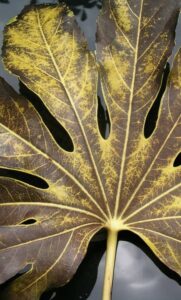 You can grow a Fatsia japonica in a pot, but if you put it in a pot, it probably won’t reach its optimal natural height of 15 feet.
You need to make sure you water it regularly and keep it well fed during its months of active growth.
Outdoors, Fatsia japonica can reach 4.8 meters in height! And for most homes, accommodating a plant that tall just isn’t possible. But the good thing is that you can still grow your Fatsia japonica indoors. As?
When you pot a plant and move it indoors, you deprive it of its natural habitat. As such, you are limiting its growth because you are limiting the actions of its roots.
This is why most fatsia japonicas never grow taller than five feet indoors. If you think five feet is too much, pruning fatsia japonica is always a good idea.
I know someone who always cuts his plant in the summer because it grows so fast. So if you want to keep a smaller plant or shape your Fatsia japonica, you might want to consider this strategy.
If you’re okay with your plant growing up to 5 feet tall, all you need to do is provide it with the right growing conditions. These include:
1) Watering
Your Fatsia japonica needs regular watering to prevent the soil from drying out completely. You should reduce the regularity of watering once the cold months begin.
Temperature
Keep temperatures between 50 and 80 degrees Fahrenheit. This plant grows in hardiness zones 7 through 9 and can handle cooler temperatures.
Humidity
The humidity in the house should be sufficient. However, keep the plant away from cold and hot drafts.
Feed
Use a weak liquid fertilizer on your fatsia japonica twice a month during the active growing season. Do not feed the plant in winter and late autumn.
Note that these requirements also apply if you want to keep a small plant. An unhealthy Fatsia japonica does not have glossy dark green leaves.
Instead, it gets yellowish-brown foliage with long stems. Make sure your plant gets the care it needs and you will be rewarded with healthy growth.
You may also be interested in: What Soil Does a Fatsia Japonica Like?
Where should I place the Fatsia Japonica pot?
When locating your Fatsia japonica, consider the best light for the plant. This plant does not like direct light.
Instead, it prefers indirect light, which can be bright, medium, or dim. Consider these options when choosing a location for your plant:
For variegated Fatsia japonica
These plants do well in bright indirect light. Being in low light conditions robs them of their variety. Place them near an east, west or south window and protect them from direct sunlight with curtains.
For other Japanese Fatsia
You can keep these plants in low to medium indirect light. You can get this light in the middle of east or west facing rooms or other rooms in the house that don’t have as much access to light.
If your plant begins to show leggy or twisted growth, stunted growth, and poor leaf development, move it closer to light. But when the leaves start to fall, yellowingor brown, place it away from light.
When should I transplant Fatsia Japonica?
 The Fatsia japonica grows an average of 20 cm per year and spreads its dark leaves further into space. And if you feed it, that rate can go up to 10 or 12 inches a year.
Many people tend to forget that just as a plant grows and grows, it also grows downwards.
The roots of your Fatsia japonica reach a point where they can no longer spread. And when that happens, you’ll notice signs like:
- The plant stops growing as quickly as it should, even though it has access to its basic care needs,
- Roots protruding from drainage holes in the pot or soil surface, and
- Water that accumulates on the surface of the soil when you water the plant.
These signs show that your plant now has roots and needs another home (pot). As a rule, these symptoms occur every year.
But to be sure, you can inspect the roots of the plant when taking it out of the pot. Do the roots seem to wrap around each other?
Take this as a sign that the plant needs more space to spread its roots. You may also need to repot the plant if it has suffered root damage from root rot. Either way, I’ve outlined the steps you need to follow below.
You may also be interested in: Top 10 Fatsia Japonica Problems and How to Fix Them
How to Transplant Fatsia Japonica
Is your plant showing signs of root growth? Have you suffered root damage? Here’s how to transplant it in a few easy steps:
1) Make sure the plant is actively growing: Transplanting a dormant plant is not a good idea, as it reduces the plant’s ability to recover.
Therefore, it is better to transplant in summer or spring. If you must do it in the fall, do it early in the season.
2) Find a jackpot that is a size or two larger than the current jackpot. The replacement pot should have adequate drainage holes.
3) Fill the replacement pot halfway with well-drained, well-aerated soil with a slightly acidic or neutral pH.
Fatsia japonica is not very picky when it comes to nutrition. But getting nutritious potting soil can save you a lot of work.
4) Wet the potting mix to loosen the bond between the Fatsia japonica and the soil. Give it about 20 minutes, then set the pot to the side. Slowly move the plant out of the pot, being careful not to disturb the roots.
5) If you are transplanting the plant because the roots are damaged, assess the extent of the damage.
Then cut off the affected parts with a sharp, sterile knife and treat the plant with a fungicide.
Let it dry for a few minutes. If the plant has no damaged roots, you can proceed directly to the next step.
6) Place the fatsia japonica in the potting mix and cover with more potting mix, leaving two to three inches on top.
Then water it and let the excess water run out through the drainage holes. You can now place the plant in a place with little, medium or a lot of indirect light.
Your plant may look droopy over the next few days as it gets used to its new home. However, you shouldn’t worry about it. Instead, continue to provide the plant with its basic care needs, and it will soon recover.
You may also like: Fatsia japonica Light requirements
Our 5 recommended pots for a Fatsia Japonica
What should you pay attention to when choosing a pot for a fatsia japonica?
- Drainage: the pot should have adequate drainage holes to allow excess water to drain away,
- Size: Is the pot big enough for your Fatsia japonica?
- Design: how well does the planter fit into your interior?
Here are some options to consider:
1) HB pots with self-watering and self-aeration
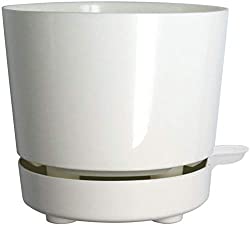
These 8-inch pots have a two-week self-watering design that lets you go ahead and leave them water.
More importantly, they don’t overwhelm your plant.
2) HOMENOTE plastic jars
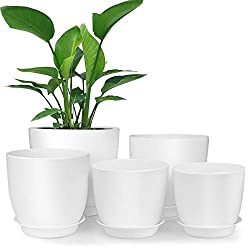
These plastic pots are available in different sizes, so you can choose the right one for your Fatsia japonica.
In addition, they have a tray that collects excess water instead of draining it onto the ground.
3) The Muse planter by La Jolie
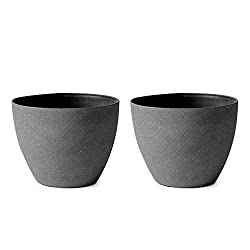
Breathability is key to maintaining a healthy root system, and this 11.3-inch pot is perfect. It has a lightweight construction with stone dust.
In addition, it has pre-installed drainage holes to ensure that no water remains around the roots of the Fatsia japonica.
4) Santino ASTI 9.2-inch Self-Watering Planter
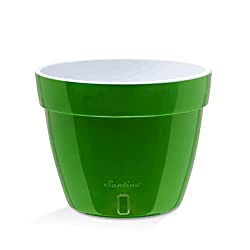
Here is another self-watering planter that is a sight to behold. It is available in different colors and sizes and is a great alternative to ceramic pots.
The lightweight design is another plus besides the drainage capabilities.
5) DecoPots Self-Watering Planter
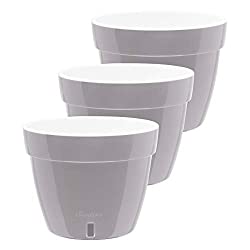
With 3 pots, you can plant no less than 3 fatsia japonicas or place other indoor plants in your space.
It also has a self-watering technique that saves you time when watering your plant. In addition, it ensures optimal air circulation.
If you are growing your Fatsia japonica for the first time, opt for smaller sizes so that it can grow into larger pots over time.
final thoughts
Did you know that you can root new Fatsia japonicas from your mature plant? All you need is to take a fresh stem cutting during the active growing season.
Then treat it with a rooting hormone and place it in moist, well-drained soil for about a month. You should see new growth soon enough to have another beautiful plant in your home.
Happy gardening!