You might be wondering why your mint leaves are turning black. Have you exhausted all your options, but it doesn’t seem to be affecting the health of your mints?
Luckily you’ve come to the right place, the key to avoiding this is applying and understanding the ideal conditions and supplies for growing mint plants.
Mint grows best in moist soil, and if the soil becomes extremely dry, the leaves may turn brown or even black. Mint leaves at low humidity evaporate more water than needed, which leads to leaf cell death. Spray the plant or place the container on a pebble tray and water between waterings.
Luckily, you’ve come to the right place to learn more about the ideal conditions and requirements for growing mint plants.
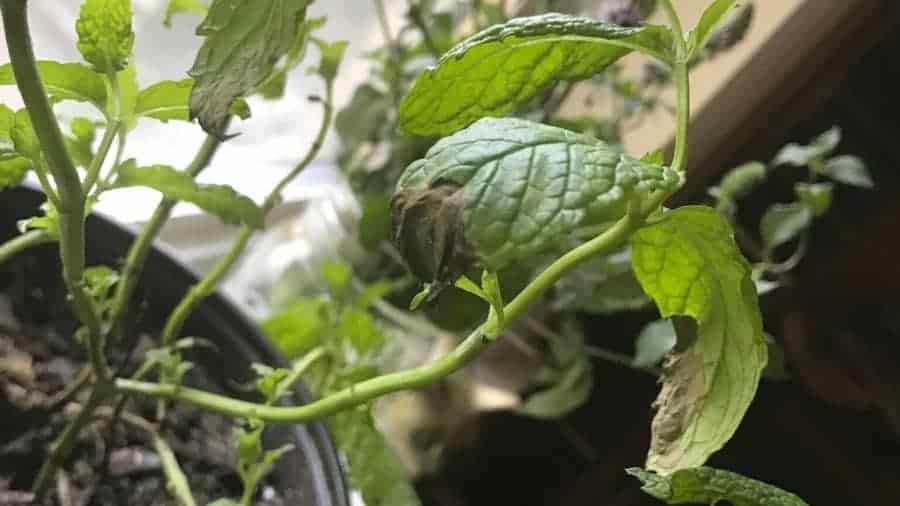 blackening mint leaves
Causes of mint leaf blackening
Let’s take a closer look at the causes and solutions.
poor drainage
Mint has sensitive roots, so improper drainage systems can put stress on the roots.
It thrives in light soils that allow water to drain easily. A healthy root can support the plant and make it grow faster.
How to make a good drainage system?
Be sure to use the correct type of soil first, then drill 2-3 holes in the bottom of the pot.
The holes allow only the minimum amount of water needed in the soil. It also helps prevent a situation where you accidentally water it down.
Over-fertilization
Over-fertilizing the plant can reduce plant growth and invite weeds to grow on it.
This makes it susceptible to disease and the leaves eventually turn black. This is called fertilizer burning.
At the same time, the soil can dry out without nutrients, so it is best to fertilize it once or twice a year to provide enough nutrients for plant growth.
You can easily determine the fertilizer dosage yourself by reading the instructions for use on the fertilizer packaging.
You can try organic plant food for herbs, which works great for any type of herb.
How Do I Know I’m Overfertilized?
Salts will accumulate above ground, use a pH meter to check its value.
Below 7 values indicates the large amount of salt, you can minimize its presence by mixing it with another potting soil and make it a potting soil.
temperature and humidity
Mint plants are a fast-growing herb that grows best in full sun to partial shade.
Direct exposure to high temperatures can dry out and blacken mint leaves.
It is important to regulate it in its needs of 69-84°F (21-29°C), but you must protect it from extreme temperatures in the sun.
It thrives in warm, not too humid environments.
the type of soil
Like any other herbal plant, you need to provide rich, moist soil for mint.
Soil that is too dry and lacking in moisture will make it difficult for herbs to grow.
So find fertile soil like clay soil or put some organic fertilizer on it. Organic compost is affordable and readily available in stores.
This helps maintain moisture levels and provides adequate nutrients for growth.
mint oxide
As a result of the attack of fungal spores, mint rust appears on the leaves. You’ll see mint leaves turning bright orange and yellow in late summer.
The color will eventually turn black. You must remove the infected part and isolate it from other plants. It can also spread to other nearby plants.
That’s what you should do
- Cut off any leaves or stems that show the above symptoms first. This will minimize the spread of disease.
- It is best to remove infected plants and destroy them completely.
- If the infection is low, transfer them to the new potting mix after removing the infected parts.
Verticillium wilt
Verticillium wilt comes from a fungus in the soil. Symptoms of these diseases include curling, twisting and dwarfing of the upper leaves.
Infected leaves change color from green to yellow and bronze.
Once the fungi enter the soil, they remain there for many years. There is no fungicide treatment for this, so it is best to remove the plant completely. (Source: Michigan State University)
leaf disease
Mint leaf scorch occurs in winter or cold weather. When the plant enters a dormant phase, all the leaves turn black.
Once you know winter is coming, try moving it to a warmer environment or exposing it to as much sun as possible.
You can move it indoors to keep the environment warm.
It is best to throw them away from other plants to stop their spread.
If you notice any of the symptoms above, try separating them by cutting them into stems and leaves.
This can help keep the rest of the mint stalks healthy. To ensure that there is no fungal transfer, simply wash the remaining healthy leaves with water.
You may also be interested in: Why Are My Mint Leaves Turning Purple? (And how to fix it)
Annoy
Mint-containing pests include aphids, cutworms, thrips and spider mites.
If you notice the leaves turning yellow or brown, check carefully for small movements or the unusual appearance of black, brown, or yellow bodies on the mint leaves and stems.
They feed on leaves and create leaf-forming brown spots on the stem. You can wash them with water.
If they still appear, opting for an insecticidal soap will be the best option.
mint aphid
The mint aphid is one of the insects capable of blackening mint leaves. It is usually green, yellow, black or brown in color.
The aphid causes the mint leaves to turn black and eventually die. You can apply any insecticidal soap or neem oil to it.
If there is a heavy presence of aphids, spraying with insecticides may work well.
little light
In low light, mint leaves can become soggy and spirited. This allows the lower leaves to dry out and gradually turn black.
For this reason, you can still preserve it by cutting off the black leaves and leaving it in the sun for 6-7 hours, also make sure not to overexpose it to the sun for too long.
However, if the base of the plant’s stem is brown or black, it will be very difficult to keep your mint.
How to Fix Low Light
Don’t feel limited by the low light in your home. You can still grow mint and other herbs with no problem using artificial light. If your apartment doesn’t have enough natural light, try using LED lighting. Solve your low light problem.
You may also be interested in: Why Is My Mint Turning Brown? (And how to fix it)
Here are some tips to protect your mint plant
Keeping these points in mind can help your plant feel less stressed and grow healthy. It can be applied to any form of grass. Take notes and give them what they need!
- Keep mint plants away from paths or driveways. This ensures that it is protected from dust and other physical damage.
- Grow your mint in a herb grow pot, this gives it more room to grow.
- It needs regular watering and adequate lighting.
- Make sure the soil is moist by touching the top layer. You can always keep an alarm to remind you to water it.
- It needs plenty of water in the summer and be sure to plant the roots at least 3 inches deep with an extra 3 inches for maximum root growth.
- Young mint leaves are vulnerable to pests and diseases, always keep an eye on them.
- Do not overexpose to direct sunlight, store in partial shade.
- Mint plants are salt intolerant, three times flush the soil with water to remove any residue.
- Ideal soil pH levels should fall below the acid value of 5.5-6
Why grow mint plants?
Herbs bring flavor to life, even in small spaces, with the added benefit of always having fresh herbs in your dishes.
Most herbs will thrive in a garden or home if you can provide the right conditions, including the right amount of light and temperature.
Herbaceous plants get yellow to black colored foliage if certain conditions are not met.
Finally, if your mint leaves turn black, the practical tips mentioned above will solve your problem.
Sharing is caring!