
Exotic fruits are increasingly fashionable, such as passion fruit. This delicious treat originating from South America is not only delicious, but also has many benefits for our health. Today there are many varieties of passion fruit which are grown in different parts of the world. Each of them has an appearance and a flavor that differentiates them from the others. Do you want to know the most popular?
In this article we will talk about the most common varieties of passion fruit. We will briefly explain how they are and where they are grown to get an idea about these delicious fruits. So do not hesitate to continue reading if you want to know more about these exotic fruits.
What varieties of passion fruit exist?
Passion fruit, also known as passion fruit, is a tropical fruit highly valued for its sweet and slightly sour taste. as well as for its nutritional benefits. These include a high content of antioxidants, anti-inflammatory compounds, and relaxing and sedative properties. In addition, passion fruit helps improve digestion, strengthen the immune system and reduce the risk of cardiovascular disease. Also note that this fruit is very rich in nutrients and has a low caloric intake, which makes it a good ally for weight loss.
The scientific name of the plant is Passionflower and its genus includes more than 400 different species. Each of the passion fruit varieties has its own characteristics, including size, color and flavor. Next, we’ll talk about some of the most popular today.
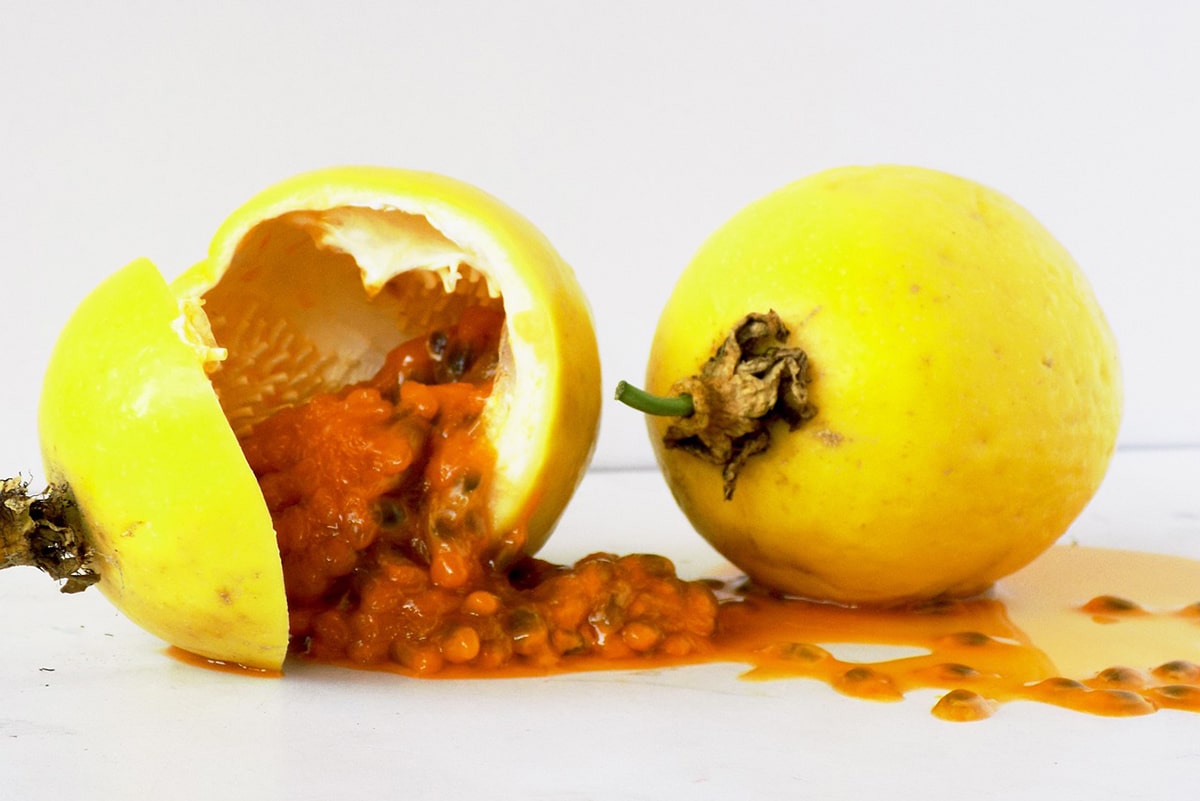
Yellow passion fruit (Passiflora edulis flavicarpa)
The most common type of passion fruit is yellow. It is characterized by an intense orange pulp and a yellow skin. This variety can weigh up to 90 grams. As for the taste, it is usually very sweet. This fruit is usually used to make juices, desserts and jams.
Among the most remarkable properties of yellow passion fruit is its high soluble fiber content, like pectin. This substance is found in large quantities in the cell walls of the fruit and is used as a stabilizer and gelling agent.
The yellow passion fruit adapts well to hot and humid climates, which is why it is grown mainly in tropical and subtropical regions. It is a very versatile fruit and it can grow in different types of soils, provided they are well drained and well fertilized. This type of passion fruit is native to Brazil, but is currently grown in several countries in Latin America, Africa, Asia and Oceania.
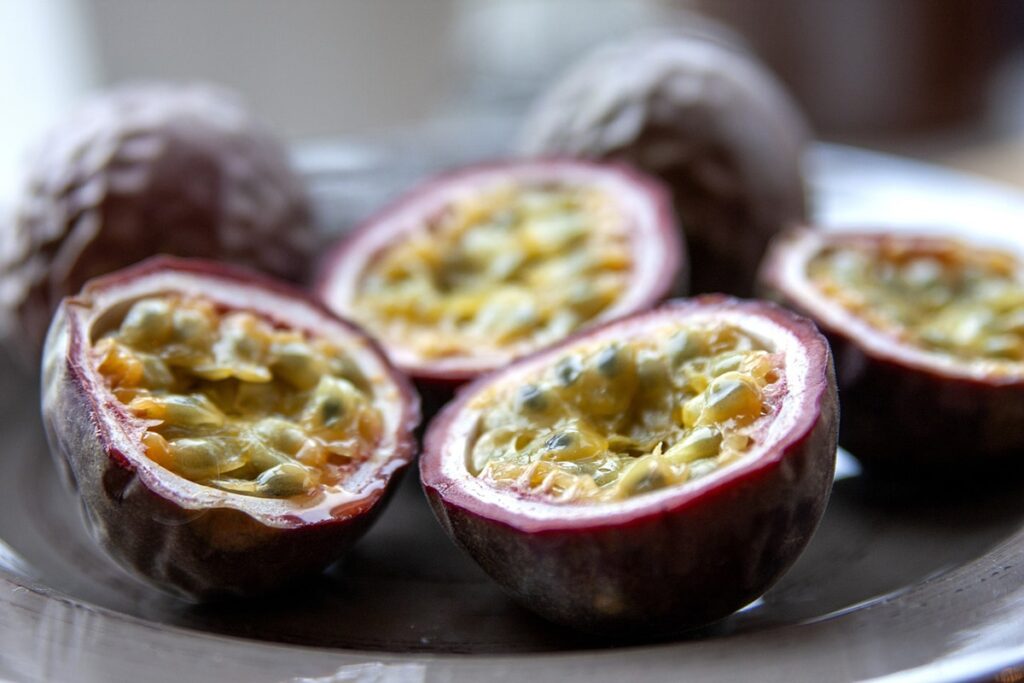
Purple passion fruit (Passionflower edulis)

Another of the most popular varieties of passion fruit is purple. It is distinguished by its skin of this color and its white or pale yellow pulp. Compared to yellow passion fruit, this one is less sweet. It is generally used to make juices and some desserts. When the fruits are a little wrinkled, it means that they have already lost moisture. As a result, they are already edible.
The purple passion fruit is native to the subtropical regions of South America, particularly the Peruvian and Colombian Andes. Currently, it is cultivated mainly in Latin American countries, but its cultivation has also spread to other regions of the world. This plant requires warm and humid climates for its cultivation, and it can grow in different types of soils if they have good drainage. Besides, It is a plant that needs a lot of light. and can tolerate high temperatures. Therefore, it adapts well to the climatic conditions of tropical and subtropical regions.
Sweet passion fruit (ligular passionflower)
Also known as granadilla, it is a smaller variety and rounder or oval than the yellow passion fruit. Its skin is yellow, orange or light green and its pulp is very soft and gelatinous, pale gray. It should be noted that the main solids in this fruit are natural sugars which dissolve in the juice. Nothing more and nothing less than 75% of the components of this variety are sucrose, fructose and glucose.
There ligular passionflower It prefers cool, humid climates, with temperatures between 15 and 24 degrees Celsius. It can grow in different types of soil, but it should be well-drained and contain plenty of nutrients. Therefore, it is mainly grown in the mountainous areas of the Andes, but it can also grow in other regions with similar climatic characteristics. This variety of passion fruit comes from the Andes of Colombia, Ecuador and Peru. As of today, The main producers of this fruit are the countries of Latin America, although it can also be found in parts of Asia, Africa and Oceania.
Giant Passion Fruit (Passionflower quadrangularis)

Finally, we must highlight the giant passion fruit, also known as royal granadilla or badea. How to deduce from his nameit is the largest variety of passion fruit. It can measure up to 26 centimeters in length and weigh up to one kilo. The skin is green and hard to the touch, with some bumps. As for the pulp, it is soft and gelatinous. It has a slightly acid taste. The main use given to this fruit is the preparation of juice. The leaves of this vegetable are also used. These can be used as a tranquilizer or sedative.
The giant passion fruit is native to South America, specifically from the Amazon region of Brazil, Colombia, Ecuador and Peru. While it is true that this variety can be found in parts of Asia, Africa and Oceania, its main producers are the countries of Latin America.
This vegetable needs warm and humid climates to thrive, preferably with temperatures ranging between 24 and 28 degrees Celsius. Although they adapt well to all types of soil, they should have good drainage and be rich in organic matter. It is therefore not surprising that it is grown mainly in tropical and subtropical regions of Latin America, although it can also grow in other regions with similar climatic characteristics.
And you, which variety of passion fruit do you prefer?