
Crotone (Cidiaum variegatum) These are beautiful, colorful leafy plants that give your apartment an exotic touch. Native to tropical climates in Southeast Asia and Oceania, Croton’s leathery green, orange and scarlet leaves make it an excellent houseplant.
The croton is a fairly easy plant to grow and care for at home, but sometimes its leaves can turn yellow, which causes the plants to lose their natural exotic appearance.
If you want to bring your green and colorful pet back to life, you need to find out the causes of yellowing leaves. You can then decide what actions to take to resolve the issue.
Why are my Croton leaves turning yellow? Croton leaves can turn yellow for the following reasons:
- Improper watering (too much or too little water)
- insufficient light
- harmful
- temperature variations
- poor soil quality
But don’t despair, as I told you before, Croton is a pretty easy plant and pretty tough too, so there’s nothing a little TLC can’t cure.
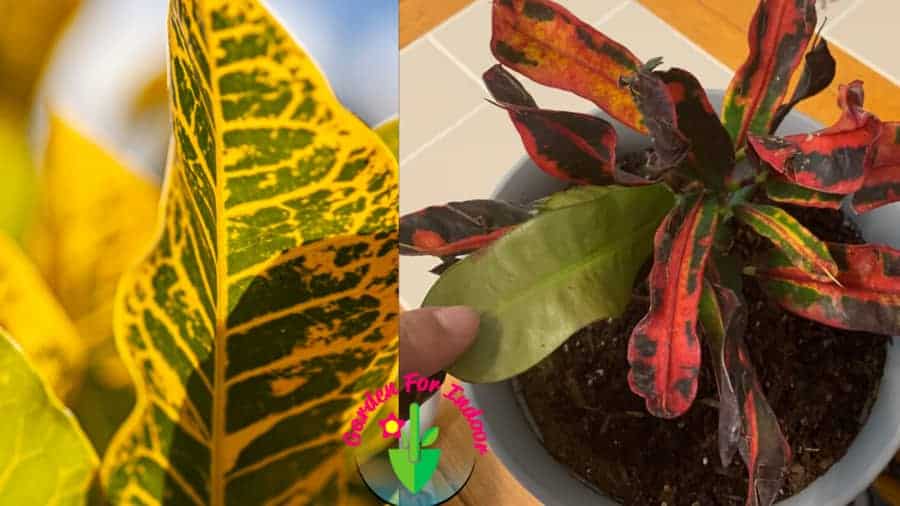
Causes of Croton Leaves Turning Yellow
Croton leaves are naturally colored due to the presence of carotenoids and flavonoids. This chemical density varies with the season, so the croton changes color.
Also, there are other reasons why croton leaves may turn yellow. Let us know and how to resolve the issues.
Improper watering (too much or too little water)
One of the main reasons why the leaves of the plant turn yellow is excessive watering or flooding. We all know that plants need water and a lack of water can harm your plant. But yes, overwatering your croton can also be harmful! If you overwater your plants, it’s almost like drowning them and the roots can rot.
How to fix improper watering
To diagnose your plants and tell if they are getting too much or too little water, stick a finger about 1 inch into the plant’s soil.
If the soil is completely dry, your plant urgently needs an elixir of life: water. Make sure your plant gets enough water by adjusting your watering schedule and watering more frequently.
If you notice that the soil feels wet when you poke your finger into the plant’s soil, your plants may be getting too much or too much water.
To check if there is too much water, smell your plant. Yes, you read that right! If you notice a musty smell, it could mean your plant’s roots are rotting.
In this case, change your plant’s container to one with better drainage and adjust your watering schedule. If you overwater your Croton, allow the soil to dry out a bit between waterings.
Finally, if you live in a very dry area and there is no humidity in your home, misting the leaves once a week with a spray bottle filled with water will help the leaves keep their vibrant colors since they resist in a humid environment.
insufficient light
Crotons are native to exotic places, where there is an abundance of light and sun. Of course, if you place it in a dark corner of your apartment, the plant will not thrive.
It’s normal for crotons to lose some of their color in the winter and in low light conditions, so if your croton’s leaves look a bit yellow or discolored, it could mean they aren’t getting enough light.
How to Fix Insufficient Light
A simple way to solve the problem of insufficient light is to place your plant where it will receive the most light. If you live somewhere warm and sunny, take your plant outside and let it bask in the sun.
This does not mean that you just throw your plant outside and all your plant problems are solved. Crotons can be a bit finicky and don’t like to be moved around.
Harden off your plants by first placing them outside for a few hours at a time. Place your plants in a shady spot first and give your Croton time to adjust to outdoor conditions.
like wind, brighter sun and fluctuating temperature, before locking you in for good.
Now, if you live in a colder climate, it’s not a good idea to place your Croton outside. Crotons cannot withstand temperatures below 30°C (-1°C).
To keep your Croton happy and healthy in your home, place it near your sunniest window and watch the vibrant colors bloom.
In some cases, your Croton’s leaves may turn yellow from too much direct sunlight. In this case, the above solutions will not work.
If this is what is happening to your Croton, try using sheer curtains to create a barrier between direct sunlight and your Croton, or move it to an area where it doesn’t get as much direct sunlight. .
pest by pest
The croton is a relatively hardy plant and generally disease and pest free. But unfortunately, they are not immune to common houseplant pests like scale insects and spider mites.
How to Diagnose and Treat Parasites
Invisible to the naked eye, mites and scale insects are virtually impossible to see no matter what you do. power see is the effect they have on your plants.
Examine your plant carefully and if you see small holes in your Croton’s leaves, you are probably dealing with spider mites. But if you see a cottony white wash on your plant, scale insects are probably your bad guy.
How to fight mites
To control spider mites, first wash the affected plant under running water from a garden hose or faucet. Wash as many plants as possible and repeat the washing several times until it is effective.
You can also introduce natural predators, such as ladybugs. A visit to your local nurseries will give you excellent recommendations on predatory species.
Another solution is to use a chemical control, neem oil, insecticidal oil, or miticides that have been shown to kill the mites.
How to fight mealybugs
To control scale insects, the cheapest option is to remove and destroy the affected parts of your plant. Another option is to visit your local garden center and buy some pesticides.
If you want to go the chemical-free route, one option is to choose a predator, such as ladybugs or green lacewings, but be sure to consult an expert to find the right kind of effective predator for your mealybug range. .
temperature variations
Croton are native to warm, humid climates, and for this reason, this is the climate in which they thrive. Tropical plants do not like cold, drafty environments and will suffer in these conditions.
Temperature can affect the appearance of your plant, and crotons exposed to cold and drafts tend to lose vitality and cause their leaves to turn yellow.
How to Correct Temperature Fluctuations
Be sure to keep your croton in a climate that makes it happy: warm and humid. Check your window to make sure no outside drafts are coming in and blowing on your plant. If so, move your plant to a better location.
It can be hot and sunny outside, but if you keep your croton indoors while your air conditioner is running, it may be too cold for your houseplant.
Move it outside gently for a few hours at a time, until your croton gets used to the outdoor conditions, then move it outside permanently.
If it’s not hot outside and you’re just enjoying a cool house, try moving your croton to a room that doesn’t have air conditioning and place it near the window so it can get all the light. much-needed sunshine.
poor soil quality
Croton leaves turning yellow can also be due to poor soil quality. Like watering, this can mean over- or under-fertilizing the plant’s soil.
Lack of nutrients can disrupt photosynthesis and cause yellow leaves.
How to Fix Poor Soil Quality
Just like us humans, plants need nutrients to survive, and one of the important nutrients for plants is nitrogen.
Nitrogen deficiency can cause your plant’s leaves to turn yellow and new leaves turn a very light green.
If this is the case for your plant, look for top dressing fertilizers that contain nitrogen. This will help your plant regain its vibrant colors.
Another tip is to use a balanced slow-release fertilizer two to three times a year, this will revitalize your plant and keep it healthy.
However, avoid over-fertilizing your plant, especially in the winter when your plant grows a little slower. Over-fertilizing your Croton or any other plant will not make it grow any faster.
Instead, it will create a toxic environment for your plant, which will burn the leaves and cause them to turn yellow. So be sure to fertilize at the recommended rate.
These are some of the most common causes of yellowing croton leaves, but there’s nothing a little love and care can’t fix.
Be patient after trying any of these solutions and give your Croton time to recover and adjust to the new conditions.
Do you have any other tips and tricks for keeping your Croton vibrant and thriving? Let me know in the comments!
Sharing is caring!