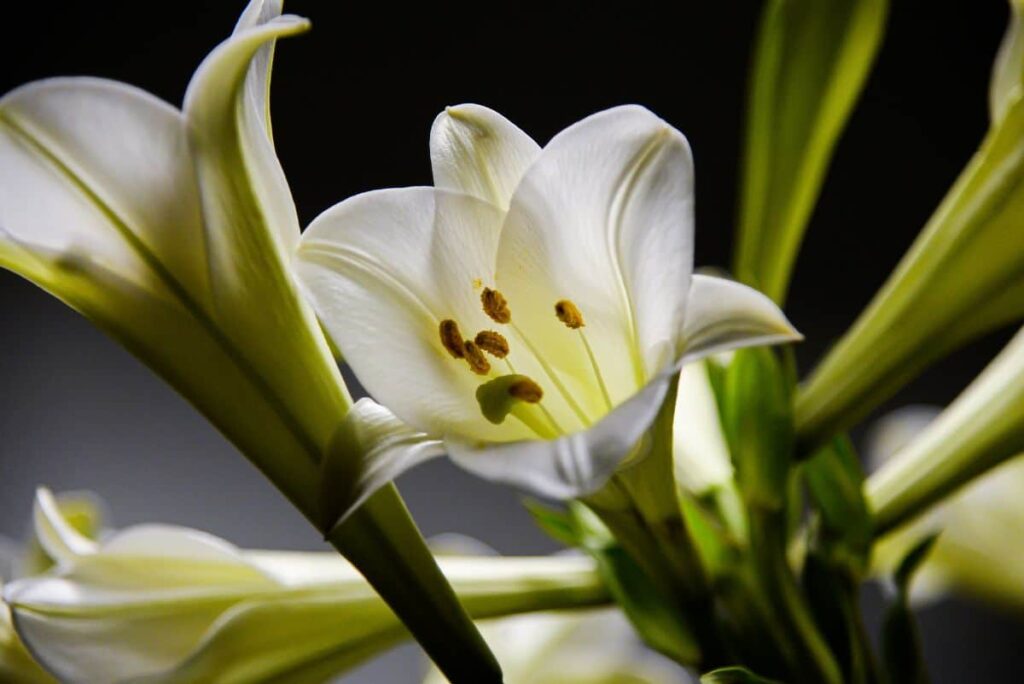

If you have lilies, or have succumbed to these beauties this year, you’re sure to enjoy a spring and summer with plenty of blooms (and blooms that last a long time). But, what to do with lilies after they bloom? Is there any special care for keeping the plant over winter? Is getting lost?
If you want to know all about the lily plant after flowering, keep reading because we’ll explain it all to you.
How often do lilies bloom

The first thing you need to know is that The blooming season for lilies is from early spring to late summer. This means that during this time there will be flowers. These can last you all those months and you can have them until around November, although by the end of September you will start losing them.
Exactly, although they are said to be perennials, flowers don’t last foreverbut they must die to give way, the following spring, to other plants.
Therefore, you need to know what to do with lilies after they bloom.
Lilies and end of flowering: what to do with them

Imagine that you have just reached the end of the lily blooming season. And you will see that the flowers begin to fade. What to do with lilies after they bloom? Well it’s easy:
The first thing will be to cut off the head of the flower. No, we haven’t gone crazy, but we recommend that when you see it drying out, you cut it off as soon as possible. The longer the flower stays, the more seeds it will generate. And yes, that means you won’t have any seeds to plant the following year, but the fact is that producing and growing them exhausts the plant, which may need that energy to regrow. For that, it is better to cut them (just below the beginning of the flower). Of course, always with a cross section.
Once you’ve gotten rid of the flower, the next thing is to make another cross-section to “prune” the plant. Note that we are not saying that you remove the entire stem of the plant. Quite the contrary.
It is best to cut 4-5 centimeters (more or less) from each stem to prepare it for winter. Besides, which will get new shoots.
However, if when autumn arrives you notice that the plant is completely drying out, don’t panic. In this case, you will have two options:
take out the bulbs
You can tear off the leaves and stems and dig up the bulbs. This is an opportunity to see if they can be divided.
Indeed, it is recommended, every 3 to 5 years, to examine and divide the bulbs in order to have more plants, yes, but also to increase their health and their yield. You must be guided by the roots and plants that the bulb has in such a way that each cut has it with at least one plant.
Once done, we recommend leaving them for 3-4 days in a ventilated place, even in the dark, and in the open air, because what we want is for the wounds to heal. If you keep them fresh, it can cause them to rot.
After this time, yeah You can store them in a dry and dark place. It can be a glass jar, for example, which you cover with a cloth (inside or outside).
Then, in the spring, you can collect them and replant them. Of course, try to maintain a distance between the plants of at least 18 centimeters.
leave the bulbs
The other option is to remove the leaves and stems but leave the bulbs in the pot. It’s not a bad idea either, in fact many do.
Now, if you leave them in the pot, what you have to be careful about is that cold and frost do not affect the bulb. And, for that, you have to protect the part of the field. As? For example, add a little more soil, cover with a thermal blanket, or similar.
It’s a way for the bulb to stay in good shape and get ahead the following year. This, yes, be careful when the good weather begins lest what you have put on to protect it will prevent the shoots from coming out. As soon as you see that the temperature is rising, try to loosen the part where the bulb is located a little in case it wants to come out now. But don’t trust yourself, that frost or cold can ruin all the care you’ve had in winter.
Winter lily care
Finally, we are going to give you the keys to taking care of lilies in winter. These will focus on the fact that you left the bulbs in the pot and they can be fine. There aren’t really many details to consider, but they will help you figure out what to do with the lilies after they bloom.
Location and temperature: The location may be the same as where you had it. As you are going to protect the pot, there will be no problem and, on the other hand, you will keep the sunny days and the climate it had, so it will not be stressed.
Irrigation: No. If you don’t have a plant the worst thing you can do is water it because it won’t do the bulbs any good and what you will get is that they will rot and not come out until the season next. Put the watering can aside to do nothing. You only need to water if you have the plant, but much less than in spring or summer.
Plagues and diseases: In this you need to be vigilant, especially if dampness appears in the pot, white mold, etc. If so, it can endanger your bulbs. If this happens, it is best to remove the first layer of soil and discard it, place new soil on it and look again. This is something that often happens when there is a lot of humidity in the environment. It is therefore sometimes necessary to change the pot for another drier part. On the other hand, if they are in the ground, it will be necessary to protect them much better so that the humidity does not affect the bulb itself.
Now you know what to do with lilies after they bloom. That way, you’ll be prepared for when that time comes, and you can get your plant healthy again the following season. Do you like to leave the bulbs in the pot or take them out?