
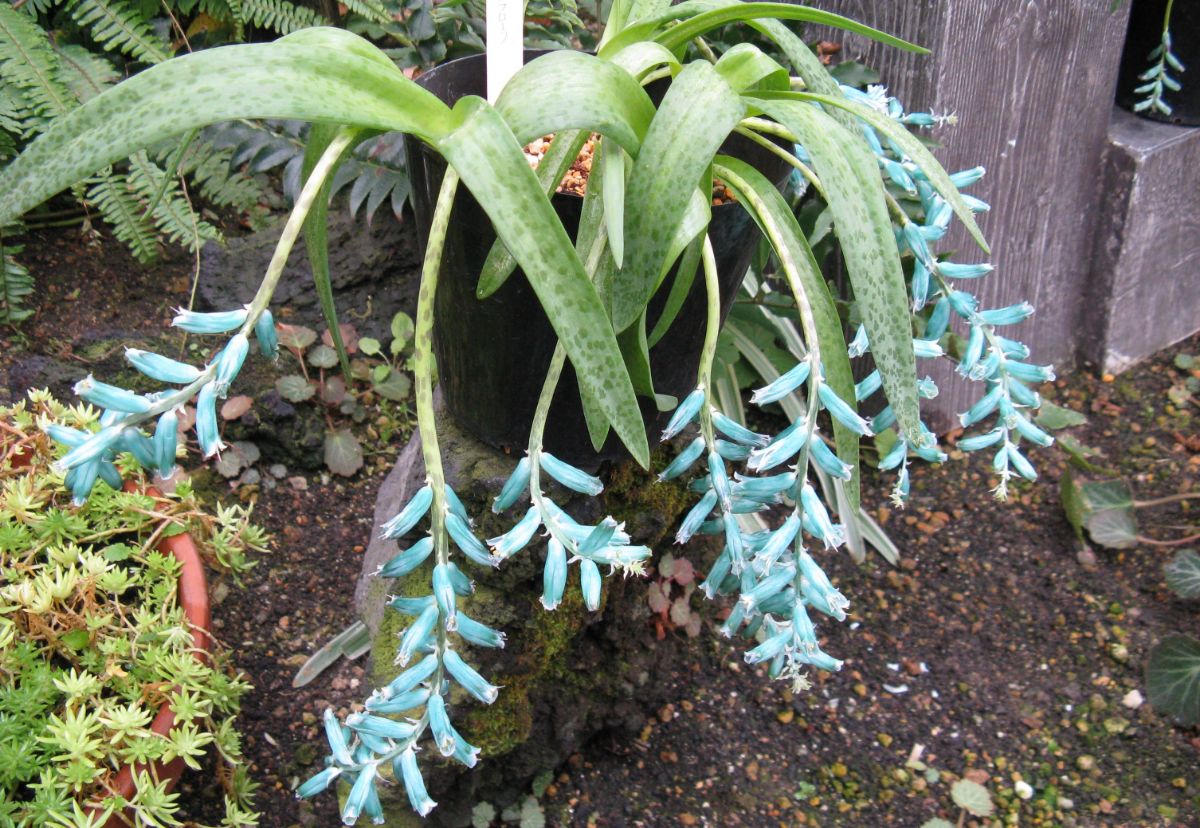
Do you know the genus Lachenalia? These are more than a hundred species full of colors and shapes. But they are not always known, even if they are plants that can bloom for almost 6 months.
Find out more about this gender and the care it needs to feel good and always look good.
How is the genus Lachenalia
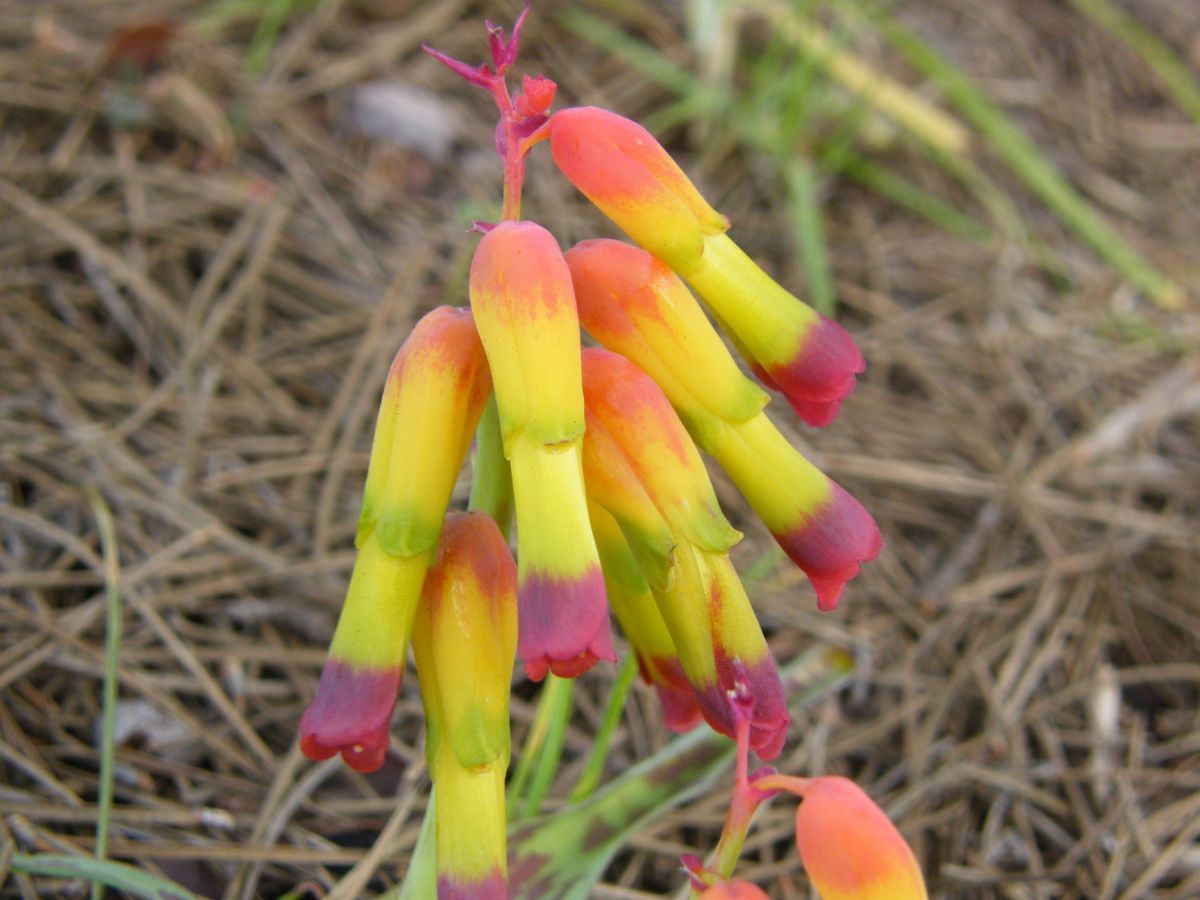
The first thing you need to know about Lachenalia plants is that they are part of the hyacinth family.so you can already get an idea of what they look like.
It is a plant with long leaves, sometimes with one or two, other times with a few others, which almost always remain at the base of the soil. These form a rosette up to 20 centimeters long. In addition, they have flowers, which can be of different colors and can be made on long peduncles. This flowering is quite long, being more or less 6 months.
They are native to Africa, particularly South Africa and Namibia. Since there are so many species (110), each has a period of activity, although most of them usually start in the fall to grow and flower until spring.
Some species of the genus
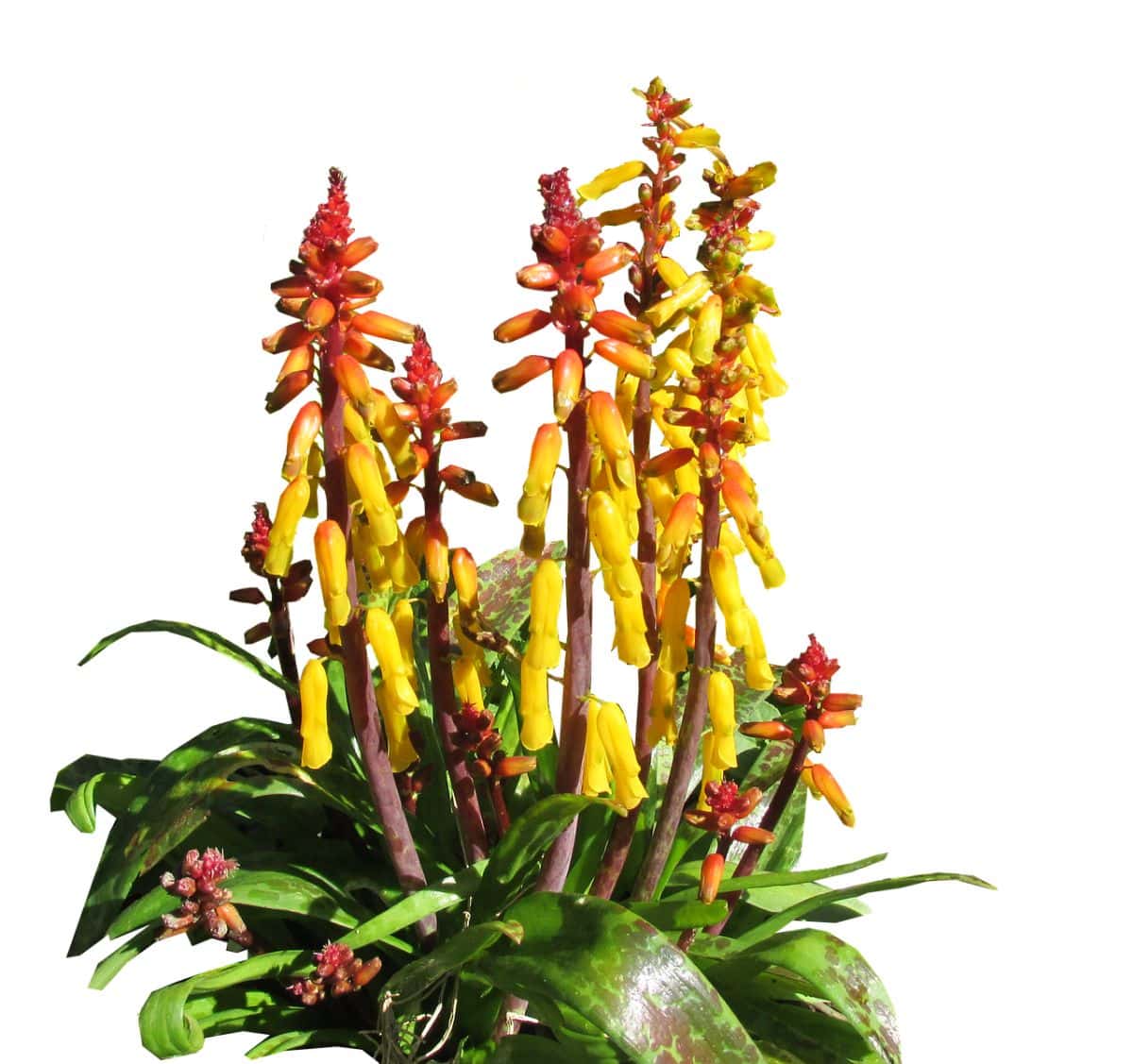
As we told you at the beginning, the genus Lachenalia is made up of more than a hundred different species. Some of the best known or sought after are:
- Bulbiferous Lachenalia. Native to the Western Cape in South Africa. It grows from 8 to 30 centimeters and has only one or two leaves. But the most beautiful is the flower stem with red or brown flowers with green tips. It flowers from April to September.
- Lachenalia ensifolia. Also from South Africa. In this case, the flowers are grouped together at the base, in the middle of its only two leaves that come out of the ground. The flowers are white turning mauve and give off a certain almond aroma.
- Lachenalia puckered. Unlike others, this plant has four to six leaves with spots. In the center it has a rosette from which the stem of the flower (rather short) comes out, leaving the flowers at ground level. These are white.
- Lachenalia corymbosa. In this case, the flowers are more striking, in pink with two red lines or fuchsia. It does not measure more than 12 centimeters.
- Lachenalia carnosa. It has two green oval leaves that stay on the ground and from the center comes out a flower stalk with small white flowers with a magenta stripe.
- Lachenalia unifolia. It can reach from 10 to 35 centimeters high. It has a single leaf with green and brown lines and the flowers are blue, pink or yellow with white tips. These are flared.
- Nerve lachenales. It has two veined leaves and a flower stalk bearing white, bell-shaped, pendulous flowers with pink or reddish spots.
Lachenalia Plant Care

Did you like the photos you searched for of the Lachenalia species? So maybe you want to have one in your house. And we must warn you that while some are easy to maintain, there are others that are not suitable for beginners. Plus it’s a little tricky because it needs a cool rest period and it’s in an environment where the air doesn’t get stale let alone smoke. of cigarettes.
But if you can avoid this, with the care that we are going to give you, you can have an orientation to know if this plant is for you.
location and temperature
There is no doubt that the best location of the Lachenalia is outdoors, but the truth is that it adapts well to interiors. Of course, in both cases, it will need plenty of light, whatever you can provide. But in no case should it be direct, but indirect.
As for the temperature, in winter it will need a cool temperature (not less than 10ºC), while heat is the worst thing you can give to this plant (although it comes from Africa, it does not support not the heat).
Of course, you must bear in mind that in its more than a hundred species, it is possible that some are more adaptable to the hot climate and, in general, to any climate. All you have to do is find the ones that really fit your space (this is the best way to make them successful).
Substrate
It is necessary that you give it a light substrate, with a lot of drainage, and a little soil that retains humidity.
A good mix that can be useful is to use a universal substrate with peat and drainage such as bark or perlite so that it is very well oxygenated. This way you will avoid clumping and water accumulation.
Irrigation
Make sure you don’t run out of water. When the soil dries out, the plant suffers a lot, so you have to check that it never lacks it. This, yeswhen watering, you need to let the first layer of the substrate dry out a little. If you go too far with the irrigation, it will also get you noticed (the plant dies).
In addition to irrigation, the flowers will need water sprays or humidifiers to stay perfect.
Subscriber
When the buds grow, and also during flowering, the plant requires a lot of nutrients. This is why you will need to give it a follower at least once a week.
Of course, if the soil has a lot of salts, the plant will suffer, so be careful with the use of one fertilizer or another (just like the soil).
multiplicationeitherNo
Lachenalias are bulbous plants, so over the years they may create suckers that you can divide to have new plants of the same species. Of course, be sure to make the separation during the bulb’s resting season and allow the cutting to heal before planting them out so the fungus doesn’t kill them both.
As you can see, the genus Lachenalia is quite large, and most importantly, its species are not too difficult to care for. Do you have any at home or would you like?