
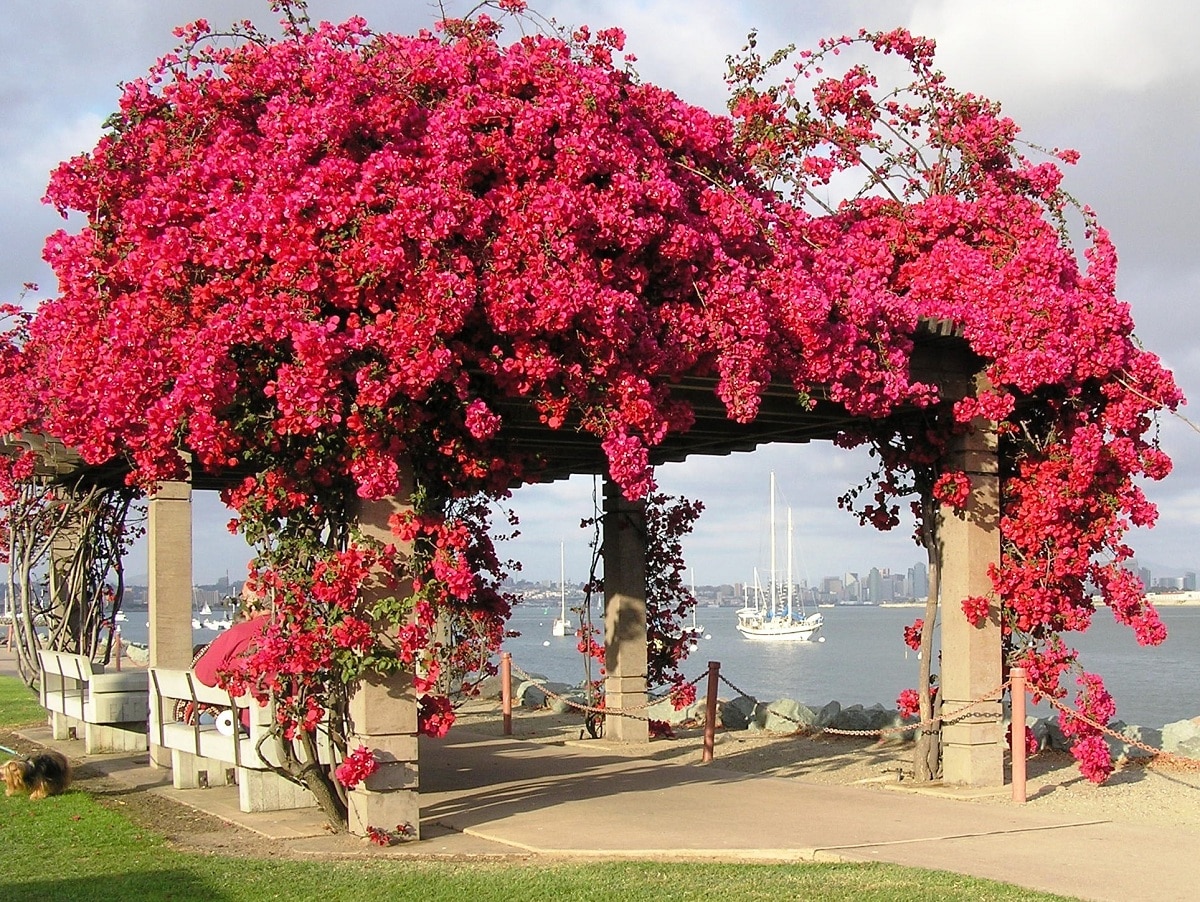
Bougainvillea is a plant of South American origin and is a type of climbing trainer. It adapts to any type of terrain and is ideal for decorating terraces and gardens. However, many people wonder where this plant is in relation to the sun. We don’t know if the bougainvillea must be in the sun or in the shade.
For this reason, we are going to dedicate this article to resolving all doubts about whether the bougainvillea should be in the sun or in the shade.
Characteristics of bougainvillea
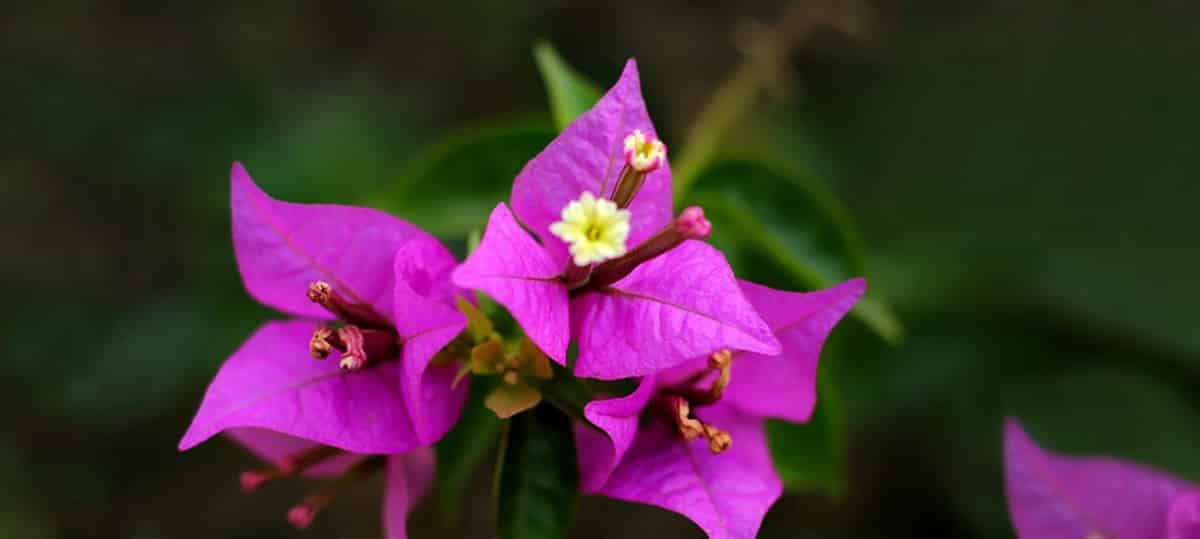
To find out whether the bougainvillea should be in the sun or in the shade, you must first know what the main characteristics of this plant are. Native to Brazil, bougainvillea has grown in the warmest parts of the world, even in the driest parts of the Middle Eastern country. In warm Mediterranean regions, they thrive outdoors.
Those that are resistant to low temperatures are the classic violets: bougainvillea or dogwood, enriched. As long as it is not very long, this variety resists frost well. This Bouganvilla is also the most shade-tolerant, as it will flower even when facing east. White, orange, yellow and red varieties need more light and heat. These varieties should be planted in a protected and sunny place.
Tree bougainvilleas are all the rage these days and they do not need to be planted next to the wall. If you prune it to keep its shape, you’ll have a wonderful little tree that will flower most of the year.
Bougainvillea care
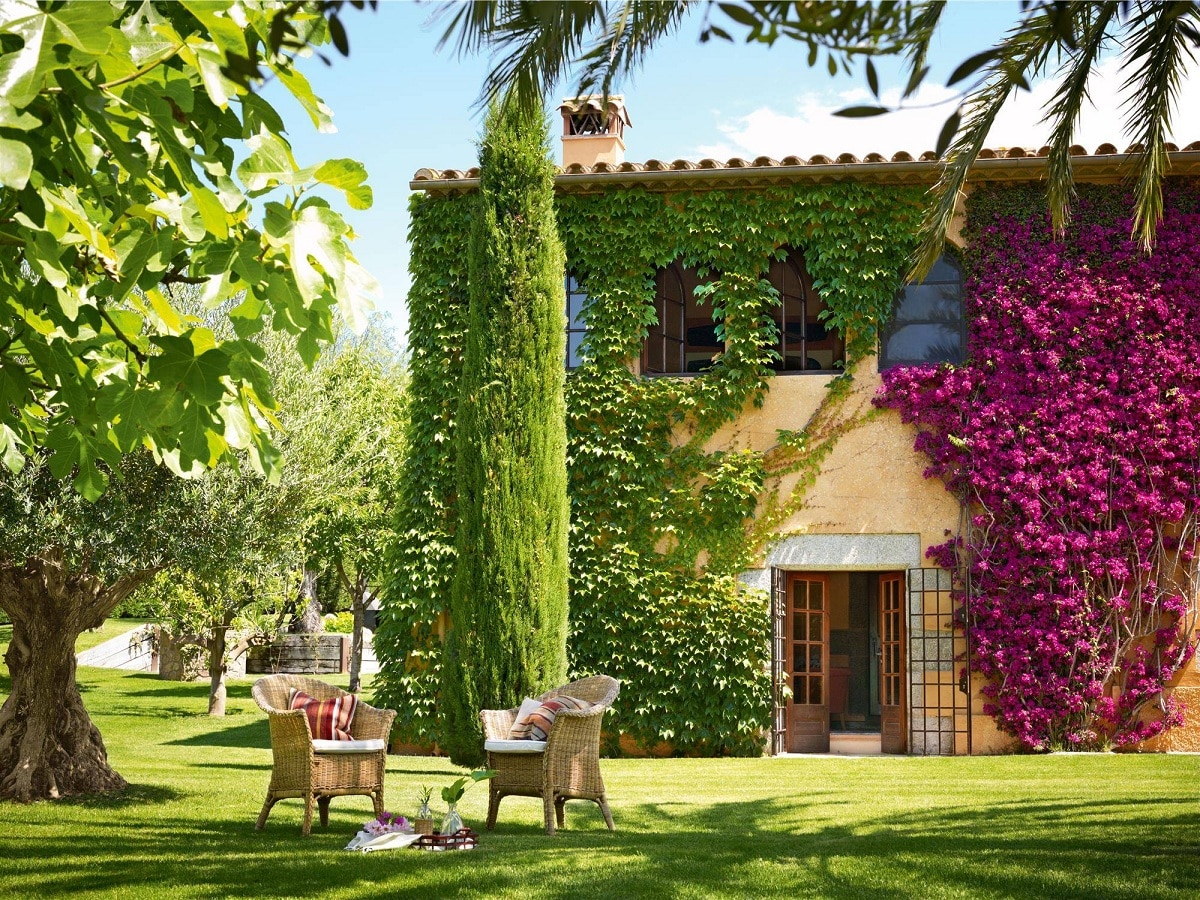
First of all, it is important to know that the bougainvillea is a climbing plant, so it should ideally have a suitable place in your garden or terrace where the plants can tangle and grow at will. This means that you need to allow enough space for the bougainvillea to spread out.
In this way, in the care of bougainvillea Some supports or structures are installed to guide the flowers and climb on them. In garden stores and DIY centers you can find items specially designed for this purpose, which you can place, for example, in front of the walls or in the garden as dividers. If you prefer, you can also place several canes for the flowers to curl like other plants.
It is important to place the bougainvillea in a sunny place, because it is a plant that needs a lot of sun. For species of bougainvillea or clover that grow indoors – there are many species – it is necessary to place them in a room or balcony with more light.
Watering the bougainvillea 3 times a week is essential in the summer, and you can water it at intervals during the cooler months.. You should not flood the ground where you are planting bougainvillea because the roots will rot and kill the plant.
As for the soil in which you will place the bougainvillea, a universal substrate will work, but you will have to pay for it with a certain frequency. In order for the flowers to grow strong and beautiful, it is recommended to apply organic fertilizer in winter and inorganic fertilizer in summer.
Bougainvilleas also need pruning to promote healthy plant growth. In this way, in February and March, branches that are in poor condition or have grown too much should be cut, which will strengthen the shoots.
The bougainvillea must be in the sun or in the shade
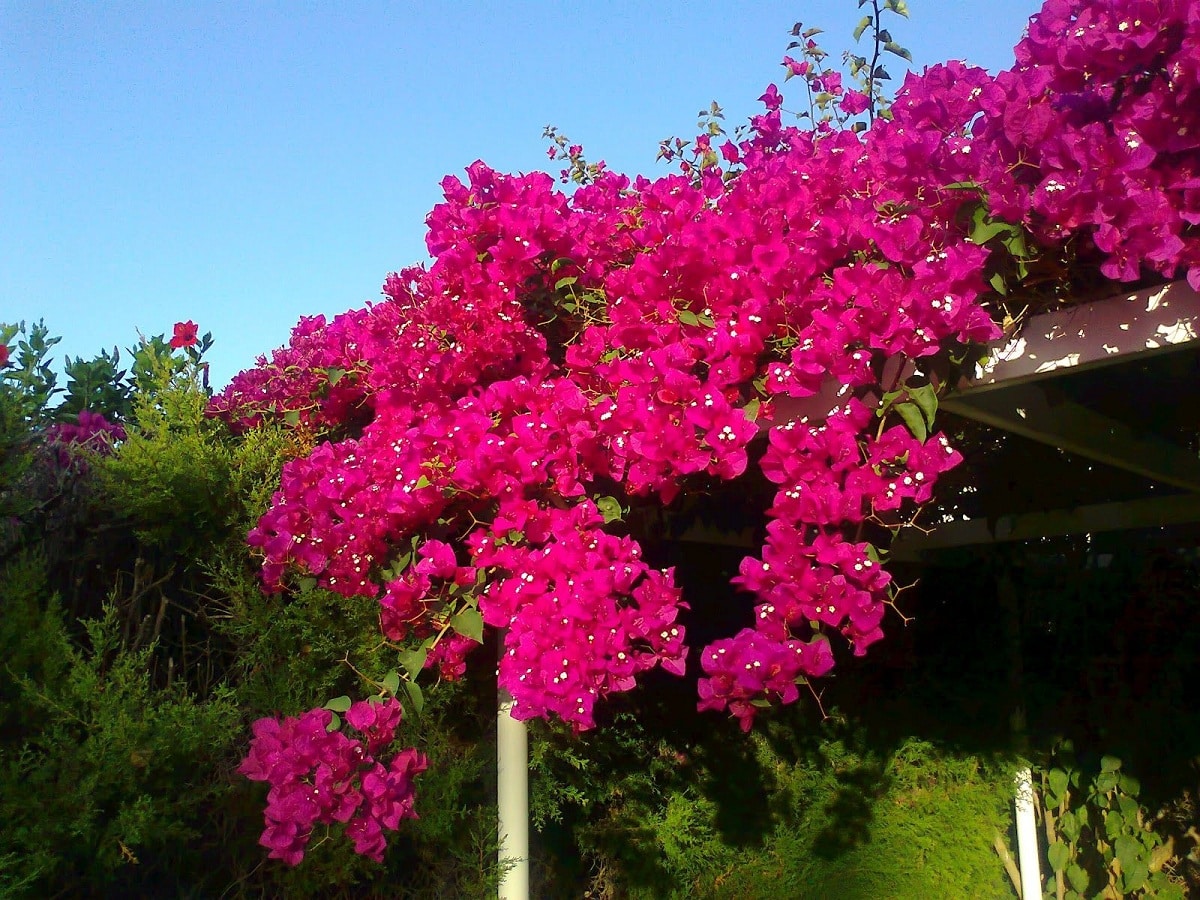
This is one of the most frequent doubts of all those people who have bougainvillea. They do not know whether the bougainvillea should be in the sun or in the shade. As we mentioned earlier, it is important that it is placed in the sun during the hours of greatest light. This plant needs a large amount of sunlight to be able to grow, develop and stay in good condition. However, the fact that it is located in full sun means that the need for irrigation may be greater.
During the summer and spring season, when the temperatures are higher, Needs to be watered more times as it has been hit by strong light and sun rays. To prevent accelerated drying and weakening of the plant, watering at least 3 times a week during the summer is mandatory.
ideal conditions
In general, caring for any type of bougainvillea is simple due to its hardy nature. The greatest plant growth response will be found in warm environments, with humid breezes, typical of coastal environments.
In our case, we will have to adjust the frequency of irrigation, fertilize the first months of germination (especially if the leaves fall in winter) and carry out periodic pruning to give the climbing plants a specific shape.
During very cold winters, with maximum temperatures not exceeding 10 ºC, it usually loses its leaves and becomes peeled, although in the spring it grows rapidly. It can withstand hot temperatures above 35°C, although it performs in favorable environmental humidity conditions.
Bougainvilleas are climbers accustomed to humid and tropical environments. The optimum relative humidity is between 60 and 85%. Coastal environments with humid sea breezes are best for its growth, as it is not a particularly sensitive plant to saline environments.
If temperatures are good and the growing area is warm, flowers will arrive before spring arrives. In hot regions such as the coastal areas of the Mediterranean side, they can persist throughout the period.
Bougainvillea has good resistance to cold and is ideal for all types of soil. It prefers calcareous soils. It can withstand basic pH, the only thing we have to take into account is to ensure adequate drainage since it does not allow puddles.
If our soil is heavy, we can reduce the problem of sand or perlite mixtures that promote root oxidation. It responds very well to the incorporation of organic matter and an annual or semi-annual application of 2 to 3 kg around the main stem of each adult plant is recommended.
Subscription is highly recommended as we are looking for a mantle of blooming flowers and bushy fuchsia foliage. This is essential when you notice the first buds swell and new shoots appear.
Of all the types of fertilizers, we recommend a homogeneous fertilizer with an NPK ratio of around 2-1-3 and containing micronutrients to prevent iron deficiencies. Keep in mind that when grown in calcareous environments and with a high pH, iron is poorly assimilated and chlorophyll can develop.
Hopefully with this information you can learn more about whether bougainvillea should be in sun or shade.