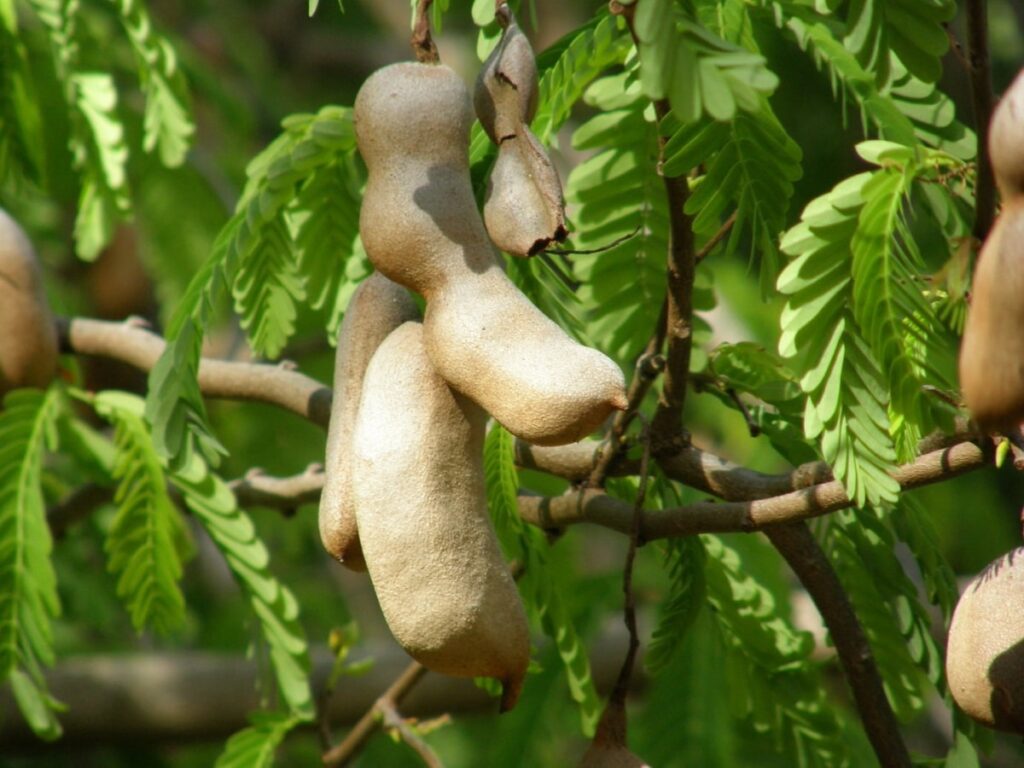

Image – Flickr/Malcolm Manners
Many of us want to have a garden with exotic plants, with a tropical look, that’s why, It is not surprising that people wonder if it is possible to grow a tamarind tree in Spain.. And it is that it is a plant that is not only beautiful, but also produces edible fruits.
But to answer this question, we need to know what climate there is in its place of origin, because only then can we have an idea of whether or not it is viable to grow it in our region. .
Where does the tamarind live?
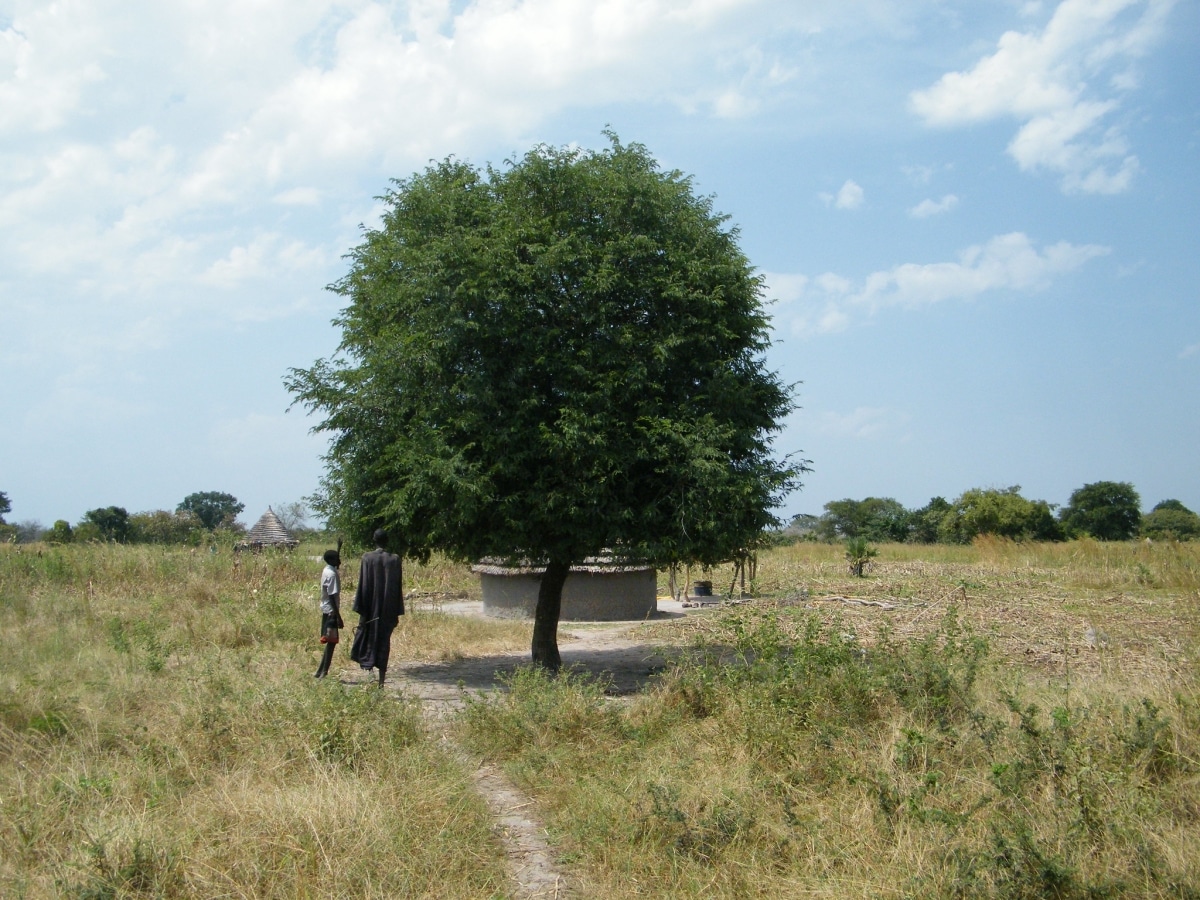
Image – Flickr/Scamperdale
Tamarind It is an evergreen tree native to Africa, particularly the tropical savannahs of Sudan.where about 800 mm of precipitation can fall per year, especially in summer, and where the average annual temperature is 22°C, with minimums of 11°C and maximums of 35°C.
From now on, the human being spread it on other continents, starting with Asia and to end up reaching America, where it is today the most cultivated.
It is a fast-growing plant, which, as we have said, remains always green throughout the year. This is due to the fact the conditions in which it lives allow its leaves to remain on the plant for a long time (months) until they are replaced by others.
So, it is a species that lives in areas where it rains a lot during the hottest season, and where temperatures are also high throughout the year; or in other words: it is found in places where the thermometer never drops below 10°C.
Can we have it in Spain?
It is complicated. Sure, in the south and in some points of the Mediterranean region, as well as in some points of the Canary Islands, it is possible. In the rest of the country it could be kept in a greenhouse, or inside the house if you have an interior patio that gets lots of natural light, and even so we will see that it is not easy to keep him alive.
It is a tree that, in addition to a warm climate and plenty of light, needs high humidity. This is not a problem if you are on the coast, on an island, near a river or in an area where it rains frequently, but otherwise the tamarind could become dehydrated.
Is it worth having as a houseplant?

Image – Wikimedia/James Steakley
If we take into account that it is a tree very sensitive to frost, and that it even suffers a lot from the cold (that is, when the temperatures drop below 10ºC), you may wonder to be if it is possible to keep it indoors. Yes The answer is yesbut only if you have it in a room where you have a room with windows that let in lots and lots of light.
But yes, it is important that, if you have curtains, you remember to open them, to bend them, so that there can be more clarity. Also remember that if you have a fan or an air conditioning device, for example, you should try to place the plant in a corner where it is not exposed to the drafts generated by these devices.
Another thing you can do is keep it inside the house only in the winter and take it outside when the weather improves.. In this way, you will make him take advantage of the heat much better to grow. But if you do, put it in partial shade; that is to say, it should not be exposed to the sun without having accustomed it to it, because it would burn.
How to maintain the tamarind tree in Spain?
Now let’s talk about how this plant is cared for in our country. But first, let me tell you something: we live in an area where there are many different climates: for example, it is not as hot in the Pyrenees as in Tenerife, and it does not rain as often in Galicia than in Almería. Therefore, we could say that these tips are general. Next, thinking about the climate in your area, you’ll need to see if you can follow them to the letter or make variations:
- Location: as it is a plant very sensitive to cold, but also very demanding in light, it is interesting to keep it outside in spring and summer, and to bring it inside in autumn.
- soil or substrate:
- Garden: if you are lucky enough to live in an area where frosts are never recorded, you can plant it in the ground if it has good drainage.
- Pot: you can fill it with universal substrate, like this one.
- Irrigation: it is a tree which must be watered, as long as it does not rain, several times a week in summer. If you have any doubts about when and/or how to water, I advise you to take a look at our video on irrigation.
- Subscriber: you can pay it from April to the end of summer. If there are no frosts, you can pay for it throughout the year. To do this, use organic fertilizers, such as guano or manure, in this way you will take care of the environment.
- Multiplication: to propagate to size, the seeds must be sown in the spring.
The tamarind in Spain is a demanding plant, but if you want to have a specimen, we wish you good luck.