

For plant lovers, botanical gardens are a good option to spend the day. They are not only very striking for their plant diversity, but also for the combination of natural elements and human architecture. A good example is the Botanical Garden of Santa Catalina, which stands out mainly for the conservation of the ruins of a convent.
So if you are in the Basque Country and want to make a nice trip, this is an excellent idea. So that you know a little where you are embarking, We are going to talk in this article about the Botanical Garden of Santa Catalina and its history. In addition, we will give you some practical information about visits, times and prices for this park.
What is the Botanical Garden of Santa Catalina?

When we talk about the Santa Catalina Botanical Garden we refer to an environment of about 32,500 square meters located in the Sierra Badaya de Álava, specifically in the municipality of Iruña de Oca. This beautiful extension of land in the Basque Country is part of the Ibero-Macaronesian Association of Botanical Gardens.
It all started in the Middle Ages, a time when the convent of Santa Catalina was still very impressive. However, over time, it fell into oblivion. Over the years, the undergrowth devours its structure until it was decided to recover the building in the 21st century to create a unique botanical garden.
Story
In the 13th century, the descendants of the most notable and powerful family of Iruña de Oca had their tower house built, which would be the origin of Santa Catalina. About a century and a half later, they moved to the Torre de Doña Otxanda in Vitoria, which made it their new residence. At that time, the family decided to give their old house to a closed monastic Catholic religious order, called the Jerónimos.
After a few years, the building became the property of the Augustinian monks. They are the ones who transformed this house into the monastery of Santa Catalina. Basically, they attached a church next to its cloister, guarding the tower. In 1835, due to the confiscation of Mendizábal, the monks abandoned the monastery and left it at the mercy of nature. It was turned into a troop barracks during the First Carlist War, but after it fell the Carlists decided to burn it down and turn it into ruins.
It was in 1999 that the City Council of Iruña de Oca decided to take over Santa Catalina and install the botanical garden that we know today. This was inaugurated in 2003. Nine years later, in 2012, the decision was made to free the ruins of the convent from nature and recover it. This was quite a difficult task, as all the walls long supported by the vines had to be kept upright.
In 2015 it was the first park to be named Starlight Stellar Park worldwide. It received this honor because it happens to be an ideal place to observe the stars and other astronomical phenomena. In fact, special astronomy-related events still take place today.
Botanical Garden of Santa Catalina: Visits
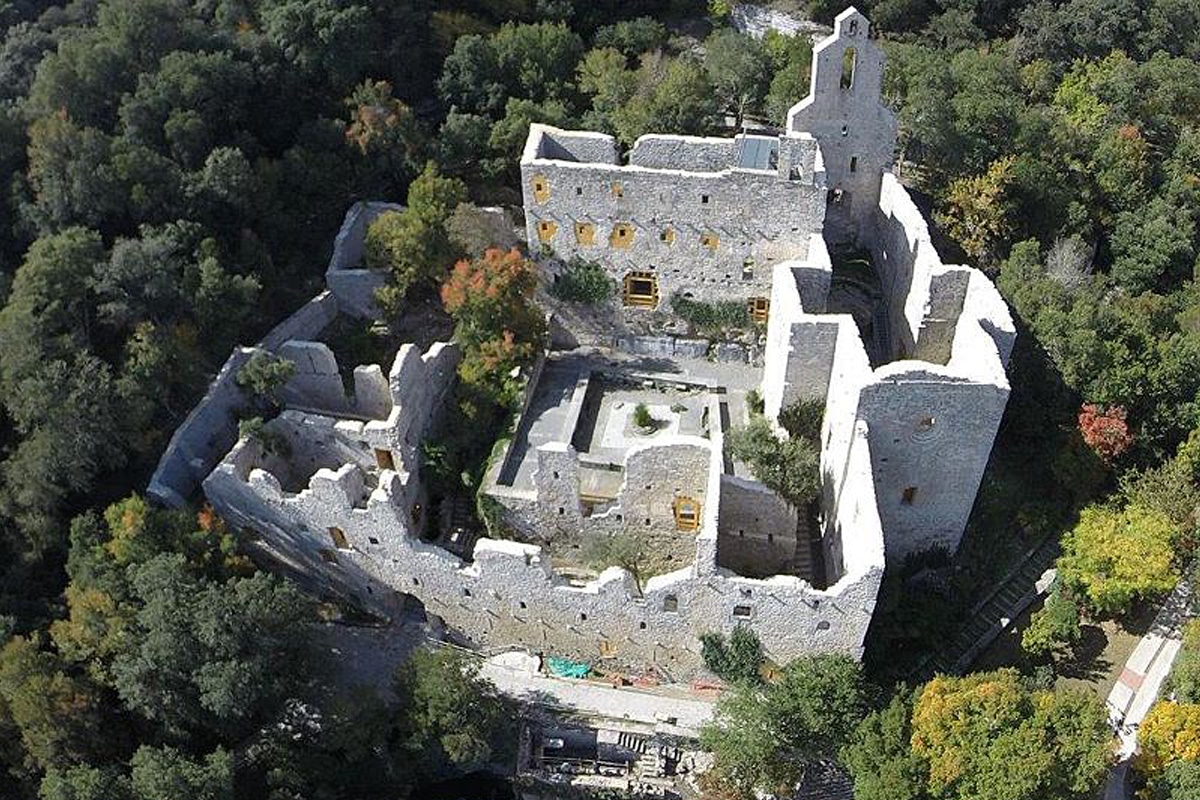
The Santa Catalina Botanical Garden contains different routes and spaces within its approximately four hectares of land. These regions are divided into three climatic zones: Solana, shaded area and valley. As for the vegetation that can be found on the route, it is generally native to the Sierra de Badaya, but there is also a lot of flora native to other continents. Thus, the combination of the botanical garden and the convent creates a unique space that is worth visiting in Álava.
There are several types of visits that we can do in the Botanical Garden of Santa Catalina. Of course, we can also go there for free. The ticket is valid every day. That is to say: As long as we keep the ticket, we can come and go as many times as we want during the day, respecting the timetables, of course.
We can say that we can go see this beautiful natural space accompanied by our dog. However, there are some rules that we must respect. First of all, the dog must be attached by means of a leash with a maximum length of one and a half meters. Also, dogs that have been aggressors in previous situations or that can be potentially dangerous should wear a muzzle. Taking this into account, let’s see what types of visits we can do in this botanical garden:
- Guided tours: As in many tourist places, guided tours are characterized by having an experienced guide who informs about what we see. For this supplement you have to pay an extra €3 at the entrance. The duration of this option is one and a half hours.
- School visits: This is a good option for schools that want to take a guided tour for children during school hours.
- Theatrical visits for children: This is the best option for the little ones. It is a theatrical guided tour in which the little ones visit the park with the protagonists of the comic strip called “The Butterfly Garden”. This is how they teach them, in a fun way, about the flora and the history of the park.
- Functional diversity visits: These are designed for people with disabilities, including those who are blind, visually impaired, disabled and deaf. Special guides, directional bars and all-terrain wheelchairs are available to them at no additional cost.
Schedules and prices
If you enjoy it and are thinking of going to visit the Santa Catalina Botanical Garden, it is important that you take into account timetables and fares. This park opens at the following times (although throughout 2022 it will be closed for renovations):
- From Monday to Friday: From 11:00 a.m. to 3:00 p.m.
- Saturdays and Sundays: From 10 a.m. to 8 p.m.
Regarding prices, it must be said that children under ten enter free of charge. The rates for others are as follows:
- Self-guided visit for an adult: €3
- Free visit for large families: €2
- Free visit for residents registered in the municipality of Iruña de Oca: €1.50
- Reduced free visit with student card: €1.50
- Reduced free visit for groups of at least ten people: €2
- Guided tour: €3 in addition to the entry price.
If you have the opportunity to visit the Santa Catalina Botanical Garden, do not hesitate to do so. This is the ideal place for nature lovers!