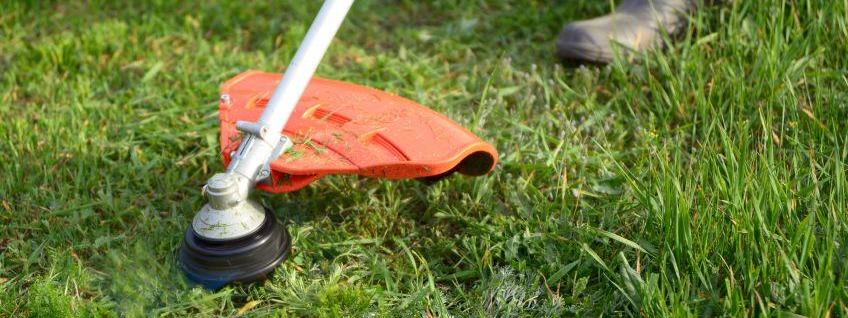
The brushcutter is an excellent tool for keeping grasses in the garden or around regulated orchards, it is also often used in the undergrowth or for cutting grasses and brambles.
When the vegetation is too stubborn to use the classic wire head, discs and cutters should be used, which are also comfortable compared to woody brambles or young shrubs.
Whether it is a battery-powered tool capable of installing discs and knives, a light brushcutter or a powerful forestry model, it is always necessary to carefully follow certain procedures and always carry equipment personal protective equipment (PPE). So let’s take a look at why you use blades and discs and how to do it safely.
Contents [Ocultar]
-
When to use blade instead of wire
-
read the manual
-
Use of protections
-
Make sure there are no hidden obstacles
-
Don’t overdo it, choose the right tool
-
Check blade wear
When to use blade instead of cable
The choice between a blade or corded brushcutter is determined by the type of work one wants to do. Blades or discs are typically used when thick, tall, tough grass is too tough for the line, causing frequent breakage and/or poor performance.
A mowing knife will certainly work faster, but the grass will be cut at the base and then fall to the ground with almost whole stems, causing a possible harvesting operation. There are also discs specially designed to destroy bushes or to cut bushes and suckers.
read the manual
It may seem innocuous to say it, but it is in the user manual of our brushcutter that we will find the first (and essential) information. Specifically, you need to make sure our brushcutter can mount a blade or disc, and if so, what is the maximum diameter. Electric and smaller blades are often not designed for this.
After this check it is necessary to understand how to mount the disc: generally once the wire head has been removed, the disc is placed on the centering flange (against the bevel pinion), another flange and/or a support cup is placed on it. , and finally the nut to tighten it. In some brushcutters it is also necessary to remove part of the stone guard, designed for use with the line carrier heads, higher above the ground and with the need to cut off the excess line.
usage protection
The use of adequate protections is a rule that must always be followed when working with a brushcutter, even when using the wire, and even more so when using cutting discs. Headphones, goggles, or better yet, a full face shield (perhaps integrated into a helmet with helmet), gloves, safety boots, and shin guards are the right gear.
If the trimmer line encounters an obstacle, such as a rock, it tends to abrade or throw it. A disc, in an unfortunate event, could lose a piece of metal and fly it like a bullet. Better to be careful. It is also good to respect the safety distances with animals or other people.
Precisely because of the risk of projecting a fragment of the disc in the event of impact with an obstacle, before starting the brushcutter it is always advisable to make a round. This will allow you to notice, expose or remove any iron, wood, stones or other materials that may be hidden in the vegetation and reserve unpleasant surprises.
This very simple precaution in many cases prevents injury or damage to the blade.
There are protections that can be very useful, for example, if you use a blade brushcutter with a disc to eliminate suction cups, it is good to equip yourself with a suction cup, the Valmas universal suction cup is very useful in this regard .
Don’t overdo it, choose the right tool
Each disc is designed to do an ideal job: the cutting blades for cutting tall grass quickly, the brush blades for dense grass and underbrush, the widia or wood discs for bushes and suckers.
Therefore, each wants to be used in a different way, for example, when cutting tall grass, one proceeds with wide and regular swings, advancing and then cutting with right to left movements, like a scythe .
The bramble blades have downward curved ends and are therefore used from top to bottom, by “resting” them on the brambles, taking care not to get too close to the ground.
Wooden discs should be used with care to avoid an effect similar to chainsaw kickback, i.e. bringing the socket to be cut closer to the edge of the stone guard with the disc part to the left.
If the type of work changes a lot, it is good to change accessories. It is useless and risky to think of cutting the grass with a bramble disc or to end up near a wall with a disc: it is better to go to the wire. The few minutes needed to disassemble and reassemble the cutting equipment are well spent and are compensated by the possibility of doing better work.
Check blade wear
Before starting work, when finished and during breaks, always check the condition of the blade disc. If it is excessively worn, unevenly worn, cracked, or deformed (perhaps from impact), replace it immediately.
What to a distracted eye may seem like sudden damage can have catastrophic consequences triggered by a single obstacle not seen in time.
The intact blade is durable but if damaged, it could more easily lose parts.
Also always pay attention to vibrations during work: if they increase (perhaps after a collision), they indicate an imbalance of the blade. You may have bent the blade, lost part of it, or the clamping nut may have come loose. In such cases, you should immediately stop working to repair the blade.