
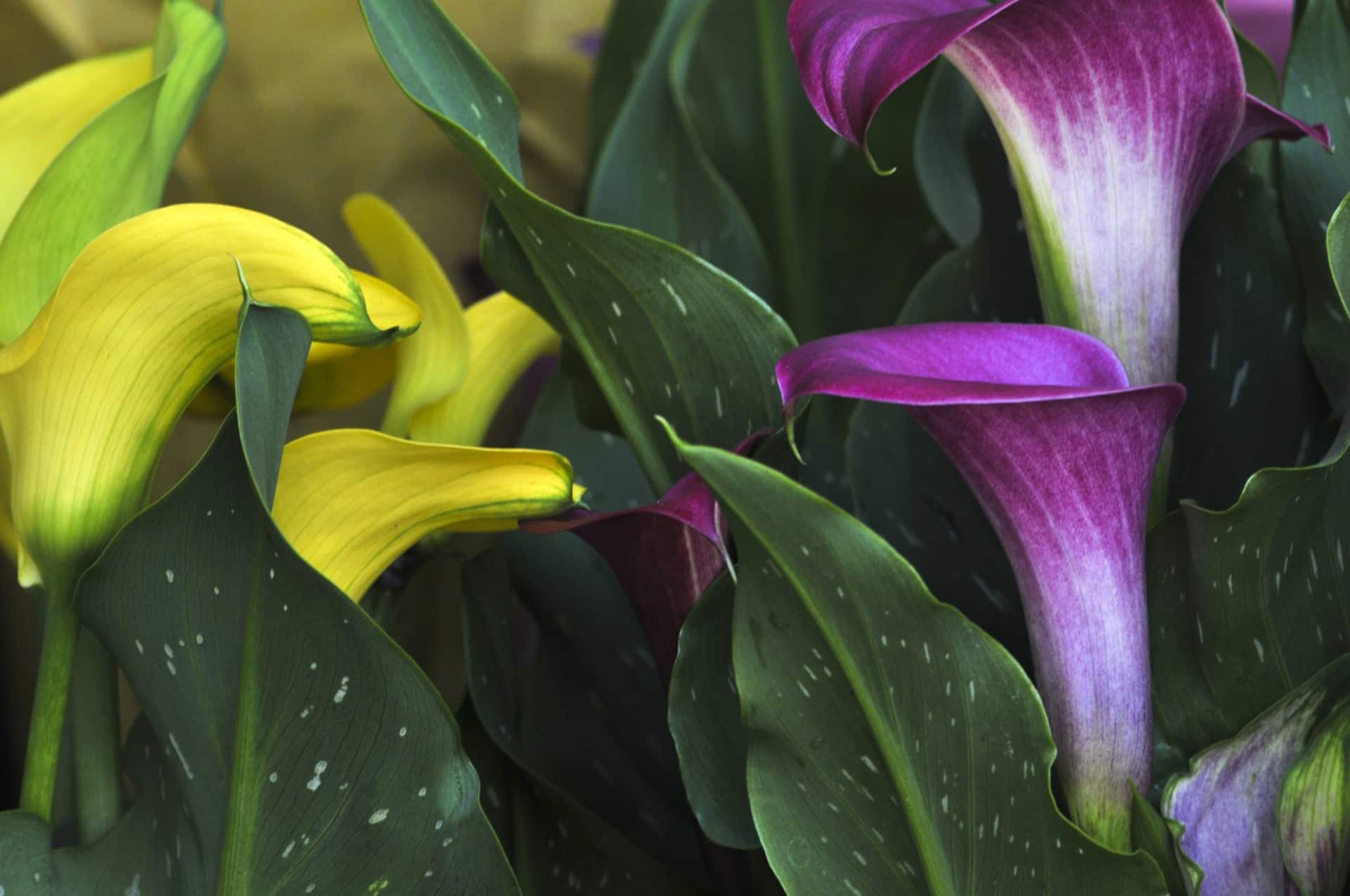
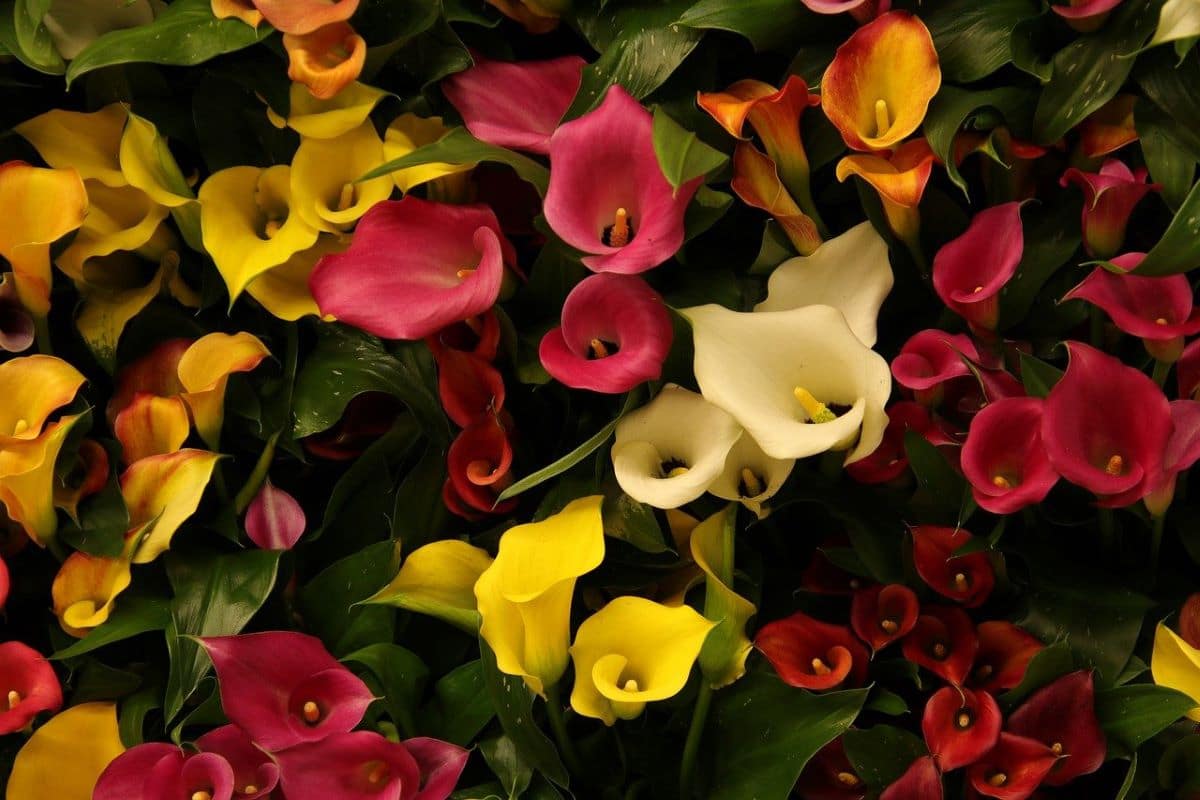
The colored callas are as beautiful or even more beautiful than the one with white flowers, which is why it is not uncommon to wonder whether to bring them inside or leave them outside, because it is important that they live as long as possible.
They seem to be very delicate, and therefore, it can give the impression that they can’t stand the cold at all. For him, I’ll tell you if the colorful coves are indoors or outdoors.
When do we say that a plant is indoor?
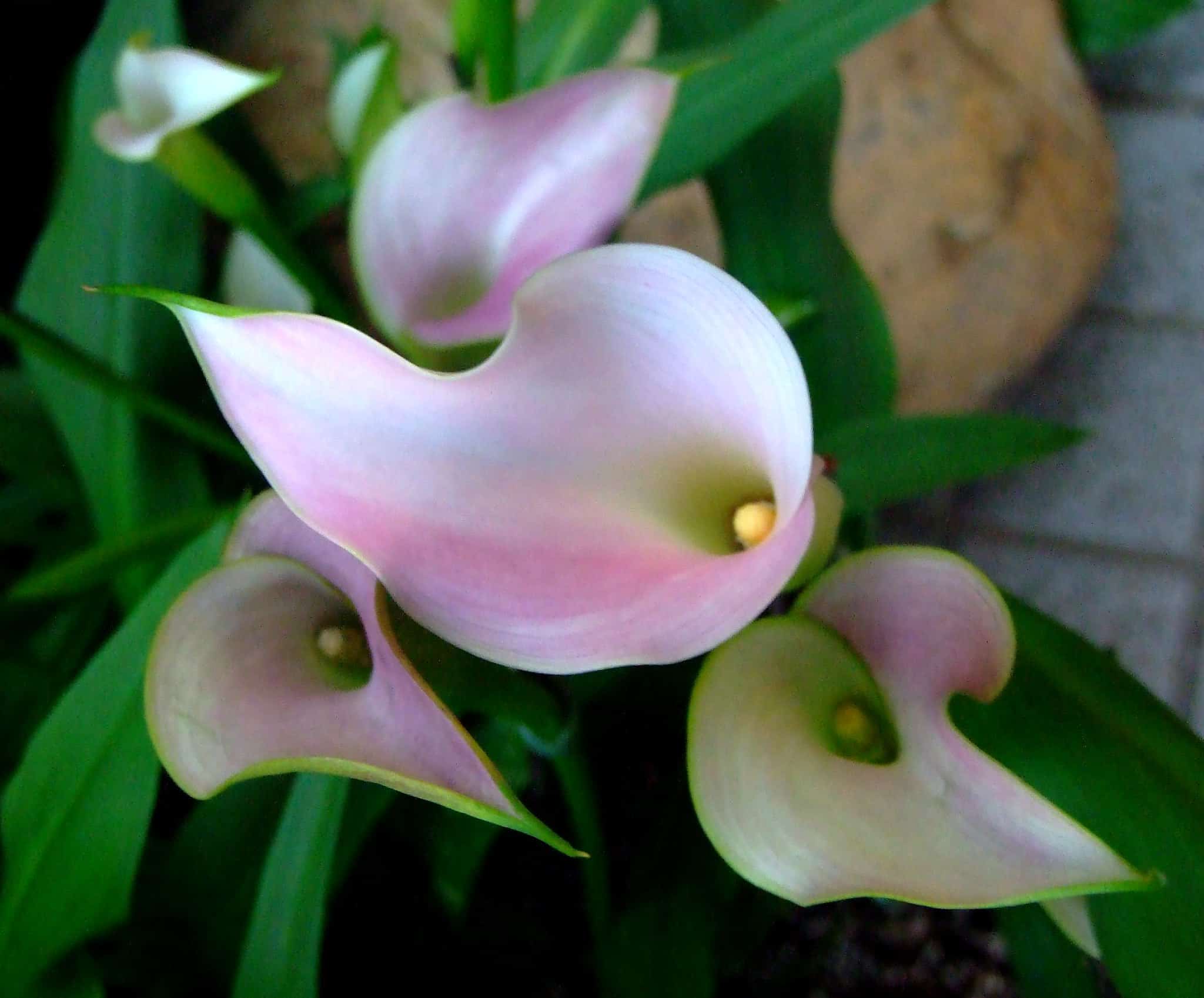
Image – Flickr/Kai Yan, Joseph Wong
I always like to start at the beginning, so before I dive into the subject of this article, I want you to know what a houseplant really is. And good, It is a plant that, because it does not support the cold – or to be more exact, temperatures below zero – must be grown indoors at least during the winter.. This is the case of anthuriums, philodendrons and monsteras, for example, if we focus on those that are cultivated as such in many parts of Spain.
And it is that, yes, depending on the climate of a region (country or province), there may be one or another of the plants that must be kept indoors. Thus, while in Madrid we have at ficus retusa indoors, in the Mediterranean region, you can be outdoors all year round.
Are the coves interior colors?
To properly answer this question, we would have to ask another one: what is the resistance to cold of these plants? These are varieties of the species Zantedeschia aethiopica (the white cala), native to South Africa. Yes It is a rhizomatous herb that tolerates cold very well, but suffers from frost.. That’s why its leaves die if they’re exposed to frost, for example, or those north winds that are so, so cold.
So if we focus on our protagonists, we can intuit that if pure species can’t stand freezing, neither can they. In fact, I would dare say they are more sensitive to the cold, so I don’t recommend having them outside the house in the fall if by then the temperatures are starting to drop below 10°C.
Under what conditions should they be kept inside the house?

Related article:
Colorful calla lilies: care
In other words: where to put colorful calla lilies at home? And how to take care of them? Good, Well what we’re gonna do is put them in a room where there’s windows. This is crucial so they can have the light they need. In addition, in this room there should be no drafts; that is, we don’t need to have – or at least we shouldn’t start – the air conditioning, the fan, etc., because if we do, the leaves will be damaged.
Another important point concerns the pot. This It should be a container – it doesn’t matter if it’s plastic or clay – that has at least one drainage hole. If he didn’t, the roots would die from excess water. For this reason, it is also necessary that you empty the plate that you will put under after watering. And speaking of irrigation, you should pour water – on the ground – several times a week during the summer, but less the rest of the year.
Can they be outside?
Of course they do, but if the temperatures drop below ten degrees you already know that they will have to be protected whether at home or in a greenhouse. No matter where you place them, it’s important that they don’t lack light; in fact, if you have them outdoors, I recommend placing them in partial shade.
If, on the contrary, you choose to have them in your home, you must place them in a place where there is clarity because they would not look pretty if you choose to have them in a place where you can hardly see anything.
Under what conditions should it be kept outside the home?
If they have to be kept abroad, I recommend that you place them in an area where they receive direct sunlight for some time. Another option would be to put them in partial shade, in a place where the sun would never hit them directly. You can leave them in pots, or if you have a garden, plant them in the ground.
As for irrigation, it will be necessary to be aware of the humidity of the earth, being outdoors, it is normal for it to dry much faster than if it were indoors. Therefore, you may need to water them about 4 times a week in the summer and less in the winter.
Remember that if there are frosts in your area, you will need to protect your colored coves so that you do not run the risk of losing them.
I hope now you know where you are going to get them.