
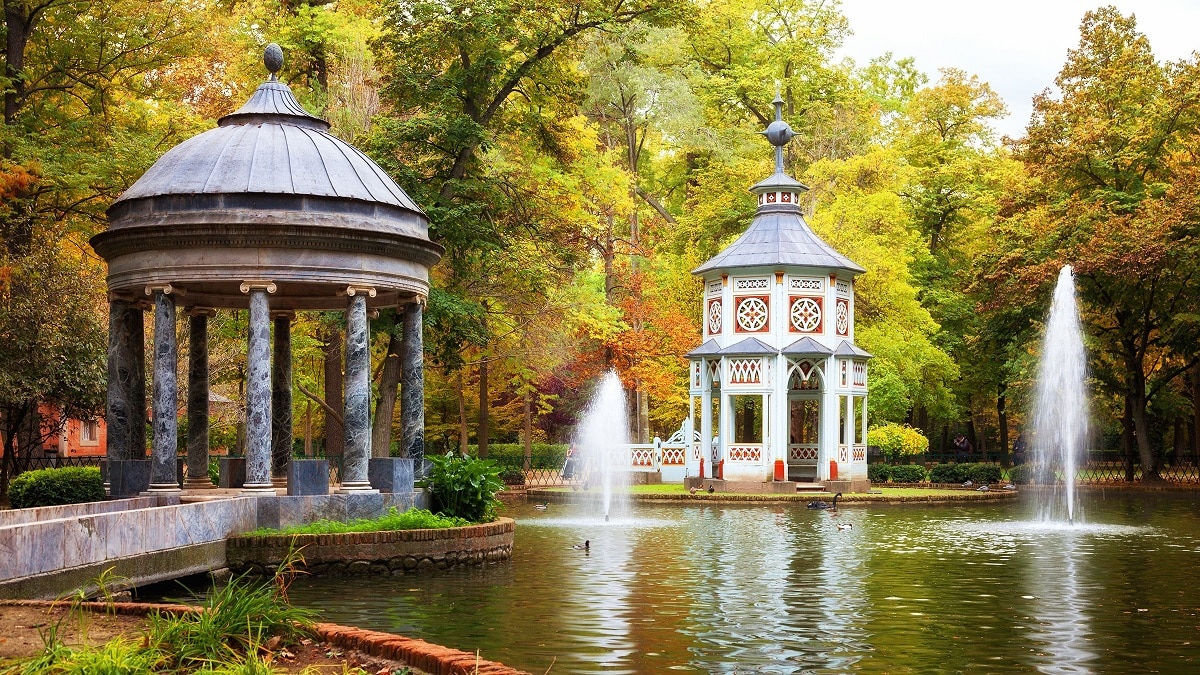
The Aranjuez Gardens are a beautifully landscaped set of magnificent forests and parks located in the municipality of Aranjuez, in the Autonomous Community of Madrid, Spain. These gardens are a World Heritage Site and are part of the Cultural Landscape of Aranjuez, declared a World Heritage Site by UNESCO in 2001.
In this article we are going to tell you everything you need to know about the gardens of Aranjuez, their characteristics and their history.
Aranjuez Gardens
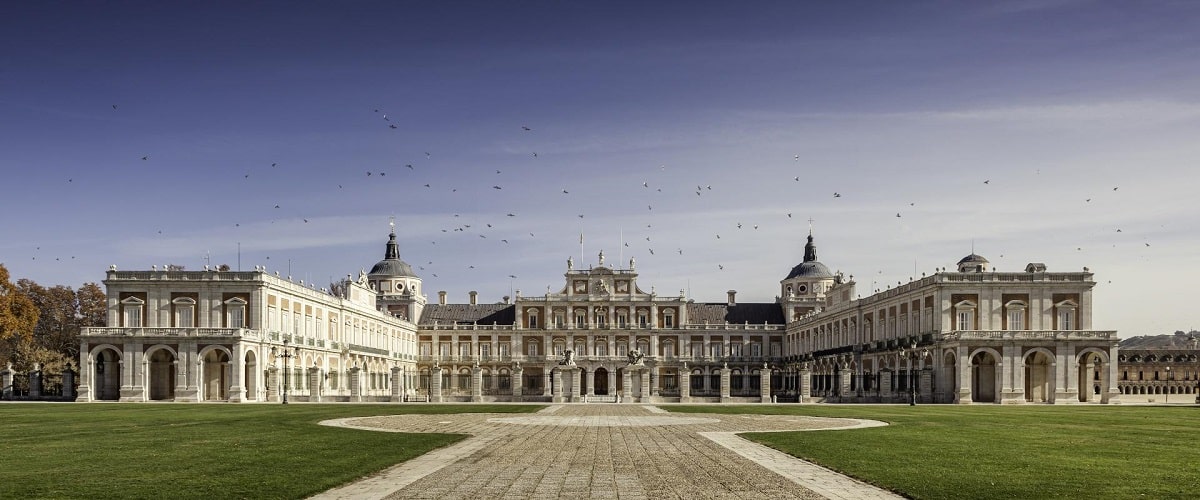
Aranjuez is the southernmost region and the second largest (186.7 km2) in the region, surrounded by the municipalities of Castilla-La Mancha belonging to the regions of La Sagra and Mesa de Ocaña. Its geographical limits form a wide and characteristic tongue that follows the sweet waters of the Tagus along the left bank until it enters the green and noble land of Toledo.
In the context of the Castilian Altiplano, characterized by a Mediterranean climate, with a tendency towards continentalization, Aranjuez becomes an island of lush vegetation due to the scarcity of wooded areas, mostly replaced by extensive rainfed crops, with their vast groves and riparian forests, thanks to the abundance of water and the fertility of the valleys of the sedimentary soilsin stark contrast to the surrounding desert.
An extensive irrigation system was added to the original foliage, from which orchards and gardens were born, enriching the plant environment, while paths, bridges and various infrastructures provide great accessibility to the complex.
History of the Gardens of Aranjuez
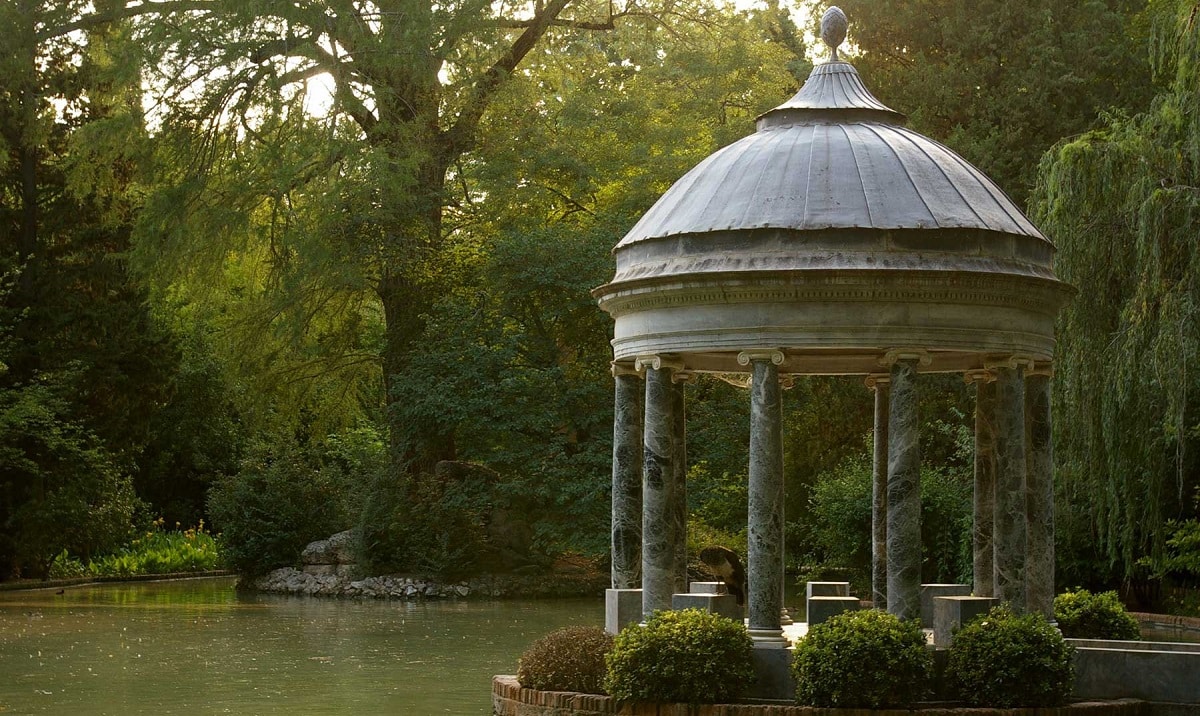
The history of this territory is full of cultural encounters, Capetians, Visigoths, Romans and Arabs passed through this fertile land. In the Middle Ages it belonged to the military organization of Santiago and its owner built the first palace in a forest full of big and small game. Site Royal status derives from the Catholic Monarchs (15th century) who incorporated all their territories into the crown, although Felipe II (16th century) would be in charge of fulfilling one of the old dreams of his father, Emperor Carlos V , de Thanks to the ascent and expansion of the grounds of the Royal Palace, he made Aranjuez one of his favorite residences. Felipe II really wanted to create one of his biggest projects: Aranjuez.
So much so that he himself gave precise instructions on the need to draw the streets and determined the details of the landscaping, as some of his orders say: “See the street from the bridge, the view from the bridge towards the street”. Felipe II’s love for gardening is well known. Perhaps for this reason the best Spanish and foreign gardeners of the time took part in the design, creation and execution of the work, by express order of the king.
This is how the first known botanical gardens in Europe were created at the time, establishing pioneering centers for the experimentation and domestication of tropical plant species. Seeds, trees and shrubs brought by expeditions from India were planted here. Felipe II started the project as crown prince and continued as king. At first he tried to collaborate with his architects, mainly Luis and Gaspar de Vega, who laid out the first tree-lined streets (Reina, Madrid and Entrepuentes); but the project required a lot of work and was very complicated (problems with the river, need to create hydraulic structures, large-scale developments, etc.).
Beauty of the Gardens of Aranjuez
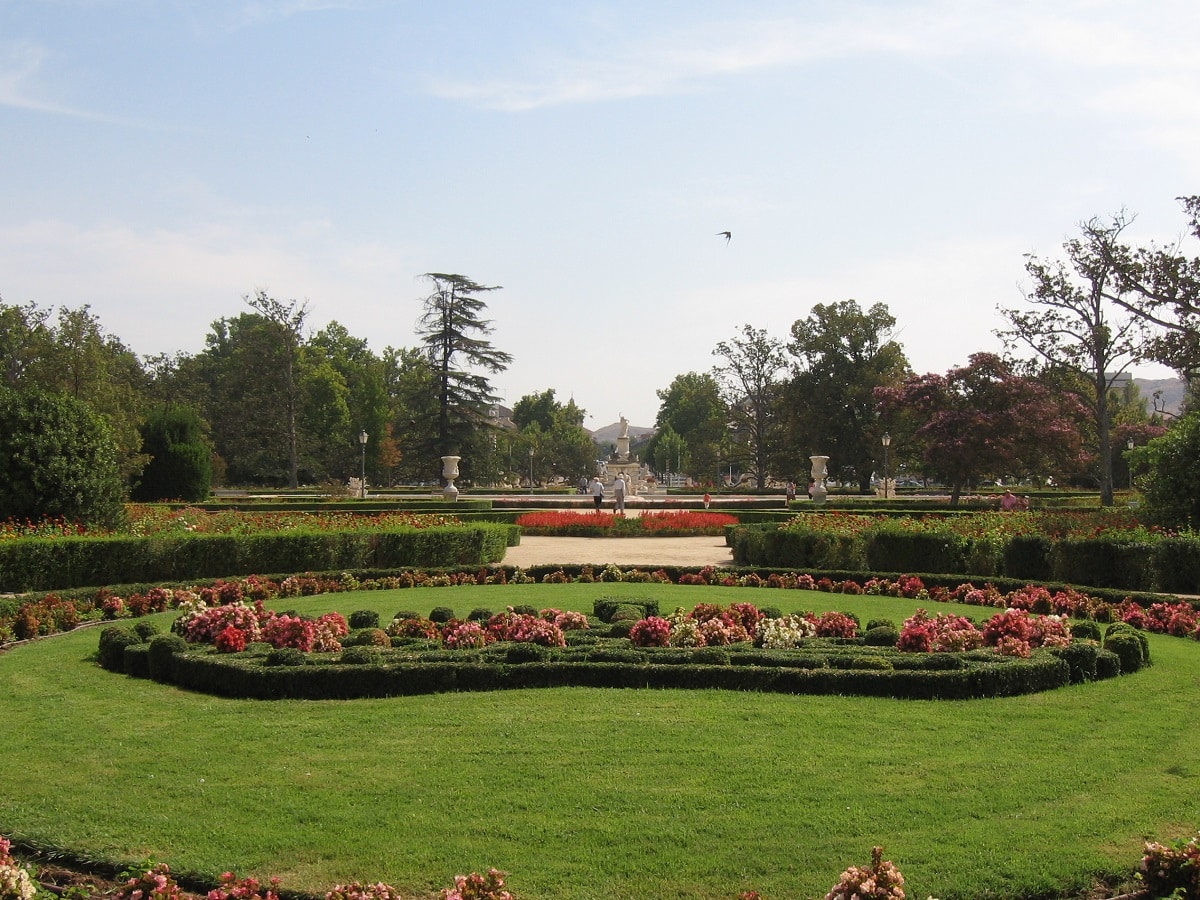
The need to combine utility with aesthetics and the obligation to create concepts with high landscape value was such an ambitious challenge that the sovereign ordered Juan Bautista de Toledo, the architect in charge of all disciplines, to ’eminent scientific personalities, to be brought to him in 1560. .as Juanelo Turriano, Pedro Esquivel, Francesco Sittoni or Pacciotto were studied. After the death of Juan Bautista de Toledo in 1567, Juan de Herrera took charge of the work.
Under the direction of these two architects, the gardens of Picotajo and Doce Calles, the Gardens of the Island, the Jardines de Arriba (formerly Jardines del Príncipe), etc.; the Ontígola Reservoir, the Embocador Canal (now Azuda), the Aves Canal Extension, the Distillery and part of the Tower. Important projects such as navigation on the Huohe River have been completed.
The discovery of America marked a change of course in Spanish botanical research, since our best botanists of the Renaissance were more interested in the forests discovered in the New World than in their own. A) Yes, the great scholars of this science devoted themselves entirely to the study of the flora of the Americassome of which were even part of the great botanical expeditions carried out at that time (Francisco Hernández can certainly be called the pioneer of the extraordinary expedition).
Almost all of them left written treatises on the newly discovered plant species, and were able to send many of them to the flowerbeds of the various royal gardens prepared for the occasion, such as those of Aranjuez, to the delight of the king himself, nobles and courtiers. Even so, the first herbalism and greater collection of plants, fruits and seeds took place throughout the 18th century, during the reign of Carlos III.
most famous plants
All these gardens have a unique collection of plants, not only by species, subspecies, number of varieties, singularity or rarity of some of them, but here are some of the tallest specimens: they exceed 50 meters in height, some of the oldest ornamental trees in Spain reaching 260 years old. These heritage orchards contain more than 400 species of trees and shrubs, 28 of which are classified as exotic trees by the Community of Madrid.
Among the plants that stand out we have:
Pecan (Carya illinoensis), ahuehuete (Taxodium mucronatum), Chilean palm (Jubaea chilensis), Virginia guayacán (Diospyros virginiana), storax (Liquidambar orientalis) and plantains (Platanus orientalis, P. occidentalis and P. x hispanica). Other species of noteworthy interest are: yellow-flowered horse chestnut (Aesculus flava), red-flowered horse chestnut (Aesculus pavia), sugar hackberry (Celtis laevigata), macassar (Chimonanthus praecox ), scarlet hawthorn (Crataegus pedicelata), St. Andrew’s tree (Dyospyros lotus), garlandine (Gymnocladus dioica), tulip tree (Liriodendron tulipifera), Osage orange tree (Maclura pomifera), magnolia (Magnolia stellata), metasequoia (Metasequoia glyptostrobioides), iron tree (Parrotia persica), paulownia (Paulownia tomentosa), Calabrian pine (Pinus brutia), silver linden (Tilia tomentosa), Japanese zelkova (Zelkova serrata), etc.
I hope that with this information you can learn more about the gardens of Aranjuez and their characteristics.