

Chances are that at some point in your life you have heard of myrrh. But would you know what myrrh is and what it is used for? It is basically a colorless or yellowish resin obtained from a bush. For centuries, myrrh has been valued around the world for its medicinal properties and its use in perfumery and cosmetics. It also has an important place in history and religion, so much so that it is even mentioned in the Bible.
Apart from its historical and cultural value, myrrh is still used today as an ingredient in various products related to medicine and cosmetics, among others. Many people believe that it has various beneficial properties for our health. In this article, we are going to explore in more detail what myrrh is and what it is used for. In addition, we will talk a little about the plant from which this versatile product is obtained. So, if you are interested in the subject, I recommend that you continue reading.
What is myrrh and where does it come from?

When we talk about myrrh, we are referring to an oily aromatic resin obtained from a shrub called Commiphora myrrha. This vegetable grows in North Africa and Southeast Arabia. Since ancient times, myrrh has been used as incense and in traditional medicine. It should be noted that it is also mentioned in the Bible as one of the gifts presented by the Magi to the baby Jesus.
But where to find this curious aromatic resin? Well we can acquire myrrh in stores specializing in natural and organic products, health and wellness stores, household products stores and online on e-commerce sites. It is also possible to find it in stores that sell high-quality perfumery products.
It is important to note that due to its popularity and scarcity, myrrh is an expensive commodity and its trade may be linked to logging and deforestation in some producing regions. For this reason, It is important to ensure that we buy products that meet ethical and sustainable standards. To do this, it is best to look for brands that strive to use responsible and environmentally friendly business practices. It is also strongly advised to read labels and check the purity and quality of myrrh before buying it.
Commiphora myrrha
As we have already mentioned above, myrrh is obtained from a shrub or small tree called Commiphora myrrha. This plant typically grows in the deserts of Yemen and Somalia and has oval-shaped evergreen leaves. Its flowers are usually tiny and pale yellow, while its fruits tend to be dry with a sweet pulp.
Regarding care, Commiphora myrrha prefers hot, dry climates. It is important that it receives direct sunlight to thrive properly. Considering the circumstances of his habitat, This plant does not require a lot of water. Indeed, an excess can be very harmful to him. This shrub can be grown in sandy or clay soils. Of course, they should always have good drainage. It must be said that the Commiphora myrrha it is susceptible to fungal diseases, especially if the environment is too humid. For this reason, it is very important not to over-irrigate.
In summary, we can say that It is a hardy plant that requires little maintenance. However, their specific needs in terms of climate and soil must be taken into account to ensure their success in cultivation.
Uses and Benefits of Myrrh
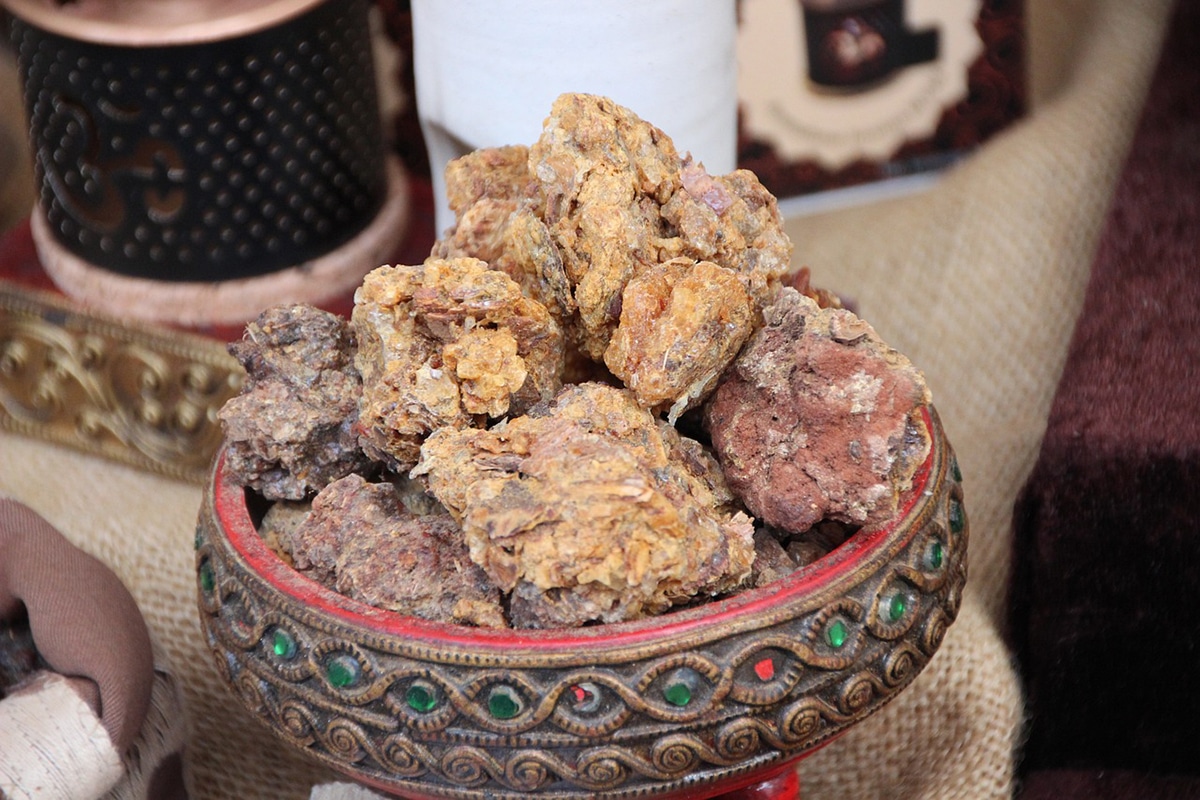
Now that we have a rough idea of what myrrh is and what it is used for, let’s go into a little more detail about its uses and benefits. This aromatic resin has been used in various cultures and religions throughout history as a sacred incense and to scent cosmetics, body care products and foods. Additionally, in traditional medicine, it has been used to treat a variety of ailments, from menstrual cramps to respiratory problems. In ancient times it was considered a valuable commodity and was used as a form of currency.
Currently, myrrh is still highly valued in perfumery and is used in the production of high quality products, such as colognes and perfumes. It is also used in the manufacture of pharmaceuticals. It must be said that experts continue to study its possible use as an antimicrobial and anti-inflammatory agent. Let’s see the applications it has in various areas:
- Perfumery: Myrrh is a popular ingredient in making high-quality perfumes and colognes, due to its sweet, woody scent.
- Personal care products: This aromatic resin is used in the manufacture of body care products such as creams and lotions. This is thanks to its anti-inflammatory and antibacterial properties.
- Incense and candles: Myrrh has been highly valued since ancient times as a sacred incense. Even today, it is still used in the manufacture of scented candles and products related to aromatherapy.
- Traditional medicine: It has also been widely used in traditional medicine to treat a variety of conditions, including menstrual cramps, respiratory problems, and ear infections. However, it is important to note that scientific research on its medicinal effects is still limited and it is always advisable to consult a healthcare professional before using myrrh products.
- Food industry: This resin is quite common in some regions when making certain foods and beverages, such as cakes and alcoholic beverages. With this, we managed to add a woody aroma and flavor.
It is important to note that although myrrh has a long history of use, its safety and effectiveness are not yet fully supported by scientific research. Therefore, it is important to use it with caution and following the instructions of a healthcare professional. I hope this information about what myrrh is and what it is used for was useful and interesting to you. Who knows, maybe you have a strange product with myrrh at home.