If you live in an underdeveloped country, over the past few decades these two words have been thrown around in our 5 senses and the general population doesn’t seem to be fully aware of it. It has to be done? Should we individually be the first to realize this? These are questions about the airwaves that I ask myself that are difficult to answer and that would surely lead to endless debates. We go on with our lives and the reality is that with the exception of legal taxation, various taxes (even excessive), education campaigns and even European agendas such as 2030 (also with nuances that would have to be dealt with in depth…), the percentage that attempts to carry out this type of life is minimal.
What does living sustainably mean? Sustainable with whom? With what? Can we get there? Who sets the limits of what is considered sustainable or not? Let’s reflect and focus on the part of this blog that is our turn, which after all is agriculture in all its dimensions (both self-sufficiency and technology as a profitable business).
Scope of the term “sustainable lifestyle”
It’s vast. Let’s summarize what an average inhabitant of almost all European countries does:
- Has a job
- He has a house
- Invest time and money in hobbies
- Go on vacation once or twice a year
- You have at least one means of personal transportation (car in most cases).
- to eat food
- consume goods and services
We mean by sustainable life, a life that satisfies our needs (individual, collective…) by generating the minimum impact on natural resources, in a way that allows future generations Living in a healthy environment, with non-exhausted resources and at the same time maintaining economic growth or sustainability that allows us to achieve the personal goals that everyone sets for themselves.
What do we consider today as a sustainable way of life? Here is an example of a sustainable living blog. Is it really? I let you decide. I’m going to put two extremes below to lay the groundwork for what could be and what isn’t.
If we go to the first extreme, a hermita hermit, a ascetic they would be extremely durable. They are the largest environmental entities that exist. People with a deep inner life who live alone, using minimal energy, with virtually no impact on the environment, with just enough to live on. We all know that this life cannot be led by all 8 billion of us. Most of us wouldn’t even want to lead that kind of life.
At the other extreme, a person who has enough money, relying on extremely consumerist habits (not capitalists, which is not the same), energy eater would be the opposite extreme, right? Capitalism is based on work, saving and investment, not on consumption. Consumerism is something else.

If you realize, the general social tendency pulls more to this side of the scale than the other. even if you have bamboo straws instead of plastic, even if you have a condensing boiler, even if cbuy “eco-certified” equipment, even if you buy an “ecological car”, even if you buy fair trade coffee or cocoa, even if you buy ecological clothing, even if you have three colored cubes in the kitchen to recycle, even if it means growing 4 tomatoes on the balcony… I can give a thousand more examples but I think the argument is understood. Do you think this is enough to avoid overconsumption of energy and wear and tear on materials on the planet?
The comfort, to have everything easy, with a stroke of the card, that they bring it to me, that they give it to me to be able to devote myself to what I really want is what pushes me to satisfy needs and to invest my time and my money in consumption so as not to have to do it myself. Real needs or imposed needs. Do we need a car? Do we need a smartphone? Should we go on vacation to the other side of the world at least once a year or every 2 years? Even yes, even no. It depends on everyone. Some will sacrifice some things, some others, some none, because who are we to prevent someone from traveling? If I consider going to work on foot or by bicycle to be a sustainable life habit, can I blame you for going by car, can I forbid you?
In what concerns us, agriculture, there is a term that defines sustainability in its maximum expression in this field. PERMACULTURE
What is permaculture?
We already talked about it in Agromática in articles from many years ago. We leave them here, but give you a brief summary. Permaculture responds to 7 principles in which, being realistic, certain things must be nuanced in my opinion.
- Land and nature management (seed banks, regeneration of environments and ecosystems, coexistence of plants in these natural biomes… (this often struggles with productive yields when it comes to feeding so many people. It’s a complicated dilemma).
- bioconstruction: Construction of houses as passive as possible (this is something very complex in today’s societies and cities). This tends to be the case with energy certificates for homes, but these are poorly executed government impositions that end up having negative parts that don’t outweigh the overall benefit.
- tools and technology: based on the use of renewable energy and efficient use. How we are doing with energy in 2022 is a blistering topic that is very difficult to deal with because of how Europe has (not) led the energy transition.
- Education and culture: Social awareness and holistic education in all areas of life. Then comes the dilemma of knowing whether this involves imposing a culture on people who do not want to accept it. Would you agree to be a hermit so as not to pollute? I leave the question there and the reflection is yours.
- Physical and spiritual well-being: Eating healthy, playing sports… We agree on that.
- Economy and deposit: Based on exchange, savings, low consumption. In many cases incompatible with current production models. I don’t say bad, I say current. I don’t judge if they are bad or not, but the reality is that they feed a lot of people. And replacing it is difficult.
- Land tenure and community governance: The idea of the cooperative is on the agenda in this area and I don’t think it’s a bad idea. Civil associations are free to agree on how to manage individual lands for the common good.
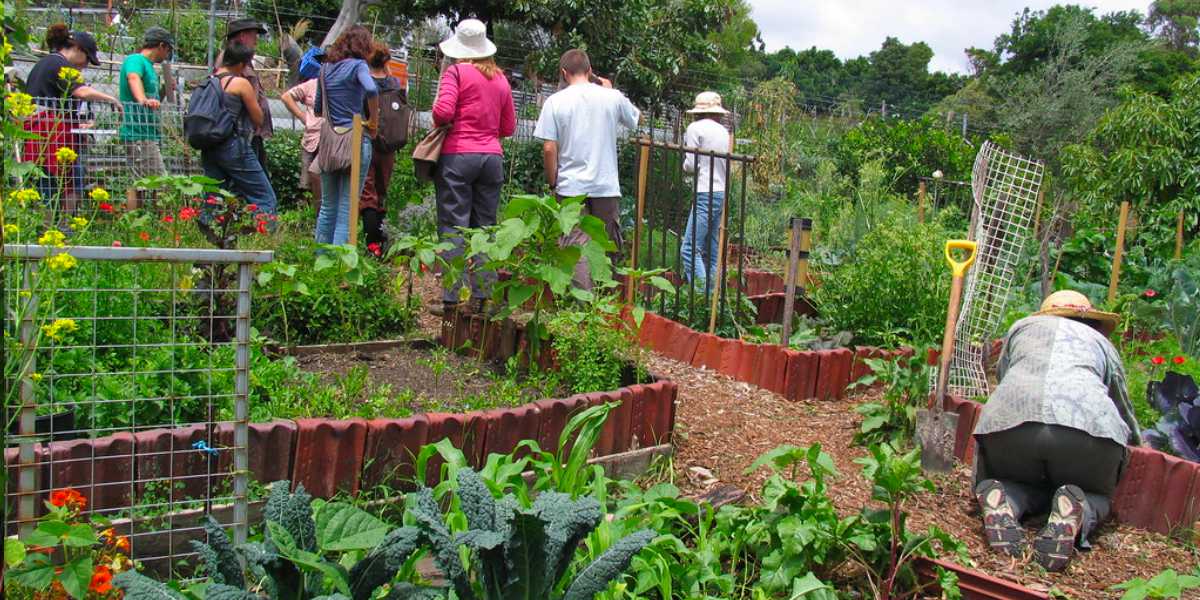
You will be able to find many more nuances about what permaculture means. The concept of permaculture caught our attention according to the responsible journal, which even differentiates between urban and rural permaculture. And that makes a lot of sense. Many of the principles described above are difficult to understand in cities and surely there are nuances that need to be modified or readjusted to achieve similar but not the same trends. All these disadvantages that I put in the 7 principles, maybe they can be accommodated in small gestures framed in the concept of urban permaculture.
Is having a vegetable garden a form of permaculture?
It’s a small gesture yes. Now good. If we talk about yields, expenses, pollution and resources used to cultivate an orchard, it is still more expensive than buying fruits and vegetables. Moreover, energetically the same thing does not come out therefore”efficient“. Imagine this person who has a garden 5-15 km from their home (there is more going on in cities than it seems), on a small piece of land in a nearby town. If you use the car to get in and out of the water, all that good intention is burned off as liters and liters of diesel. Better go to the store below the house, buy the tomatoes.
If you are going to garden for environmental reasons, plan the rest of your life the same way. Transport, food, leisure, material goods… everything. This is the only way to get closer to the ideal of permaculture without falling into the most absolute hypocrisy.
Growing your own food in a small garden whether or not using permaculture as an ideal to have less impact on the planet is a fantastic almost utopian idea to strive for but don’t tell yourself that you are helping the planet because the reality is that it you grow to what you consume during the year, I don’t think it even reaches 10%. The other 90 you buy come from traditional agriculture and animal husbandry. I speak in general. If you do it, do it because you love it, because you want to learn, because you want to see what you normally buy grow on trays, as a hobby… Because the benefits of growing a garden are many, but achieving food self-sufficiency takes a lot more effort than previously thought.
Do you think you are leading a sustainable life? Has your perception of the issue changed by reading this article? Leave it to us in the comments.