

If you’ve never had your heart broken by a plant, try growing a gardenia!
Gardenia flowers are the work of a fairy tale, yes that fairy tale Goldilocks and the three bears. Everything must be “right” for Goldilocks (by which I mean gardenia) to settle in your garden. You need the right amount of sunlight, the right temperature, and the right amount of water.
The problem is often not that gardenias don’t produce flowers, but rather that once they have formed buds, the buds often turn brown and fall off without even opening. In a way, building hope leads to more disappointment when your gardenia doesn’t bloom, right?
 Gardenias are the golden loops of the plant world.
But don’t blame yourself for the unfortunate gardenias. These plants have a reputation for being high maintenance, which doesn’t help with the transition from the grower’s greenhouse to your own backyard.
In a commercial greenhouse, experienced growers have the right environmental conditions to keep gardenias happy. They can easily control the temperature, humidity and the amount of nutrients the plants receive.
Most plants need a period of acclimatization to transition from this ideal environment to all that our backyards provide. But gardenias, which are particularly sensitive to the slightest changes, often survive this period of adaptation poorly.
So don’t be tempted by this siren’s song too often, because its glossy dark green foliage and fragrant flowers beckon you.
Gardenias are a little temperamental and temperamental, but with a little care and a lot of patience, they will become beautiful ornamental flowers that will take pride of place in your garden.
If you’re brave enough to try growing this plant in your garden, but think your gardenia might not bloom this year, here are some reasons why and how to fix it.
1. Your gardenia needs the right amount of sunlight.
If there was an equation for the perfect gardenias, it would look like this:
Bright light + cool temperatures + high humidity = happy gardenia
If only it was that easy to come to this, right?
The problem, as you may have noticed, is that the three items above don’t necessarily go well together. Lots of sunshine often goes hand in hand with warmer temperatures and not always high humidity.
 For an abundance of flowers, gardenias need eight hours of sunlight.
Gardenias grow best in USDA zones 8 through 12 and do especially well in microclimates similar to their native tropical and subtropical regions in Asia, Africa, and Australia. Your gardenia will thrive in full sun to partial shade, but with a few caveats. It is best if it gets the four to six hours of morning sun, rather than the strong midday sun. And it’s even better if the partial tint is a speckled tint instead of a full tint. Heavy shade results in poor flowering in spring and summer.
If your gardenia experiences heat stress from too much direct sun exposure combined with high temperatures, flower buds will form, but they may turn brown and drop off before they’ve had a chance to open. On the other hand, if the plant does not get enough sunlight, it may not even flower.
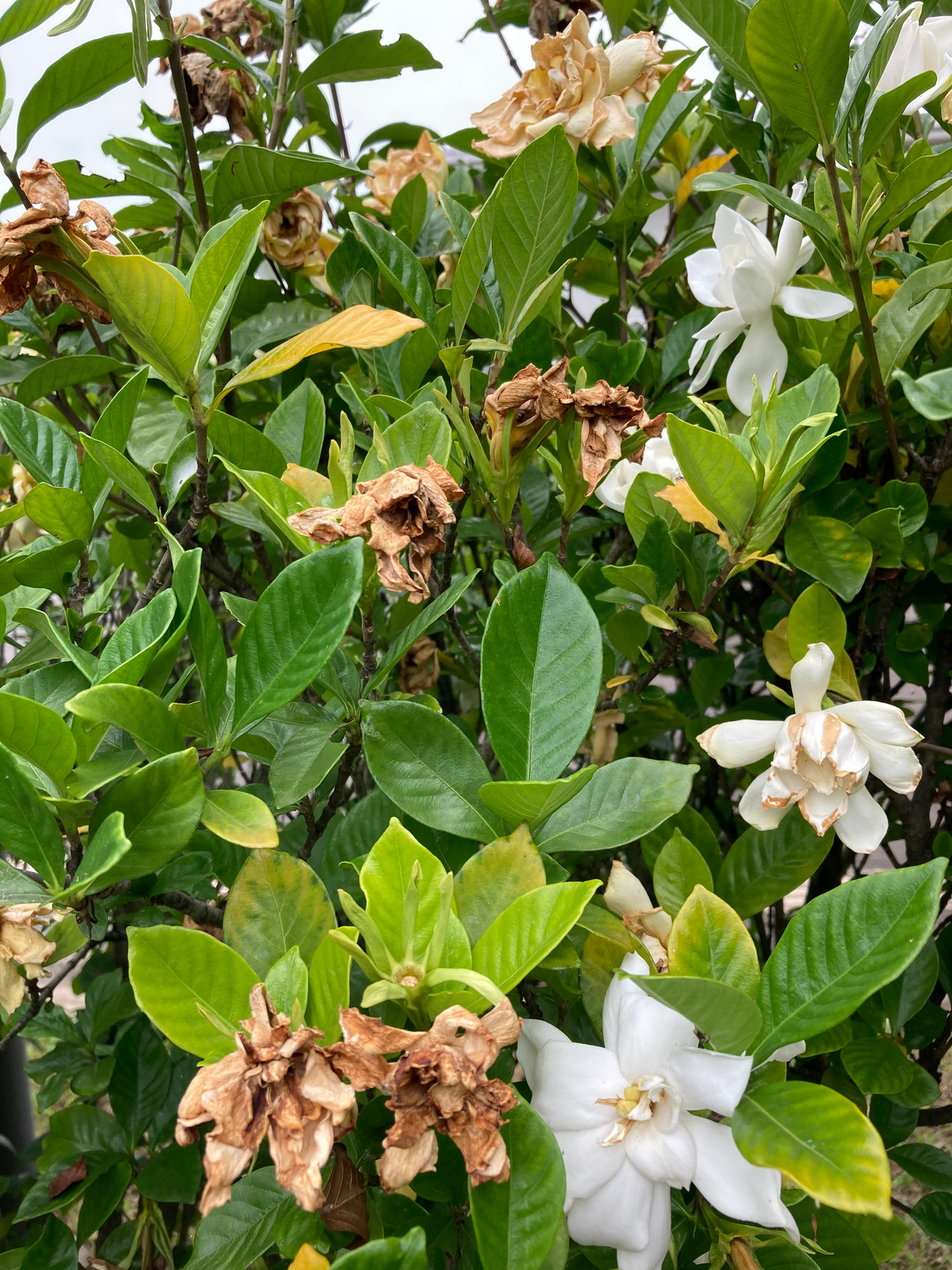 The gardenia responds to heat stress by dropping flowers and turning yellow.
 As I mentioned earlier, your gardenia won’t like either extreme. They will not flower fully if the temperatures are too high or too low.
Gardenias prefer cool nighttime temperatures around 50F, but no higher than 60F, and mild daytime temperatures that hover around 70-75F. They also need at least 12 hours of uninterrupted darkness to form flower buds, so be sure not to plant your camellia under porch lights or floodlights that stay on all night.
Let me repeat that gardenias are temperamental plants and any sudden change in temperature can cause buds and leaves to drop even on a mature plant.
 The elegant gardenia flowers are very fragrant.
If you must move your gardenia to a sunnier location, wait until fall to do so. Gardenias don’t tolerate root disturbance very well, so it’s important that when you lift them out of the ground, you remove as much of the root structure as you can safely handle. Replant it to the same depth in its new location.
2. Your gardenia needs acidic soil.
Gardenias need acidic soil with a pH between 5.0 and 6.0 to thrive. Because gardenias are so valuable and often expensive compared to your average flowering plant, do a soil test before deciding to purchase a gardenia for your garden.
 Gardenias need soil amendments at least once a year.
You can amend your soil to make it more acidic by incorporating more organic matter into your planting bed. Compost, shredded bark, pine needles, and straw are all good choices that will help improve the acidity of your soil. Take a look at this article for more ideas on this. How to make your soil more acidic.
3. Your gardenia needs enough humidity.
Not enough moisture in the soil or too much moisture can cause malignant shoot drop on gardenias.
If your gardenia doesn’t get enough water from the soil, it will drop its flower buds before opening to conserve resources during times of drought. Likewise, if your gardenia is planted in poorly drained soil, where water simply pools around the roots, your gardenia may struggle with root rot.
Water your plant deeply whenever the top two inches of soil feels dry to the touch, making sure to keep the soil evenly moist. If you think drip irrigation will be the answer, I’m afraid it’s not that simple.
A small amount of shallow water at a time encourages shallow root development, which helps the plant less to absorb nutrients. Deep watering is important for flowering plants because it promotes a strong root system. Be sure to continue watering even after the plant has finished flowering to encourage vigorous development for the next growing season.
In the meantime, make sure no water gets on the leaves or buds.
 Don’t leave your gardenia alone in the summer.
A good layer of mulch does wonders for keeping the soil evenly moist and keeping underground temperatures consistent, even during periods of intense heat. A good mulch option is one that acidifies the soil as it decomposes, such as bark or pine needles.
4. Your gardenia needs enough nutrients.
Gardenias will thrive in nutrient-rich soil. Your first task should be to improve the soil by adding organic compost and well-rotted manure before putting a new plant in the ground. Add a new layer each year in the spring to avoid depleting the soil.
You can also fertilize your gardenia with the same fertilizer you use for your other acid-loving plants, such as rhododendrons and camellias. You can use a 10-8-8 or 12-6-6 fertilizer monthly or every six weeks from March through August, but don’t fertilize late in the year.
 You can feed the gardenia with a fertilizer designed for acid-loving plants.
 Fertilizing in late fall encourages new growth that is very vulnerable to cold temperatures. So give the plant enough time to rest and prepare for the cold season.
It should be noted that too much fertilizer will also harm your gardenia. Applying fertilizer too concentrated or too often causes an excess of salts in the soil, which can cause the roots to dry out.
5. Keep your gardenia pest-free.
Unfortunately, the gardenia is a pest magnet, and pests can interfere with flower formation and flowering. Unwanted guests such as aphids, whiteflies, thrips and spider mites are common with the growth of new gardenias.
To avoid infestations, check your gardenia’s foliage regularly, paying particular attention to the undersides of the leaves and stems.
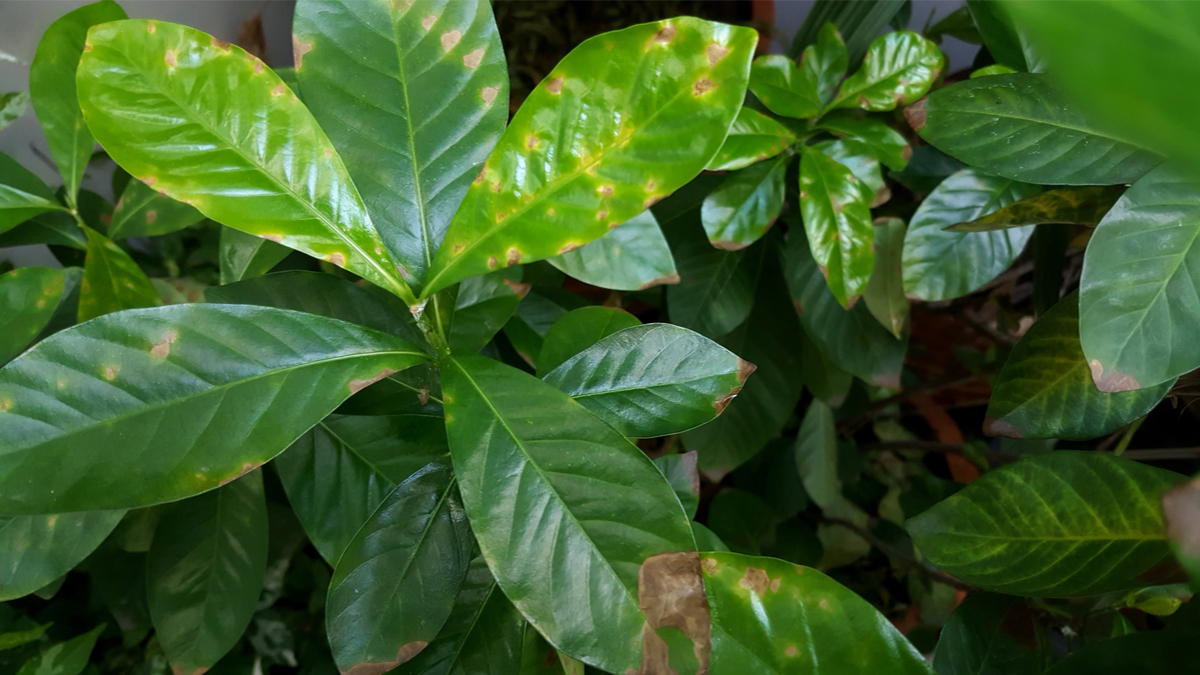 Gardenia foliage is very susceptible to pests.
 If you see signs of trouble, do your best to avoid the temptation to use synthetic insecticides that can harm both your plant and the local population of beneficial insects. You can first try to remove the pests by hand or with a strong stream of water. If you were a bit late and the infestation has spread, you can spray a neem oil solution directly on the affected areas. You may need to repeat the process to make sure you get all the larvae and pupae.
6. Your gardenia will not tolerate late pruning.
Your gardenia needs light pruning to encourage branching and maintain compact, harmonious growth in your garden. However, since gardenias get ready for next year’s bloom in late summer and fall, always be sure to prune early enough in the summer so you don’t accidentally cut off the new growth that has emerged. You can remove faded flowers at any time, but wait until all the flowers have finished blooming before you start pruning stems and branches.
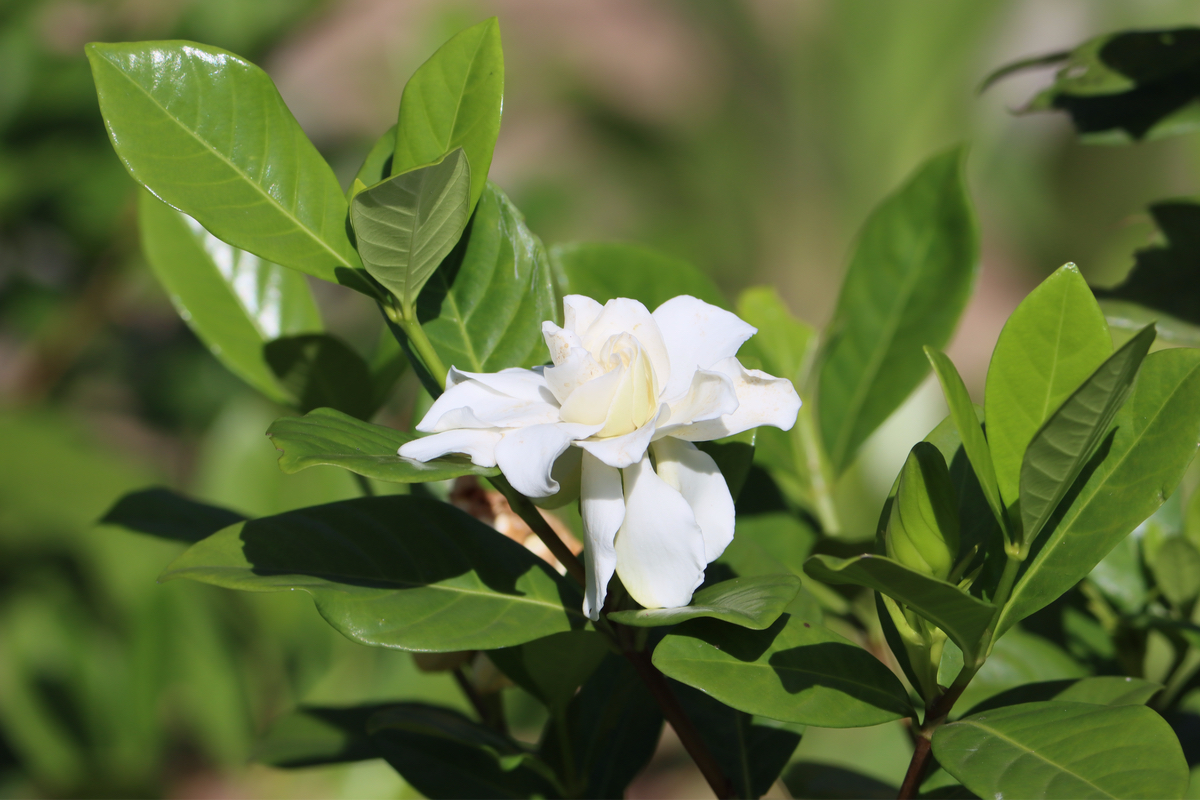 If your gardenia blooms twice a year, don’t prune it until the end of the second bloom.
 If you are growing one of the new gardenia cultivars that bloom twice in the same year, always prune after the second bloom.
It is true that gardenias are not for the faint hearted as they leave little room for error. It’s true that you’re going through a rollercoaster of emotions, but hopefully you’ll come out the other side like the proud gardener who made a gardenia bloom.
Once its fragrant creamy-white flowers open in the spring, you’ll be glad you gave it your all. In more temperate climates, your efforts will be rewarded with almost two months of flowering.