

Image – Wikimedia/Krzysztof Ziarnek, Kenraiz
There are many types of lilies, and I am not only referring to the variety of pure species that have been described – which are over 300 – but I am also including cultivars. These plants, which bloom for quite a long time as soon as the cold begins to give way to milder temperatures, have the particularity, In addition to producing beautiful flowers, they are very easy to maintain..
Of all those that exist, in this article we will focus on just one: the iris lutescens. It is a pure species found in the Mediterranean region, so we can already tell you that it supports the typical heat of the region very well, as well as weak frosts.
Where does it come from and what are its characteristics?
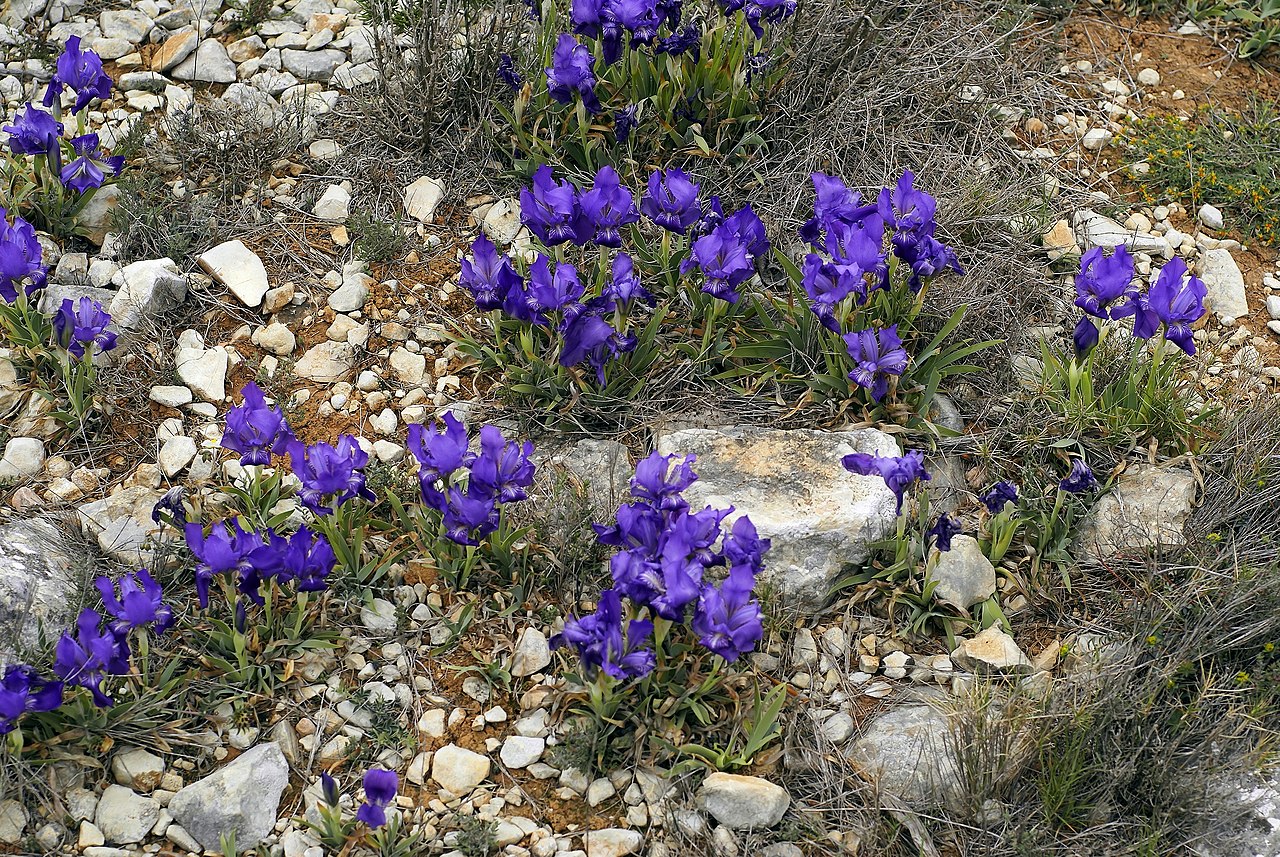
Image – Wikimedia/Hans Hillewaert
Although we said it grows in the Mediterranean, if we want to go see the iris lutescens In person, in its natural habitat, where should we go? well lives in the western Mediterranean, more precisely in the southeast of the Iberian Peninsula. It grows on calcareous soils, being part of the bushes exposed to the sun practically all day, at an altitude between 1400 and 2000 meters above sea level.
It is a small rhizomatous plant, which even with the flower does not exceed 25 centimeters in height, which belongs to the genus Iris (lily). It develops simple, entire and rigid leaves, as well as erect and green. The flower can appear alone or with another, and it is lilac in color. After flowering, it dries up, but the rhizome remains, from which new leaves will sprout next spring.
What care is needed?

Related article:
How to Care for a Lily
If you’re ever thinking of growing the wild lily, also known as the dwarf mountain lily, you need to know what it needs so you can see its blooms every year. So now we are going to tell you everything you need to know so you can enjoy it:
Where should it be placed?

Image – Flickr/peganum
The first thing you need to keep in mind is that It is a plant that we would call “outdoor” (I put it in quotes because, really, there are no houseplants, for the simple reason that all of them, in their natural habitat, grow outdoors).
As we said, it is a species that lives in the mountains, and also at high altitudes, so we can assume that it supports the cold without problems (not extreme, since in the southeast of the Iberian Peninsula winters are quite mild).
What kind of land do you need?
Since it grows in clay soils, that is, in soils with a pH of 7 or a little more, it must be planted in lands that are also like that. And if you are interested in having it in a pot, it should be filled with a universal substrate from a well-known brand, such as Weedness or Flower (although these others are also interesting: Westland and Fertiberia). By clicking on the links you can buy the one you are interested in.
When should it be watered?
You should water the wild lily from time to time. It is not drought resistant. It is a plant that needs to be rehydrated regularly., so that you can perform your functions normally. Although it is native to the Mediterranean, which is a region where droughts are common, in winter and spring it usually rains with some frequency. This, added to the high ambient humidity, which makes the landscape literally wake up every day wet (for example, I attach an image of one of my alocasias, taken on a late December morning), the Iris does not go thirsty at any time.

A picture of myself Alocasia goii, taken in winter. Just by looking at it, you can appreciate the humidity so high that there is (was) in the environment. In my region (south of the island of Majorca, about 6 km from the coast), it is 60-90%.
Should it be paid?
It is strongly recommended to do so, yes. Especially if it’s potted, I recommend fertilizing it as soon as you see its leaves start to sprout, and until the flowers start to wilt.. For this, it is interesting to use fertilizers of organic origin, which are, for example, manure from herbivorous animals, compost, or even worm humus (on sale here).
Just a detail: if you have it in a container, it is better to use liquid fertilizers and not in powder so that the drainage remains optimal, and also, so that the roots can absorb the nutrients more quickly.
When should it be planted?

Image – Wikimedia/Dr. Alexei Yakovlev
If we take into account the fact that iris lutescens it blooms in spring, its planting time is about 3-4 months before. This means that should be planted in late fall or early winter at the latest. In any case, once you have it in the ground or in a pot, you won’t have to take it out and store it after flowering, but you can leave it there.
What is its hardiness?
The dwarf mountain lily withstands frosts down to -5ºC as long as they are punctualas well as temperatures up to 35ºC.
Have you heard of the iris lutescens?