

There are many creeping plants in the world, and there is an interesting variety of species that produce very beautiful flowers. They are ideal for rock gardens, hard-to-reach areas and, of course, in planters or pots.
They grow quickly and do not require special care. So if you want to know the flowering climbing plant names that we recommend, don’t stop reading.
Before starting, a small paragraph: to make this article, the information provided by the Spanish Catalog of Invasive Species has been taken into account, since some creeping plants can become potentially invasive. For this reason, and to avoid problems, we want you to also have said catalog “on hand” so that you know whether or not you can grow them in your area.
Arctostaphylos uva-ursi
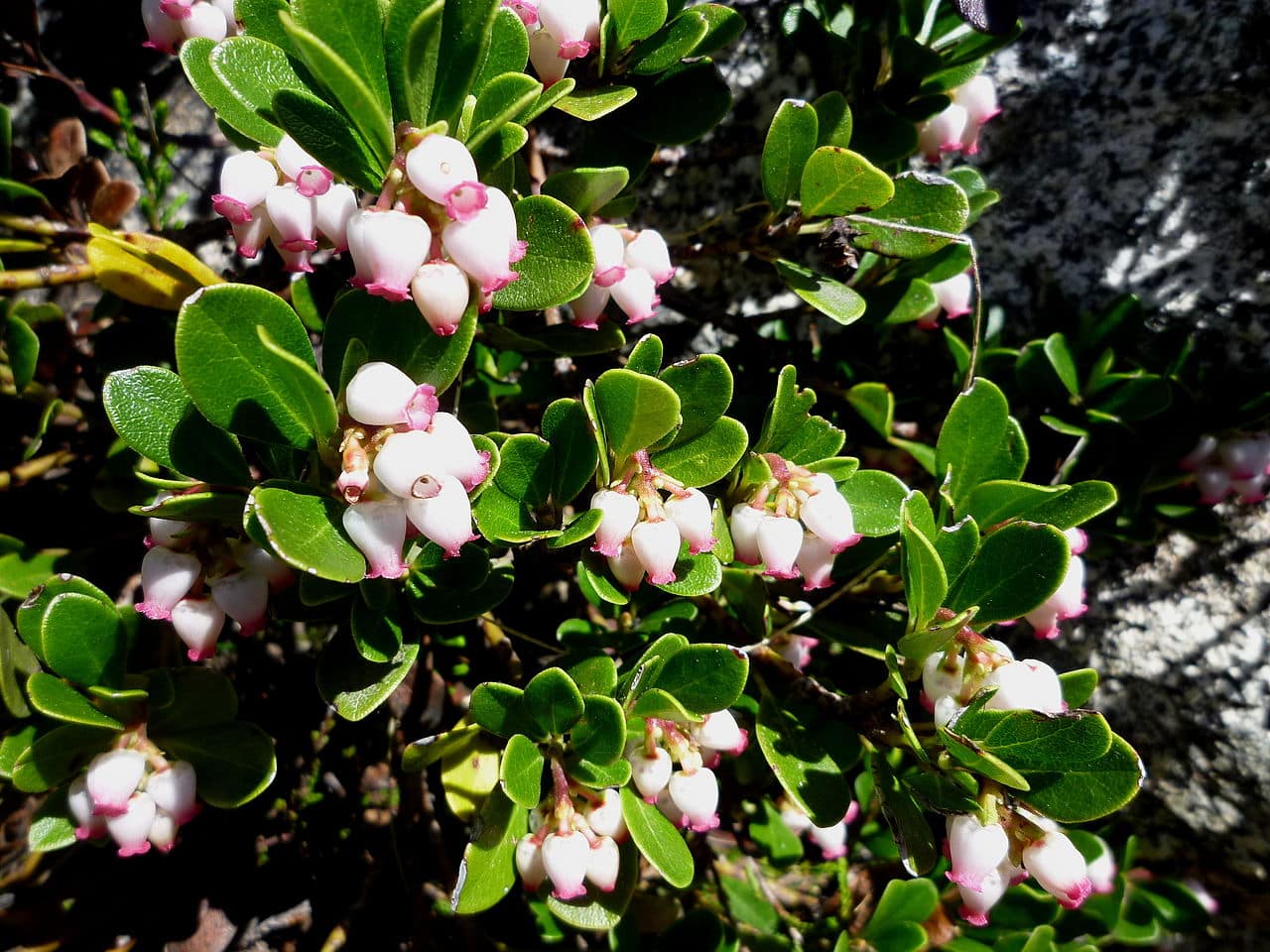
Image – Wikimedia/Isidreblanc
the Arctostaphylos uva-ursi It is an evergreen shrub known as bear vine with branches reaching a maximum length of 2 meters. The total height is about 50 centimeters and it is native to Eurasia. As for its flowers, they are white or pink, and out of curiosity to tell you that they produce edible fruits.
It is widely used as a creeping plant, being planted in areas where it will not pass much because it does not tolerate footsteps well. Frost resistant down to -15ºC.
Convolvulus mauritanicus
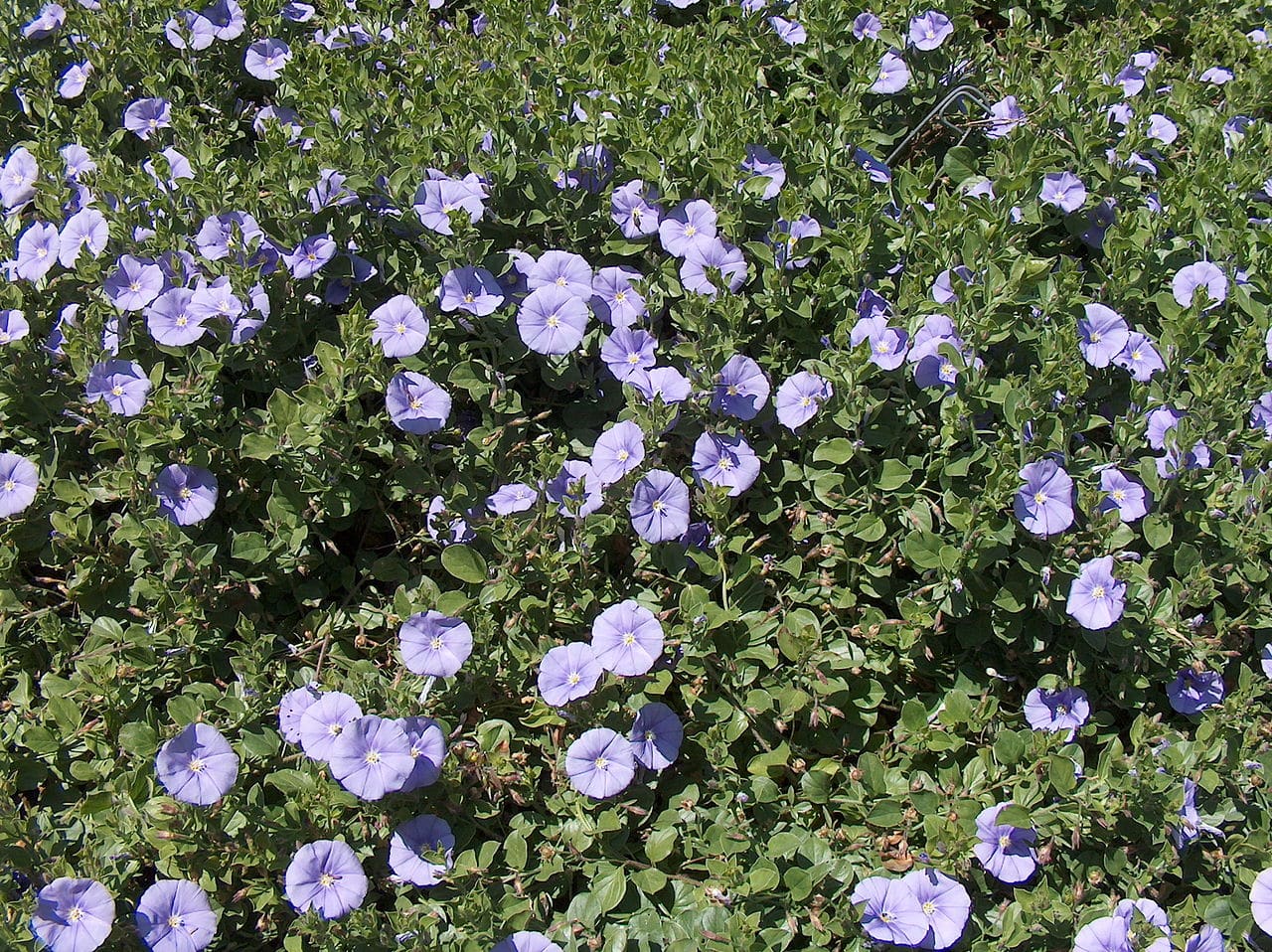
Image – Wikimedia/Valérie & Agnès
the Convolvulus mauritanicuscalled blue bell, is a perennial herbaceous plant native to Italy and Africa which can be used as a vine or ground cover since its stems can be 25 centimeters long. Its flowers, as you can imagine, are blue and bell-shaped.. They appear in the spring and are about 2 centimeters in diameter.
Its cultivation is simple, since it tolerates drought and can (in fact, must) be in full sun. It resists cold and frost down to -7°C.
Hypericum calicinu

Image – Flickr/Karen Blakeman
the Hypericum calycinum, or creeping St. John’s Wort, is a rhizomatous perennial plant native to Greece and Asia Minor. It grows up to 30 centimeters high and develops small green leaves. Its flowers are of a beautiful yellow color, and they appear during the summer, in the upper part of the plant.
It is a species that must be planted in a sunny place, since it cannot be in low light areas. In addition, you will not have to worry about it in winter since frost resistant down to -20ºC.
Lampranthus spectabilis
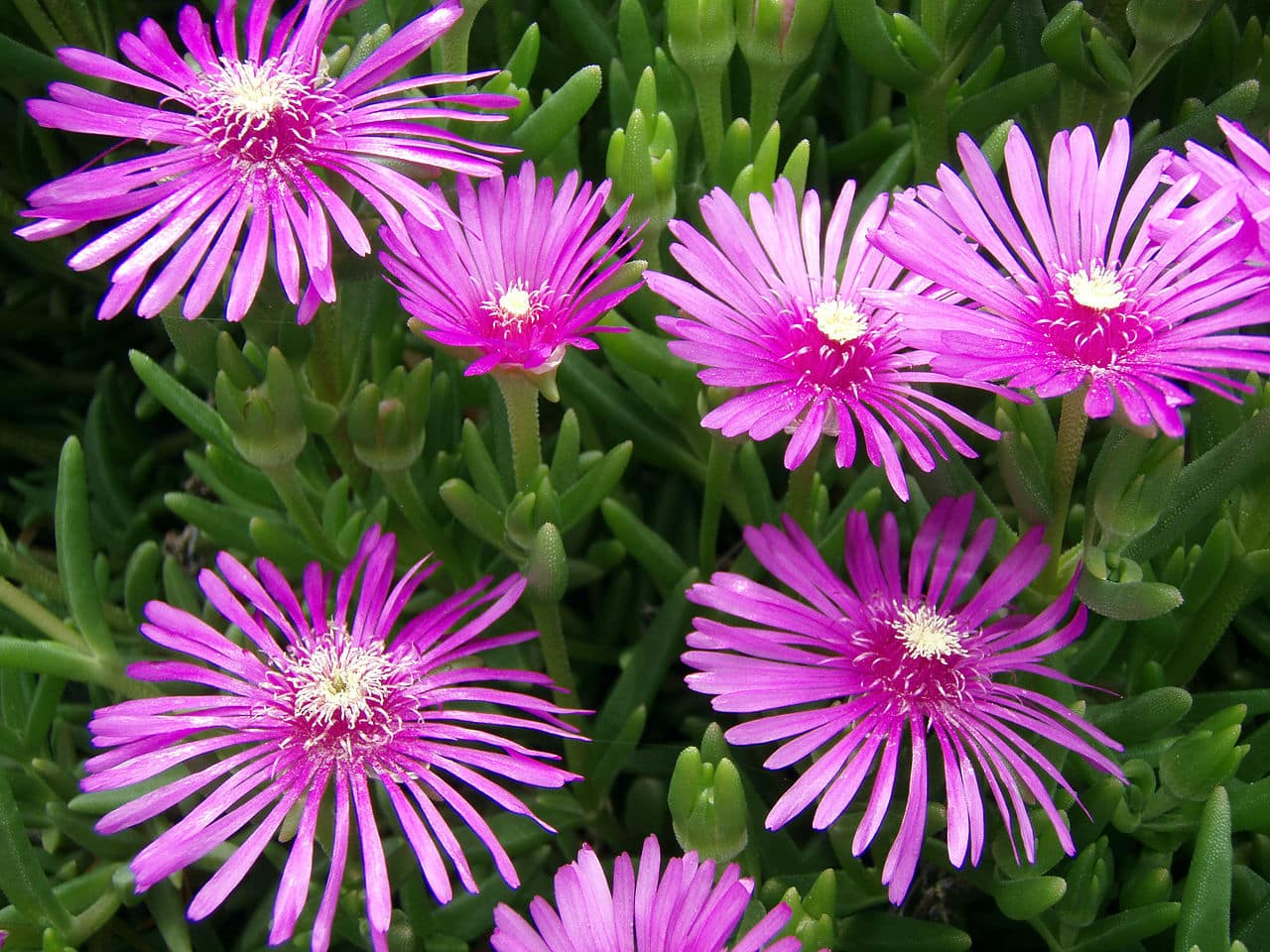
Image – Wikimedia/apple2000
the Lampranthus spectabilis It is a creeping succulent plant native to South Africa. It reaches a maximum height of around 25 centimeters, with stems up to 3 meters long. It has fleshy, lanceolate, and very small leaves, about two centimeters in length. Its flowers are also small, about 1.5 cm in diameter, and pink in color.. These appear in the spring.
As it tolerates drought, it is very interesting to plant it in Mediterranean gardens, or in places where it does not rain much. Also you should know that It resists frosts down to -5ºC.
Lippia nodiflora

Image – Wikimedia/Forest & Kim Starr
The Lippia nodiflora It is a creeping plant with stems reaching about 90 centimeters in length. It is popularly known as a beautiful carpet, because if several specimens are planted in close proximity, they create a very beautiful carpet. The flowers are small, whitish and appear in late spring or summer.
Although it supports the cold, you must bear in mind that if the temperature drops to 0 degrees, the leaves will turn reddish. And if there are frosts, they will take damage.
Lonicera pileata

Image – Wikimedia/Agnieszka Kwiecien, Nova
The Lonicera pileata It is an evergreen shrub native to China that can be used as a creeper thanks to its long stems that can measure about 2 meters in length. The leaves are very small and green in color, and produces white flowers, measuring 1 centimeter in diameter. It blooms in the spring.
It must be said that it is not the Lonicera species which produces the most striking flowers, but it is one of the hardiest since withstands down to -18ºC.
mertensia of the sea
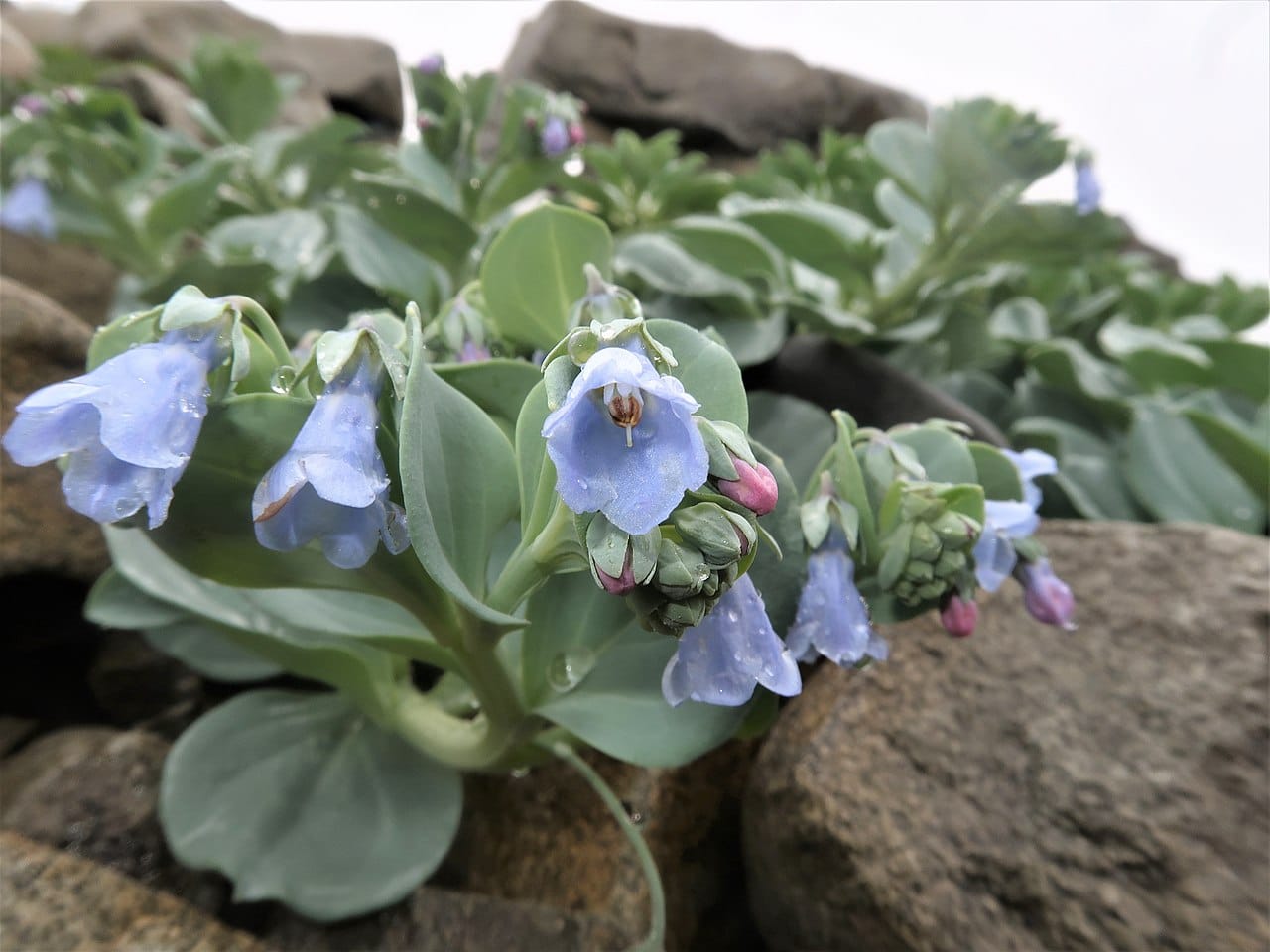
Image – Wikimedia/Qwert1234
The mertensia of the sea It is a perennial herbaceous plant native to one of the coldest regions of the northern hemisphere, such as northern Canada or the Svalbard archipelago. Its stems can be 50 centimeters long and from which bluish-green leaves grow. The flowers are bell-shaped and blue in color.
It should be placed in a sunny spot, although if you live in an area where temperatures exceed 30°C it is best if it is in the shade. Resistant down to -15ºC.
Potentilla nitida ‘Rubra’
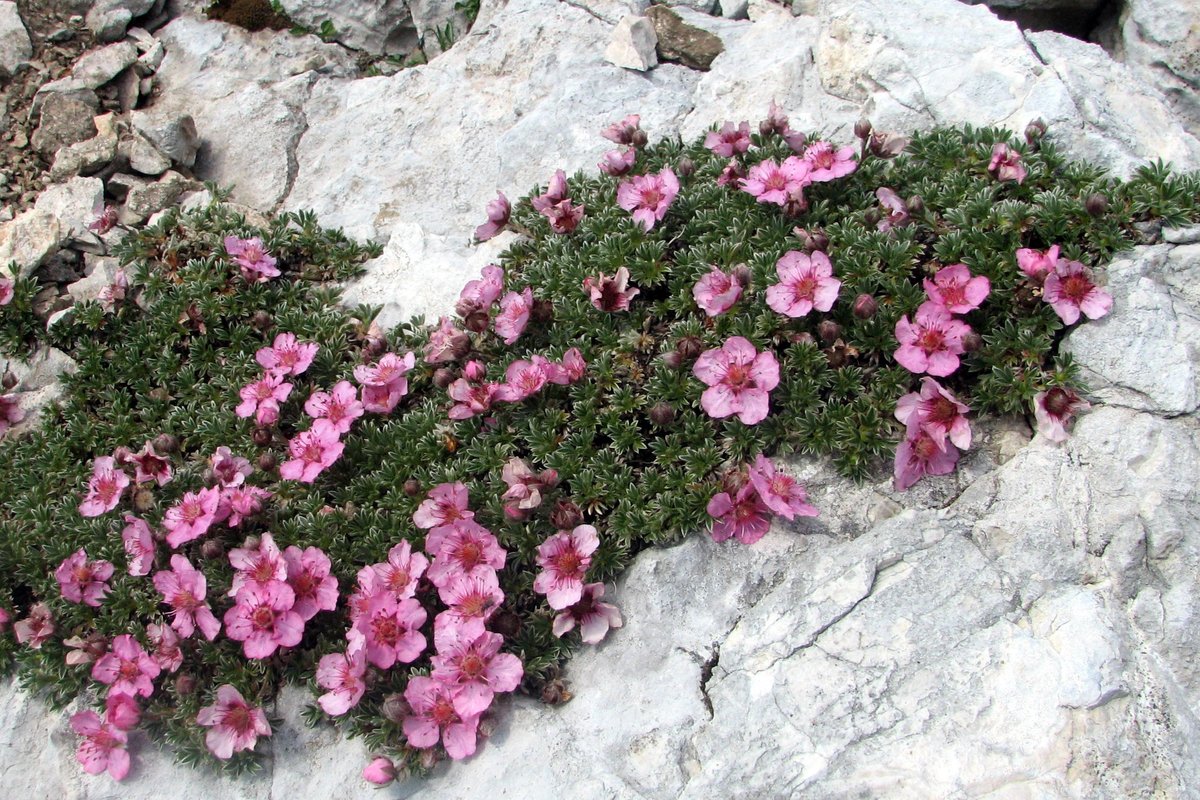
Image – Wikimedia/Sonja Kostevc
The Potentilla nitida ‘Rubra’ It is a creeping perennial native to the northern hemisphere that develops stems up to 1 meter long. The leaves are small and green and the flowers are pink. Are appear in the spring, and measure about 2 centimeters in diameter.
In cultivation, it is a very grateful plant, which must be placed in a sunny location for it to thrive. Resistant down to -20ºC.
sagina subulata

Image – Wikimedia/Agnieszka Kwiecien, Nova
The sagina subulata It is a plant known as Scotch moss. It is native to Europe and is a grass that reaches a height of about 35 centimeters. Over time, it can create a very pretty green carpet. The flowers are small, whitish in color, and appear in large numbers in spring.
It is a resistant species, which must be planted in full sun to develop normally. Withstands down to -15ºC.
vinca minor

Image – Wikimedia/Algirdas
The vinca minor It is an evergreen creeping shrub or shrub native to central and southern Europe. It develops stems up to 40 centimeters long, and from which grow glossy dark green leaves, as well as flowers. Are They are bluish, purple or whitish in color and measure about 2 centimeters in diameter. They appear in spring and summer.
It is a species of great ornamental interest, which thrives both in sunny gardens and in pots. As well It supports frost, down to -20ºC.
Do you know of any other creeping flowering plants that can withstand freezing temperatures?