
Succulents are a big draw for all low-maintenance gardening enthusiasts. These are species that require little care and even less water. A faithful representative of this family is Sedum spurium, commonly called bastard silk. This hanging plant with leaves very thickened by the accumulation of water can be grown both in the garden (especially in rocky areas and in xerophilic gardening) and in pots.
In this article, we tell you the main characteristics of this plant and a complete guide to its maintenance.
Characteristics of Sedum spurium
Sedum spurium It is a succulent or succulent plant of perennial type. In adulthood, it does not exceed 30 cm in height, so it adapts to growing in containers indoors. Its growth habit is more horizontal and its roots are quite superficial, so its usual place of growth is rocky or sloping environments, as a ground cover plant.
read more: best ground cover plants to cover your garden.
Sedum spurium It has the shape of a rosette, grouping its leaves, about 2 or 3 centimeters in length. These are very fleshy and have a highly evolved water storage system, which is why they are very resistant to high temperatures and drought. In adulthood, it produces small flowers with pinkish and whitish colors. Personally, we like the ornamental aspect of the plant more for its leaves.
cultivars
There are several cultivars, although the most demanded is the one with ruby and tricolor leaves, as its appearance is very attractive for growing in the garden or indoors, especially on balconies and terraces.
- S. spurium ‘Tricolor’: leaves of pinkish, white and green colors.
- S. spurium ‘voodoo’: ruby color.
- S. spurium ‘Dragon’s Blood’: ruby color
- S. spurium ‘Schorbuser Blut’: purple color
- S. spurium ‘Splendid’: purple color
- S. spurium ‘Purpurteppich’: purple leaves and flowers
- S. spurium ‘Roseum superbum’: green leaves and pink flowers
plant taxonomy
| Order | Saxifragales |
| Family | Crassulaceae |
| sex | sedum |
| Species | Sedum spurium var. coccineum |
Common names: Motherfucker
care guide Sedum spurium
Here we show you the main points to cultivate Sedum spurium in the garden or in pots.
location preferences
Sedum spurium It can be grown both outdoors and indoors, being much more common to place it in the garden, outdoors, due to its excellent conditions for adapting to different environments.
read more: Kalanchoe thyrsiflora: how to grow in pots.
I know grow outdoors, it is common to use it in rocky areas, slopes or as a ground cover plant. It is perfect for a garden with low water needs (xerophilic garden). To create a floor covering with this species, which you can also combine with others of different colors, you will need about 15-25 plants per square meter.
It is located in sunny areas with lots of light. There is no need to protect it from drafts or anything like that. He toleratescold and very hot temperaturesand prefer low ambient humidityalthough this is not a limiting factor since it is regularly grown in coastal areas.
the type of soil
Sedum spurium It adapts very well to all types of soil, without having any limiting factor due to pH or textures. As its root system is superficial and sensitive to excess humidity, it prefers loose, well-drained soils. It can be grown in areas with acidic or alkaline pH, even in calcareous soils.
It adapts well to poor soils, although it prefers those that provide the plant with greater fertility. Even in shallow spaces in the substrate, such as slopes or rocky areas, it can grow without problems.
if it you grow in pots, the substrate to choose is the usual one for succulents. It consists of a part of universal substrate mixed with elements that promote drainage, such as coconut fiber, perlite, vermiculite or any other inert material.
An ideal composition for Sedum spurium can be the following:
- 50% Universal Substrate
- 10% earthworm humus
- 40% draining materials.
read more: cultivation and care of Sedum Morganianum.
water needs
Irrigation of this plant should be rare. Succulents manage water resources very well and have a great ability to retain water in their leaves, hence their fleshy appearance. Therefore, we should only water with a small amount when the substrate is completely dry.
The amount of water is usually calculated between 5 and 10% of the volume of the pot. That is, if you have Sedum spurium grown in a 2 liter pot, you will need to water between 100-200 ml of water.
nutritional needs
S spurium requires little fertilizer, especially when grown in pots. It can even grow on calcareous soils, which are poor in nutrients and organic matter. However, the greater the fertility, the greater the development, which is very interesting when looking for a ground cover plant of this type that covers large areas of soil.
In this case, it is recommended to use a complete fertilizer consisting of NPK with magnesium and trace elements, either in solid form (granules) or in the form of liquid fertilizer.
To enrich the soil and provide practically all the nutrients this plant needs, the NPK 12-8-16 mixture with magnesium, sulfur and micronutrients is interesting. The recommended dose is 0.5-1 kg/m2, distributed over the entire floor surface.
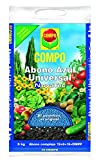
COMPO Novatec Universal Fertilizer Blue, 5 kg
- NPK complex fertilizer (Mg+S) 12 + 8 + 16 (+3+25) with magnesium and sulfur + microelements + nitrification inhibitor, Ideal for all types of ornamental plants, shrubs, green plants, roses, citrus fruits, etc.
- The professional technology with the nitrification inhibitor (DMPP) ensuring the stability of nitrogen in the soil, guarantees the maximum utilization of nutrients in the plants and more abundant flowering. Up to 8 weeks subscription available
- Improved formula, with less phosphorus. Eco-friendly
- COMPO quality: raw materials selected according to the original COMPO recipe, Strict quality controls by independent laboratories and institutes, The best conditions for healthy plant growth
- Contents: 1 x COMPO Novatec universal blue fertilizer, 5 kg
In case you want to pay your Sedum spurium grown in pots, if you want to use this granular fertilizer, we recommend between 20 and 30 grams per plant, every 30-45 days or when you notice that the granules have dissolved with the humidity. If you are using liquid fertilizer, look for an alternative for succulents.

UNDERGREEN Cactus Love Nutrients for cactus, succulents and succulents, organic liquid fertilizer, 250 ml, 2830802011
- Organic liquid fertilizer to promote the growth and development of all kinds of cacti and succulents, with a practical dispenser; good gardening in the city
- For your mini desert landscape: supply of essential nutrients, good growth, optimal resistance, the solution for strong exotic plants
- It’s as simple as that: shake the bottle, add 5 doses per liter of water, water the plant, application period: every 2-3 weeks from March to October
- Undergreen Cactus Love: Lover for your own mini desert landscape
- Contents: 1 x Undergreen Cactus Love, nutrients for cactus, succulents and succulents, organic liquid fertilizer, 250 ml
In this case, this solution is brought 5 doses per liter of water every 3 weeks during the growth period.
When are fertilizers supplied?
We advise at the end of winter, 1 application per month until the end of September.
Multiplication
As a well-adapted ground cover plant, Sedum spurium It is able to multiply and increase its surface in the soil. If one wants to bring an identical plant into another environment, pots or soil directly, the best way to reproduce this plant is by cuttings.
Follow these steps to play Sedum spuriumwhose cuttings you can harvest during the growing months (spring and summer).
- Choose a stem in good condition between 8 and 10 cm in length (if it’s something smaller, nothing happens).
- Remove the leaves from the bottom, which is the one that will be in contact with the water.
- Introduce the stem into a container with water, staying there until we see the first roots are forming. We will change the water to renew it
- When you see roots several centimeters long, you can transplant it into a pot.
- Place the pot in pleasant temperature conditions (about 18-22 ºC), and in partial shade.
- Maintain a constant light humidity in the substrate to promote continued root development.
This process can be accelerated if we add rooting hormones or use a small proportion of biostimulants such as algae with the water.
Plagues and diseases
This succulent plant is quite resistant to pests and diseases. Its cuticle is very thick, so not all sucking insects have access to it. The main pests in the garden are slugs and snails, which hide in the part of the soil protected by the stems of the leaves, in an environment with good humidity. Except on rare occasions, it can be affected by mites (especially in conditions of low ambient humidity and high temperatures) and scale insects, but this is not very common.
In terms of diseases, it is only in situations of high soil humidity, which should not be allowed, that its roots can be affected. However, the great capacity for multiplication and expansion of this ground cover plant makes it unlikely that it will affect the entire surface of the plant.
Cover image source: Jerzy Opioła