
Black Velvet Alocasia it is an exotic and fascinating plant that has gained popularity in the gardening world. Also known as elephant ear, this plant stands out for its elegant and exuberant appearance. In this article, we’ll explore its characteristics, taxonomy, countries where it’s grown, and provide a comprehensive care guide so you can enjoy this gem in your own garden.
read more: tips for taking care of your Alocasia zebrina.
Characteristics of the Alocasia Black Velvet
Alocasia Black Velvet belongs to the family Araceae and is from Asian rainforests. This perennial has large, glossy leaves that are elliptical in shape and have wavy edges. Its particularity is its velvety texture which gives it a luxurious and unique appearance. The color of its leaves ranges from a deep green to a deep black shade in the darker varieties.
Regarding its taxonomy, it is classified in the genus Alocasia and its scientific name is Alocasia reginula. It is important to mention that there are other varieties of Alocasia, but Black Velvet has gained popularity due to its aesthetic appeal and ease of maintenance.
This plant is grown mainly in hot and humid climatic zonessuch as Thailand, Malaysia, the Philippines and Indonesia. However, thanks to its popularity, it has spread to other regions where the conditions for its development are recreated. For this reason, the controlled conditions of the house, with average temperatures of 20-22 ºC, make this plant a good option for indoor cultivation.
Of course, the humidity is somewhat low for what a tropical plant like Alocasia can be used to, so we will have to help it during the hottest times of the year with foliar sprays.
How to Care for Black Velvet Alocasia
Alocasia Black Velvet requires special attention to ensure its healthy growth. Below are the key cares you need to consider if you want to grow this plant in your garden.
location and temperature
Alocasia Black Velvet prefers warm, humid climates. The ideal temperature is between 20 and 30 ºC. It should be protected from cold drafts and temperatures below 15°C. If you live in an area with cold winters, you can grow it indoors or in pots that you can move during the cold season.
When it comes to light requirements, Alocasia Black Velvet requires bright but indirect light. Avoid direct exposure to the sun, as it can burn its leaves. A location near an east or west facing window, where it receives filtered light, is ideal for optimal growth.
type of substrate
This variety of Alocasia requires a well-drained soil rich in organic matter. You can make a mix using potting soil, worm castings, and coir to ensure good drainage and moisture retention.
How and when to water
keep the substrate continuously slightly moist, but avoid waterlogging, as this can cause root rot. During the warmer months, you may need to water it more frequently. However, in winter, reduce the frequency of watering.
Generally speaking, for a house with an average annual temperature of 20-22 ºC, we speak of 2 waterings per week in spring and summer (with high light arrangement), and 1 watering every 7-10 days in autumn and winter, with the shortest days. There amount of water to be applied at each watering is generally 1/6 or 1/8 part of the volume of the pot, leaving a little water to drain from the lower holes.
Check before watering the humidity conditions of the substrate. If you find it excessively dry, you should increase the frequency of watering. Quite the contrary in conditions of excessive humidity, where it will be necessary to wait a few more days before watering.
subscriber guide
Apply a balanced, slow-release fertilizer throughout the growing season, especially during active growing months in spring and summer. You can use liquid fertilizers (dose of 1 to 2 ml/litre of water) or, for convenience, slow-release solid fertilizers.
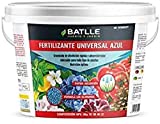
Fert. Blue Universal Bucket 6kg
- Azul Batlle Universal Fertilizer is a complex granular fertilizer that contains all the nutrients from each grain of fertilizer
- Particularly indicated for outdoor plants, it provides the nutrients necessary for the optimal development of horticultural species, fruit trees and all kinds of ornamental plants, trees, shrubs and flowers.
- Its composition, low in chlorides, rich in micronutrients and very soluble, gives it optimal qualities for plant nutrition.
- Composition: EC fertilizer. NPK 10-12-18 + 2MgO fertilizer with trace elements
- Dosage: Apply by spreading evenly at a rate of 40g/m2
How do alocasias reproduce?
Alocasia Black Velvet can be propagated by separating the rhizomes or by cutting the stem. Make sure each division has roots and at least one new growth to ensure successful growth.
pruning and maintenance
Pruning is not necessary for this plant unless you want to remove damaged or dried leaves. Always use clean, sharp tools to avoid infection.
Alocasia Black Velvet is an exotic and elegant plant that can add a touch of luxury to your garden. Its velvety leaves and striking beauty make it a real visual spectacle. However, consider the specific care it needs, such as proper temperature, light, watering, and substrate. By following this guide, you can enjoy a healthy and vibrant Alocasia Black Velvet in your environment.
Remember that gardening is a constant learning experience and each plant has its own needs. Observe and experiment with your Alocasia Black Velvet to discover the optimal care that adapts to your environment.
read more: 5 basic tips for taking care of your indoor plants.
How to care for alocasia in winter
In winter, care must be taken to locate our factory in areas of cold drafts, just as you must also protect it from heating, which, if it is through the air, usually dries out the environment. Under these conditions, it is useful to spray the leaves of our Alocasia Black Velvet with a spray with distilled water. This operation will probably also have to be carried out in the summer if you use air conditioning a lot or if you live in a continental zone, with very low ambient humidity.
Don’t worry, you can take advantage of the water from the air conditioning to spray its leaves, since it contains practically no dissolved solids and you won’t stain the leaves.
Other interesting indoor plants for your home
Cover image: www.petalrepublic.com