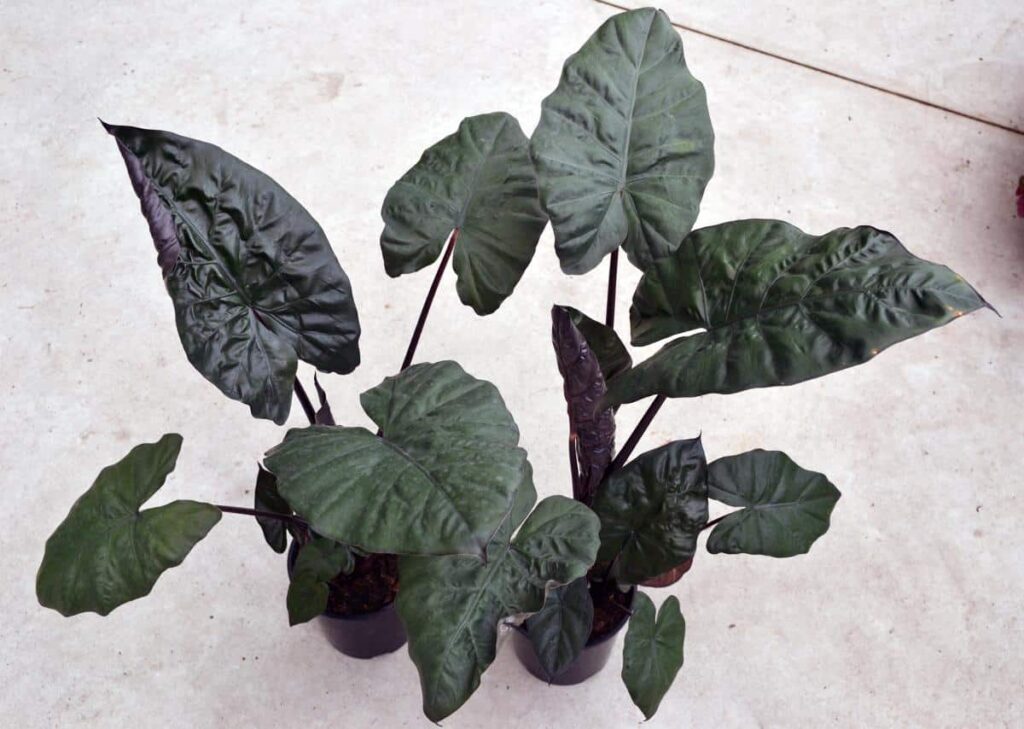

Picture – ballaustralia.com // Alocasia plumbea ‘Nigra’
The common names we give to plants can sometimes be more confusing than helpful, as we can use a single name to refer to several different plant species. This is what happens with “black alocasia”.
A Google search will bring up images of the cultivars Colocasia and Alocasia, two related genera but with notable differences. Now, when it comes to care, they all need the same thing. So that if you want to know what black alocasias are and how you should keep them beautiful, pay attention to what I am about to tell you.
What plants are known as black alocasia?
Although there aren’t many of them, the cultivars given this name are so beautiful that if you’re a lover of tropical plants, you’ll surely want to have them at some point. See:
Alocasia ‘Black Velvet’
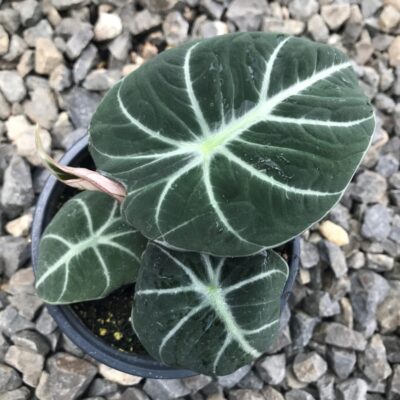
Image – littleprinceplants.fr
The ‘Black Velvet’ is an alocasia that I am in love with. And it is, look at it! Its leaves are almost black, with practically white veins., and you know the best? Which does not grow much: only about 70-80 centimeters in height. For me, this is the real “black alocasia”.
Alocasia plumbea ‘Nigra’
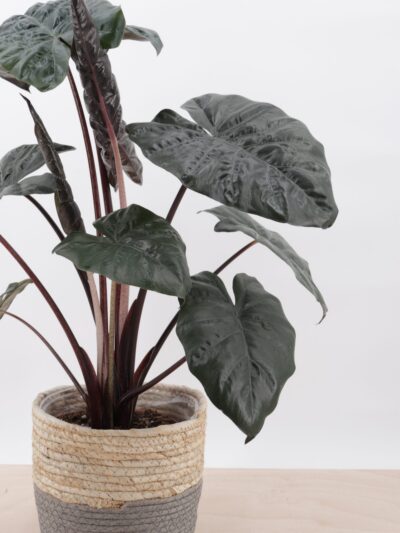
Picture – viplants.de
It is an alocasia that can reach 50 to 100 centimeters in height, with dark green leaves and stems. It is a very interesting cultivar to plant, for example, in a clay pot placed on the terrace.
Colocasia ‘Black Coral’
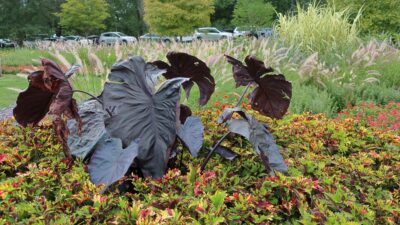
Image – Flickr/cultivar413
Colocasia ‘Black Coral’ It is a cultivar with very, very dark purple leaves.. It is a plant that reaches one meter in height, and which can measure more or less the same width, since many shoots come out of its roots throughout its life.
Colocasia ‘Black Magic’
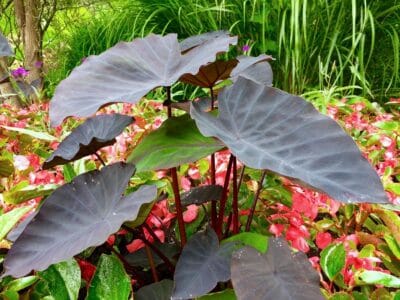
It is a cultivar of Colocasia which it has purple leaves. It reaches a height of around 1 meter and, as it tends to produce many suckers, can be a meter or more wide.
How is black alocasia treated?

Related article:
How to take care of Elephant Ear?
Although we have talked about four species of plants known by this name, the care they need is the same whether it is an Alocasia or a Colocasia. So what I’m going to do now is give you a series of tips so you can have them beautiful:
Location
- On the inside: These are plants that grow and live very well in a house, but it is important that they are placed in a room with plenty of natural light. In addition, it is necessary to avoid placing them near the fan, air conditioning and the like, since the drafts generated by these devices strongly dry the environment, which the black alocasias do not need.
- Outside: if you wish, you can grow them outdoors, but you must protect them from direct sunlight so that they do not burn. But if frosts hit your area, I recommend planting them in a pot and not in the garden, so you can bring them indoors when temperatures drop below 10°C.
Irrigation
Alocasias and colocasias need to be watered very often. These are plants that need the soil to always remain moist. (but beware: not flooded). So, with that in mind, we’ll water them every couple of days in the summer, and once a week in the winter. Of course, if it rains or rains, watering can wait.
Humidity
No black alocasia can live in a dry environment, with an air humidity of less than 50%. Under these conditions, the leaves dry quickly, turning brown.
For this reason, we must first see what degree of humidity there is in the place where we have them, for example with a home weather station; then, if it is low, we will sprinkle the leaves with water every day.
Of course, it is important to find out beforehand, whether it is high or not, because if we start spraying them daily and it turns out to be 50% or more, the fungi will kill them.
soil or substrate
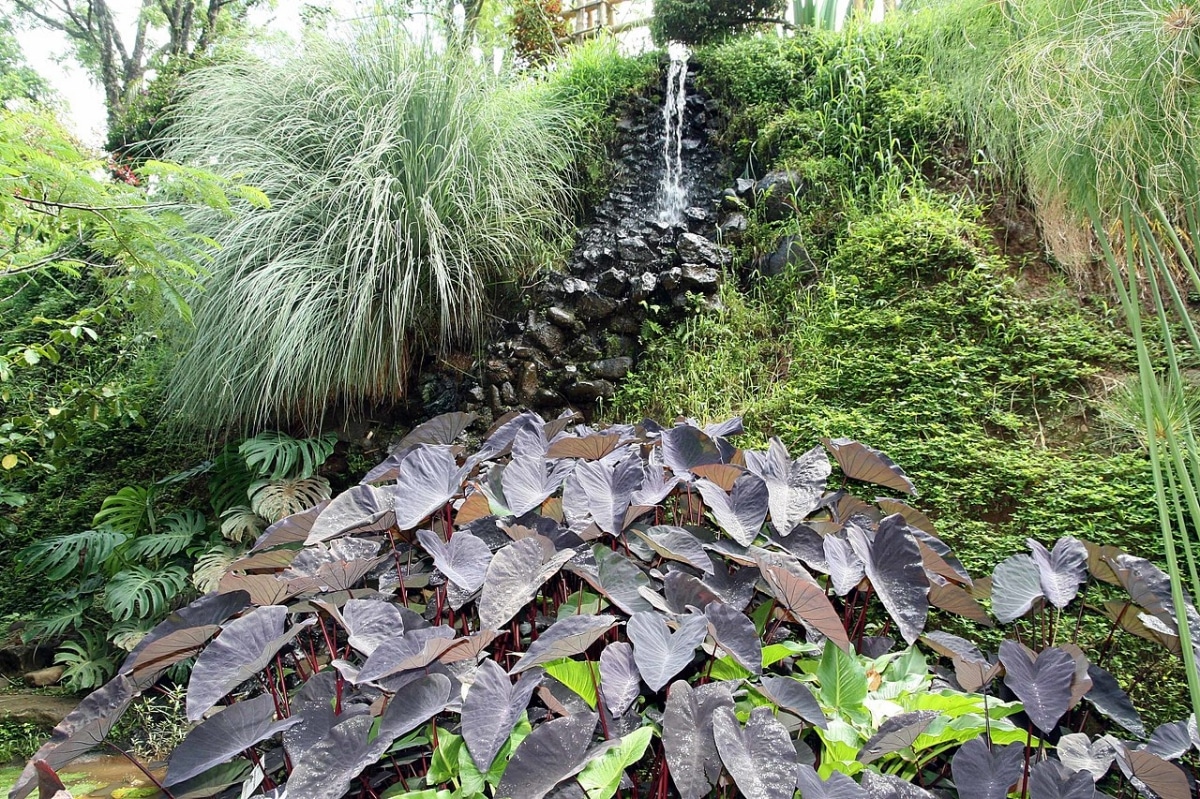
Image – Wikimedia/David J. Stang
- Court: if you want to have your black alocasia in the garden, it is important that the soil is fertile and well drained.
- Flower pot: if on the other hand you are going to plant them in a pot, you must put it in a pot with drainage holes, with a mixture of universal substrate (on sale here-) and perlite.
Subscriber
If you are in the northern hemisphere you can pay it from April to September more or less (if the temperatures start to improve in March, you can start that month; and if the cold arrives at the end of August, then you will have to stop paying earlier).
Use fertilizers or liquid fertilizers if you have them in a pot, like this one, or if you prefer nails, which are much easier to use since you just have to drive them into the ground. And if you are going to plant it in the garden, you can add powdered or granular fertilizer, one or two handfuls per plant every month.
hardiness
The rhizome of the alocasia like that of the colocasia can withstand frost, the problem is that the leaves are very fragile, and they die if the temperatures drop too much. For it, it is best to have them at home, or in a greenhouse, if the thermometer drops below 0 degrees.
Do you like black alocasia?