Are you a plant lover? The hydrangea is a beautiful plant that blooms in spring and summer, but can it also be grown indoors? Is it possible to grow hydrangeas indoors?
Potted hydrangea plants, on the other hand, are easy to care for as long as the basic needs of the plant are met. At this time of year, our greenhouse is full of beautiful potted hydrangeas.
Since they are grown in a greenhouse and bloom months before their natural season, people wonder whether or not they should be given as gifts and then planted in the landscape.
With proper care, hydrangeas can be grown successfully indoors for years. Growing hydrangeas indoors is not suitable for all varieties. Hydrangea macrophylla is an excellent variety to grow indoors.
Can hydrangeas grow indoors?
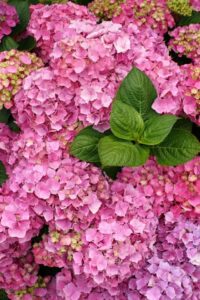 Prized for their large flowers, hydrangeas are generally considered outdoor plants, although they can also be grown indoors as flowering houseplants.
With proper care and dedication, hydrangeas can be successfully grown indoors for years, although most people buy them as disposable houseplants for special occasions.
Hydrangeas have long been prized for their beautiful blooms, making them a popular choice for houseplants. At 5 to 6 inches in diameter, its flowers are about the size of a baseball.
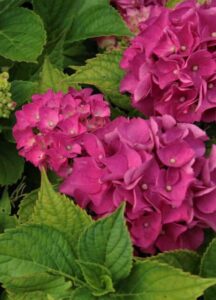
A beautiful play of colors thanks to the varieties with double flowers. The flowers vary, but the most common shades are pink, blue and red.
It is common for hydrangea leaves to be plump, with an attractive texture and dark green color.
What varieties of hydrangeas can you grow indoors?
Indoor hydrangeas are not suitable for all varieties. Hydrangea macrophylla, on the other hand, is best used indoors. is known as a bulbous hydrangea.
The ball hydrangea is available in different colors. Available in many shades. Because it can be grown in containers, covered in flowers, and easy to grow, it’s also a great choice for growing indoors.
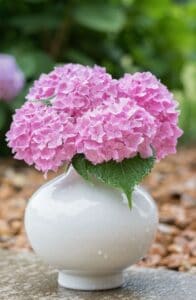
Huge clusters of flowers adorn Hydrangea macrophylla, which has rich, textured leaves. They are a popular alternative for people who like to keep their plants indoors as a centerpiece.
How to care for an indoor hydrangea?
Remove any leaves from the hydrangea if it is a gift. You should think carefully before buying cheap hydrangeas during the holiday season.
A plant purchased from a greenhouse or nursery may be more successful if you want to grow hydrangeas indoors.
- Use a spacious, well-ventilated container and good potting soil to grow the hydrangea. Place the plant in a location where it will receive plenty of direct sunlight on the leaves. Hydrangeas can grow outdoors in partial shade, but indoor plants need plenty of sun (but not direct sunlight).
- Be careful not to overwater your potted hydrangea houseplant while it blooms. Water less after flowering, but don’t let the soil dry out completely. Potted plants should be hydrated with distilled or rainwater rather than tap water, as tap water often contains chlorine and other contaminants. If the air in your home is dry, you can use a humidifier or place the plant in a humid container.
- The leaves turn brown and crispy around the edges in a warm room. Avoid drafts and heat sources. Use a diluted water-soluble fertilizer weekly during flowering. So go every month. Dormancy is recommended for hydrangea houseplants in fall and winter. Place the plant in a 45 degree Fahrenheit room with no heat (7 C). To prevent wilting, keep the soil dry and water it sparingly.
Blooming hydrangeas need 50 to 60 degrees Fahrenheit (10 to 16 degrees Celsius). Warm temperatures cause the leaves Brown and crisp Eliminates drafts and heat from the plant.
Use a diluted water-soluble fertilizer weekly while the plant is flowering. Then reduce the frequency to once a month. In autumn and winter, indoor hydrangea plants should rest.
Place the plant in an unheated room at 45 degrees Fahrenheit (7 C.). The potting mix should be kept dry and watered sparingly to prevent the plants from wilting.
light
The plant should be placed in the center of the room. Night time is fine if that’s your preference. Hydrangeas, on the other hand, need more sun during the day.
The plant should be in a location where it receives at least direct sunlight. If you wish, you can remove the flowers once they have faded. However, this is not mandatory.
Provide evenly moist but not soggy soil during the plant’s development and flowering phases. Why him domain in pots they are generally very tight, it is essential to water them regularly.
Only use water that has been treated for descaling to prevent the soil from becoming alkaline. If the hydrangea is dormant in winter, water it sparingly.
fertilizer
 Apply diluted and balanced fertilizer every two weeks in spring and summer. Or apply a slow-release fertilizer twice a year, in spring and summer.
Too much fertilizer can burn the leaves, so be careful. To ensure that the soil is nutritious, fertilization is a must.
Flowering plants need a fast-dissolving fertilizer that is half-concentrated during this time. However, in autumn and winter it is enough to feed them only once a month.
When a plant looks sick, don’t use fertilizer because it will only stress the plant more.
In spring or early summer, take 10 cm (4 in) stem cuttings and place them in moist potting soil. Do not forget dried plum the plant as soon as it begins to grow.
This is essential to control the size of the plant, especially as it is kept indoors. Pruning diseased or drooping flowers prevents the disease from spreading to healthy parts of the plant as a potential vector for infections that can damage the plant, make sure pruners are clean.
Can you put an indoor hydrangea outside?
If you live in zone 6 or further south, you can plant it once outdoors Freeze the danger has passed. Almost any hydrangea sold as gift plants can survive the harsh Cape Cod winters.
Its flower buds begin to form in August and open in June, like other macrophylla hydrangeas. In winter, these buds can be damaged by temperatures below 10 degrees.
. Like all our other hydrangeas, this one will bloom less in summer if it has had a freezing winter.
- Potted hydrangeas are sensitive to wither. Staying indoors in April and May is the hardest part. Move your hydrangea out of the greenhouse as soon as possible and place it in a slightly larger pot. A drainage hole and a pot of at least 1 inch in different diameters are required. Fill the cavities with more potting soil, but don’t pack it down too much. It’s crucial to get the air out of the potting mix when you repot it, because water runs off and roots grow in these little air spaces.
- After transplanting, keep your hydrangea in a bright place, but not in direct sunlight. An east-facing window is ideal. Plants will also thrive if placed near a south or west facing window, but not directly indoors.
- If the ground seems dry, Water your hydrangea. Don’t let it get so dry that it becomes soft. The roots may rot if the pot is left in a dish of water for more than an hour.
It’s time to move your hydrangea partly outdoors. shadow end of May, then return at night. Make sure your hydrangea gets morning sun and afternoon shade after a week.
Don’t be fooled by their small size, as most hydrangea shrubs can reach at least four feet tall and wide.
What are the benefits of an indoor hydrangea?
Partial sun is ideal for these vintage beauties when grown outdoors. It is best to find a sunny spot in the morning and afternoon.
Likewise, a location with moist soil or easily accessible with a hose is ideal. Hydrangeas, both indoors and outdoors, need lots of water.
Balloons full of new discoveries
The large, full bloom bulbs of the Magical Revolution Indoor Hydrangea can be used in any room. It’s all in the presentation of the plant.
Blue and pink hydrangeas have spirited, almost bent blooms. The plant blooms profusely from the beginning of March, so you have 150 days to enjoy it.
This equals six months of flowering!! For him fall, Magical’s color changes up to three times, culminating in shades of green and red. It turns out to be a different plant.
A potted plant in your home is a great way to ensure that magic hydrangea leaves help increase indoor humidity by evaporating water absorbed by the roots.
One of the few indoor plants that contributes humidity in the house is the hydrangea, which does it brilliantly.
There is magic for everyone.
 Revolution is ideal if you are always on the go and sometimes forget your shower. Other varieties of hydrangeas need more water than the magic hydrangea.
If you choose the Flowertree version, you get the extra height you want. You can tell it’s a standard because of the lack of a stem (as if there were no leaves).
Color-changing indoor hydrangeas are available for Revolution and Flowertree hydrangeas. Several flower pot sizes from 10.5 cm to 14 cm are also available.
There is a flowering plant known as hydrangea, hydrangea. The root and the underground stem (rhizome) are used to produce medicine.
Hydrangea is used to treat infections of the bladder, urethra and prostate; enlarged prostate; and kidney stones in the urinary tract. It is also used for hay fever.
final thoughts
Although not the easiest flowering plant to grow, the hydrangea is an excellent choice for indoor flower arrangements.
Any interior space will benefit from the color and beauty of the dense clusters of vibrant flowers.
It won’t be long before all your hard work pays off if you provide the right conditions, including lightsoil, water, temperature and humidity.
Hydrangeas are not good long-term houseplants. Overwintering these potted plants in a garage or other warm location is possible if winter temperatures do not regularly drop below 5 degrees Fahrenheit.
keep it Usually I moist but not soggy is all it takes for plants to start sprouting in March in the garage.
They should start blooming in late June or early July. Apply a tablespoon of Osmocote and a tablespoon of Holly-tone or Flower-tone to each pot before putting it outside for the summer.
Picking flowers at the optimal time is crucial if you want them to last as long as possible. When the flowers start to look like paper, it’s time to harvest them.