
Aloe vera leaf curl is a common problem you may face when growing it indoors.
The leaves of the aloe vera plant bend due to lack of light. Insufficient light also causes aloe vera plants to become long and bend towards the light source. In addition to improper watering, fungal diseases and improper container sizes can also be responsible for this common problem.
But it is very easy to solve the problem. For this, we must identify the reason. It will make your job much easier.
In this article, you will learn more about the causes and solutions of leaf curl in aloe vera plants.
Let’s dive into it.
Causes of arching of the leaves of the aloe vera plant
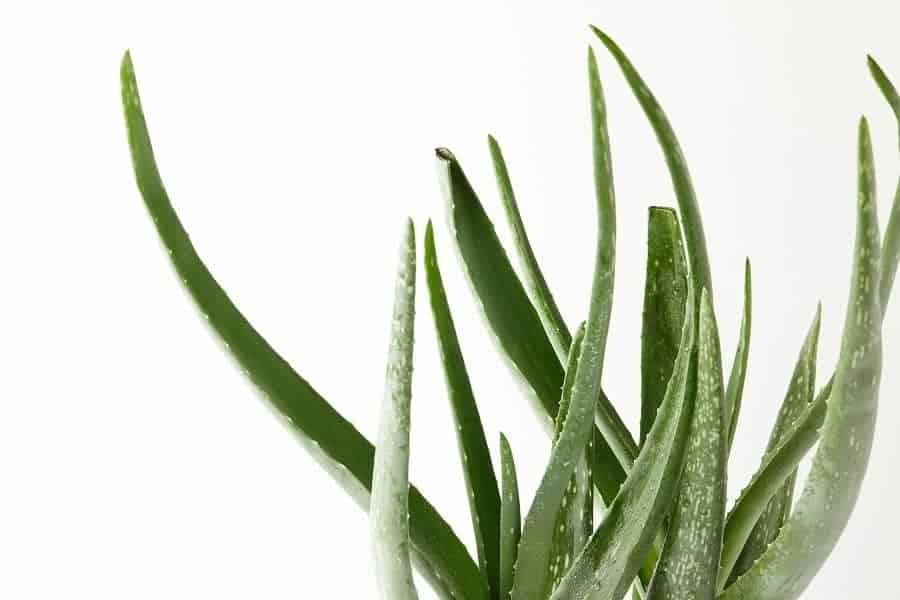
The aloe vera plant is a kind of succulent. Succulents are very responsive to your growing demands.
If you do not comply with their demands, they will let you go displaying various noticeable symptoms. Like the leaves that can turn yellow, brown or twist.
Let’s see what causes this problem and how to fix it.
insufficient light
You already know that Aloe vera loves sun and heat. You need to provide a bright location for the plant to thrive. It does not matter whether it is natural or artificial light.
Lack of light can cause aloe leaves to curl. Insufficient light can also cause aloe vera to turn pale or white. However, the leaves of the aloe vera plant turn red when exposed to strong and constant sunlight.
Insufficient light reduces physiological activities and produces weak or sparse leaves. Eventually, weak leaves may wrinkle or bend. Another indication of insufficient light is that the aloe vera is getting long.
Solution: It is best to choose a warm, bright, and dry location for your aloe vera plant. For example, in a pot on the windowsill, balcony or terrace. However, it also thrives in partial shade.
If your home doesn’t get enough natural light, you can use an artificial light source to help your aloe vera double and thrive. It will return to its normal state in no time.
Warn: Never put your pan in the bathroom. Aloe vera does not tolerate this humid and hot climate.
Irrigation malpractice
It is important to ensure a well-functioning drainage system to drain standing water from the container. Otherwise, your aloe vera will contract fungal diseases like root rot.
Before you can identify root rot, it causes irreparable damage. It is very difficult to save an overwatered aloe vera with root rot.
You can revive submerged aloe in a few days, but too much water can kill it. Rest assured, here is the solution to avoid bad practices.
Solution: You must determine the watering frequency seasonally. Summer is the growing season for your aloe vera. It must therefore be watered more often than in winter.
Watering every two weeks is enough to make your aloe vera thrive. Again, you must ensure that excess water is drained from the container.
Aloe vera is a desert plant and can store water for future use. So you don’t have to worry about water, you can survive without water for a while.
fungal disease
This can become a very serious problem for your aloe vera plant. Aloe leaves may curl due to dry rot. Fungal infection causes dry rot of aloe vera.
Dry rot causes the aloe vera to dry out from within. External symptoms (yellowing, wrinkling and drying of leaves) appear in the later stages of the disease.
Solution: Dry rot is incurable and you must destroy the infected plant. Only consistent preventative measures can save your aloe plant from dry rot. Good care, regular watering and sufficient light keep disease at bay.
Warn: The fungus remains on the walls of the container for a long time. Therefore, you need to get a new container for a transplant.
For the treatment of fungal diseases. Here are the fungicides I recommend:
Low temperature
You already know that aloe plants like heat and light. If your aloe vera plant is exposed to temperatures below 50°F/10°C, it may develop twisted leaves.
It is very likely that cold air is entering through the window or too cold water is being used for watering.
Solution: Aloe plants have no problem with high temperatures. But the ideal range is around 18-25°C/ 64.4°F-77°F. If, despite everything, the thermometer exceeds 30°C, the watering frequency must be adjusted.
However, you should only start to fear when the temperature approaches 7°C. This is a critical threshold for indoor aloe vera plants.
Bacterial soft rot
As its name suggests, this disease is caused by bacteria. It causes the leaves of your young aloe vera plant to curl. This disease spreads rapidly throughout the plant.
You can recognize this disease very easily. Infected leaves will be darker in color and swell with gas formation inside.
Solution: You don’t have to worry too much about this disease. Because if you pay attention to management practices, you will be fine. The causative bacterium can survive in plant debris and emerge in hot, humid climates.
Overwatering your aloe vera will cause bacterial rot. So keep track of your watering frequency. You should water your aloe plant in the winter when the substrate is completely dry.
very shallow bowl
The size of the container is very important for the growth of your aloe vera plant. The small container causes the aloe vera root to bind.
If the aloe is a young plant, it is good to grow it in a small or shallow container. The Aloe plant has a fibrous root which needs more room to grow with the size of the plant.
Solution: How is the optimal container size determined? That is how:
The pot should be such that there is 1-2 cm of space between the roots, the walls and the bottom. You should transplant your aloe vera when it grows and you will be notified when you see bent leaves.
Can you fix twisted aloe vera leaves??
The only way out is to prevent the aloe vera plants from bending. Unfortunately, once it’s bent, you can’t fix it. It is better to cut them and use them.
Then you realize that proper care will also prevent your aloe leaves from curling and other problems. Below are some basic rules for caring for indoor aloe vera plants. With these maintenance tips, you will prevent your aloe leaves from bending.
- Relief. Aloe loves sun and lighting. It grows well on south or southeast facing windows. To form a uniform arrangement of leaves, provide uniform lighting conditions. Also make sure that it is not exposed to direct sunlight and does not get burned.
- Temperature. When it comes to temperature, aloe can easily handle changes. Withstands a rise above +26°C/78.8°F. It does not tolerate frost. Sometimes the temperature drops drastically in winter. Make sure, however, that the ambient temperature does not fall below +10°C/50°F.
- Water. As the soil dries out. In summer in 2-3 days and in winter in 2 weeks. Use lukewarm and normal water. Try to avoid getting water in the center of the blade outlet. Do not overwater the plant, it will rot the roots. At the bottom of the pot are the roots that absorb moisture. This is why he often uses watering from below. Regularly wipe the blades with a damp cloth and clean them of dust.
- Floor. You can prepare the soil with turf, leafy soil, humus and sand. The lawn consists of two parts, the rest of the components one by one. You can also use prepared potting soil for aloe. Before loosening, add a little coal, crushed stone to the ground.
- Fertilization. Fertilizer is rarely applied to aloe vera containers. If you don’t want more than once a month. Water the soil before fertilizing. Do not apply fertilizer for six months after transplanting.
- Transplantation. First, you need to transplant aloe plants every year. Use a bigger pot each time. You can transplant once every three years or simply replace the topsoil.
last words
A well-chosen pot, a suitable substrate and minimal watering are the keys to the health of the aloe vera plant. Basic maintenance tips and preventative measures will ward off the problem.
Sharing is caring!