
If you like geraniums, you surely have some at home. But, Do you know Randy Geranium? Have you ever heard it?
With a few distinctive blooms, this plant may be the envy of all your neighbors. What if you knew what it looks like and the care it needs to know if you can have it at home?
How is Randy Geranium

Randy geranium is not a plant that grows too big. In fact, it usually stays between 40 and 60 centimeters high. It is quite branched, with very woody and slightly twisted branches. As for the leaves, they are small and light green.. They are toothed and somewhat cut. It is a bushy type, but creeping (so it hardly grows tall).
Its origin is in South Africa but in the rest of the countries it is mainly used as an ornamental plant, either in flower boxes or in flower beds, since it is quite leafy and blooms abundantly.
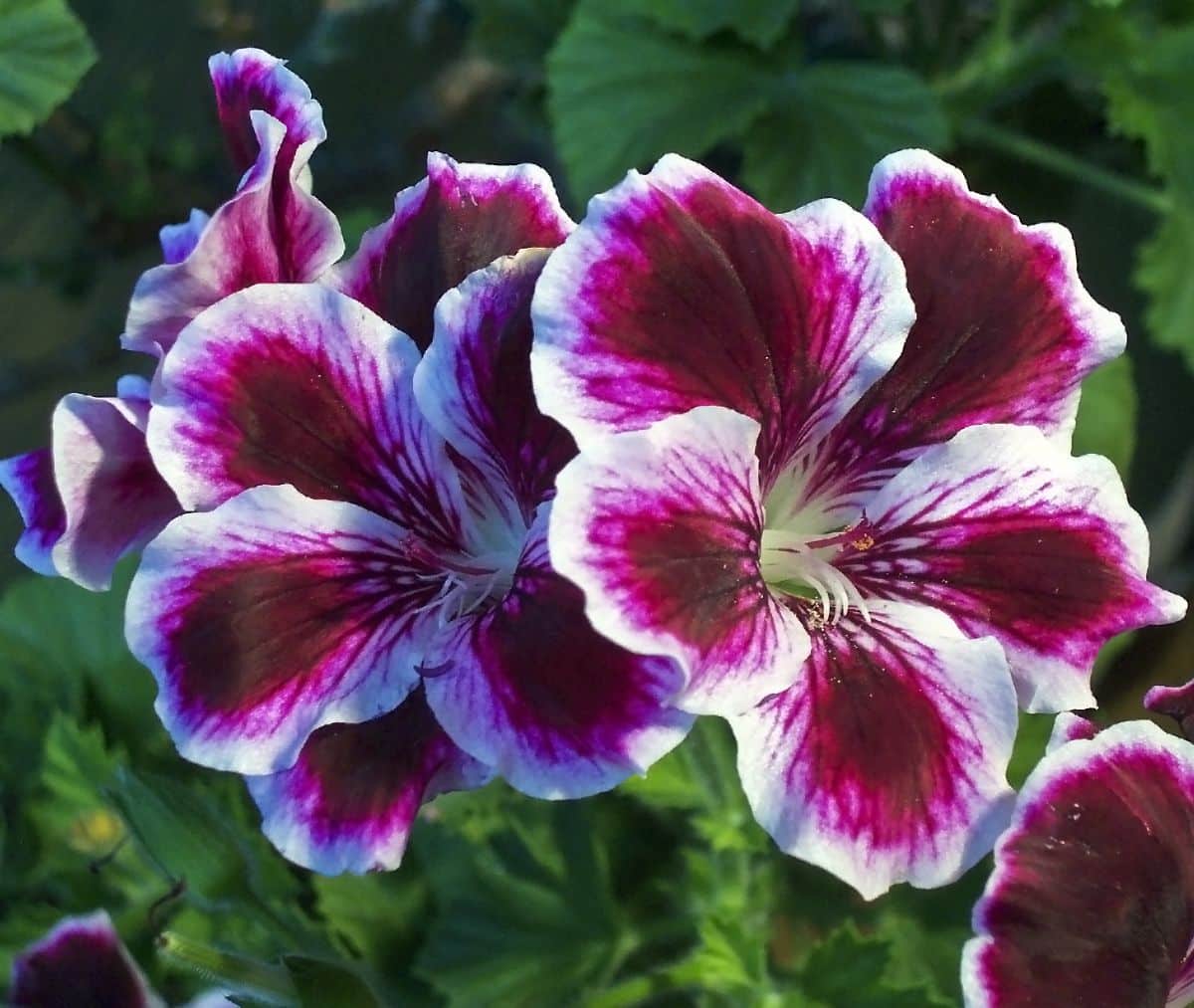
Speaking of flowers, know that these are the most striking of the Randy geranium. And it is that these, which appear from spring to autumn, are small and have bicolor petals, that is, some pink with white edges and others magenta with white edges.
Randy Geranium Care

Now that you’ve seen the Randy Geranium, you may have liked it enough to buy one. And it is not difficult to find, quite the contrary, because online we have seen several stores that sell it. But before you start doing it, you need to know what the main cares are to know if you can meet their needs.
location and temperature
Randy Geranium is an outdoor plant. It is true that many geraniums can be indoors, but you risk that it will flower poorly and not be as healthy as if you had it outside the house.
Of course, outdoors you should place it in full sun, unless where you live the sun gets too much. Yes OK Geraniums are plants that tolerate the sun and heat fairly well, sometimes it is better to put it in partial shade to avoid the hours of greatest incidence (especially if the temperatures usually exceed 40ºC).
It must be well protected from drafts. A little is good, but if it’s strong, it can harm your health. Humidity is also not suitable for it, as it can damage the branches and leaves of the plant. (This is why geraniums are typical of Andalusia, where the humidity is low).
As for the temperature, it is also necessary to try to take care of it when it drops (she does not like frost at all). Actually, you must protect it if temperatures drop below 10ºC (for example, with a thermal net for plants or put it in a greenhouse).
Substrate
One of the biggest issues Randy geranium may not be successful with is because of the soil you are using. You have to see that it does not compact and, for that, nothing better than a mixture of compost, universal soil and perlite. You can also use worm castings instead of compost, and bark or sand and gravel instead of perlite.
If you have the plant in a pot, try to make it narrow, deep (at least 20 cm) and also clay. You will have to transplant it when the roots come out of the bottom of the pot, but in general geraniums are small plants so they won’t occupy large pots.
Irrigation
Watering is one of the most important parts of geraniums in general, and obviously the Randy geranium in particular. Too much can kill it, as the roots rot very easily. And a lack can prevent it from flourishing and not growing either.
The frequency of irrigation will very much depend on several factors. As a rule, it is watered 2 to 3 times a week in spring and summer; once a week in autumn and nothing in winter. But, as we tell you, it will depend on the weather, temperature, humidity, location…
Subscriber

From spring to late summer you should add a little monthly fertilizer. It is best, in early spring, to add a little compost or manure. And after, month after month, with the irrigation water, add a little chemical fertilizer.
Size
As a shrub that is the Randy geranium, it is possible that sometimes it will get out of hand and grow a lot on one side and little on the other. So you will have to shape and carve as you lose it. You don’t need to constantly cut, only every 2-3 months to do a maintenance pruning.
However, at the end of winter, you will need to prune more drastically to promote growth and clean up the plant.
Plagues and diseases
Although geraniums are hardy plants, once geranium Randy has several enemies based on pests, such as aphids or the so-called “geranium moth”. The best thing is to prevent them from appearing and, if so, to use specific products to eliminate them.
As for diseases, they occur mainly due to irrigation or lighting, both in excess and in case of lack. And it will let you know that first and foremost by the leaves.
the reproduction
We come to the end, with the propagation of the geranium. And the best way to grow new Randy geraniums is from cuttings. These should be cut in early spring and left in water until they take root.. Of course, make sure they are at least 10cm tall and have no flowers.
If you prefer to plant it in the ground, wait at least a day for the cut to heal or add a little cinnamon powder to avoid fungus or other problems that will cause the cutting to fail.
As you see, The Randy geranium is one of the plants that will embellish your garden the most with its atypical flowers. Now all you have to do is review it and decide whether to buy it or not. Its price is not too expensive, and it could be worth seeing it flourish.