
If I had read the clematis care tips before buying a single clematis plant, I would definitely have given up on the purchase altogether. Although I’m usually pretty good at deciphering plant care guides, even the clematis care guides left me frustrated, I have to admit.
I understood that there were three groups of clematis. But was it 1, 2, 3? OA, B, C? What about types of clematis? And what group do herbaceous clematis belong to?
So I went back to my college days and rekindled an old habit: bulleted lists. If a meticulous list helped me process, clarify, and memorize complex information back then, there’s no reason why it should fail me now.
If you’re having trouble parsing the sometimes confusing (often contradictory) information on how and when to prune your clematis, scroll down a bit for my simplified clematis cheat sheets.
But before I begin, I must mention a clematis pruning method that clicked for me: the Red light.
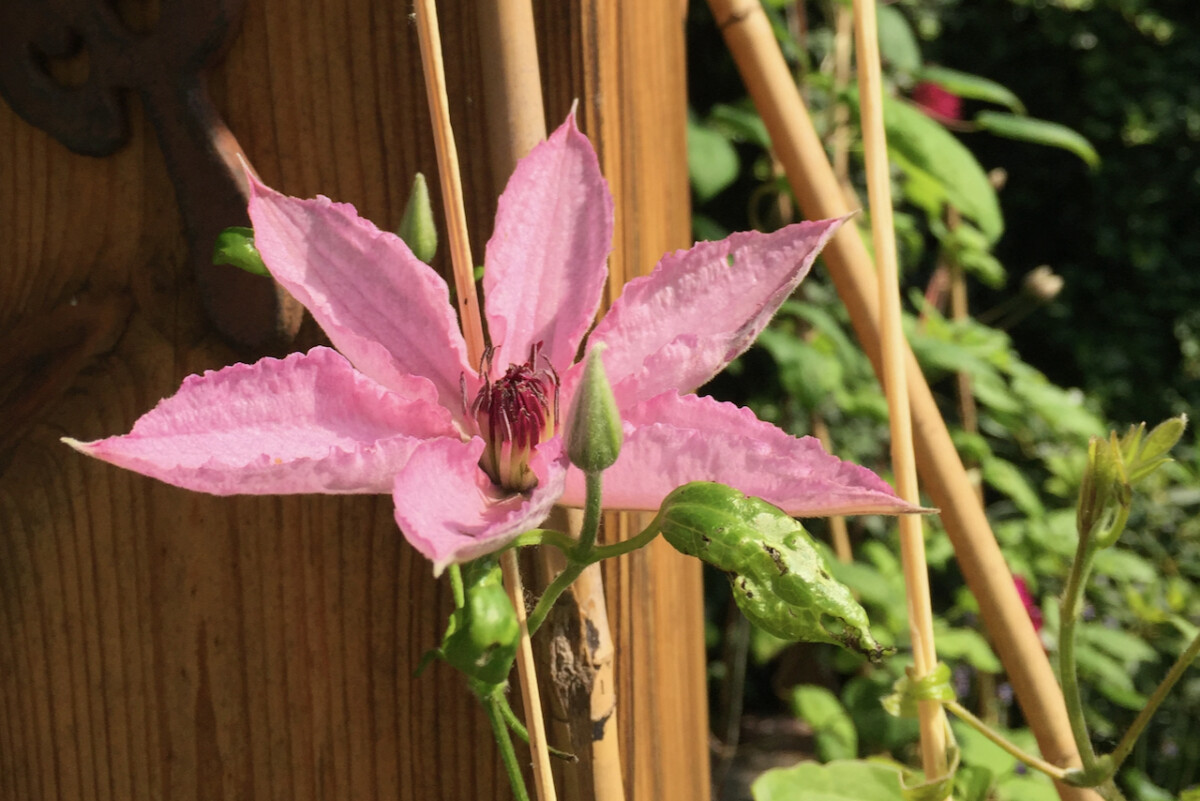 One of my current clematis, ‘Hagley hybrid’ (Group 3)
I first heard about this method from the website of Spring Hill Nurseries, an Ohio-based mail order company that has been in business since 1849. I looked at their online catalog (with 195 varieties of clematis!) looking for an easy-care gift. for a friend and noticed that their pruning groups were marked as green, yellow and red.
Step 1, 2, 3.
Not A, B, C.
As a visual person (a trait I suspect I share with many other gardeners), this made sense. And for someone who must have played hundreds of games green light, red light from the age of four, this system was fun and easy to remember.
Just recall the semaphore system:
Red means STOP!
Yellow means SLOW!
Green means GO!
Now let’s add the word “plum”:
Red means STOP pruning (do not prune now)
Yellow means SLOW pruning (think carefully before pruning anything)
Green means Go (go ahead and prune as you please).
What type of clematis do I have?
Before you can categorize your clematis, a little detective work is required. Some store-bought clematis have clear labels that say group 1, 2, or 3. Some say group A, B, or C. Others will just tell you when the plant flowers (more on that below) without naming a group , so it’s up to you to connect the dots.
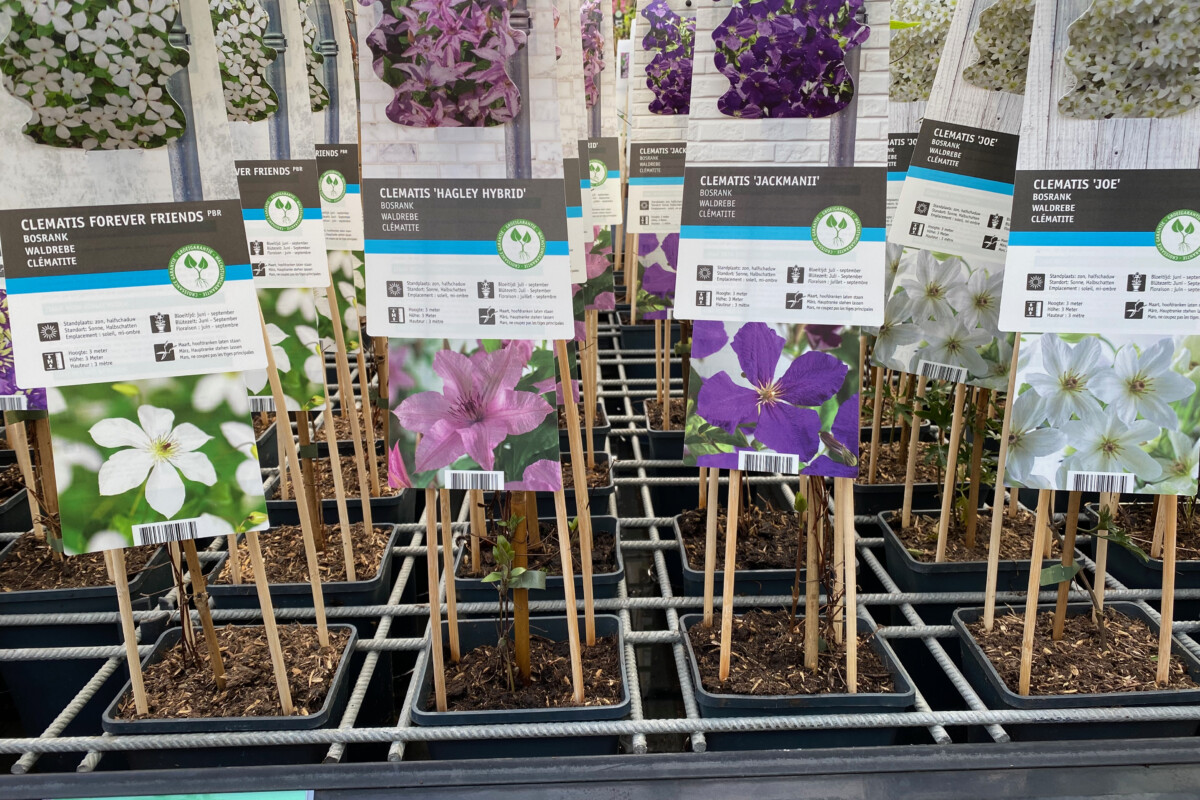 Look for flowering time information on the clematis plant label and you will know which group it is.
If you have just moved into a new garden where clematis are already growing, I recommend using the first year to simply observe the plant without interfering in any way. When will it start to bloom? When will it finish flowering? What’s left at the end of the season?
Take a look at the cheat sheets below. Once you have chosen the group, return to your plant and tie ribbon or embroidery thread of the corresponding color (red, yellow or green) to the lower stems of the plant. This will serve as a visual reminder of the type of clematis you have when it’s time to prune it next year.
Reminder Clematis
Group 1 (or group A): early flowering clematis
Red means STOP!
Inflorescence: They always bloom on last year’s growth.
Flowering period: Group 1 clematis begin to bloom in late winter and early spring, sometimes until January. They continue to bloom until April and will likely have finished blooming by June.
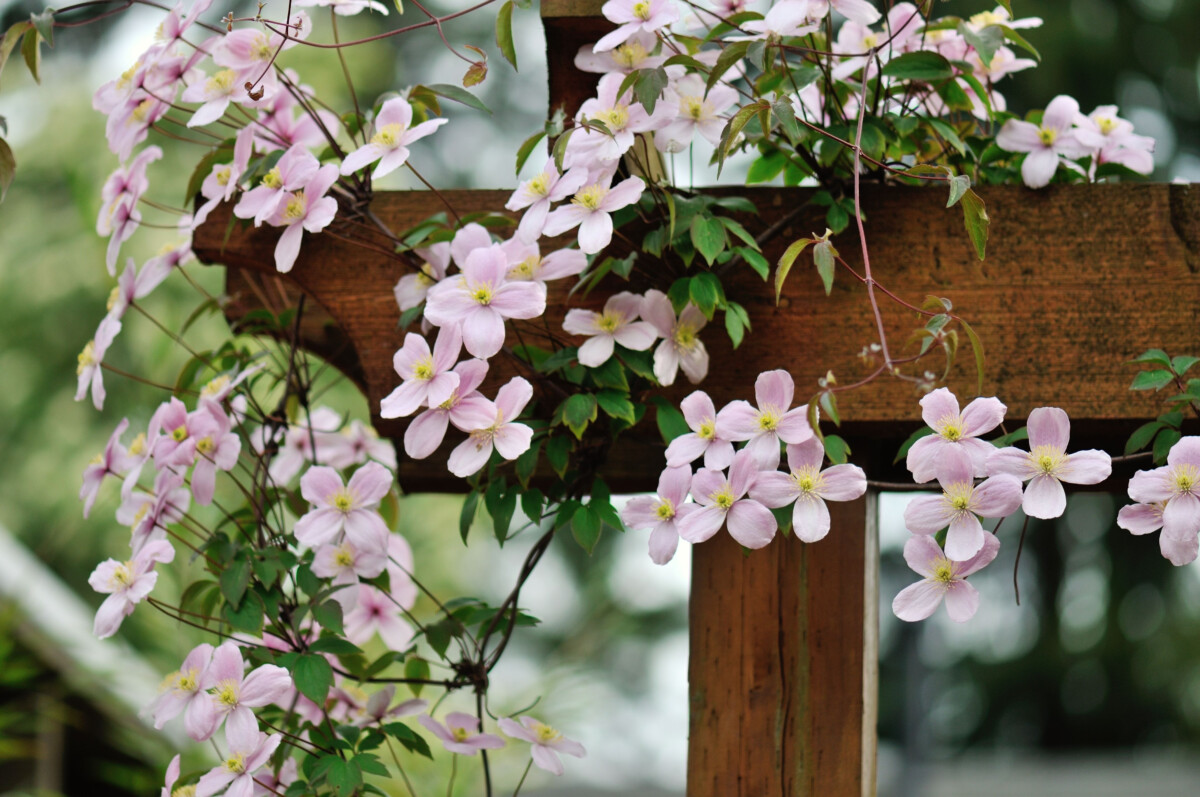 All cultivars of Clematis montana (alpine clematis) belong to group 1.
The look:
- As this clematis opens the flowering season, you will notice that the flowers tend to be smaller and more compact than clematis that bloom in June.
- Once the clematis has finished flowering, it will continue to produce new shoots to support next year’s spring blooms.
How to prune group 1 clematis
- This group needs little pruning.
- You can prune it minimally to form or clean it out in late spring or early summer after the first flower bud has finished.
- Remove dead or damaged stems and any growth above them.

Popular clematis group 1:
Clematis armandii
montana clematis
clematis cirrhosis
clematis tangutica
Clematis macropetala
Generally, when you hear “clematis species”, you are dealing with group 1 clematis.
Popular Group 1 cultivars include:
 Clematis ‘Tetrarosa’ (Group 1)
‘Tetrarose’
‘Elizabeth’
‘Alexander’
“Pink Perfection”
spoonri
‘pink swing’
“Joe Zary”
‘constancy’
Group 2 (or group B): June flowering clematis
Yellow means SLOW!
Inflorescence:
- It can have two flowering seasons, both on old shoots (late spring) and on new shoots (late summer).
- The largest flowers appear early on old growth; then smaller flowers bloom above the new growth.
- Due to their flowering habit, this group is also known as “double-flowered clematis”.
Flowering period: Clematis of this group bloom from mid-May and continue to bloom until the end of July.
 clematis passion flower
The look:
- Most group 2 clematis are newer hybrids with large, showy flowers.
- It is the most popular and therefore the largest group with new cultivars every year.
How to prune group 2 clematis
There are a few size options depending on the end result you want. But keep in mind that to bloom again you need to keep a minimum some stems from last year.
Option 1: Heavy pruning for a flowering period.
If you opt for more severe pruning in the spring (and cut back the old growth), these clematis will no longer bloom in June. It has only one flowering period: later in the summer on new growth. In this case, these flowers will be abundant in August and September.
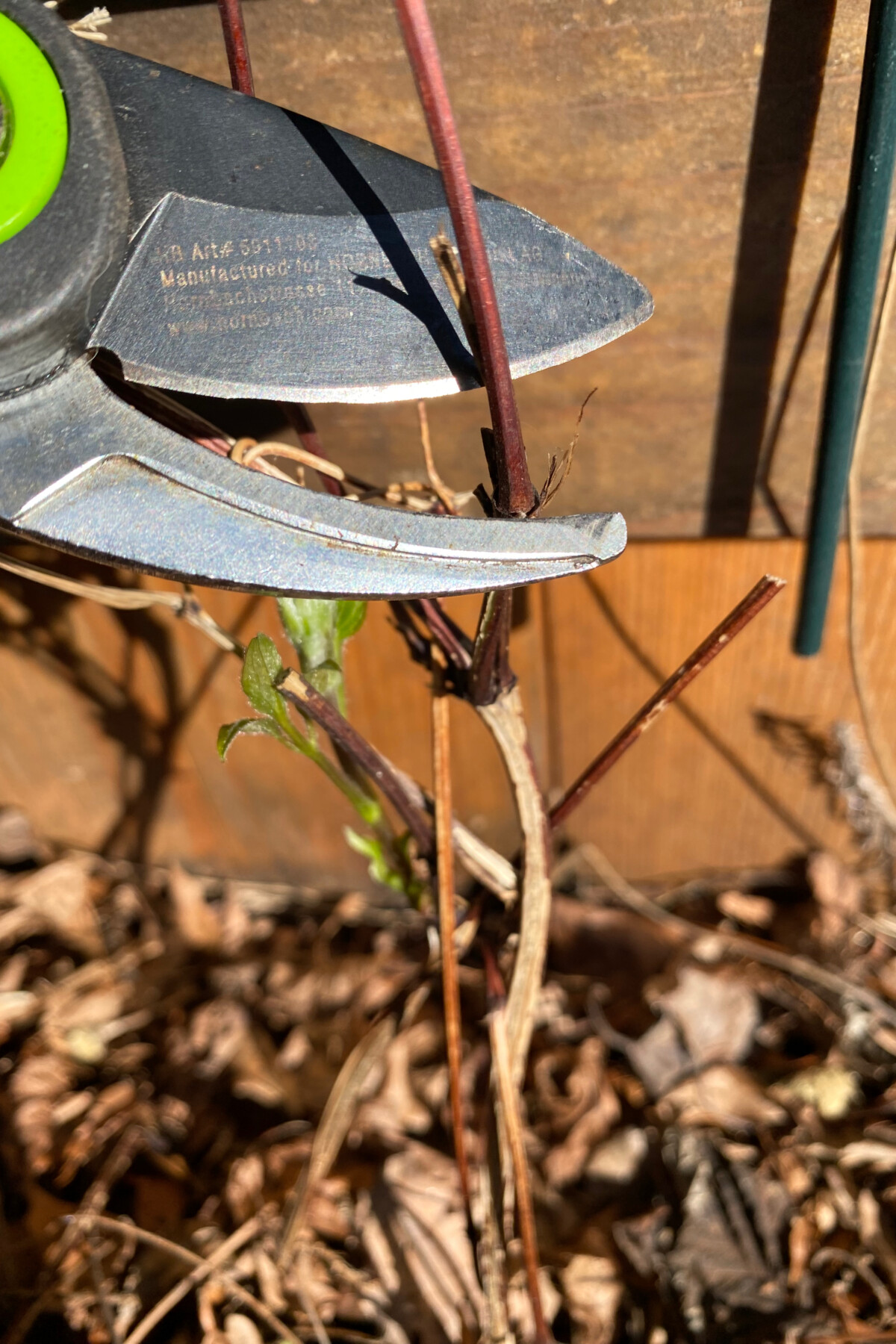 Harder spring pruning on a double-flowering clematis turns it into a single-flowering clematis.
Option 2: light pruning for two flowering periods.
If you only want to restore the plant in the spring, remove damaged stems and stems that no longer show new growth. However, always prune a little, in this case just above the highest set of axial buds that are starting to grow. These buds develop into the large June flowers that give this group its name. Small flowers will appear on new growth in late summer.
You can prune it lightly to form or maintain the height of the plant after the second flowering period has passed.
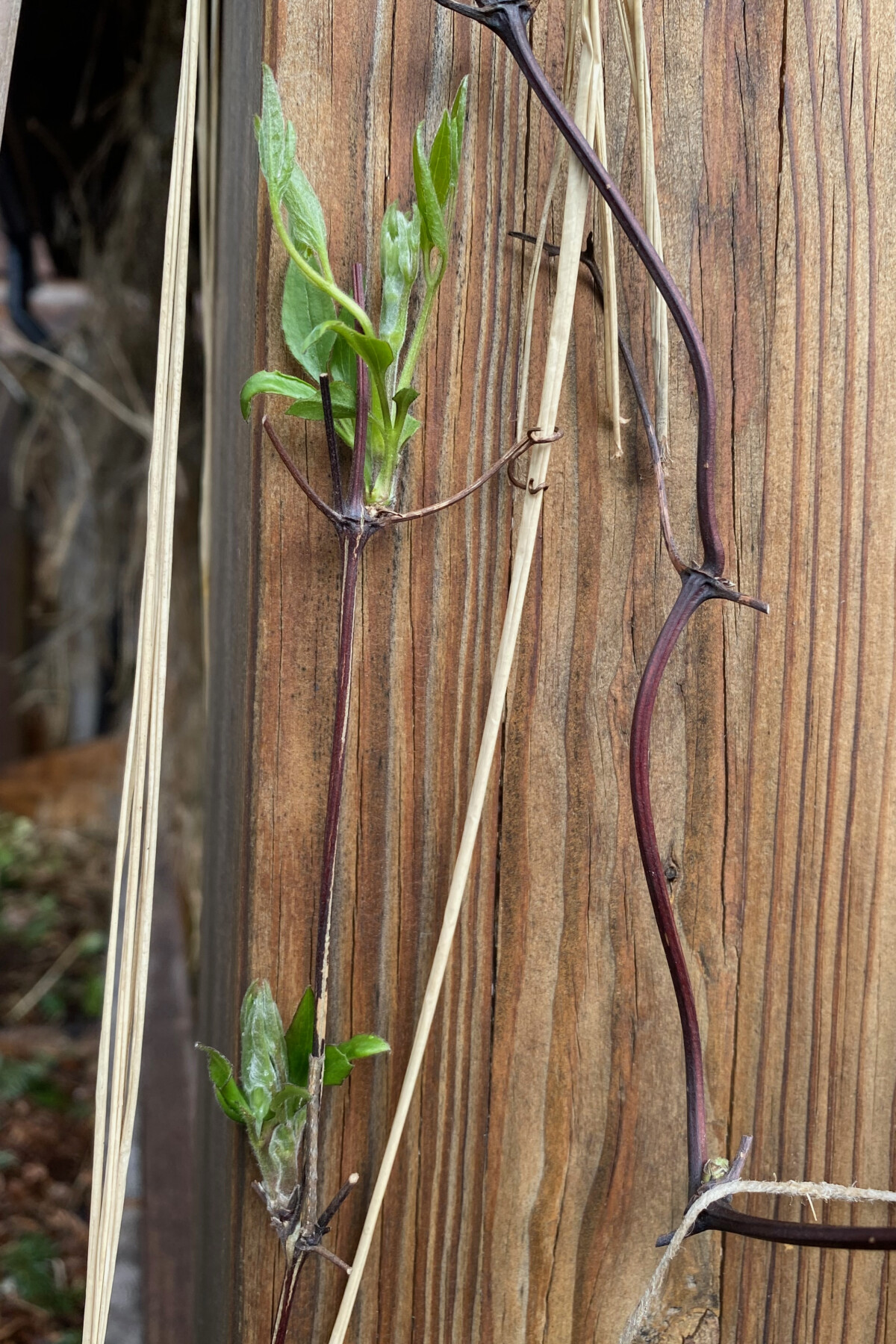 Cut the stems just above the tallest strong bud.
 Popular Clematis Group 2:
‘royal velvet’
‘Niobe’
“Nelly Moser”
‘Arabelle’
‘President’
 Clematis ‘Still Waters’ (Group 2)
“Silent Waters”
‘Sunset’
‘Hoshi no Flamenco’
“Vancouver Cotton Candy”
‘Little Mermaid’
Patricia Ann Fretwell
‘Midor’
“Crystal Fountain”
Group 3 (or group C): late flowering clematis
Green means GO!
Inflorescence: They are very vigorous flowers, always blooming on new shoots.
Flowering period:
- The flowers bloom in late summer (starting in July) and continue to bloom throughout the fall.
- They usually finish flowering in late October, but you should leave the top growth for cover until the weather warms up in the spring.
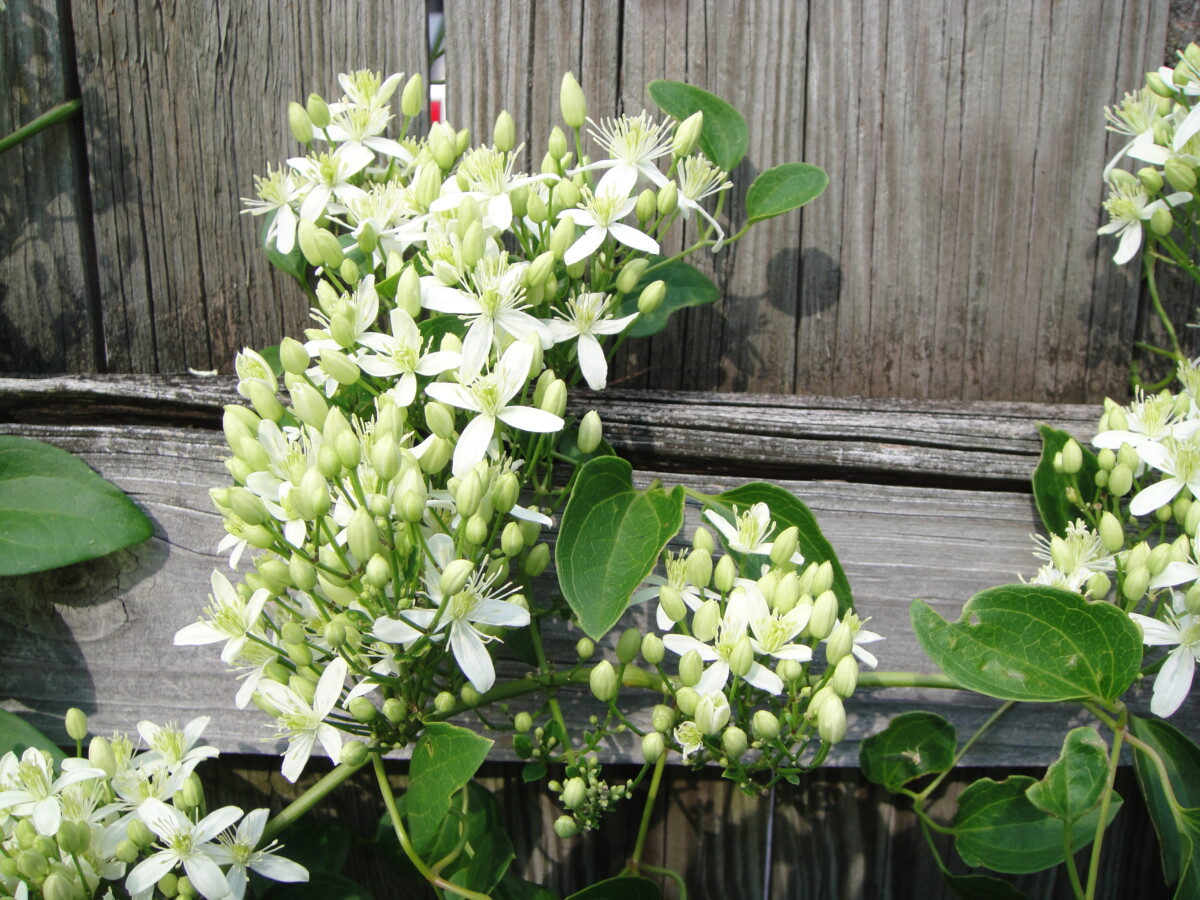
 Clematis virginiana blooms in early fall.
 The look: Group 1 usually has smaller, more delicate, close-set flowers (especially if they get enough sun).
How to Prune Group 3 Clematis
- These are the easiest clematis to start, in terms of size.
- Always prune group 3 clematis in late winter/early spring.
- The stems often get tangled, so if you don’t prune them in the spring, the new shoots will intertwine with the old ones and become even more intertwined.
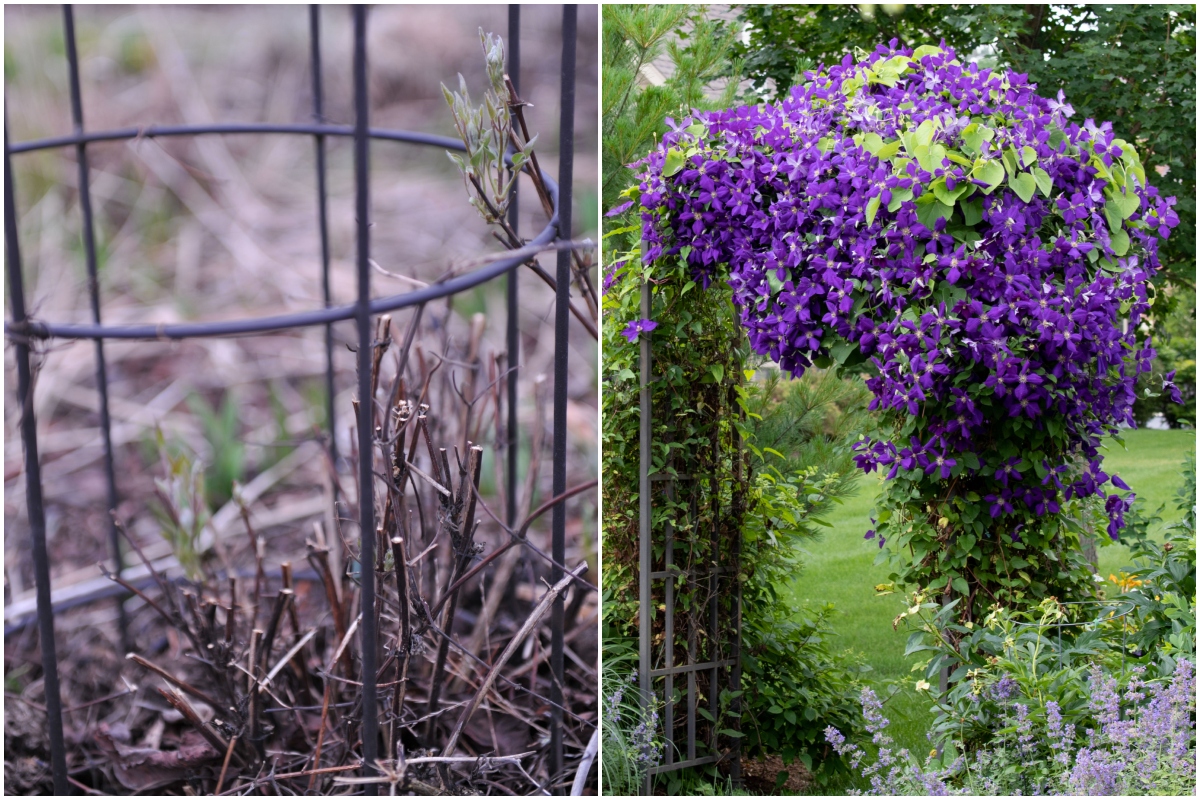
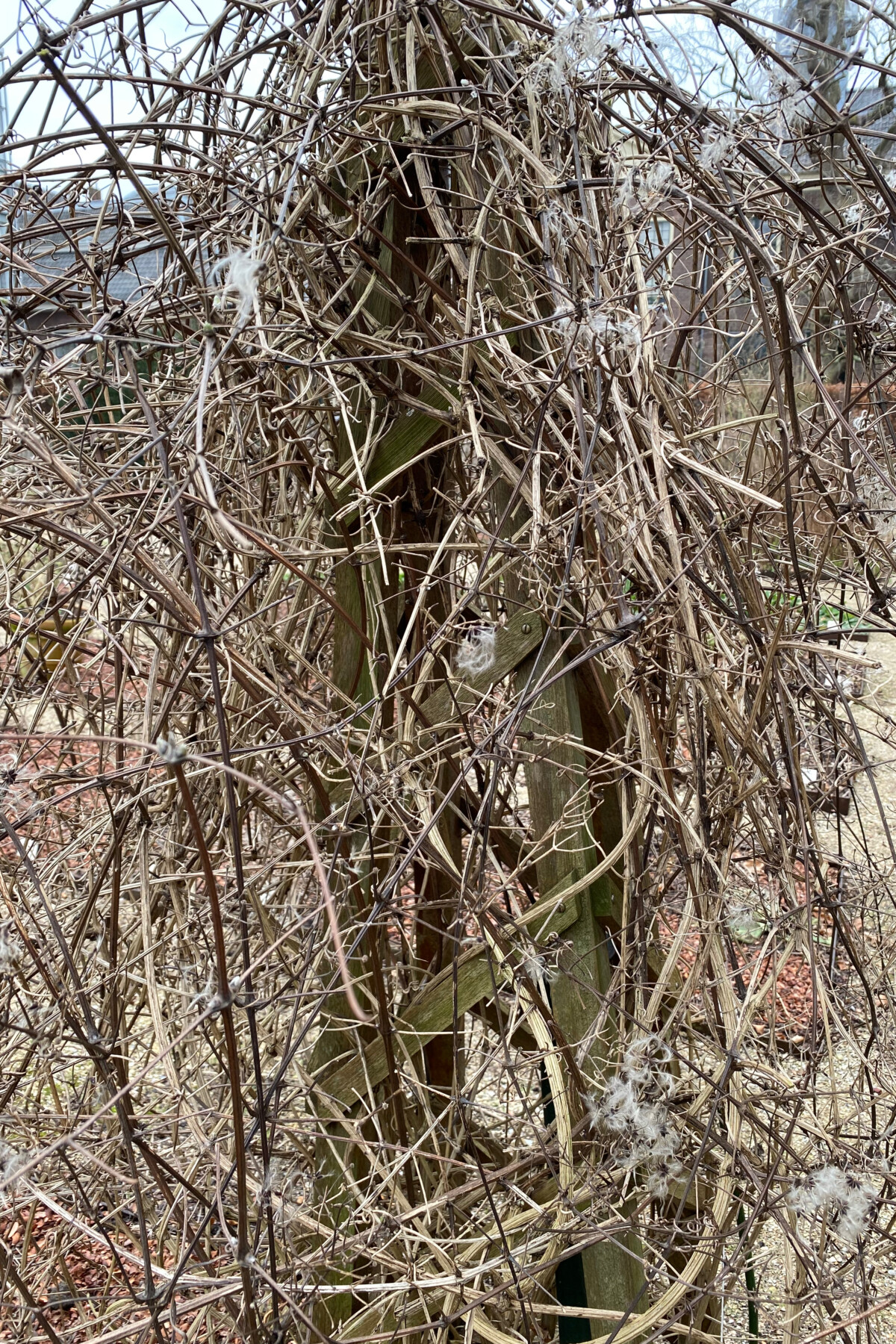 The tangled stems of a group 3 clematis in spring.
- Cut about 12 inches (30 cm) from the ground, just above a swollen bud or joint.
- You can start by untying it, detaching it from its obelisk or trellis, and placing it on the ground. If it is very tangled, cut it little by little and take it out of the frame until it comes loose.
 Don’t be afraid to cut Group 3 clematis about 12 to 18 inches (30 to 45 cm) above the ground.
 What happens if you skip pruning group 3 clematis?
They will continue to grow where they left off last year. This leaves the base of the plant bare and new flowers only emerge at the top. Depending on how high you trained it, you’ll only get flowers well above eye level.
 New spring growth on the ‘Hagley Hybrid’ reduced to the ground.
Popular clematis group 3:
Clematis integrifolia
Clematis heracleifolia
viticelli clematis
Clematis texenis
Herbaceous clematis are usually group 3.
Popular Group 3 cultivars include:
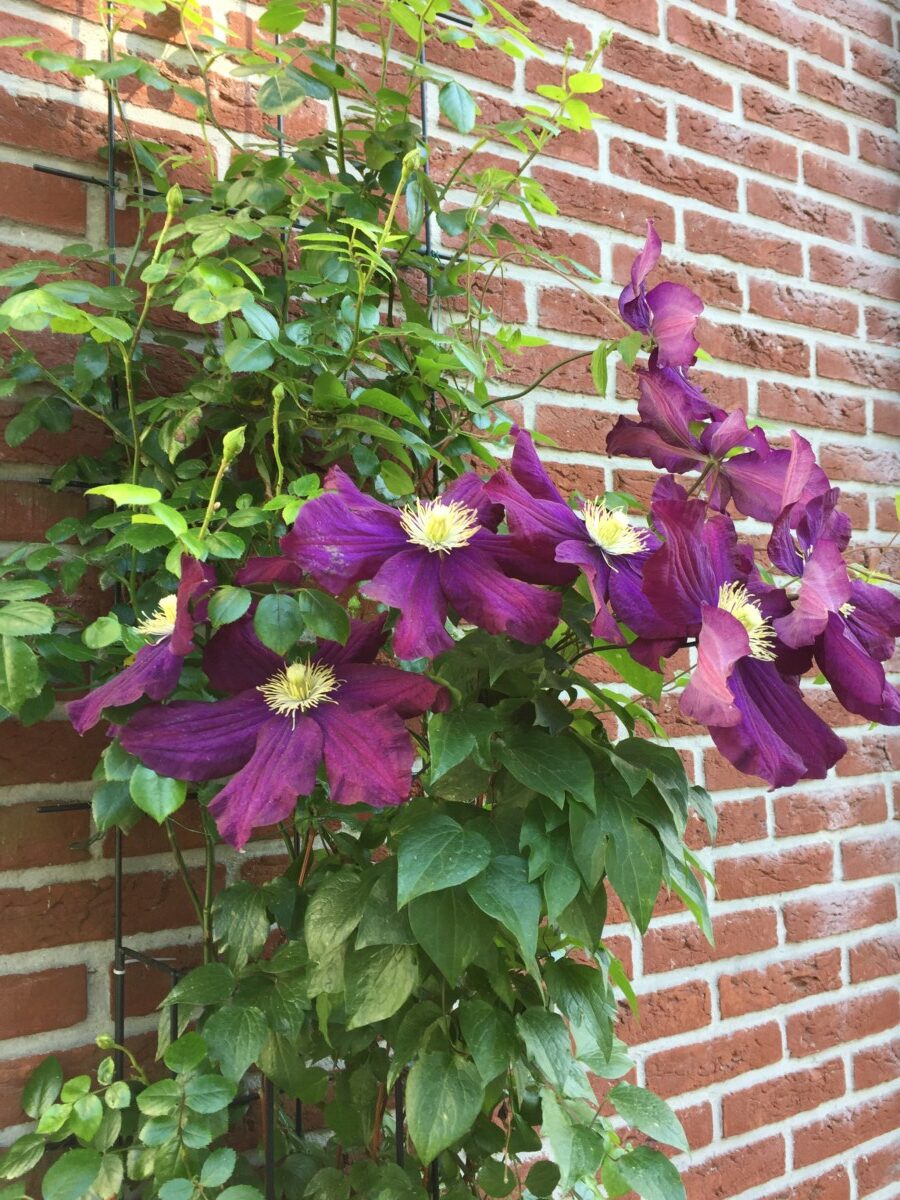 Clematis ‘Etoile Violette’ is a popular variety of C. viticella.
‘Violet Star’
“Blue Ribbons”
‘honor’
‘Princess Diana’
‘Pearl of Azure’
“The Polish Spirit”
chatworth
‘Alba Luxurians’
“Good Diana”
‘Roguchi’
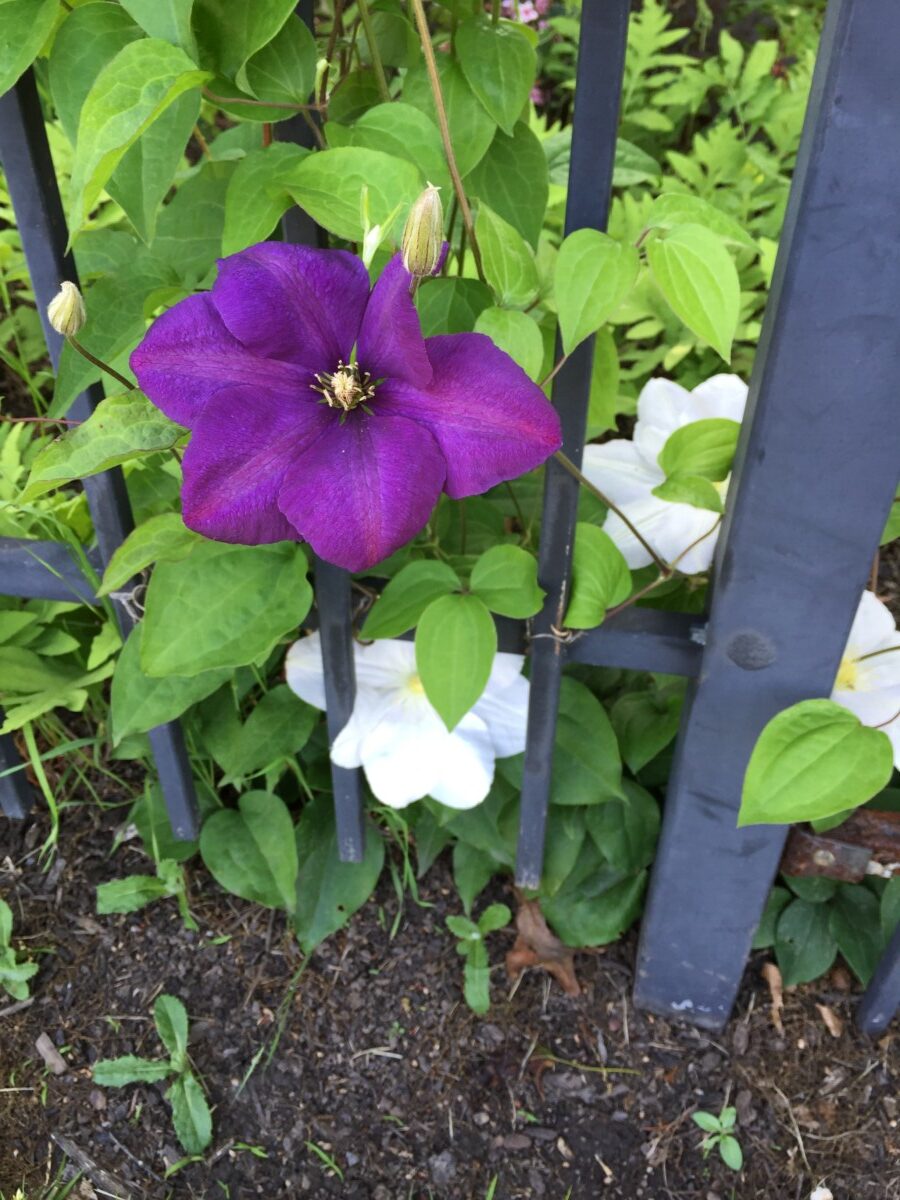 Clematis are always worth it.
 I hope this simplified guide takes the guesswork out of when to prune your clematis. As always, I recommend a few seasons of pure viewing to get you on the right track. And remember, despite their fragile appearance, clematis will bounce back even after improperly timed pruning. It can take a year for the plant to recalibrate its flowering patterns.