
As a gardener, I’m always on the lookout for more plants. colorful plants. Superb plants. Plants that make WOW! But when it comes to hydrangeas, I’m a sucker for the “simpler the better” philosophy.
This is why my favorite varieties of hydrangeas are climbing plants (abnormal hydrangea subsp. petiole). I was lucky enough to inherit two mature vines from the previous owners of my house, and have been in love ever since.
 The most popular climbing hydrangea is Hydrangea anomala petiolaris.
I’ve already decided that if I ever move anywhere else, the first thing I’ll do after unloading the moving truck is plant some climbing hydrangeas. And I’ve already taken cuttings from my hydrangeas, just in case.
I like climbing hydrangea varieties because they are low maintenance. In fact, the only maintenance you need to do is a little dead pruning and light pruning in late winter or early spring. Add to that the heart-shaped dark green foliage and lacy white flowers and you have the perfect vine for privacy and aesthetics.
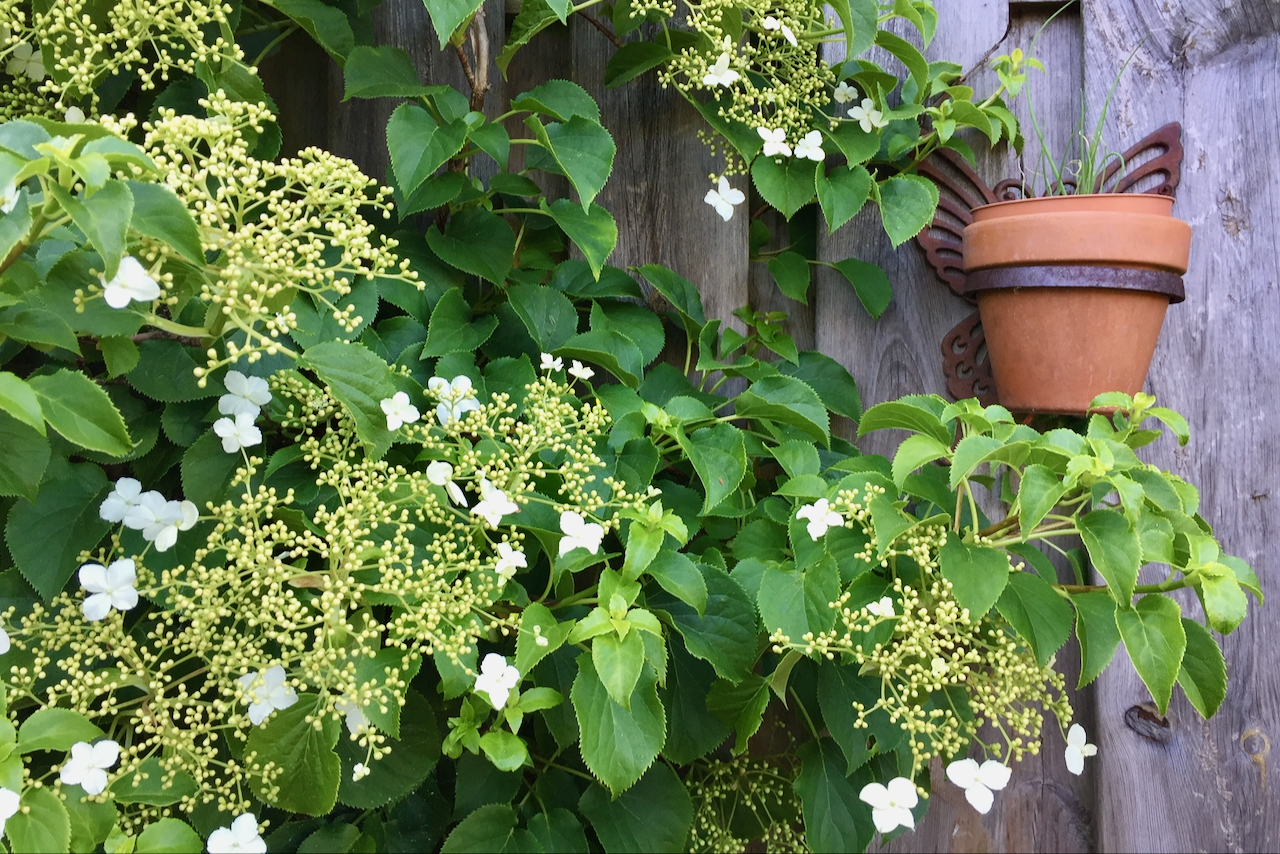 Lace flowers and lush green leaves hide an unsightly fence.
 3 reasons why I don’t prune my climbing hydrangeas in the fall
Our regular readers will remember that I included this hydrangea in the list of plants not to be pruned in the fall. I have already explained that it is because the new shoots come out of the old wood. And if you prune the plant too early, when the buds are barely visible, you risk suppressing the next year’s flowers.
 Here’s what it looks like in November. It’s hard to see where the new growth will be.
 But there are other reasons why I leave the dried flowers on the boot until February. First of all, I’m very interested in the aesthetics of dried flowers in the winter garden. I love when something, anything, catches my eye as I wander the garden in winter from the comfort of my living room. Dried flowers have volume and move gracefully in the wind, adding beautiful texture to the garden in the off-season.
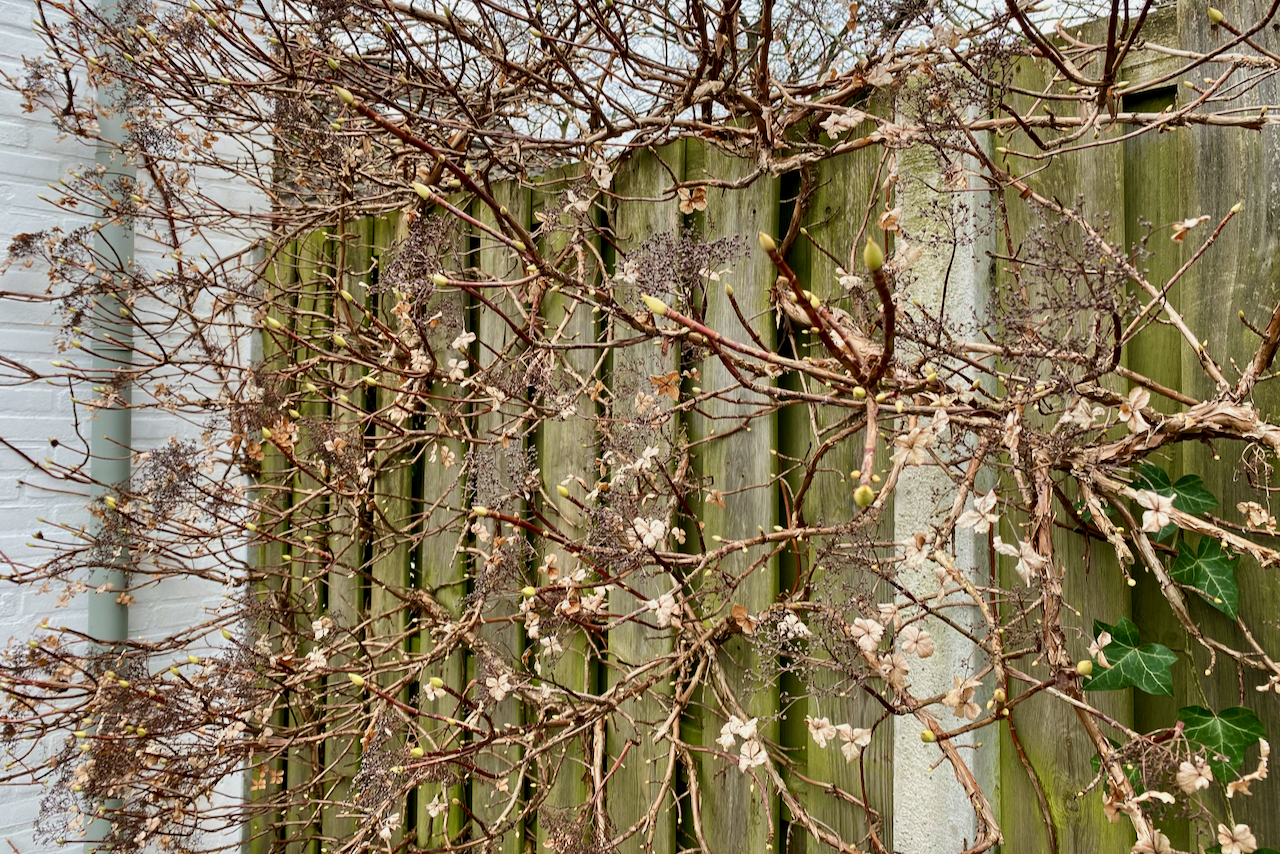 I can’t avoid it. I really like the look of the dried flower heads.
 Second, the full vine, even without the leaves, acts as a barrier. The climbing hydrangea in my garden grows through the fence I share with my neighbors, coming in and out from our side to theirs. When completely defoliated in summer, this vine provides excellent natural soundproofing between the two patios. And it retains some of the same properties through the winter, especially if I leave the flowers dried up.
 This climbing hydrangea brightens up a rather ugly fence and serves as a noise barrier.
 Likewise, the vine growing on a trellis along the front of my house acts as a windbreak and reduces some of the exposure of the building. So the more people the better, especially in winter.
How to prune and prune your climbing hydrangea in the spring.
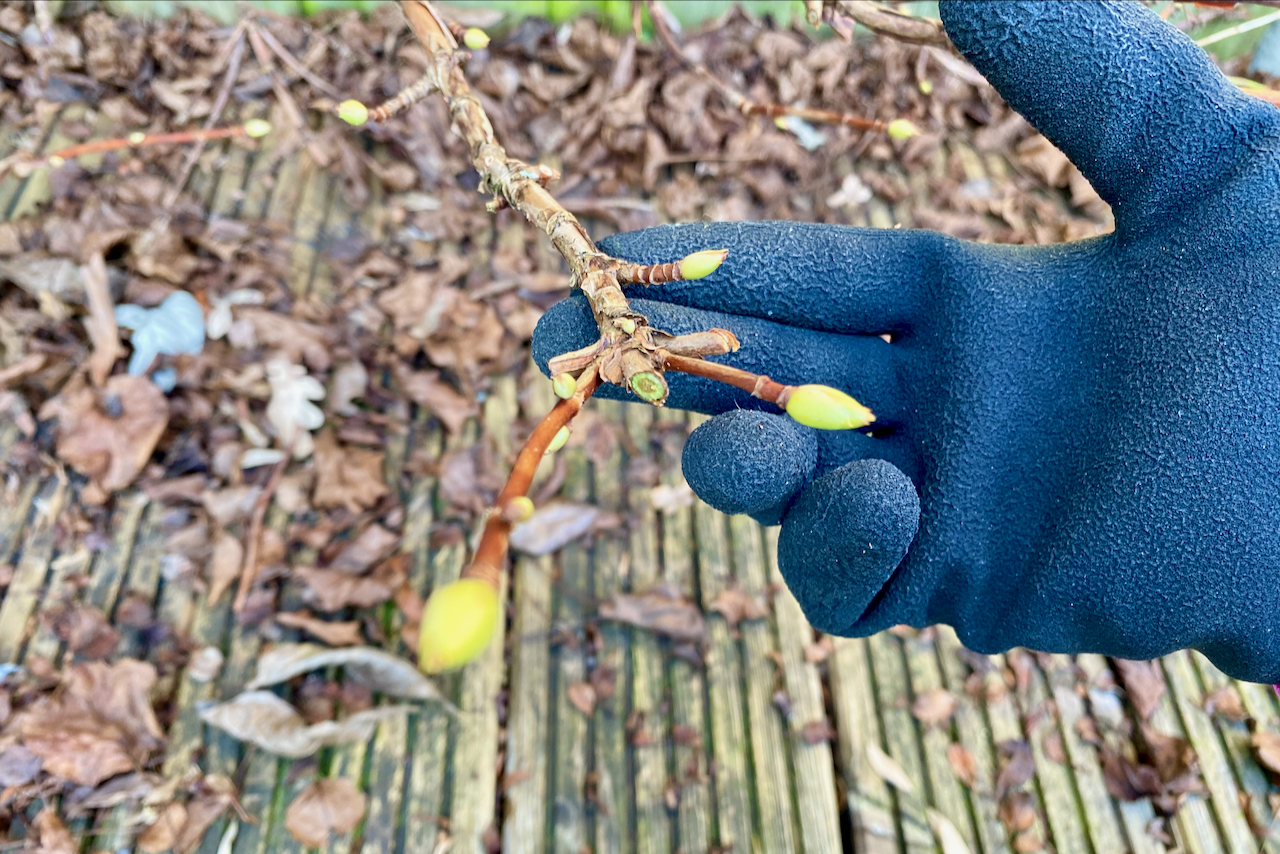
With winter ending at the end of February, it’s time to put away my climbing hydrangeas. The new shoots are already swelling and show signs of opening soon; if my calculations are correct, it will happen in less than three weeks. So, it’s over with the old and with the new today.
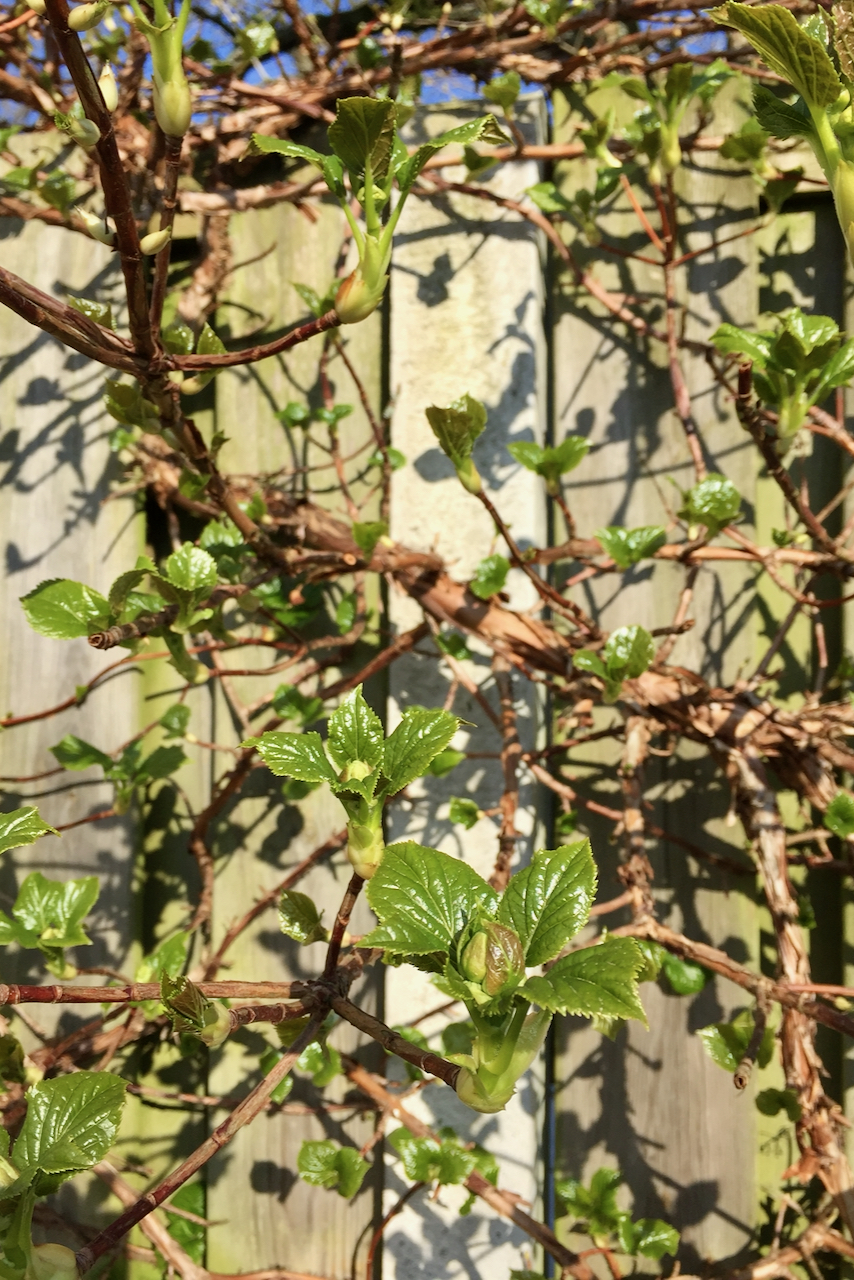 The same hydrangea opened already at the end of March last year.
 But before you start cutting happily, keep this point in mind: climbing hydrangeas are slow-growing and can’t handle harsh pruning. Excessive pruning damages the plant and can take years to recover. We can only dry flower heads, dead branches and stray shoots. So!
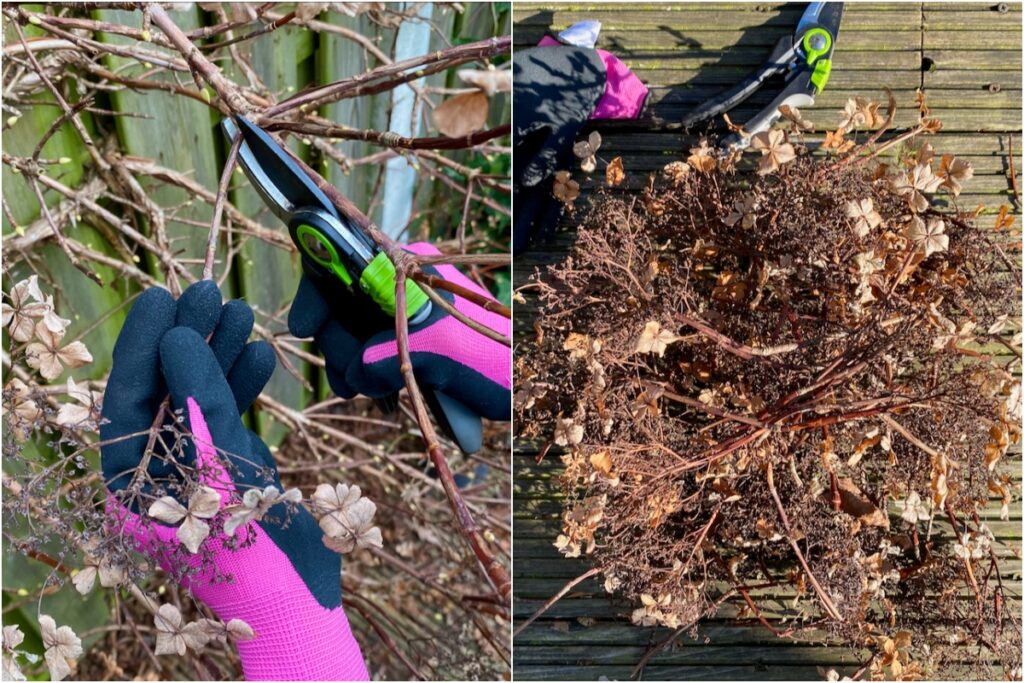
1. Start by pruning the dried flowers.
First start by bringing the dried flowers as close as possible to a main vine or main node. Since this hydrangea is very tall (which I am not), I find it easier to start in the center and work towards the margins. Opening it at eye level allows me to see what needs to be cut above and below my direct line of sight.
 Follow the flower stem and cut off as much of a main branch as possible.
 I follow the petiole of dead flowers to where it meets the vine. Some flower heads are already so dry that they burst, but none have fallen off.
 Some flower heads hang down. But there is no other harm to this vine.
 You will notice that most buds are dry and brittle, a sure sign that they are dead. And if you cut it, the scar that remains is brown. But from time to time you cut wood that is still green. That’s fine, as long as most of what you remove has already dried.
However, you will also notice new buds on some of the stems you cut. This means that the stems are still alive and will produce leaves and even flowers this spring.
 When I see shoots growing on the stem, I cut just above. It doesn’t happen often.
 I prefer to cut these stems all the way to the tips, rather than cutting them all the way to the main branch. But if you think the leaf is thick enough already, cut off those secondary shoots as well.
I estimate that I only found new growth on old dead heads about ten percent of the time. So it’s a good problem, even if it’s not common.
2. Prune as needed to promote lateral branching.
When the vine is in full bloom in the summer, I keep track of where the holes in the foliage are. (I simply tie a piece of tape or string near the area.) There, I prune one of the larger branches toward an intersection to stimulate the laterals.
 I want to encourage some ramifications in this area. It could have cut lower, but then that would have messed up the alignment with the rest of the foliage.
 But as I said before, climbing hydrangeas regrow slowly if you prune them too much. So I make sure not to cut too much in a year. Even when pruning shrubs, I prefer to spread it out over several seasons, pruning a branch or two in spring (before flowering) and late summer (after flowering).
3. Cut off dead branches.
This vine is pretty well anchored to the fence, so it usually doesn’t shake too much in strong gusts of wind. Some years there are no dead or damaged branches.
 This branch had no vegetation on it and seemed light and hollow. He was clearly dead.
 But this year when I cut this hydrangea, I noticed that there were quite a few without any new growth. It was also light and hollow when I pulled on it. I suspect my neighbor across the fence cut that branch. No damage caused! I cut it near the fence, then dug up what was left.
 What remains after the cut is an excellent brown material for compost.
 The climbing hydrangea is probably the easiest vine to prune. Most of the time, you just need to follow the plant and let it guide your pruning. What do you think of this before and after?
