

In the world of decorative gardening, sometimes you have to learn to transplant trees to transport them from one place to another or change the place where they are planted for the sake of tree survival. In these cases we need to know what tools are needed for this and what is the way to do it so as not to damage the tree.
For this reason, in this article we are going to tell you everything you need to know about how and when to transplant trees and what aspects you need to take into account.
Aspects to consider when transplanting trees
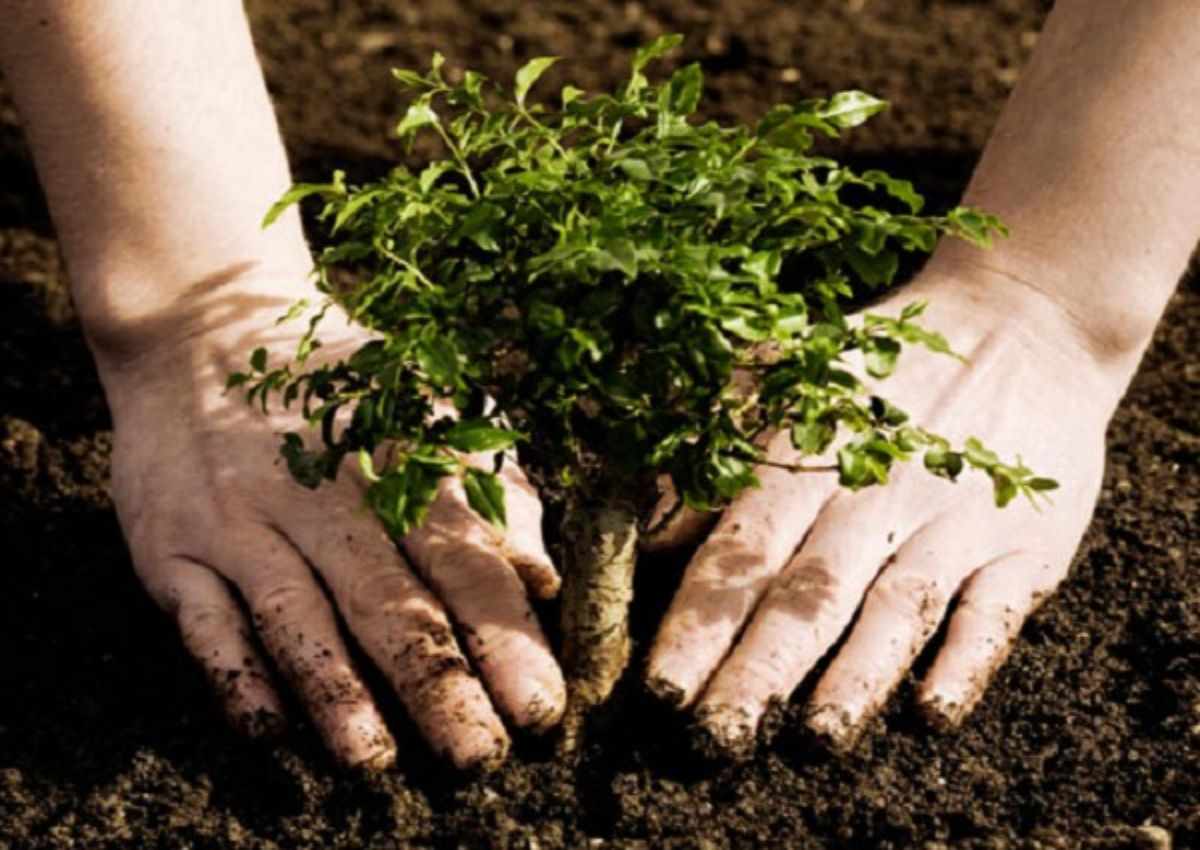
When it comes to moving a tree, either because it is in the way or because it was purchased from a nursery and needs to be planted in an orchard or garden, it is important to consider the period of the year to do so. If your tree is growing in a pot and you want to know when to transplant it to a bigger pot, you need to know more about the tree. The same applies to trees transplanted with bare roots, i.e. they are uprooted from one place and planted in another.
For pot-grown plug trees, it really doesn’t matter what time of year you transplant, unless the conditions are too harsh. This difference is due to the fact that, in the first case, the tree loses most of its roots when it is uprooted, especially the finest roots, which are really important.
Regardless of this imbalance, it only takes a few days of dry, sunny weather for the tree to wilt, losing more water through the leaves than it replenishes through the roots.
Importance of time

In fact, a bare root tree can be transplanted at any time of the year and the process goes smoothly, but if done at the right time, there are fewer risks and steps. The season affects transplants mainly due to these two factors which we will see below, although the second depends on the first.
Cool, humid weather with little sun is ideal for transplanting, as explained in the introduction: water loss through transpiration must be balanced with root uptake. Obviously, if the weather is humid and cool, this requirement is easier to meet because the amount of evaporation will be reduced.
Dry winds are also to be taken into account because, like the sun, they strongly increase leaf transpiration. Avoid transplanting during the driest and sunniest months of the year, when the risk of losing the tree is much higher.
tree condition
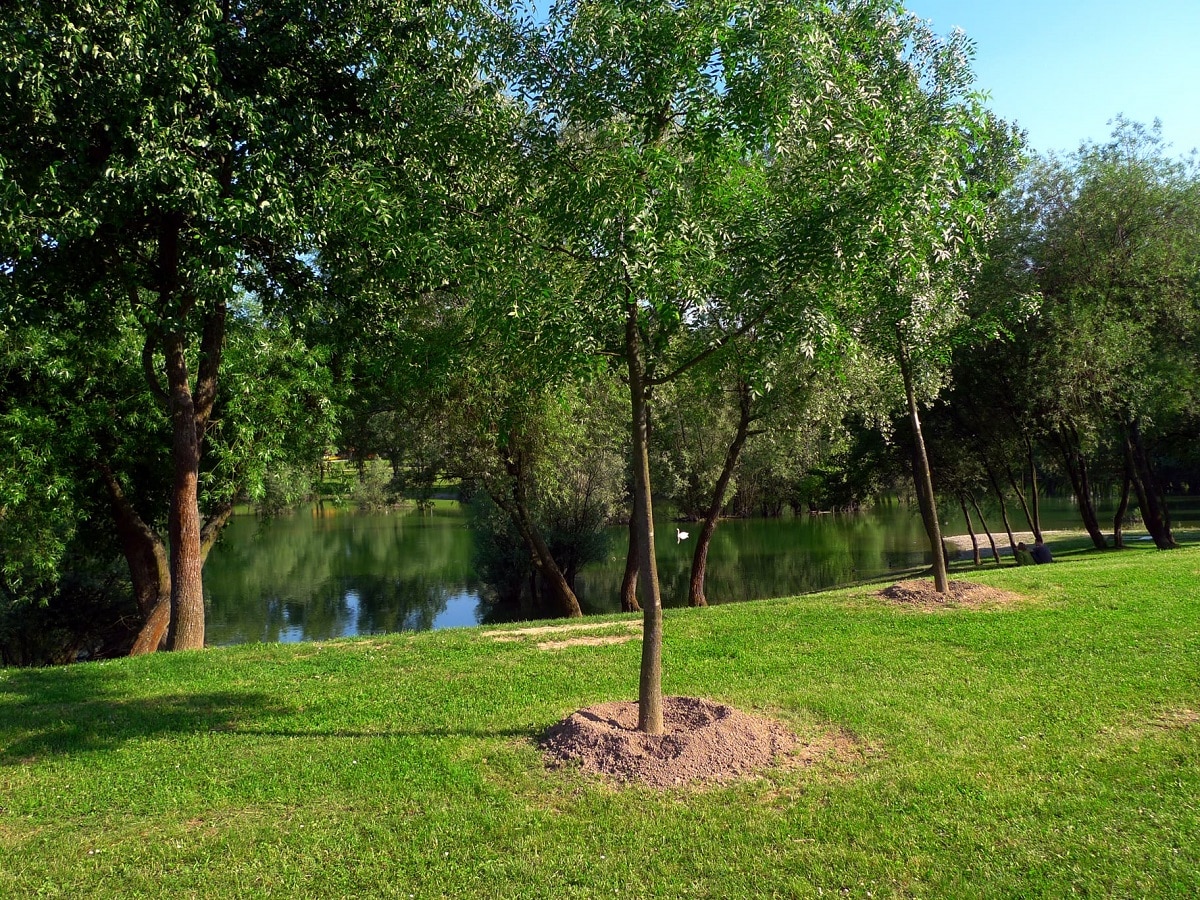
At this point you need to consider when the tree is entering a vegetative state to rest or at least reduce its activity. For deciduous plants, the situation is simple: from the moment it loses its leaves until the moment it restores them, it is more or less stationary. The rest, the conifers, although active all year round, they have little or no activity during the warmer winter and summer months.
Based on the above, we can give the best date for transplanting bare root trees in most climates. Sometimes it is good to transplant deciduous trees before they are lost and restore them again.
Early repotting is recommended, from late fall to mid-winter, before the roots of the tree begin to grow again, which is usually some time before the spring bloom. If this is not possible, the canopy should be reduced by pruning, provide shade and cover the canopy with plastic to create a more humid environment.
Also take advantage of the rainy season as the ambient humidity will be higher and the soil will remain moist, which will help the root system to take root more quickly. For all other trees, transplant in late summer to early spring, avoiding the peak of aboveground growth, which usually occurs in mid-spring and during dry, sunny weather in summer.
When to transplant potted trees
For trees with root balls, that is to say their roots contained in a piece of soil which retains its moisture, all in pots, pots, bags, etc., the grafting is generally less delicate, but more necessary.
It’s not as fragile as bare root work, apparently because the tree never loses contact with the ground. One could say that for him there was no transplant.
However, it is usually a very necessary operation for growing trees, that is, those that are young and planted in a container that is already well rooted.
As previously mentioned, potted trees that have not yet reached adult size or need a lot of nutrients, for example, because they bear fruit or flowers, they tend to quickly deplete the fertility of the substrate. Although this consumption can be saved by adding liquid fertilizer to the substrate, it is often necessary to transplant it into a larger container and renew part of the substrate.
space requirements
The roots of potted trees tend to colonize the entire substrate very quickly, even making the clumps look like they are all roots. In this case, they start pacing around the walls, piling up and tangling. As if that were not enough, in addition, when they pile up on the walls of the pot in search of expansion, they reach precisely the areas that indicate them the least. When the growing medium is too dry, cracks can develop between it and the pot, exposing these outer roots to the air. It’s not good for the plants.
Without a graft, the tree will slow down or stop growing due to lack of nutrients and space. Sometimes this is the most obvious sign that you need a transplant. It has no buds and looks very old.
With these tips, you can learn when and how to transplant trees for better yields.