
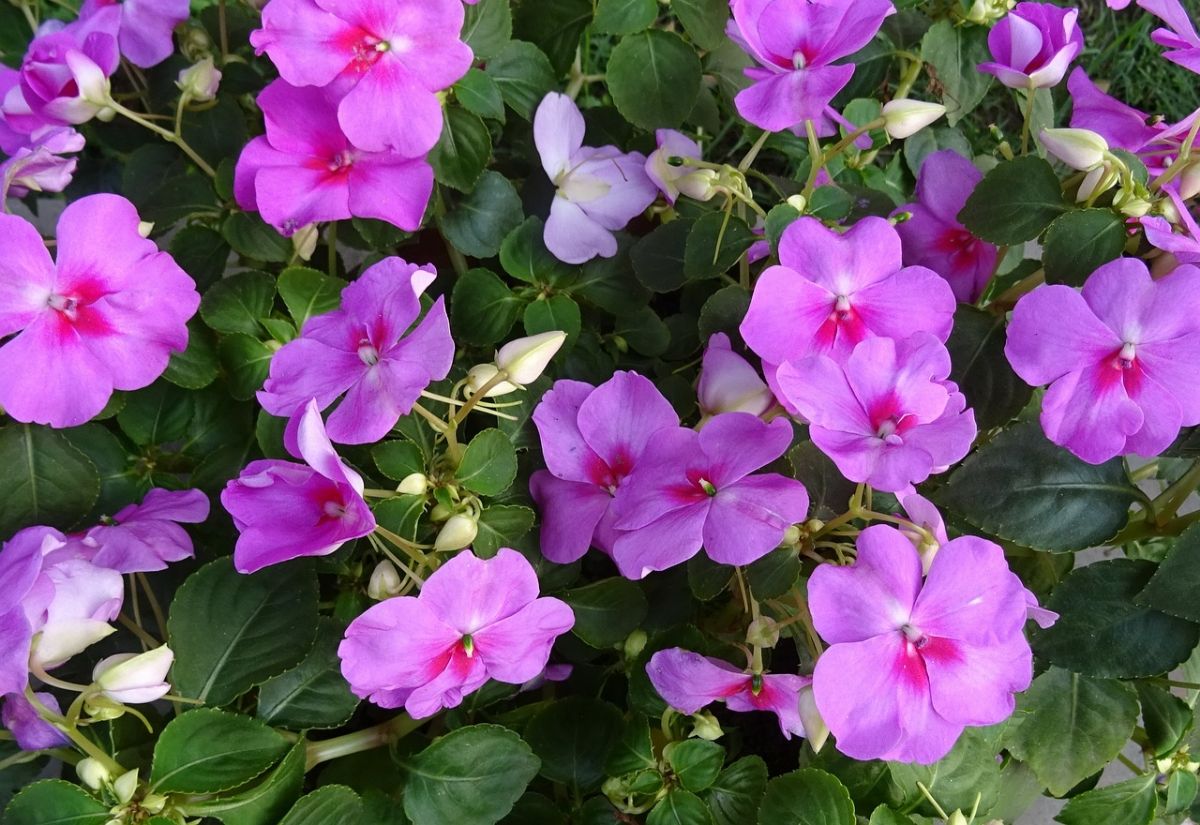
Surely you have already seen the joy of home, also known as Impatiens walleriana. It is a very popular plant that you can have both inside and outside the house and stands out for its flowering.
But, how is the joy of the house? What care do you need? If you want to give them everything they need and in return give you the most abundant flowering possible, then pay attention to what we are about to tell you. Shall we start?
How is the joy of home
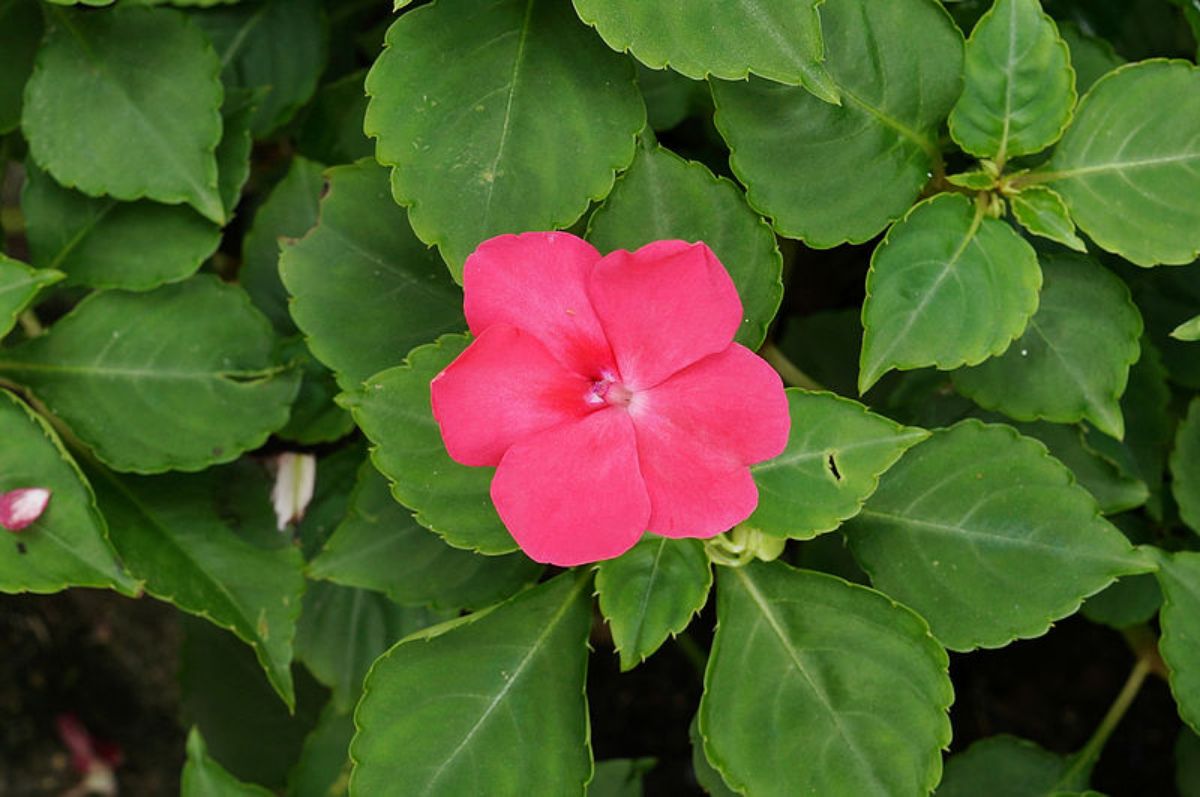
As we told you before the joy of home it is also found by its scientific name, as well as another name, “bear ears”. It is native to Africa and in its natural habitat it can reach about 60 cm in height. It is a herbaceous type and is considered a succulent, so its leaves are perennial (it will always look like this). However, one of the characteristics for which this plant is so appreciated is that it can flower several times a year, provided that you respect the care it needs to do so.
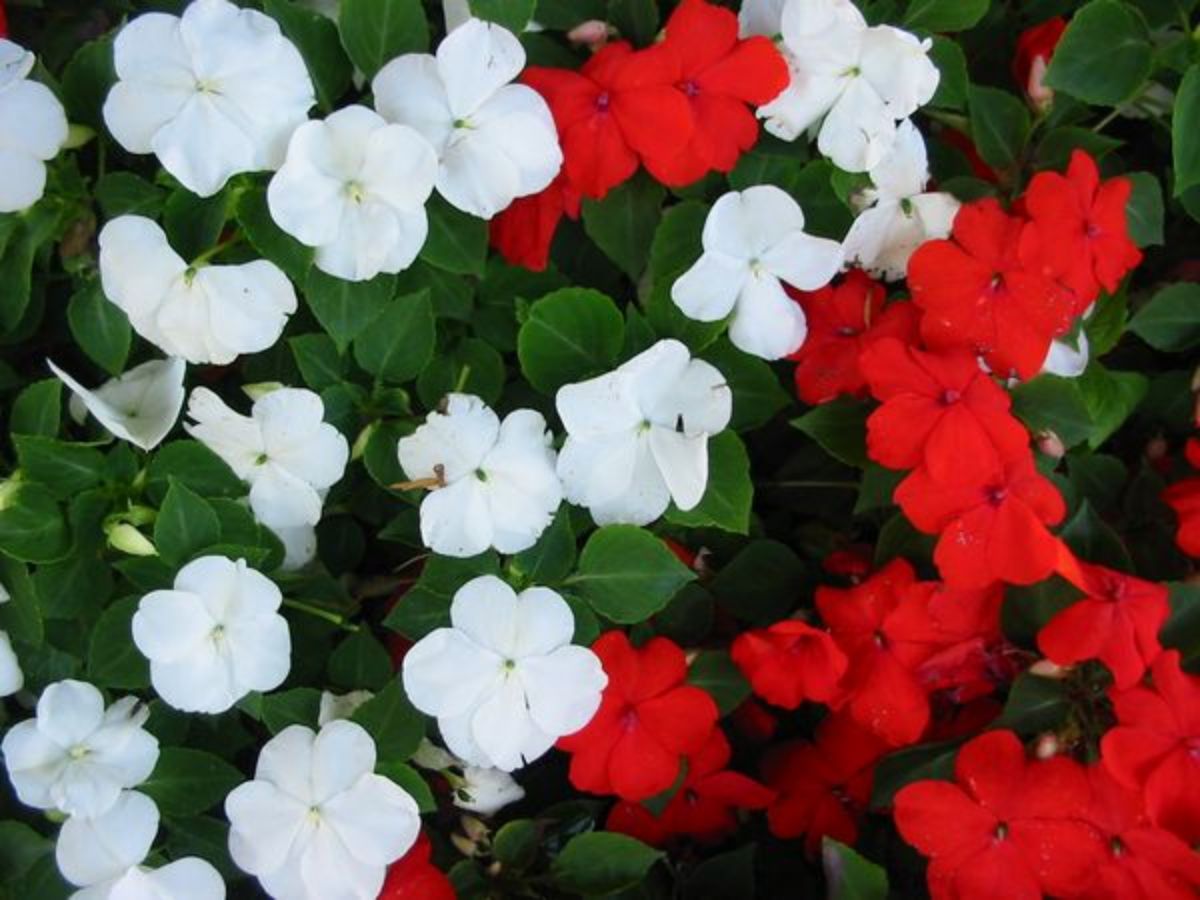
The house flowers are variegated in color. They can be white, pink, red, orange or lilac. In fact, what many do is that since the plant does not take up much space, they place several different colors so that when it comes to flowering, the place with so many colors looks much more beautiful. On some occasions you can find them double, that is, with more petals than usual (which are usually five).
The leaves, on the other hand, are a little hard and intensely green.
The life expectancy of this plant is not too long. In fact, from what we’ve investigated, it looks like it can last around two years, sometimes a little longer, but eventually it eventually succumbs over time. When it points, many end up pulling it out of the pot or garden.
Basic care to keep your Alegría de la casa healthy
Have you ever fallen in love with the joy of home? So the next thing is to grab them. Being some plants easy to find, and it is not expensive at all, quite the contrary. But if you don’t want to have to go to the store every week to buy another one, we advise you to take a look at the main care you need to give him. They are:
How to choose the ideal location for your Alegría de la casa en casa?
As we have already told you, the joy of the house is a plant that can be both inside the house and outside. However, ideally you should be away from home, abroad.
Even so, you can have it indoors, but always in an area where it gets plenty of light, not direct sun, but as much sun as possible. She needs it to keep going, and if at any point you see the plant collapsing, the leaves getting softer, you should consider taking her outside.
If you have it outside, you can put it in partial shade, as this will avoid the midday sun and prevent the flowers from wilting.
Note that, If the plant doesn’t get all the light it needs, in the end, even if it gives you flower buds, they won’t open because they don’t have that incentive. So when looking for a place, the balcony, terrace or similar are perfect places. And if they face north or east, so much the better.
Now, in terms of temperature, you have to keep in mind that it cannot withstand extreme heat, nor would it withstand extreme cold. Be careful with that.
The best substrate for home joy
As a fast plant, it needs nutrient-rich soil to be able to feed on it. For that, We recommend a mix with very nutritious soil, earthworm humus and some drainage to avoid getting puddles.
time to water
Irrigation is one of the most important care. Because if you go too far, they die, and if you fail too. So, in the case of the joys of the house, it is necessary to know that they need the earth to be always moist. This, yes, That doesn’t mean you should “drown” them. You just need to water them and leave a time between watering and watering so that the soil dries out a little.
In general, in winter, it will be enough to water them every seven or ten days; but in spring and summer it will take between two and four weekly waterings.
If you have it in the garden, try not to water directly on the stem of the plant, but rather around her. On the other hand, if you have it in a pot, do not let it pass for more than five minutes to eliminate the excess water from the plate and so that it does not damage the roots.
Do we compost it?

As you have seen, the joy of the house is a plant that grows very quickly. And that causes it to consume nutrients from the soil very, very quickly. Therefore, as far as possible, try to fertilize it because otherwise you will see that the leaves start to turn yellow and also it will not bloom as much as you would like.
In this case, fertilize with irrigation water. Do this once a week until it stops blooming.
This is the way to achieve it, every time it blooms, all the flowers come to fruition.
Common House Joy Diseases and How to Combat Them
There are two important diseases that you will need to watch out for throughout his life. On the one handbotrytis, which mainly occurs when you overwater.
If this happens you will need to buy a fungicide to clean it up and you may even need to change the soil and the pot.
Another disease is mildew, characterized by the appearance of a white-gray powder that covers it and causes yellow and white spots to appear on the leaf until they fall off.
Again, you will need to apply treatment to fix the problem.
Tips for Propagating and Breeding House Joy
Finally, we come to reproducing the joy of home. And it couldn’t be easier to achieve since you have two methods to do it:
By seeds: You have to pick them up and put them in a nursery or pot in the spring. You will have to take care of them in the same way as we have explained to you and, when they already have some leaves, you can transplant them.
By cuttings: This is perhaps the easiest way as all you have to do is take cuttings and remove a few leaves from the bottom part to place it in water and wait for it to take root. In this water, you can add a little fertilizer or rooting so that it develops beforehand. It is not practical to plant directly on the ground because it tends to rot.
As you can see, the joy of the house lives up to its name because every time you see how it blooms, it will surely put a smile on your face. Do you now dare to have it in your garden?