
If you purchase an item through links on this page, we may earn a commission. Our editorial content is not influenced by commissions. Read full disclosure.
A common question for people growing houseplants is how to choose the right container for their plants.
Having houseplants can be a very satisfying thing for people, especially those who live in an apartment or have limited outdoor space. Many people don’t realize the importance of choosing the right container and the consequences of choosing the wrong one.
It can take a lot of work to keep your houseplants in top condition, so the last thing you want to do is cause trouble by choosing the wrong container.
Let’s take a look at houseplant containers so you don’t make a mistake when caring for your houseplants.
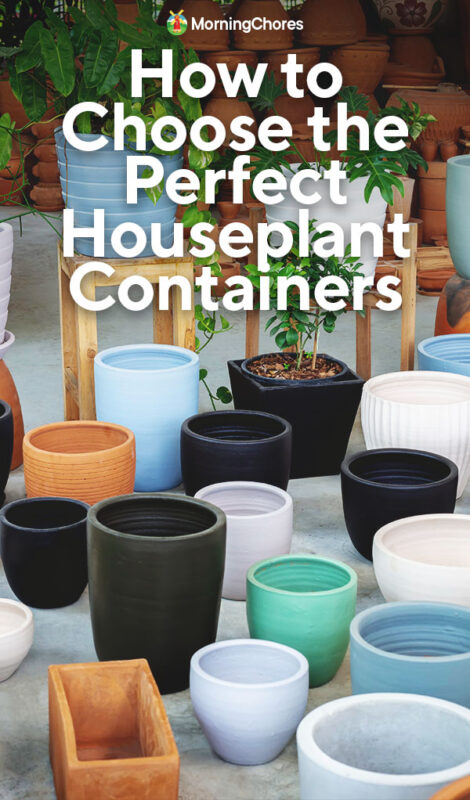
1. Material
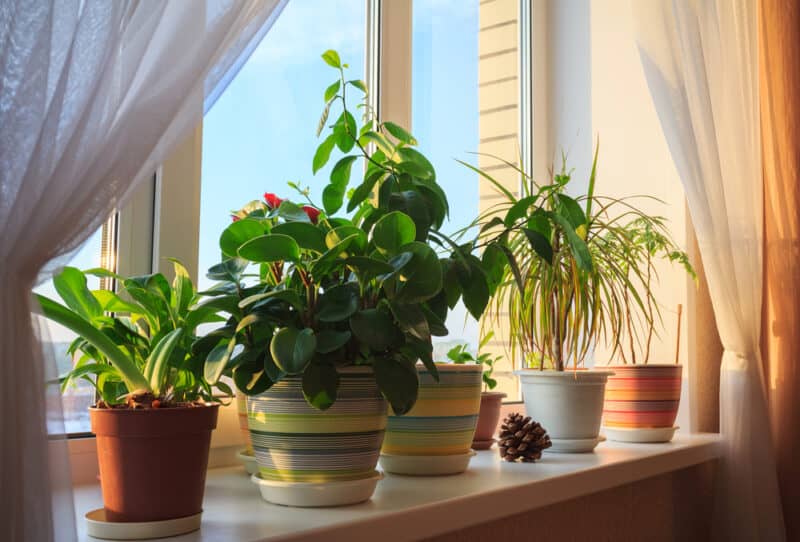
There are several considerations when choosing a container for your houseplants. Of course, there’s the color, the style, the size of the plant, the size and shape of the container, your decor, and your ability to move the containers around if necessary.
Let’s look at some of the materials used for indoor plant containers and the pros and cons of each. These are the most common, but there are also other materials.
Plastic
Advantages: Plants often come in plastic pots when you first buy them. This is because plastic is cheap and will hold the plant for several months if needed. Plastic pots are lightweight, so you can move them relatively easily.
Plastic can be made to look like other heavier materials with different textures, and there are many designs available for this common material. They don’t have to be ugly. In fact, some of them are very attractive!
Plastic containers are reusable for a long time for indoor or outdoor plants and are inexpensive to replace if you are on a budget. They may come with a drip tray already attached.
The inconvenients: Sometimes when a container is too light, it allows the plant to topple over. This is common when the container is too small, or the plant is one of those that does best a little rooted
Plastic containers often retain more water in the soil due to the nature of the material. It can be easy to overwater the plant and cause problems or disease, especially with the roots.
Plastic breaks easily and becomes brittle in sunny locations.
Terracotta
Advantages: Terracotta pots are popular and come in a wide variety of styles, shapes and sizes. Due to their earthy orange color, they are suitable for most decors, although you can also buy them painted in various colors, although painting will reduce porosity.
They are heavier than plastic pots and therefore less likely to fall from the weight and height of the plant.
Terracotta pots aerate the soil well due to the porous nature of the material. Water is less likely to sit or pool. They also come with pre-drilled holes for proper drainage.
The inconvenients: Terracotta pots are quite fragile. They will crack or break if roughly handled and bumped into other solid objects. If you slam one when moving it because it’s heavy, you’ll probably snap it in half.
You must have a drip tray or saucer under the earthenware container as water will drain but may seep through the porous sides.
You need to water plants in terracotta pots more frequently because the soil dries out much faster.
Glazed ceramic
Advantages: Ceramic vessels are visually appealing, but can be quite expensive compared to other types. Like terracotta, ceramic pots are better for soil aeration and air circulation in the soil.
Ceramic containers can drain water from the soil, so if you accidentally overwater, you won’t have the problems you would have if you overwatered in a plastic container.
The inconvenients: Ceramic containers come with a few drainage holes, and I’ve seen some without any holes at all. You will have to drill some, which can be difficult for some people, and you risk damaging the pot.
Ceramic pots can dry out the soil quickly, so if you forget when it comes to watering, your plants may struggle.
Ceramic containers are heavy like terracotta and can crack in very cold weather.
Other types of inner containers
2. Factory Requirements
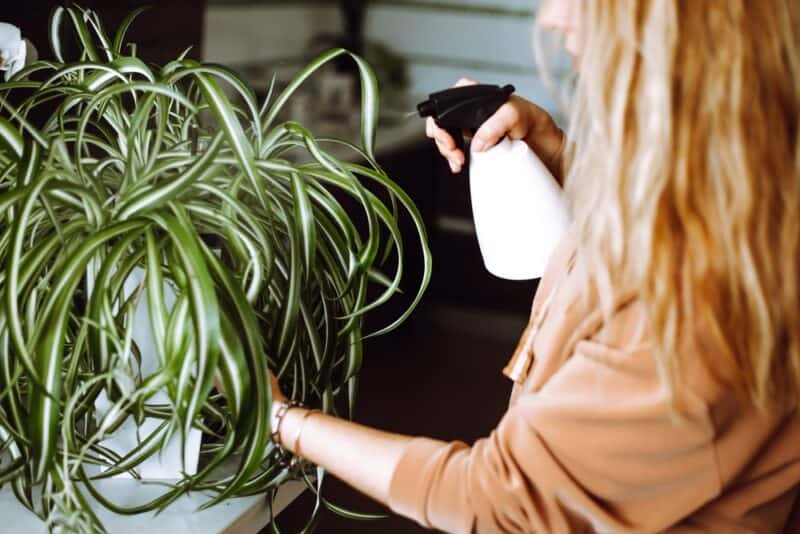
Probably the biggest mistake some people make is choosing an indoor plant container based on aesthetics alone. There are also other factors to consider.
The first and most important consideration is the plant itself. Does it require a container that allows the roots to penetrate deep or do the roots stay close to the surface?
Will the plant grow? In this case, a short, wide pot may be needed for stability. Does the plant grow super fast? If so, you might want to get a cheap container so you don’t spend a fortune every six months or so.
Some plants, like orchids, need very good drainage, so you may want a pot with multiple drainage holes.
Like all plants, houseplants grow and expand their root systems, and this is something you will need to watch out for. If you see roots sticking out of the drainage holes, pushing the plant up the container, or if the plant is struggling, it probably needs to be repotted into a larger container.
3. Shape
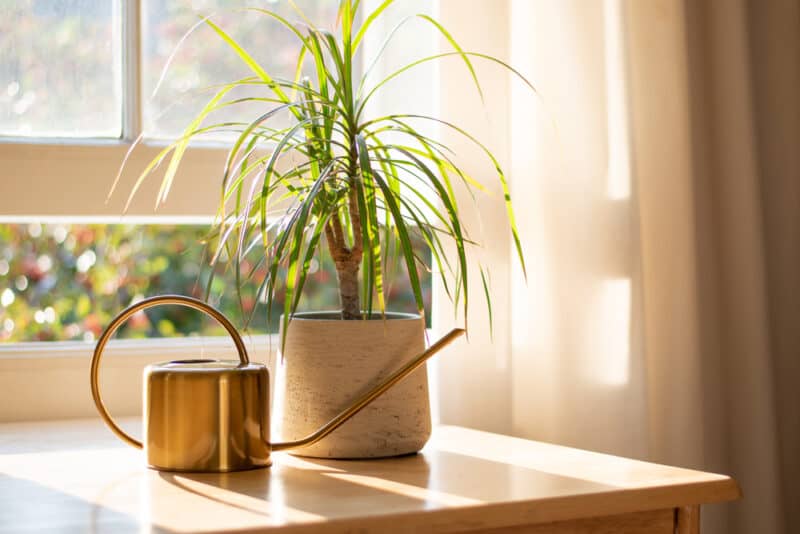
A short, wide five-gallon container has more available water than a tall, thin five-gallon pot, even if the soil volume is the same.
This is because gravity pulls water through the ground downward. A short, wide container means the plant’s roots have less distance to travel to obtain moisture and nutrients. If the container is high and the water moves downward, the short-rooted plant may not get enough water before moving down into the container.
A long-rooted or drought-resistant plant will suit the large container. Think of something like a cactus or plants with similar humidity needs. A plant that needs constant moisture will suit the wider, shorter container where access to moist soil is closer and easier.
A shallow container would be good for plants that naturally rest in boggy water or moist soil.
There are other variables such as soil consistency, but the principle of height, width and gravity is still the same.
If you’re worried about a plant toppling over, consider the rule of thirds. If you have a tall plant, estimate the height from the root ball to the top. The planter should be 1/3 the height of the plant.
4. Size
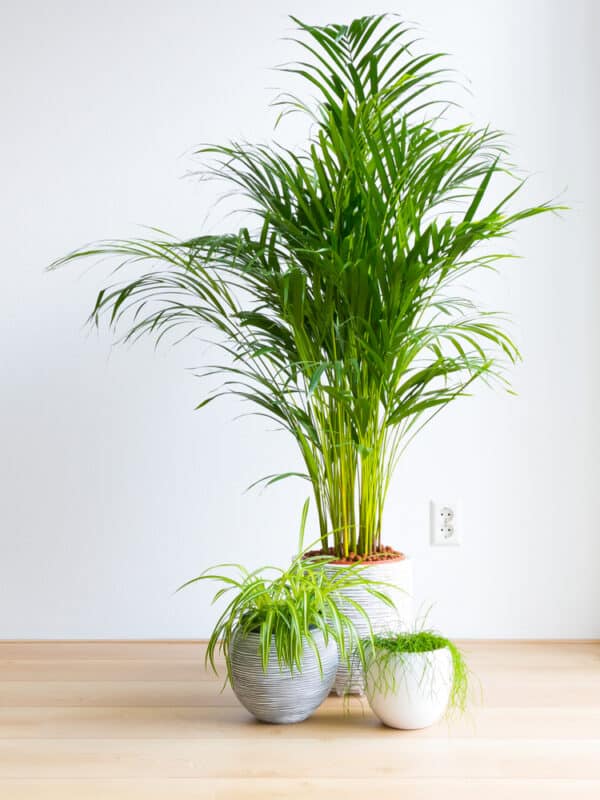
When it comes to a container for indoor plants, size really matters. The pot should not be too small for the current size of the root ball.
Consider the size of your houseplant and work towards progressively larger containers, rather than putting a smaller plant in a huge container.
If you place a plant in a container that is too large, it will be more prone to root rot.
- The type of plant, its needs and its size.
- Good drainage.
- Space for roots to grow.
- The size and shape of the container in relation to the water and nutrient needs of the plant.
- Aesthetic
In most cases, the container should be about two inches larger in diameter than the root ball of the plant you are putting in it. Of course, some plants need to have their roots in order to grow well, so keep that in mind.
5. Drain
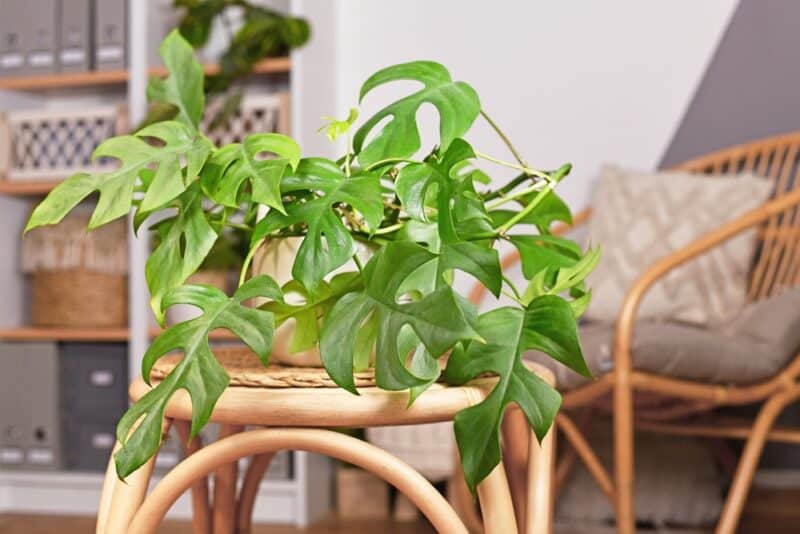
Overwatering will kill your plants. In fact, it’s probably the biggest houseplant killer. It’s so easy to add water without realizing that the roots are still wet. Although a well-drained potting mix is helpful, the container the plant is in should drain well.
Water left in a container is bad for all plants, even those that need a lot of moisture. Make sure there are drainage holes. With terracotta and ceramic vessels, you may need to drill additional holes.
You can cover the holes with a net to prevent soil depletion, and you should empty any catchment containers about 30 minutes after watering.
Problems caused by the wrong container
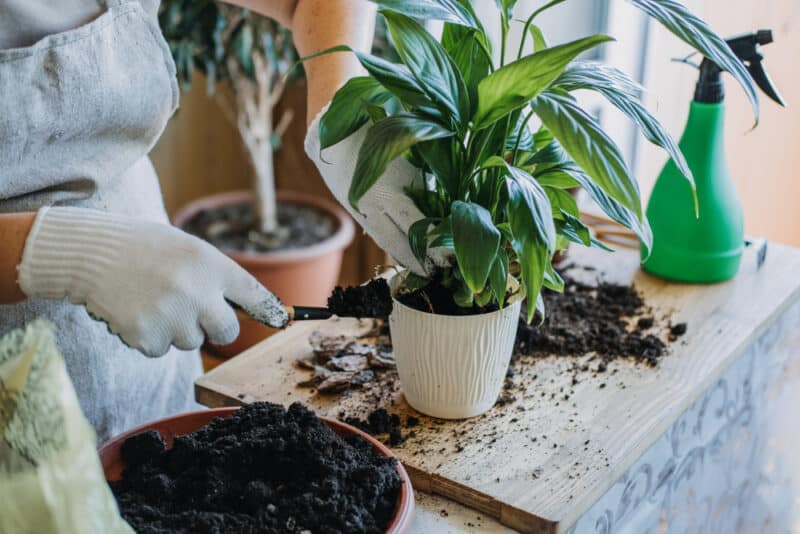
Except with specialty plants like orchids, the wrong container decision shouldn’t mean the end of your houseplant. Here’s what to do if you think container choice may be a problem.
- Exposed roots: The plant is too big for its container. Some plants have aerial roots, so don’t worry about those.
- The plant is in trouble: A container that is too large for the plant and its root structure can cause root rot.
- The soil dries out quickly: If the container is small and shallow and the soil dries out faster than you would like, increase your watering schedule.
- Soil stays wet too long: A pot that lacks good drainage causes wet soil. Decrease watering, or add soil to the container or add drainage holes.
As you can see, the right pot makes your plant healthier and happier.
Was this article helpful?
Yes No ×
We appreciate your helpful feedback!
Your response will be used to improve our content. The more feedback you give us, the better our pages will be.
Facebook pinterest