
If you purchase an item through links on this page, we may earn a commission. Our editorial content is not influenced by commissions. Read full disclosure.
If you are growing a pollinator garden or growing herbs for food, medicine or household items, be sure to add Agastache plants. These superb members of the mint family are absolutely adored by bees and butterflies and are also invaluable for the home apothecary cabinet.
Growing agastache couldn’t be easier. It reseeds itself happily and requires virtually no maintenance to keep it looking and tasting its best.
Here’s how to feed it properly.
What is Agastache? (And how do you pronounce it?)
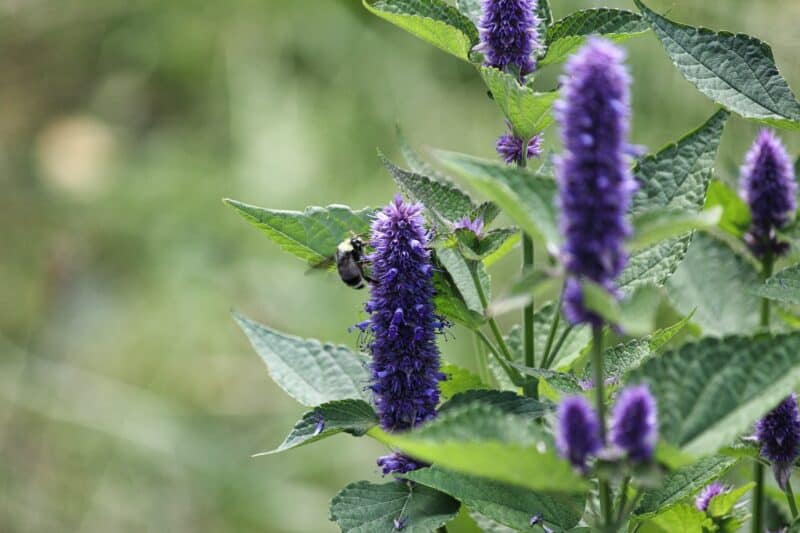
As mentioned above, Agastache is a genus in the mint (Lamiaceae) family. Specifically, most people talk about Agastache aurantiaca when they talk about Agastache.
They are hardy herbaceous perennials native to North America and in my personal experience they spread profusely and reliably come back each summer.
You may have also heard them referred to by common names such as “hummingbird mint” or “anise hyssop,” depending on the cultivar.
These plants were used both as decoration, as food and as a medicinal plant. Since they are so popular with pollinating insects, they are invaluable for growing alongside fruit and vegetable plants.
Most people are familiar with the suffix -ache resembling the end of “moustache” or “toothache”. On the other hand, Agastache is pronounced “A-GAH-stah-key”. Think of it as rhyming a bit with “catastrophe”.
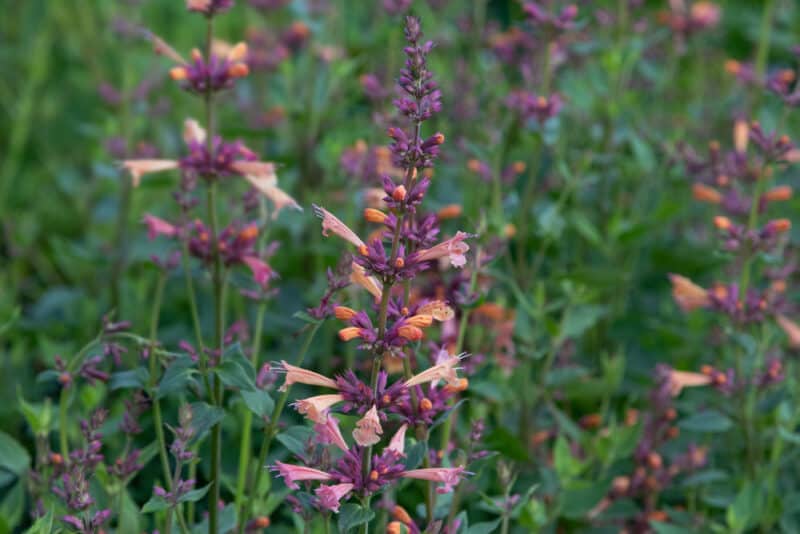
You can find cultivars in different shades of blue, purple, pink, and red. They all smell amazing but attract different pollinators. For example, blue and purple varieties are more attractive to bees and butterflies, while red and pink varieties are more attractive to hummingbirds.
How to plant agastache

The method of planting will depend on whether you are growing Agastache from seed or picking up seedlings from a local nursery.
If you are growing from seed, wait until the last frost date has passed. Then rake the soil surface and scatter the seeds evenly. Cover with 1/4 inch of potting soil and water lightly. Keep the soil slightly moist and you should start seeing sprouts in about a week.
If you bought seedlings from a garden center, wait until after the last frost date. On a hot, sunny day, dig a hole in your soil that is a little larger than the seedling’s root ball. Add some aged compost and free the seedling from its container.
“Tickle” the roots a little to spread them out and press them gently into the hole. Add more potting soil around the seedling and pat it down firmly. Then water it and let the sun do its thing.
Take care of Agastache

This section could be really tiny. Growing agastache is as simple as that.
Soil and sun requirements
Agastache needs neutral, well-drained soil to thrive. It’s okay if your soil is slightly alkaline but won’t do well in an acidic environment. Be sure to test your soil before planting and amend with lime to get as neutral a pH as possible.
Work well-aged manure or compost into the soil if your soil is slightly depleted before planting.
Note that Agastache will not thrive in too fertile soil. This trait is shared by many “country garden” plants, including yarrow, black-eyed Susans, various sages, and mullein.
In terms of light, these plants like to receive a lot of sun. Aim to plant yours in some of the sunniest spots on the property, and you’ll see how well they thrive.
Watering and feeding

Once the seeds have germinated, you will want to allow the plants to thrive in the desert conditions they are best suited to. This means not watering them too often or they won’t thrive.
Offer them a heavy, deep drink once a week and let the soil around them dry out a bit between waterings. Try to water at ground level to avoid powdery mildew or similar leaf mold problems.
As previously mentioned, Agastache will not thrive in soils that are too rich and fertile. As such, you don’t need to feed these plants at all. The natural decomposition of small insects and other plant roots in the surrounding soils should provide them with the necessary nutrients.
Other than that, you can pretty much let the happy growing Agastache do its thing.
Potential Problems When Growing Agastache
Although Agastache The species are hardy perennials, they may suffer in USDA growing zones 3 and lower. Severe winters can shorten the life of these plants. To protect them and prolong their lifespan, cover their beds with mulch after harvesting their aerial parts. This should help insulate them during the harsh winter months.
Regarding predation, Agastache is resistant to deer and rabbits, although some herbivores may like them. The only insects that can take up residence are aphids and mites, both of which can be cured with neem oil or organic insecticidal soap.
The main problem these plants can suffer from is root rot due to poor drainage or overwatering. Avoid planting in areas where water could pool and don’t water your plants if there has been a lot of rain recently. Remember that these are mostly desert species, so they won’t thrive in wet conditions.
If you grow Agastache in the right conditions, the chances of problems are low.
Harvest and storage
Use a pair of clean garden shears to cut the stem about four inches above ground level. Gather a few stems together, wrap them tightly with twine, and hang them upside down in a warm, dry place out of direct sunlight.
Test for dryness after about three weeks by rubbing a leaf between your fingers. If it crumbles, it’s ready. Otherwise, let it dry out a bit more.
Alternatively, you can dry the leaves and flowers in a food dehydrator. Lay them out on the screens with room for air circulation and dry at 160°F for about eight hours.
Test the leaves at this point to see if they crumble, and if not, continue dehydrating them every two hours until they turn to powder when rubbed.
Transfer the dried leaves and flowers to a dry, sterilized glass jar with a lid. Store it in a dark cupboard until you are ready to use it.
Medicinal uses
People have grown agastache like anise hyssop (A.foeniculum) in medicine for thousands of years. It has antiviral, antibacterial and anti-inflammatory properties, in addition to being a mild carminative (anti-gas) and mild sedative.
A hot infusion of its leaves and flowers can induce sweating, which can help relieve fever. It can also be effective as a chest decongestant and to calm frayed and anxious nerves.
Slightly cooled tea can be used to relieve nausea – in Traditional Chinese Medicine (TCM) A. rugosa is known as huòxiāng (藿香) and is used to relieve vomiting, nausea and decreased appetite, as well as symptoms of cholera and cramps due to food poisoning or allergies.
This tea also has veterinary applications: I used this tea to alleviate gas and gastrointestinal slowdowns in my rabbit companion.
A. aurantiaca has been shown to have antioxidant effects when consumed in a study published in the journal Molecules.
Its anti-inflammatory properties are also effective. I used a poultice of its fresh leaves to treat second degree burns on my arms, and a similar poultice to reduce the swelling and itching my partner felt after a deer fly bite.
This herb definitely has a place in my top 20 herbal medicine list. If you’re stocking an herbal apothecary cabinet, you might want to add a few species of Agastache for good measure.
Additional notes
Standard warning: Consult a health care provider or herbalist before using herbs for medicinal purposes. What heals one person can harm another, especially if the herb is contraindicated with a pharmaceutical drug or someone has allergies.
For example, if someone has had allergic reactions to other Lamiaceae family members, such as peppermint, oregano, basil, or lavender, they may also react poorly to Agastache.
By the way, the pleasant licorice-mint scent of this herb makes it a great addition to potpourri or aromatherapy sachets. Try mixing it with rose petals, lavender and chamomile, pour this mixture into a muslin bag and leave it on your pillow during the day. The smells left behind can help you relax and help you sleep more soundly.
Was this article helpful?
Yes No ×
We appreciate your helpful feedback!
Your response will be used to improve our content. The more feedback you give us, the better our pages will be.
Facebook pinterest