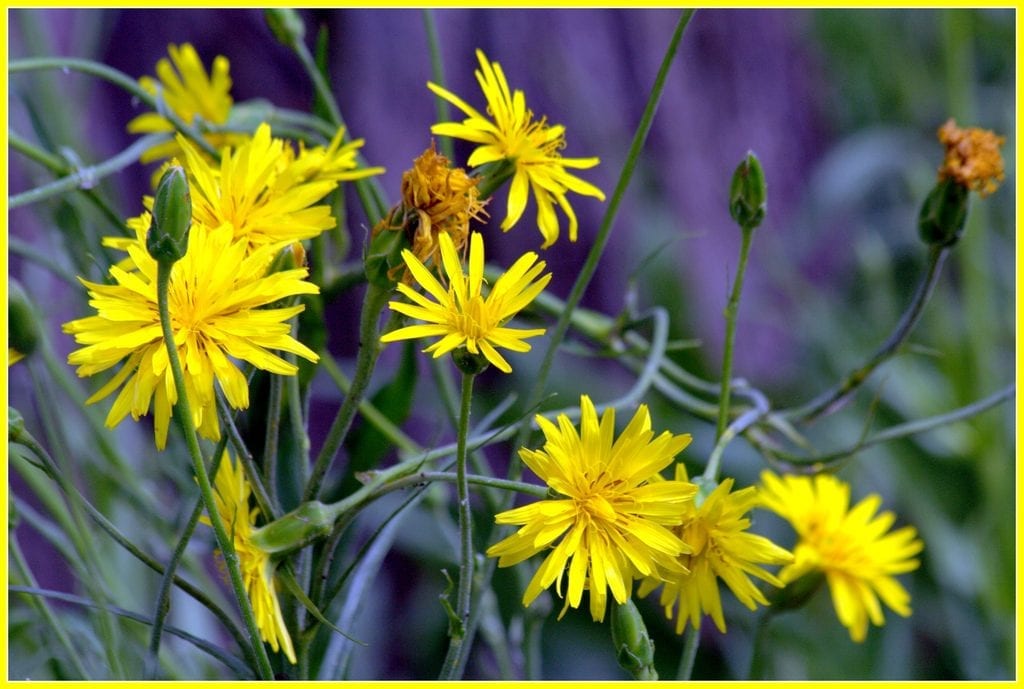
When you buy vegetables at the supermarket, you sometimes miss the great variety of edible plants that nature offers: it is difficult to find scorzobianca or scorzonera among the fruit and vegetable stalls, even if it is is very good and healthy vegetables. Fortunately, those who garden have the opportunity to rediscover this biodiversity, producing less common vegetables themselves and bringing new flavors to the table. The result not only allows you to taste new flavors, but also to have a more varied diet, a source of well-being.
Here are some useful tips for those who want to learn how to grow Escorzonera and Escorzobianca, they are very simple crops to put in the garden. Both plants belong to the Asteraceae or Compositae family, to which different vegetables belong, from salads to artichokes, and are grown for the root, as in the case of carrots, horseradish and radish.
Both plants are close relatives, very similar in appearance, differentiated by the color of the bark, as the name suggests, and flowers. The cultivation of these two horticultural plants is similar, so we can assimilate them into a single cultivation guide.
The shortening with its root covered with a very dark bark, is scientifically called hispanic tragopogon some call it asparagus in winter although it has little in common with asparagus and has a beautiful yellow flower.
The scorzobianca or escorzonera blanca, or salzafina, is the variety tragopogon porofolius characterized by a light-colored root and a purple flower.
Contents [Ocultar]
-
Soil and climate indicated
-
How to plant escorzonera and escorzobianca
-
cultivation technique
-
Collection and storage
-
Use: how to cook escorzonera and escorzobianca
Train and weather displayed
Climate. These composite plants fear both excessive cold and very hot weather, they have an ideal temperature of around 20 degrees. In freezing conditions, the plant dies, while too much heat or aridity can cause it to sow early, ruining the harvest.
Appropriate soil and treatment . Like all root vegetables, escorzonera and escorzobianca also require soft, draining and airy soil. Heavy or compacted soils prevent the root from swelling, for the same reason that it does not like stony soils, while stagnant water promotes rotting that can lead to the death of the plant. For the crop to work well, it is necessary to dig deeply and in clay soil it is good to mix sand with the earth before sowing this type of vegetable. Organic fertilization with soil amendments (i.e. substances that improve the physical structure of the soil) is very useful: the use of organic compost or mature manure is fine.
How to plant escorzonera and escorzobianca
Planting period. These two vegetables are quite simple to take to the garden, the important thing is to choose the right time to sow them, avoiding that the plant suffers from too much cold or too much heat. For this reason it is good to sow from the beginning of March in the hot regions, at the end of March or the beginning of April in the north. The escorzonera and the escorzobianca can be sown throughout the month of April and until the beginning of May. Depending on the climatic zone, it is also possible to plant at other times, provided that the climate remains mild throughout the growth cycle. The cultivation cycle of escorzonera is about 4 to 5 months, from planting to harvest.
moon phase . If someone wants to sow according to the moon, listening to traditional beliefs, he must put the seeds in a waning moon period, which is said to be favorable to the underground part of the plant, which interests us to harvest.
Avoid the transplant . In the case of root vegetables, it is preferable to avoid transplanting: it is preferable to place the seed directly in the soil of the garden. If the scaping is put in a jar, the root can perceive the shape of the container and this conditions its development. This will result in a misshapen or undersized crop.
Sixth of the installation. The scorzobianca or scorzonera is placed in rows, which must be separated by at least 30/40 cm. Plants should be spaced 25 cm apart along the row. During the planting phase, just like with carrots, you can decide to bring the seeds closer than necessary and thin them out to form the seedlings, so that even if someone does not germinate, you can avoid holes in the flower bed. The seed is placed in a furrow one centimeter deep.
cultivation technique
Escorzobianca and Escorzonera are not difficult to grow: they are hardy plants that have few enemies and rarely encounter diseases, which can be easily avoided with good soil management. This makes them ideal for organic gardens and also suitable for beginners.
weeding . To cultivate these plants, it is good to keep the soil sufficiently clean of wild grasses and to hoe periodically. The weed effect not only prevents other plants from competing with the crop, but also displaces and oxygenates the soil, preventing it from compacting and keeping it soft.
Padded . Mulching this crop can be helpful, both to keep the soil moist and soft, and to save labor. When cultivation continues as the winter cold approaches, mulching is also necessary to protect against escorzonera and scorzobianca. Since you are sowing, not transplanting, it is easier to mulch after the seedlings have grown, rather than using a rag.
Irrigation. If the soil is dry, not only does the plant lack water, but the soil hardens, preventing the formation of a good root. For this reason, it is advisable to water this crop regularly, even if it has a good root system, especially during warmer periods.
disease prevention . Escorzonera is not very susceptible to disease and is rarely attacked by insects, the most common problem being root rot and fungal diseases in general. To avoid this type of adversity, it is essential that the soil does not stagnate with water and care must be taken not to water it too much.
collection and storage
Collection. To be able to harvest the roots they must swell well, you can check them by digging a little in the neck. The crop cycle is usually four or five months, so it’s quite long: with spring planting, you can expect to get the vegetable after summer. The harvesting method is that of the carrot: the root is removed without breaking it and then it is cleaned dry from the ground.
Storage . When left in the ground, escorzonera keeps very well, but after harvesting it dries out quickly, as is the case with Jerusalem artichokes. Stored in the refrigerator, it keeps better. In the home garden, you can pick it up when you need it and keep it in the ground even in winter, simply covering the flower bed with non-woven fabric to prevent it from freezing.
Use: how to cook escorzonera and escorzobianca
Escorzobianca and escorzonera are found in some regions as wild plants and are present in the culinary traditions of some cities in Lazio, Veneto, Friuli, Piedmont, Liguria and other Italian regions. The roots of both plants have a delicate and sweet taste, thanks to the inulin content, which makes this vegetable excellent even for diabetics. They are vegetables to be cooked, before eating them they must be peeled, in particular the dark skin of marine scurvy is particularly tough, it must be removed. They can be boiled, fried or sautéed in a pan. Only the youngest and most tender roots can be eaten raw, grated in a salad.