
The onion is, together with the potato, one of the horticultural crops with the most hectares cultivated in the world. However, many variables can prevent bunion pruning from reaching the desired degree. For this reason, it is interesting to dismiss the main problems and see some keys on how to grow onions with the help of good vegetable nutrition.
In this article we give you some tips for fattening onions
nutritional needs
One of the biggest factors in making onions grow bigger over time is the nutrition we provide or get from the soil.
Whether in conventional agriculture (possibility of adding mineral fertilizers) or in organic agriculture (some inorganic and the rest of organic origin), the onion is a demanding crop and we must provide all the nutrients during the campaign, notably fattening of the underground part.
In any case, and depending on the average production of our area and our management, we must start from the data that we show below to fatten the onions with the size we want.
What does a tonne of onion produced consume?
| NOT | P | K | THAT | mg | yes |
| 3-4kg/t | 1.3-1.8kg/t | 2.5-5kg/t | 1kg/t | 0.5kg/t | 1.8-2.8kg/t |
Source: Haifa
In other words, if we produce 45 t/ha (45,000 kg/ha), we must supply between 135 and 180 kg of nitrogen (N). In Spain, the average production of onions is around 50-55 t/ha.
subscription plan
A typical fertilization plan for onion fattening is the one we suggest below, adding bottom and top dressing, the latter by fertigation.
| Fertilizer | Establishment | vegetative growth | Bulbification started | bulb development | final fattening |
| 0-30 days | 30-60 days | 60-90 days | 90-120 days | 120-150 days | |
| Nitrogen (N) | 42 | 48 | 48 | 66 | |
| phosphorus (P) | 46 | 31 | 31 | 31 | |
| Potassium (K) | 46 | 64 | 64 | 78 | |
| Calcium (Ca) | 13 | 13 | 13 | twenty | |
| Magnesium (Mg) | 5 | Eleven | Eleven | 14 |
Total nutrients provided:
| NOT | P | K | THAT | mg |
| 204kg/ha | 139kg/ha | 252kg/ha | 59kg/ha | 41kg/ha |
If you want to contribute background subscriber, you must proportionally subtract the fertilizer in each phase of development. Some of the more common fund underwriters are:
- NPK 15-15-15: 600-800 kg/ha
- NPK 12-5-40: 400-600 kg/ha
It is recommended not to add a lot of nitrogen in the initial phases, because if it does not contain nitrogen inhibitors, it leaches and percolates excessively, not being assimilated by the plant in the phase. early.
With a minimal floor maintenanceon the basis of a periodic supply of organic matter and a subscription plan based roughly on the previous example, it is very likely that one can properly fatten onions to the size indicated depending on the variety.
You can check out some additional tips on growing onions.
Don’t forget the organic part
Several scientific trials have shown that underground crops such as potatoes, carrots or onions, among many others, benefit greatly when the soil contains an optimal amount of organic matter.
For onion cultivation, a minimum organic matter content (% OM) of 1% is recommended, and it is usual to add between 20 and 40 t/ha every 2 or 3 years.
Especially if we talk about organic farming, the supply of organic matter is vital, since it contains a significant part of nitrogen, phosphorus and potassium, as well as a high carbon.
Indirectly, organic matter promotes the development of microbiology and acts as a probiotic, promoting the transport of nutrients, sugars and resources like water.
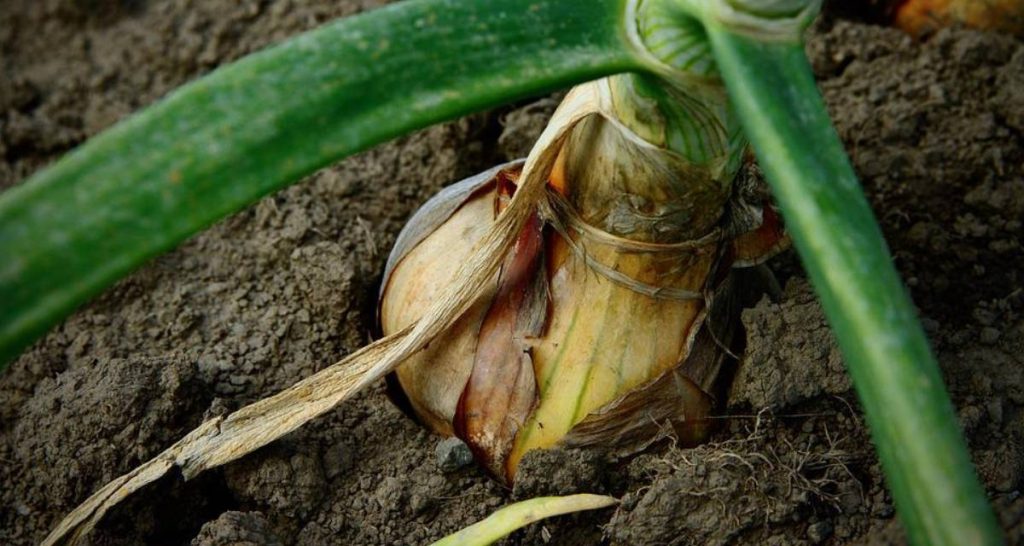
External factors affecting onion fattening
And since the fruit is buried in the ground, environmental factors don’t affect it so much, but underground factors do.
- Clumped soil: hard, compacted soil reduces the ease with which the onion expands and grows.
- Low microbiological development: native soil microorganisms have a massive influence on the behavior of roots and, in general, of all crops. They are able to control humidity, increase oxygen and the supply of nutrients that reach the root system of the onion, thus facilitating fattening and weight gain.
- stony ground: soils that contain a large volume of boulders cause injury and damage to fruit, deforming the onion and causing it to lose its commercial value.
- Pipe system: soils that excessively infiltrate water or, on the contrary, accumulate it, cause internal stress to the plant due to the lack of oxygen which considerably reduces the quality of the skin and the size of the onion. Organic matter promotes greater moisture retention in highly leachable sandy soil conditions and also the removal of accumulated moisture, as it has more porosity than clay soils.
- Light: low light points to the aerial part of the plant, with less ability to perform photosynthesis and more yellow shades of leaves and stems. The excess stem in the onion reduces the energy used to fatten the onions, so this is an important factor to consider.
How to grow onions with biostimulants
If, even if we do a correct fertilization, the weather does not support it, we can resort to the use of biostimulants to stimulate the fattening of the onion.
Amino acids: We can use both vegetable and animal origin. The normal dose for concentrated amino acids is 100-200 cc/hl. It is not interesting to apply it in cold weather, only in adequate weather and after bulbing.
Seaweed extracts: its content of phytohormones such as auxins, cytokinins and gibberellins accompanies organic or inorganic nutrition to promote cell division and fattening, allowing onions to fatten at a higher level than if they were using this biostimulant. It is generally used Gnarled Ascophyllum.
Monosaccharide complexes: simple sugars such as carboxylates or gluconates, associated with nutrients, promote their assimilation and reduce stress conditions due to cold, heat stroke, drought, etc.